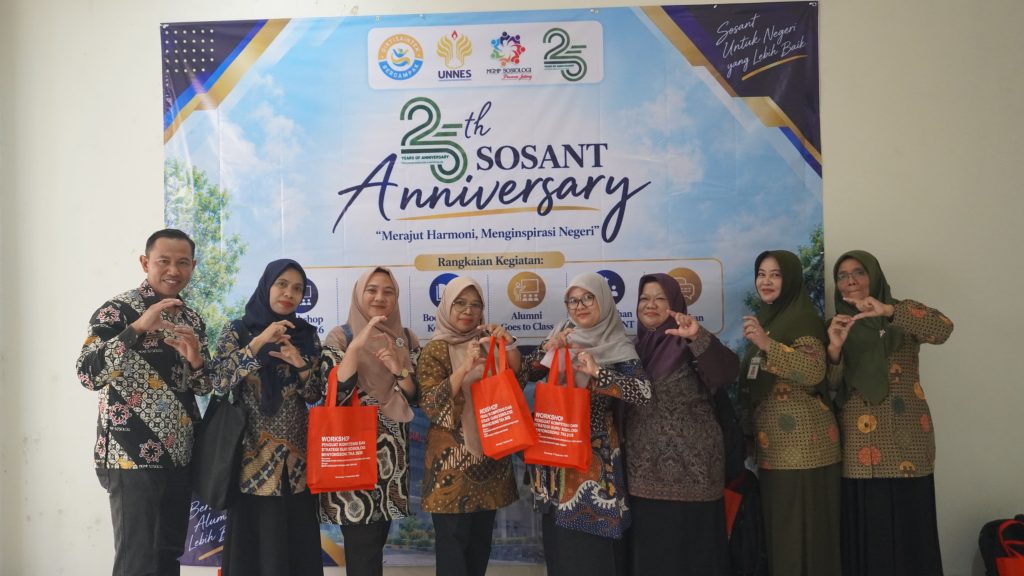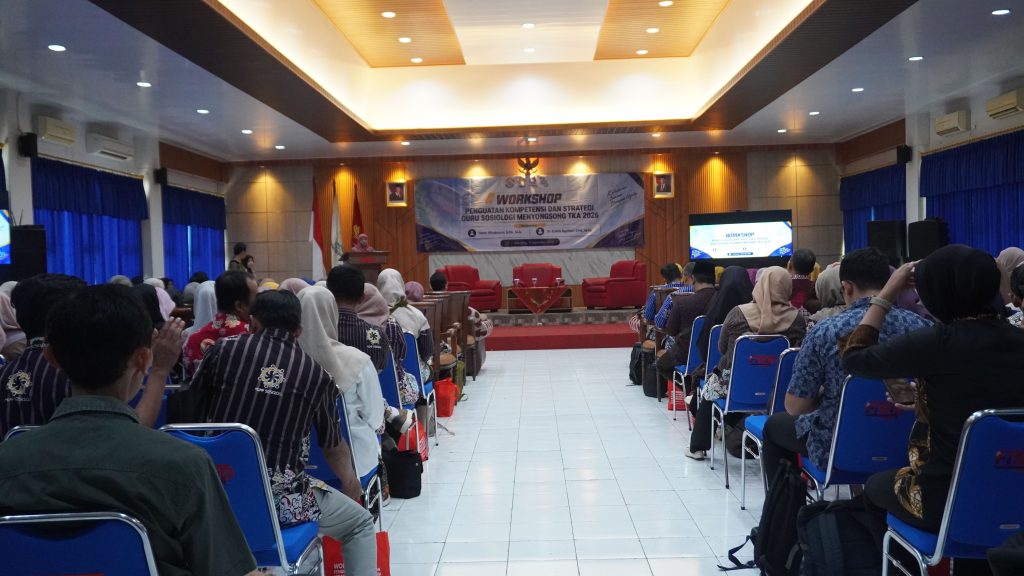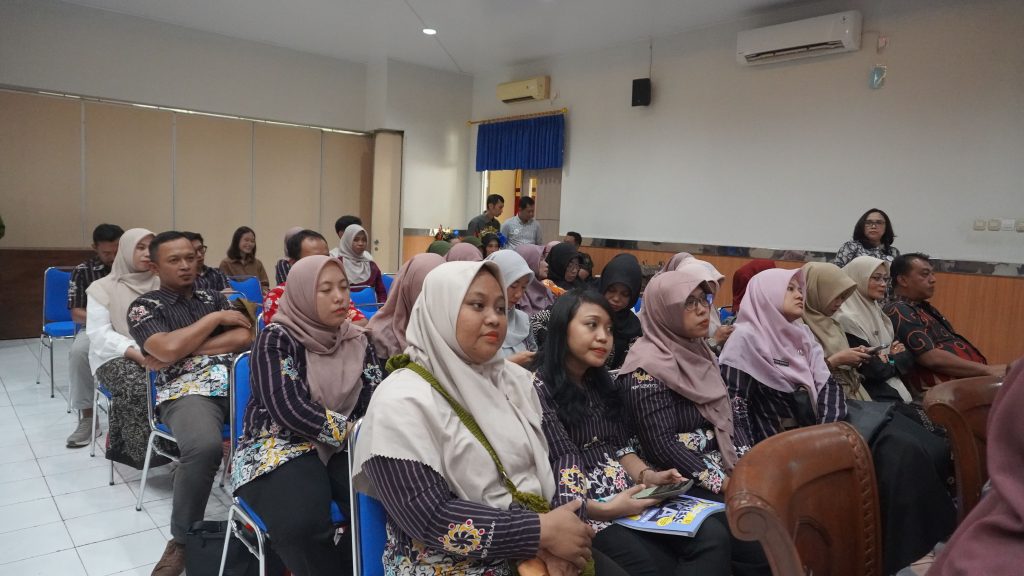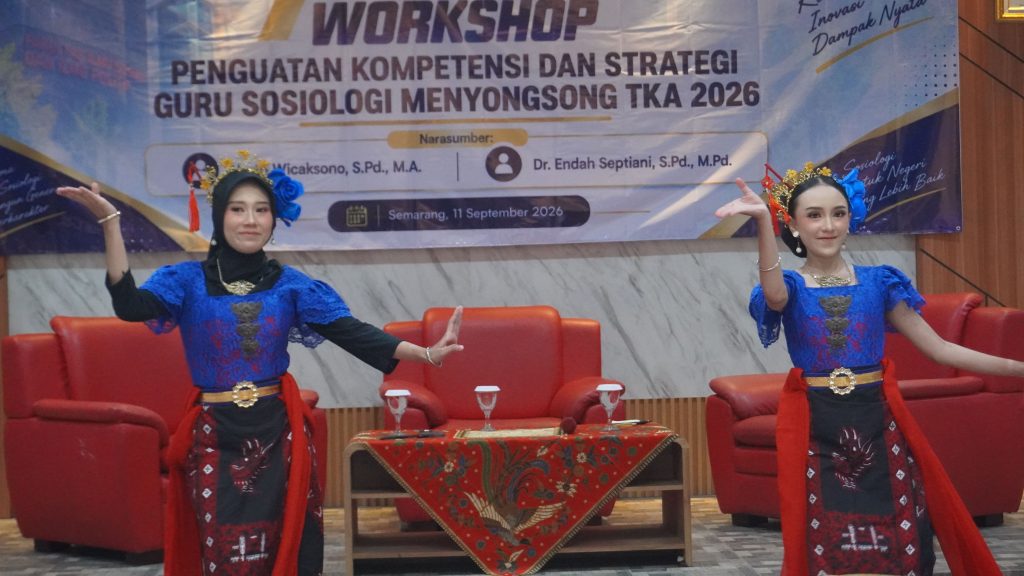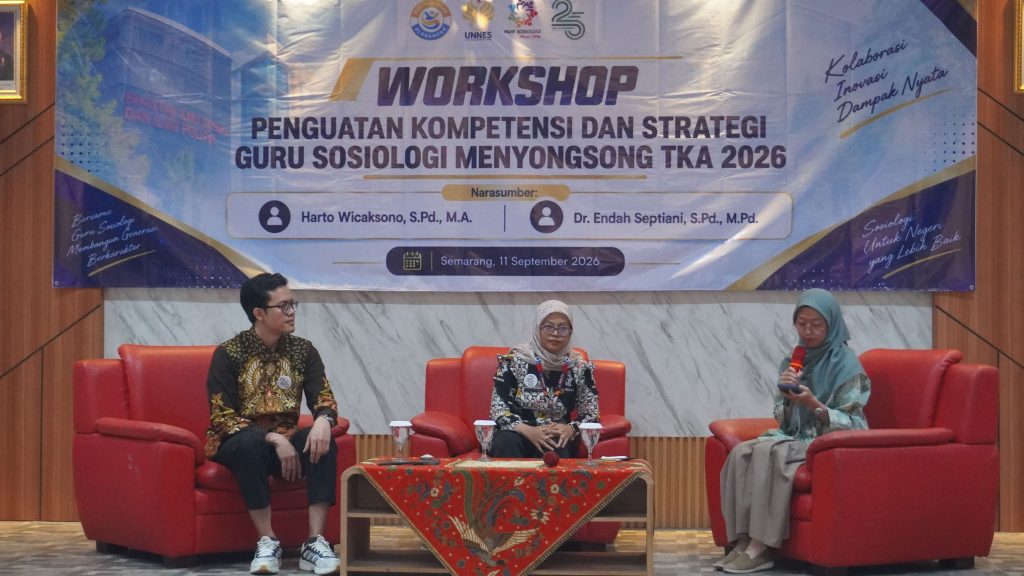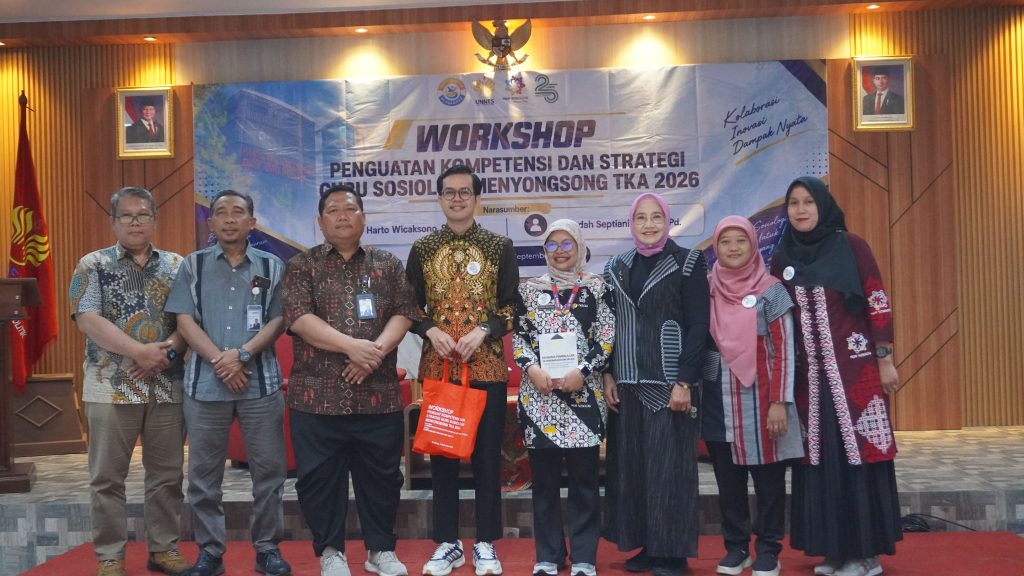




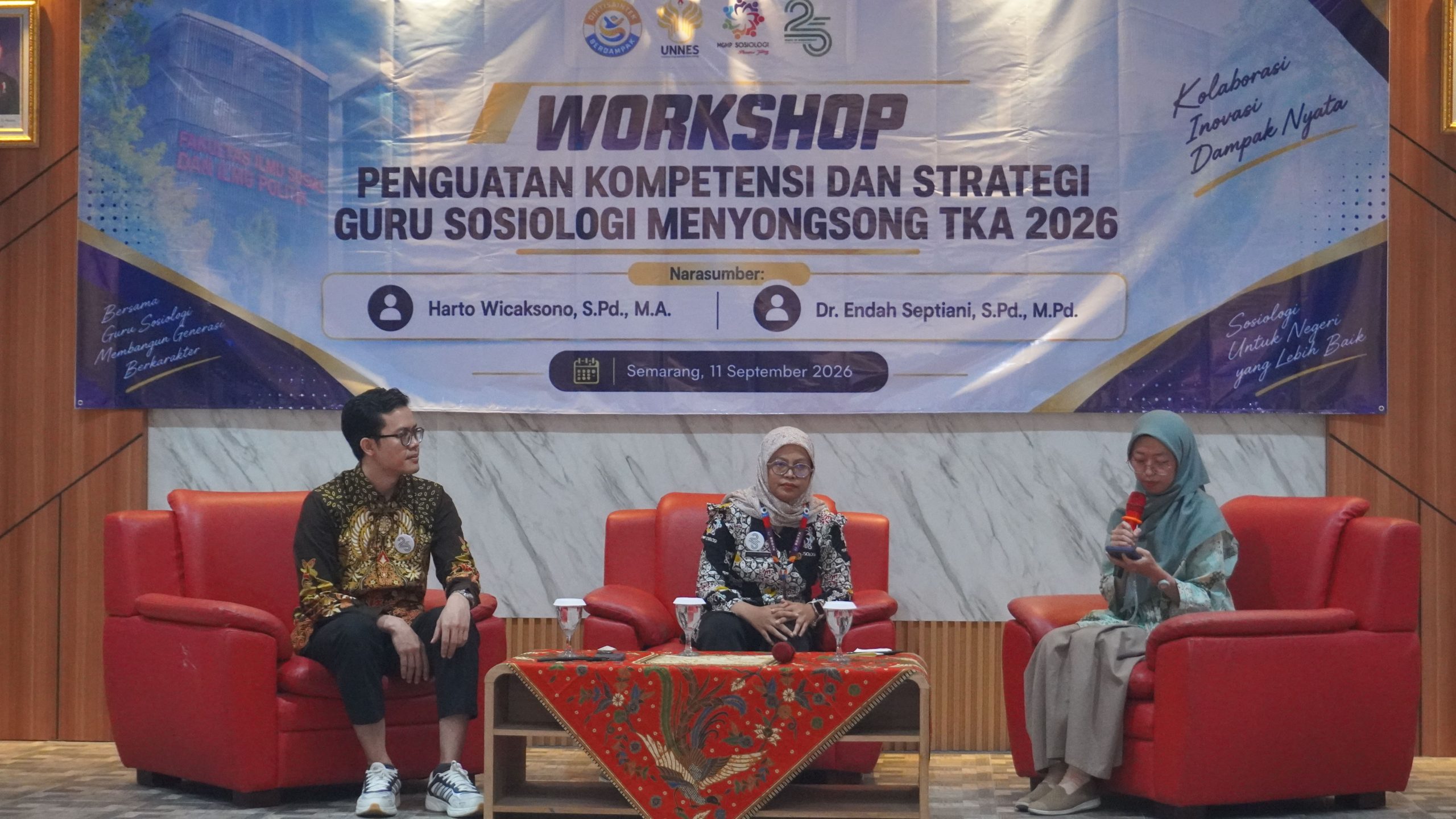
Semarang — A total of 120 Sociology teachers from across Central Java participated in the Workshop on Strengthening the Competence and Strategies of Sociology Teachers in Preparation for the 2026 Academic Competency Test (TKA), organized through a collaboration between the Sociology and Anthropology Education Study Program of the Faculty of Social and Political Sciences (FISIP), Universitas Negeri Semarang (UNNES), and the Central Java Sociology Subject Teachers’ Association (MGMP Sosiologi Jawa Tengah) on Friday, September 11, 2026 in the Hall of Building C1, 3rd Floor, FISIP.
The activity, held from 8:00 a.m. to 11:00 a.m. Western Indonesian Time (WIB), was part of the series of activities commemorating the 25th anniversary of the Sociology and Anthropology Education Study Program at FISIP UNNES. The workshop was designed to strengthen teachers’ competencies in preparing for the 2026 TKA, particularly by improving their understanding of question characteristics, mapping learning materials, and developing Sociology TKA practice questions.
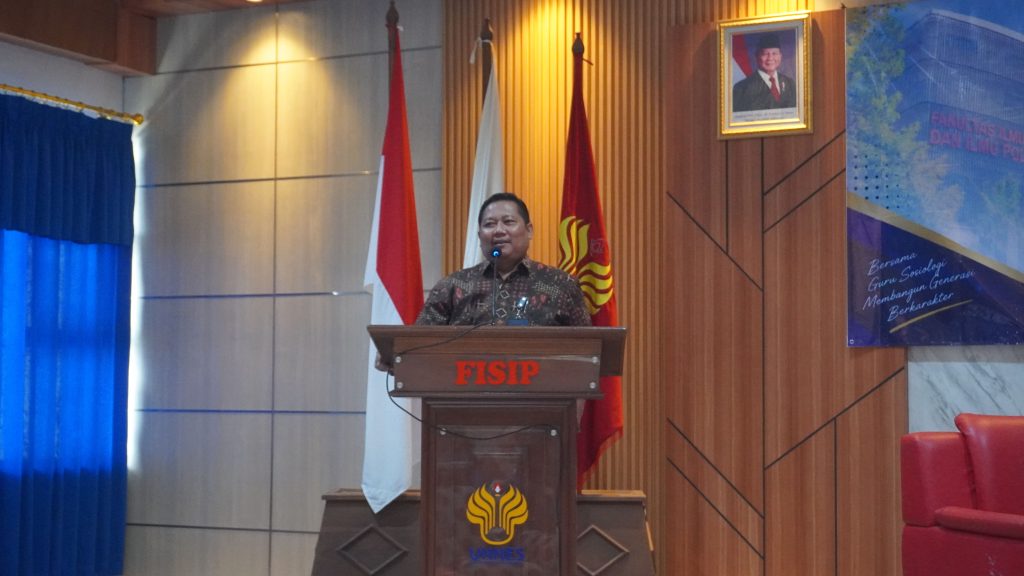
The event was officially opened by the Dean of FISIP UNNES, Prof. Dr. Arif Purnomo, S.Pd., S.S., M.Pd. The participation of teachers from various regions across Central Java provided an important platform for sharing experiences while strengthening cooperation between higher education institutions and the professional teaching community.
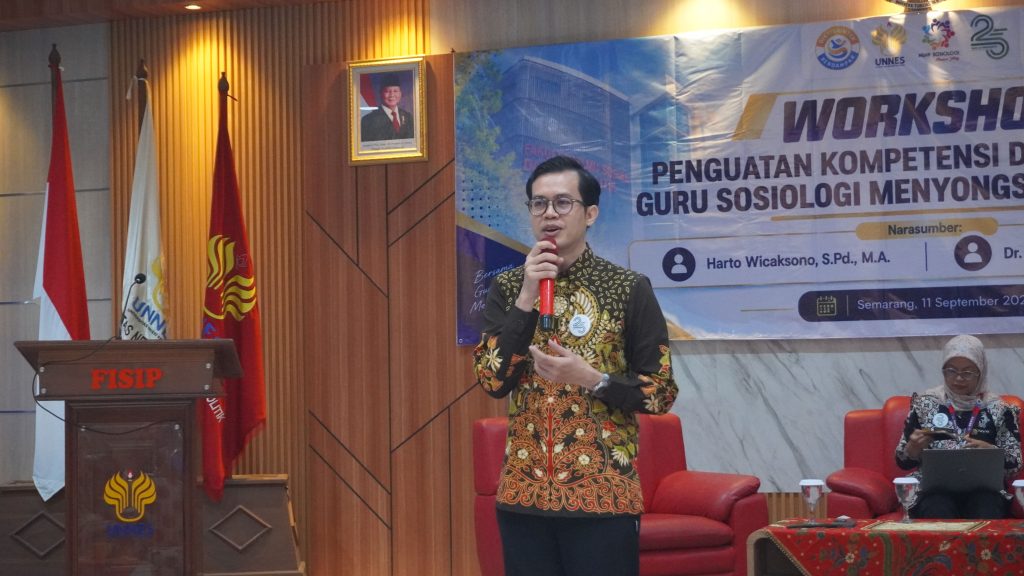
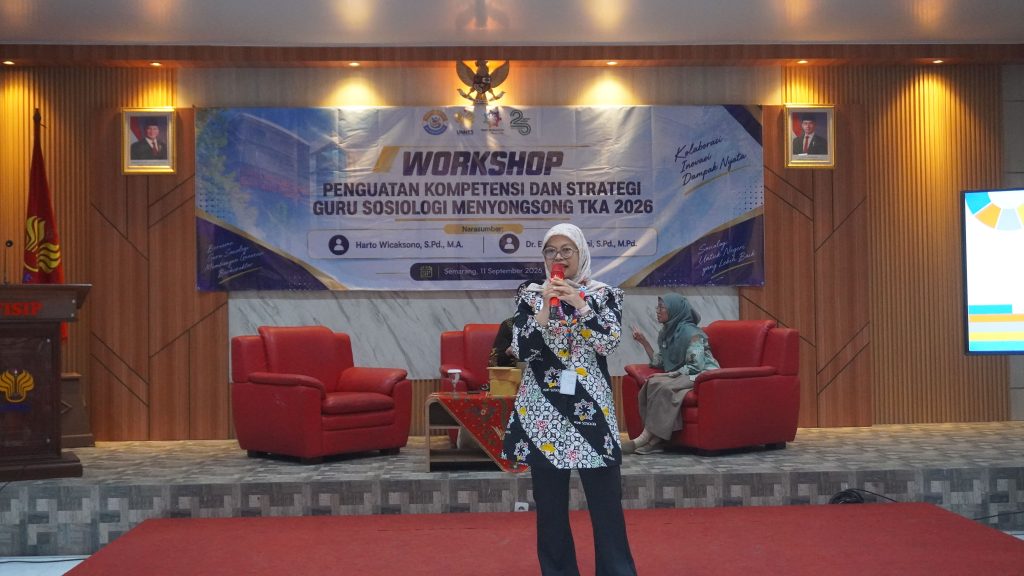
The workshop featured two speakers, namely Harto Wicaksono, S.Pd., M.A., a lecturer in the Sociology and Anthropology Education Study Program at FISIP UNNES, and Dr. Endah Septiani, S.Pd., M.Pd., Secretary of the Central Java Sociology Subject Teachers’ Association. Both speakers provided participants with practical materials tailored to teachers’ needs in preparing students for the TKA.
The first session focused on analyzing Sociology TKA questions and providing tips and strategies for tackling the test. Participants were encouraged to understand question patterns and characteristics while developing strategies that could help students prepare for academic assessments in a more structured and targeted manner.
In addition, participants received training on mapping the TKA syllabus and developing Sociology TKA practice questions. Such mapping is an important step in enabling teachers to design practice materials that are aligned with the scope of the subject matter and the competencies students are expected to master.
The collaboration between the Sociology and Anthropology Education Study Program at FISIP UNNES and the Central Java Sociology Subject Teachers’ Association demonstrates the importance of cooperation between universities and schools in strengthening the quality of education. Universities can contribute through the development of academic knowledge and learning strategies, while teachers provide practical insights into the actual needs and challenges of classroom learning.
The workshop also formed part of broader efforts to strengthen teachers’ roles as key actors in improving educational quality. Strengthening teacher competence is not limited to mastering subject matter and understanding test questions, but also involves the ability to design learning activities and assessments that continuously develop students’ academic capabilities.
The activity is aligned with the achievement of the Sustainable Development Goals (SDGs), particularly SDG 4: Quality Education, through the enhancement of educators’ competencies and the strengthening of learning quality. The collaboration between FISIP UNNES and the Central Java Sociology Subject Teachers’ Association also reflects the spirit of SDG 17: Partnerships for the Goals by fostering institutional cooperation to support improvements in educational quality.
Through this workshop, FISIP UNNES and the Central Java Sociology Subject Teachers’ Association reaffirmed their shared commitment to preparing teachers to respond to changes and demands in educational assessment. The 25th anniversary of the Sociology and Anthropology Education Study Program thus became not only an opportunity to reflect on its academic journey, but also a platform for expanding the study program’s contribution to strengthening teacher capacity and improving the quality of Sociology education across Central Java.