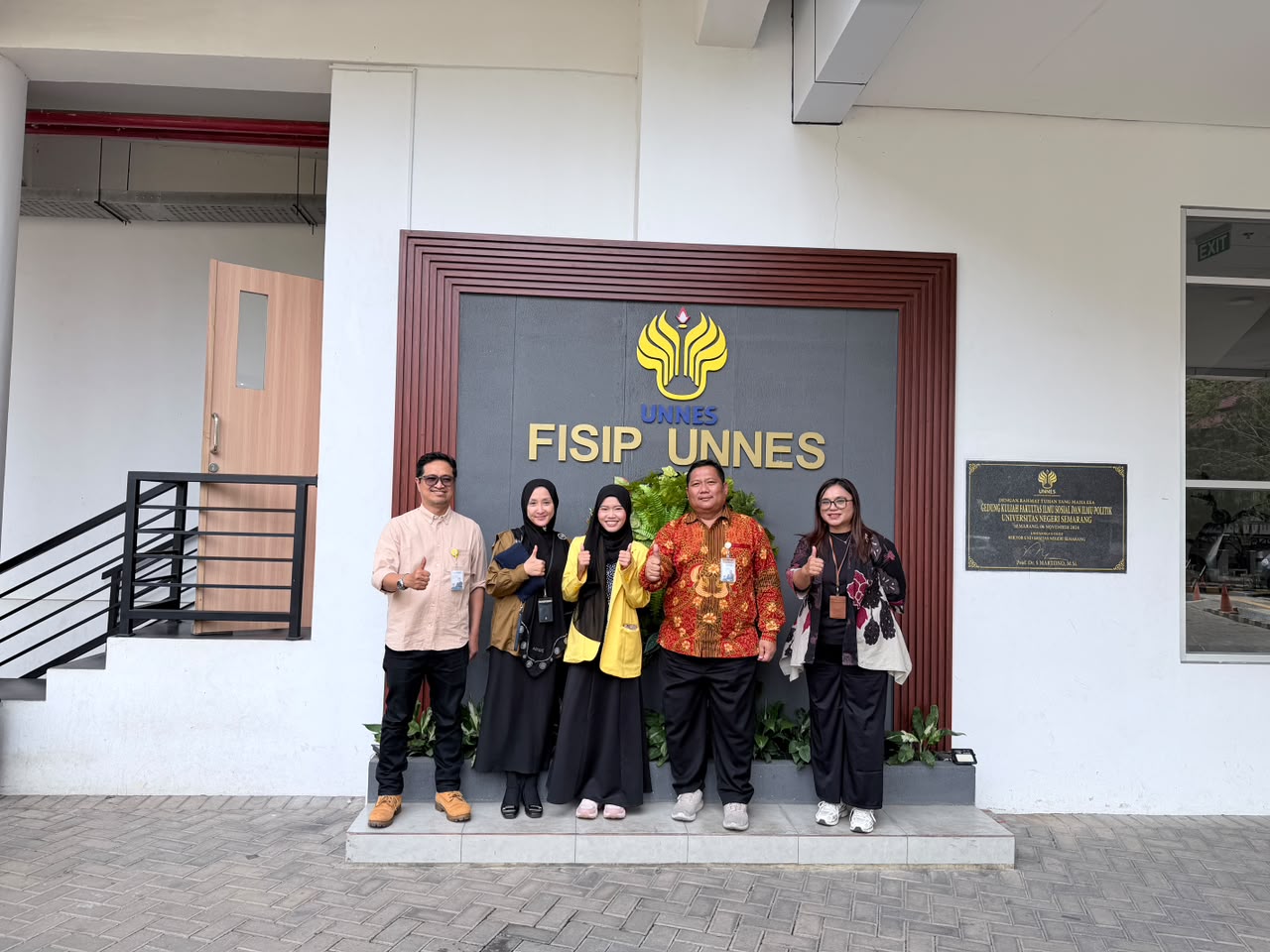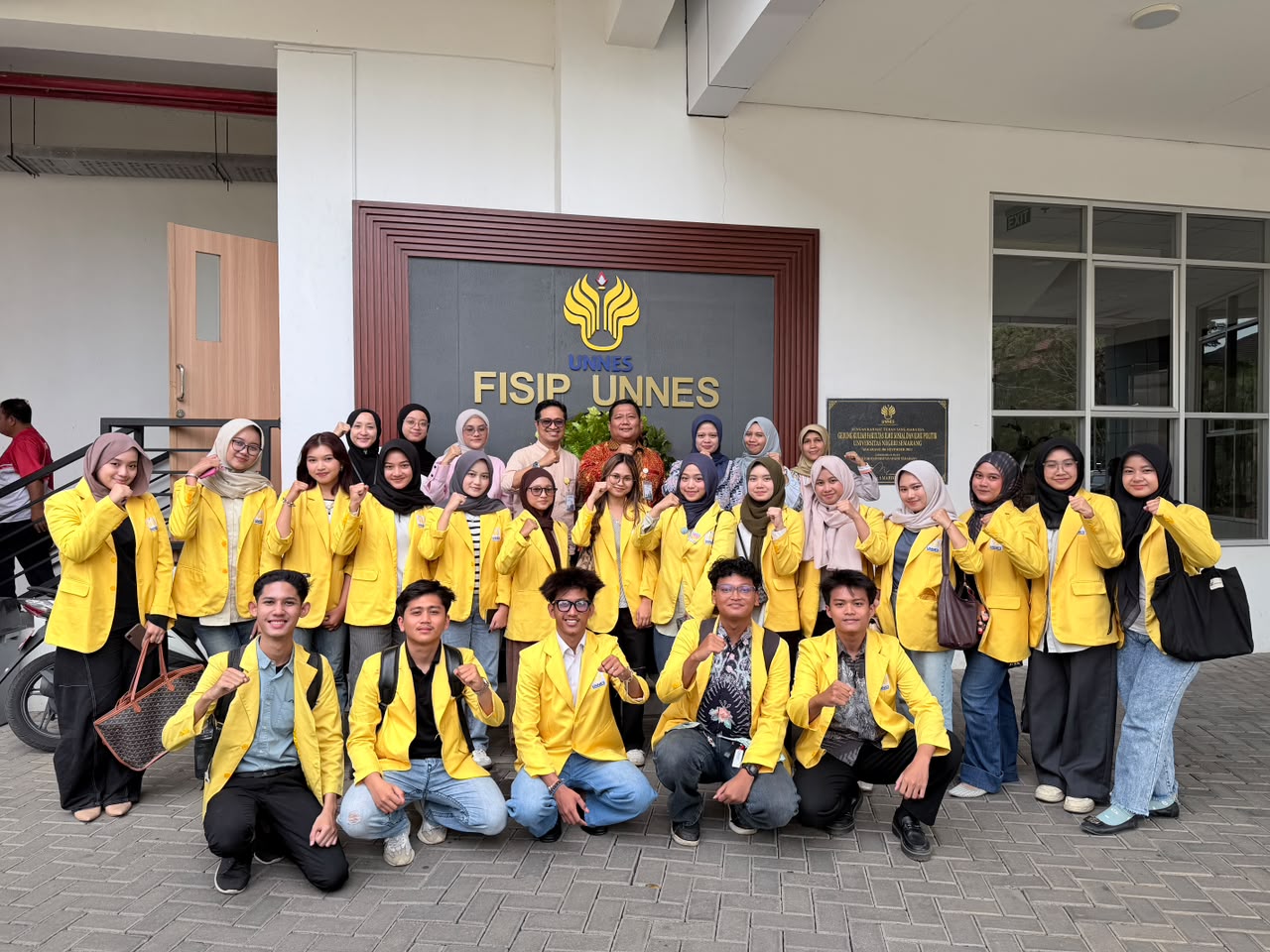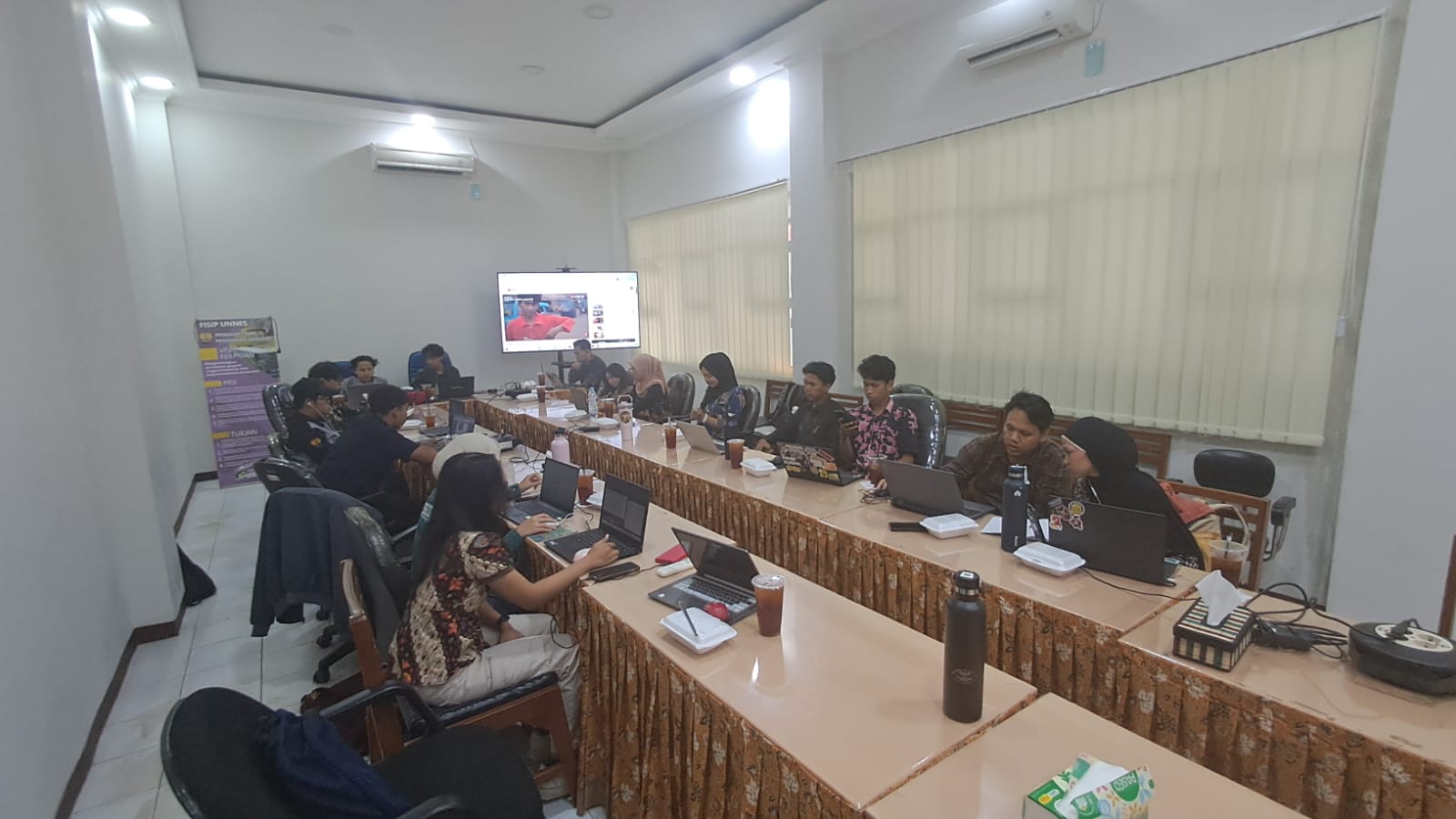




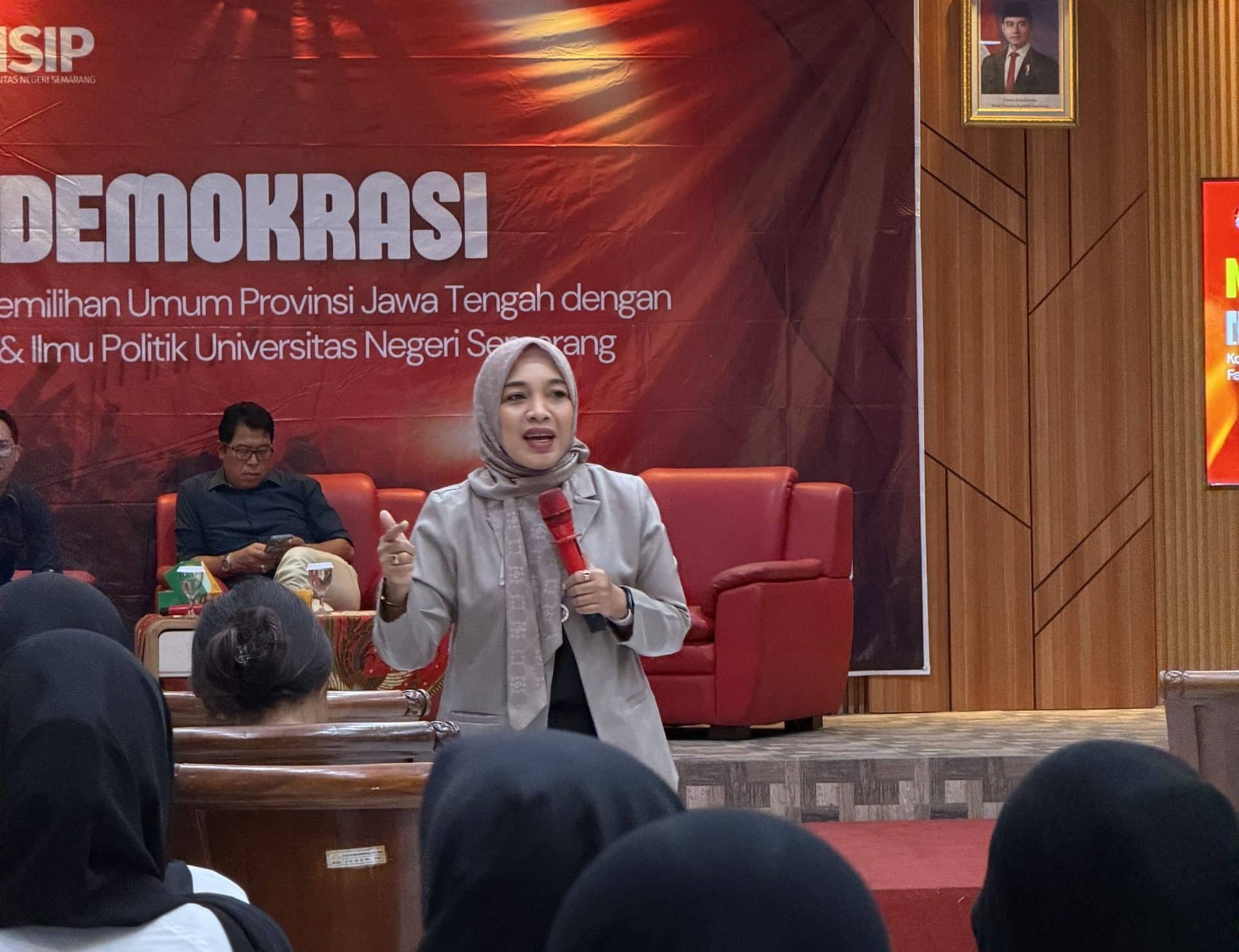
Semarang — The Central Java Provincial General Elections Commission (Komisi Pemilihan Umum or KPU) collaborated with the Faculty of Social and Political Sciences at Universitas Negeri Semarang (FISIP UNNES) to organize a Democracy Class focusing on Election Logistics on Monday, October 19, 2025, at the third-floor auditorium of FISIP UNNES. The activity was part of the partnership implementation between the two institutions, particularly through practitioners’ involvement in academic lectures. It was integrated into the Elections, Political Parties, and Parliamentary Systems course taken by fifth-semester Political Science students.
The Democracy Class featured two speakers from the Central Java Provincial KPU: Basmar Perianto Amron, Chair of the Planning and Logistics Division, and Akmaliyah, Chair of the Voter Education and Public Participation Division (Sosdiklih Parmas). Bambang Hermanto, a lecturer in Political Science at FISIP UNNES, moderated the discussion.
In his presentation, Basmar Perianto Amron explained that election logistics management must adhere to three key principles: timely delivery, accurate quantities, and delivery to the right destinations. These principles are essential to ensuring that all election materials are available according to schedule, in the required quantities, and at the designated distribution locations.
He also emphasized the complexity of election logistics. These materials include not only ballot papers, ballot boxes, and voting booths but also various supporting supplies, such as indelible ink, ballot-punching tools, and rubber bands. All these items must be carefully planned, procured, and distributed to ensure the smooth implementation of elections.
Meanwhile, Akmaliyah highlighted the relationship between the availability of election logistics and the smooth conduct of elections, including its impact on voter participation. She explained that logistical problems could create obstacles if the necessary materials and equipment were not adequately available at polling stations.
She also stressed the importance of ensuring that election logistics are accessible to voters with disabilities. One aspect that requires particular attention is the provision of accessible ballots or assistive tools for voters with visual impairments, enabling all citizens to exercise their voting rights on an equal basis.
Bambang Hermanto, a Political Science lecturer at FISIP UNNES, emphasized that understanding election logistics is an essential competency for Political Science students. According to him, the study of elections should go beyond voter behavior, political parties, and electoral systems to include the technical and administrative aspects that determine the success of election administration.
“Political Science students need to understand election logistics management because graduates may pursue careers as election administrators in the future. This knowledge is essential to helping them develop a more comprehensive understanding of elections, both from political and administrative perspectives,” he explained.
The event featured an interactive discussion and question-and-answer session. Students demonstrated their enthusiasm by raising questions about the challenges of procuring and distributing election logistics in Indonesia, particularly in archipelagic regions with diverse geographical conditions and varying levels of transportation access.
Awistin, a fifth-semester Political Science student, raised a question about the challenges of procuring and distributing election materials across archipelagic regions. Her question enriched the discussion on the importance of careful planning, coordination among stakeholders, and distribution strategies tailored to the geographical conditions of each region.
To conclude the event, the Central Java Provincial KPU organized an interactive quiz and awarded souvenirs to students who answered the questions correctly. The activity not only provided an opportunity to share knowledge and practical experience but also encouraged students to engage actively in understanding the dynamics of election administration.
Through the Democracy Class, the partnership between the Central Java Provincial KPU and FISIP UNNES is expected to strengthen the connection between academic learning and electoral practice. As a result, Political Science students can develop a more comprehensive understanding of election management, including the logistical challenges that play a crucial role in ensuring orderly, inclusive, and credible elections.