



Before artificial intelligence became widely available, students facing difficulties with their assignments might have turned to books, discussed the problem with friends, or asked their lecturers for help. Today, there is another increasingly accessible option: asking artificial intelligence. From requesting explanations of concepts to obtaining assistance in completing assignments, artificial intelligence is gradually becoming part of students’ academic activities.
At first, such use may seem simple. Students use artificial intelligence to simplify explanations, find alternative solutions, summarize information, or review work they have completed. However, when repeated frequently, interactions with artificial intelligence can develop into part of students’ learning habits. Technology is no longer merely a supporting tool, but has begun to play a role in various stages of how students seek information and solve problems.
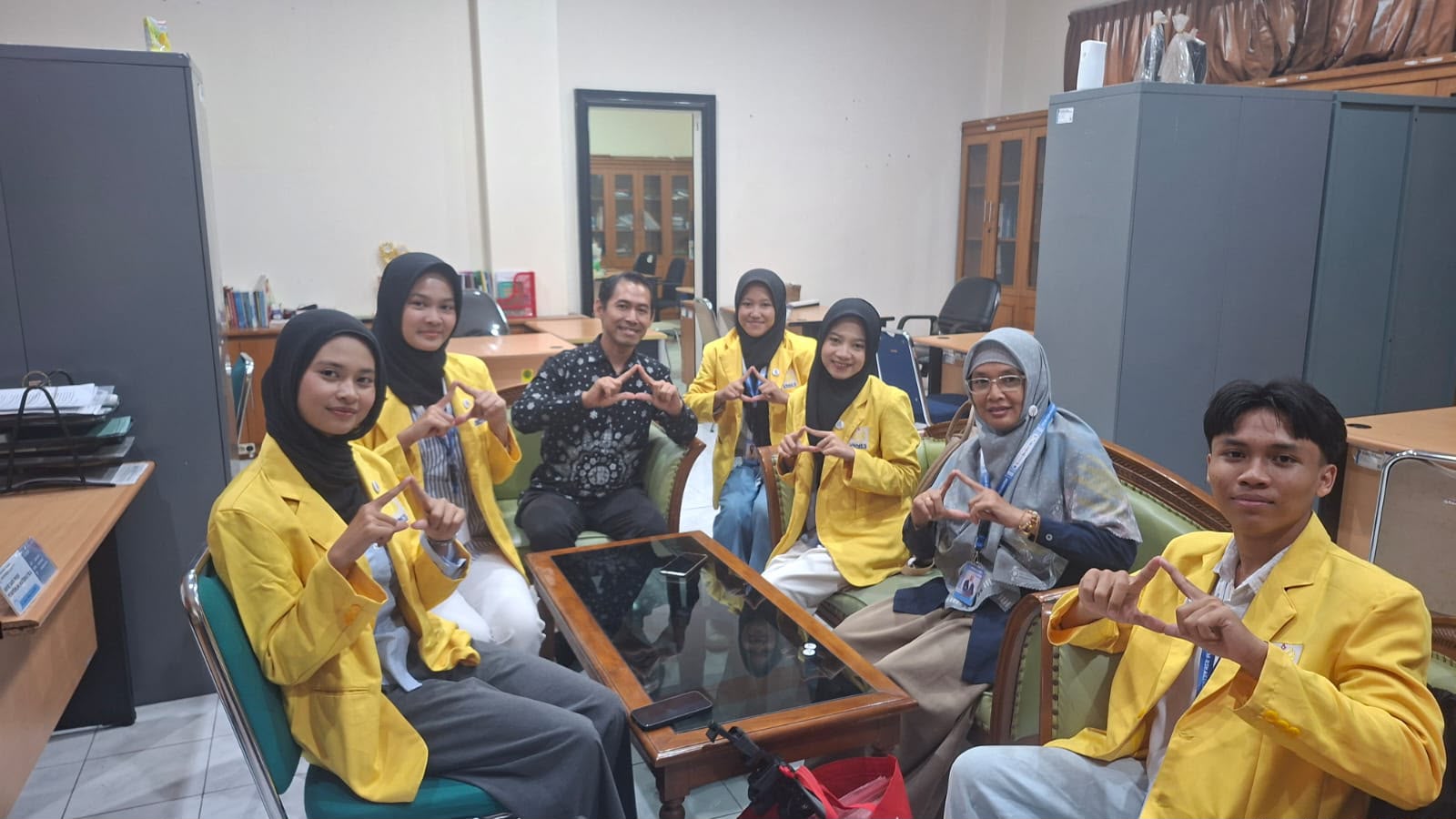
This shift in patterns of interaction has drawn the attention of the Student Creativity Program for Social Humanities Research (PKM-RSH) Team Aillusion at Universitas Negeri Semarang (UNNES). Through research involving prospective mathematics teachers, the team is examining the relationship between the level of dependence on artificial intelligence and mathematical reasoning abilities.
The phenomenon is particularly interesting because what is changing is not only how frequently students use artificial intelligence, but also how they engage in the learning process. Processes that previously required several steps—such as searching for references, discussing ideas, and arriving at a solution—can now be completed with a single instruction to artificial intelligence. This convenience may gradually create new habits in the way students approach academic problems.
For prospective mathematics teachers, this change has broader implications. Learning mathematics is not simply about finding an answer, but also about experimenting, identifying patterns, connecting concepts, testing solution steps, and explaining the reasoning behind an answer. When these processes are delegated to technology, questions arise about how students position themselves within the learning process: do they remain in control of their own thinking, or are they becoming increasingly dependent on technology to carry it out?
This question forms the basis of the research conducted by the PKM-RSH Team Aillusion UNNES. Data are collected through an artificial intelligence dependence questionnaire and a mathematical reasoning test administered to students in the Mathematics Education Study Program. The data are used to examine the relationship between technology use and students’ ability to engage independently in the reasoning process.
The phenomenon is also part of broader changes taking place in higher education. Artificial intelligence is not merely a new technology, but is also transforming the ways students seek information, communicate, and solve problems. This transformation is in line with the spirit of Sustainable Development Goal (SDG) 4 on Quality Education, while also forming part of broader efforts to advance education and develop human intellectual capacity amid rapid technological progress.
Ultimately, the issue is no longer simply whether students use artificial intelligence, but rather how the use of this technology may reshape their learning habits. From being merely a place to ask questions, artificial intelligence can evolve into part of the way students think and solve problems. It is at this point that it becomes important to understand the boundary between technology as a supporting tool and technology that begins to take over the human learning process.