

Disaster resilience cannot be built solely through technology, infrastructure, or early warning systems. Communities must also have the capacity to recognize risks, communicate effectively, and make collective decisions when threats arise.
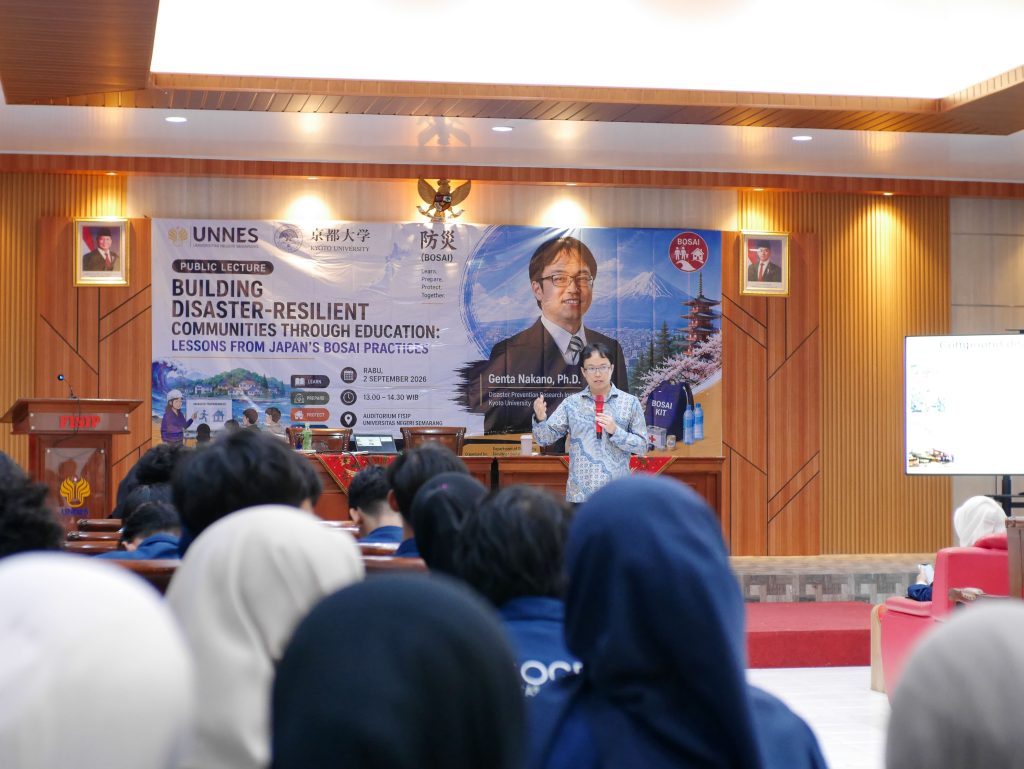
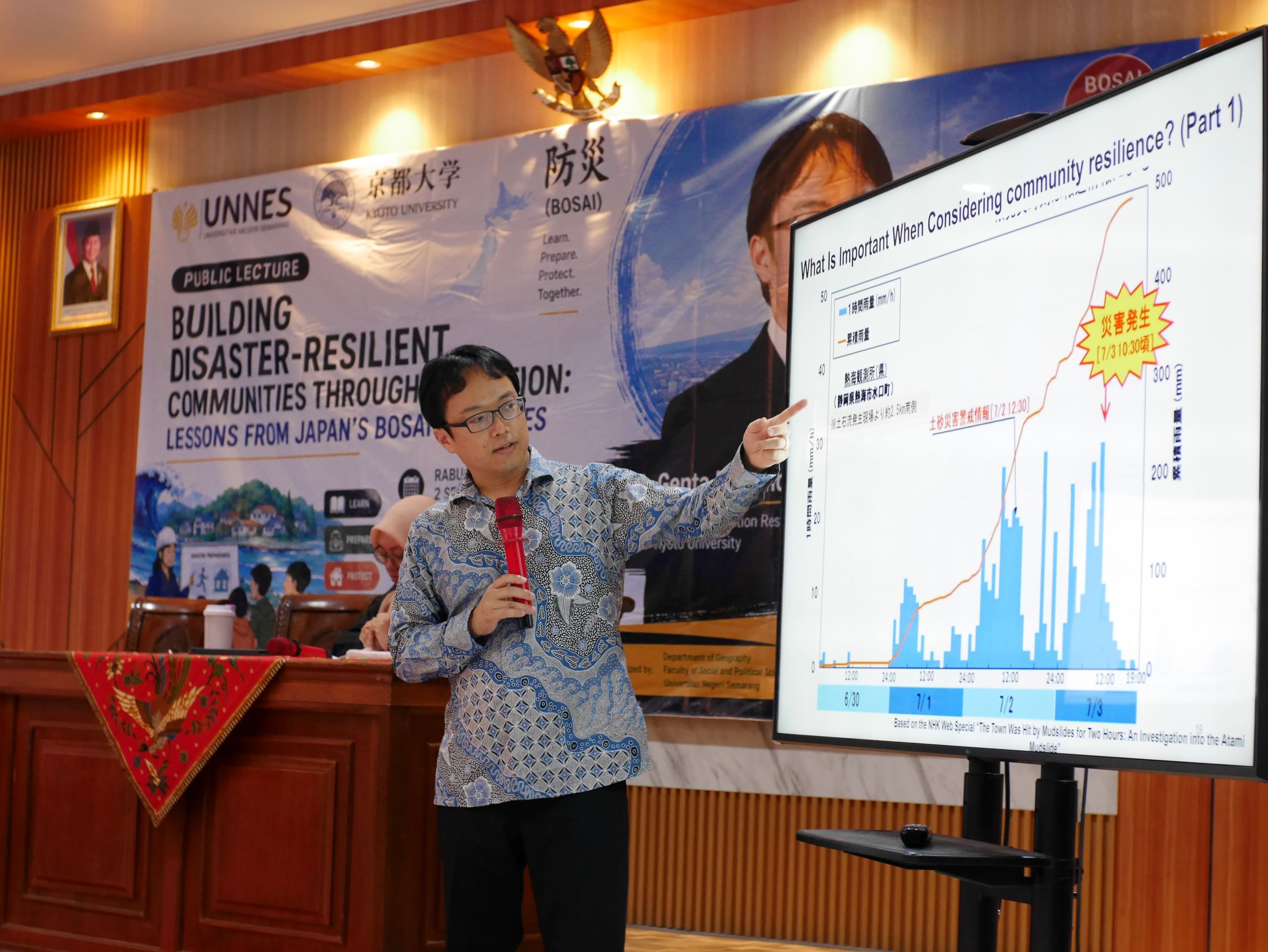
This was the key message highlighted in a public lecture entitled Building Disaster-Resilient Communities through Education: Lessons from Japan’s BOSAI Practices, delivered by Genta Nakano, a lecturer at Kyoto University’s Disaster Prevention Research Institute, to students of Geography and Geography Education at the Faculty of Social and Political Sciences (FISIP), Universitas Negeri Semarang (UNNES), on Wednesday (September 2, 2026).
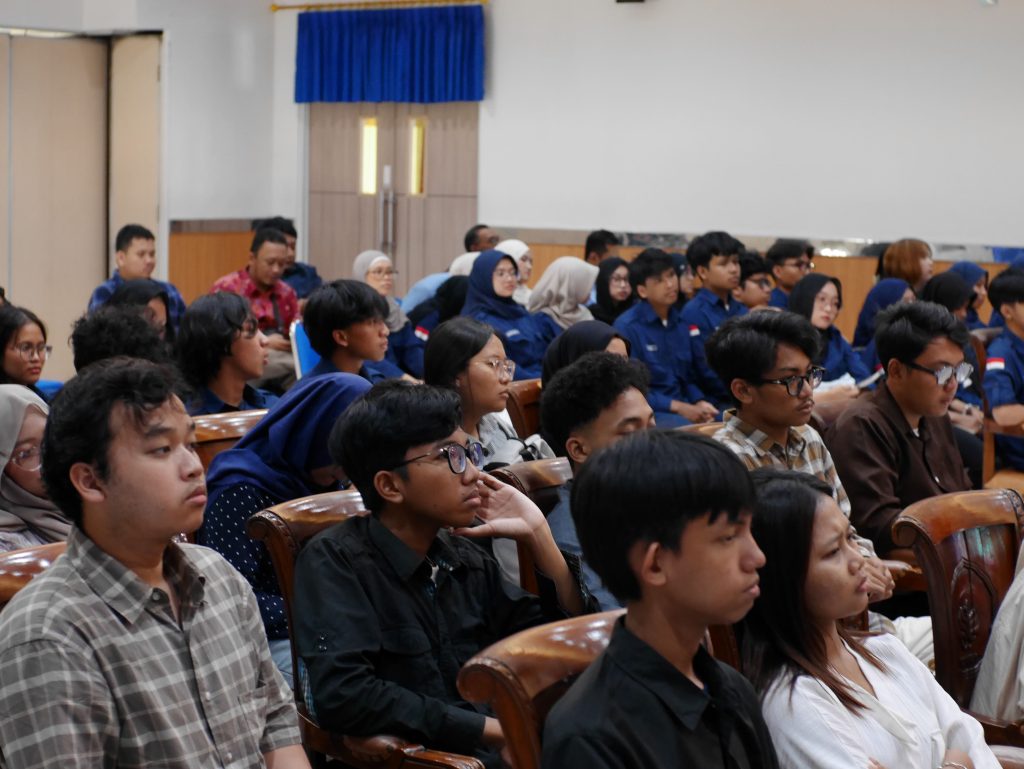
The public lecture, held at the FISIP UNNES Auditorium in Sekaran, Gunungpati, Semarang, invited students to view disaster management not merely as a matter of government response after disasters occur. According to Genta, communities must play an active role in building disaster preparedness.
Genta is a researcher whose work focuses on risk communication, disaster risk reduction education, compound disaster risks, and international cooperation. His research experience spans several countries, including Japan, Mexico, El Salvador, Nepal, and India.
One of the important lessons he presented came from the Great Hanshin-Awaji Earthquake in Japan in 1995. During the disaster, most fatalities occurred within a very short period after the earthquake struck. However, when many residents were trapped beneath collapsed buildings, approximately 80 percent of those who were successfully rescued were saved by people living nearby.
Of approximately 35,000 people who were rescued, around 27,000 were saved by local residents. Meanwhile, approximately 8,000 others were rescued by police officers, firefighters, and members of the Japan Self-Defense Forces.
According to Genta, these findings demonstrate the limitations of professional institutions in responding to large-scale disasters. When disasters affect extensive areas, rescue personnel may also be impacted, meaning that their organizational capacity may not always be sufficient to reach all affected areas quickly.
“Residents must be able to protect their own lives,” was one of the key ideas emphasized by Genta during the public lecture. Therefore, disaster risk reduction cannot be left solely to the government; it also requires active participation from communities at the grassroots level.
Genta also presented lessons learned from the debris flow disaster in Atami City, Shizuoka Prefecture, in 2021. The disaster damaged approximately 130 buildings and claimed 28 lives after cumulative rainfall exceeded 400 millimeters.
Before the debris flow occurred, several residents had actually noticed unusual signs. They observed water becoming increasingly muddy, pieces of wood floating downstream, and heard the sound of rocks rolling from upstream.
However, the concerns experienced by individuals did not develop into communication at the community level. As a result, these concerns did not lead to a collective agreement to evacuate earlier. “Each individual felt anxious, but that anxiety was not shared within the community and therefore did not lead to preventive evacuation,” Genta explained as one of the important findings from the disaster.
Even after the disaster had occurred, opportunities for evacuation were still available. However, some members of the community perceived the event as something that was not directly related to them.
According to Genta, the lessons from Atami demonstrate that information and warnings alone are not always sufficient. Community resilience also depends on the ability of residents to understand risks as shared concerns and make collective decisions.
For this reason, Genta emphasized the importance of building communication and reaching agreements at the community level regarding when residents should evacuate. Governments, the private sector, and communities need to develop complementary systems of preparedness.
When government decisions are delayed, communities are expected to be able to take action. Conversely, when community capacity is limited, the government must remain capable of providing support.
One example of the practices presented by Genta came from the Okitsu community in Shimanto City, Kochi Prefecture. In this area, which faces the risks of earthquakes and tsunamis, disaster education has been developed through collaboration among schools, local communities, local governments, and Kyoto University.
Elementary school students have been involved in the continuous development of BOSAI maps. For approximately two decades, fifth- and sixth-grade students have contributed to the development of these maps by considering community needs, including those of older people and children.
The students’ work is then shared with the community and local government through presentation activities. The maps continue to evolve from year to year. The activities involve not only identifying evacuation sites but also mapping tsunami heights, landslide risks, the time required for evacuation, and potential hazards along evacuation routes during both daytime and nighttime.
These educational activities have produced tangible changes within the community. These include the relocation of childcare facilities to higher ground, the installation of evacuation route markers that can be illuminated at night, improvements to bridges along evacuation routes, increased parental participation in disaster drills, and improvements to evacuation signage.
For Genta, schools can serve as a bridge between scientific knowledge and community life. Through disaster risk reduction education, students not only learn how to save themselves but also interact with their communities and share the knowledge they acquire.
This model brings together schools, local governments, communities, and experts in collaborative disaster risk reduction efforts.
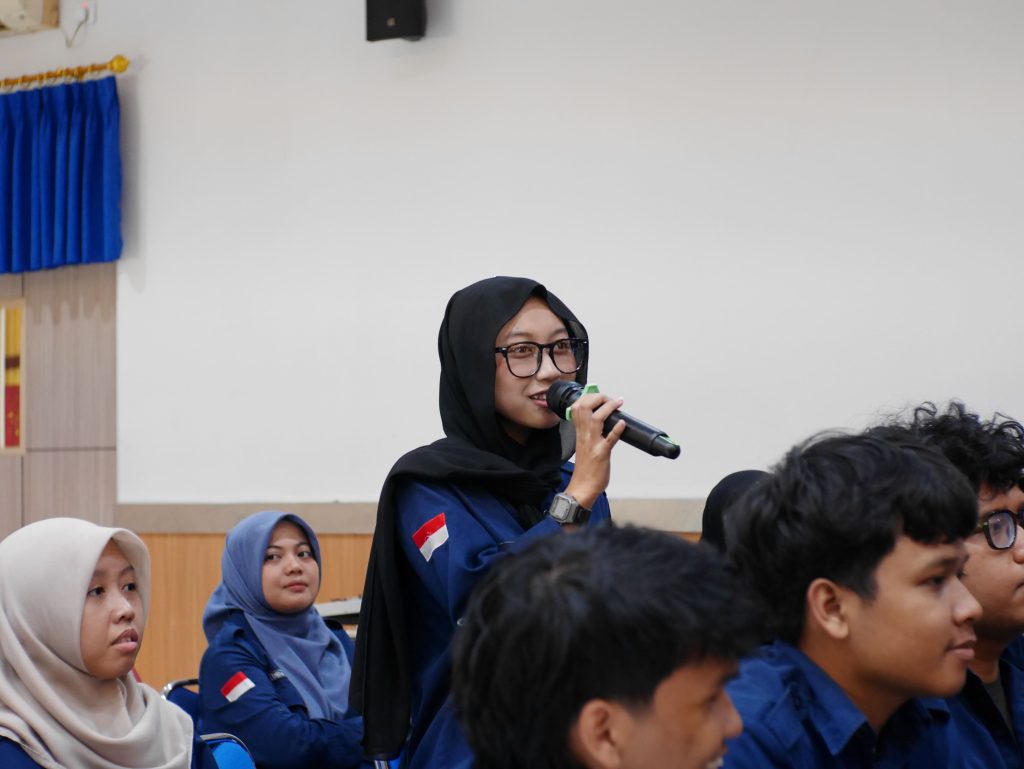
Ghina Aliya, a Geography student at FISIP UNNES, said that the material presented by Genta provided a new perspective on the importance of disaster education. “The learning experience shared with us was very insightful and inspiring, especially regarding how disaster management is carried out in Japan,” Ghina said.
According to her, the public lecture emphasized that disaster education within communities is an important issue that deserves greater attention, particularly in countries facing diverse natural hazards. “This education needs to be instilled starting from the most basic levels of the community in order to create significant change,” she said.
For the students, the Japanese experience presented during the public lecture served as a reminder that disaster resilience is not built only when disasters occur. Rather, resilience begins long before a disaster strikes—through learning, communication, and community involvement in recognizing the risks that exist in their surroundings.
Through disaster education, knowledge does not remain confined to the classroom. It can extend into communities and develop into collective action to protect lives.