Learning from Historical Wounds: High School Students in Semarang Revisit the History of Jugun Ianfu

Universitas Negeri Semarang > Faculty of Social Sciences and Political Science > News > Learning from Historical Wounds: High School Students in Semarang Revisit the History of Jugun Ianfu

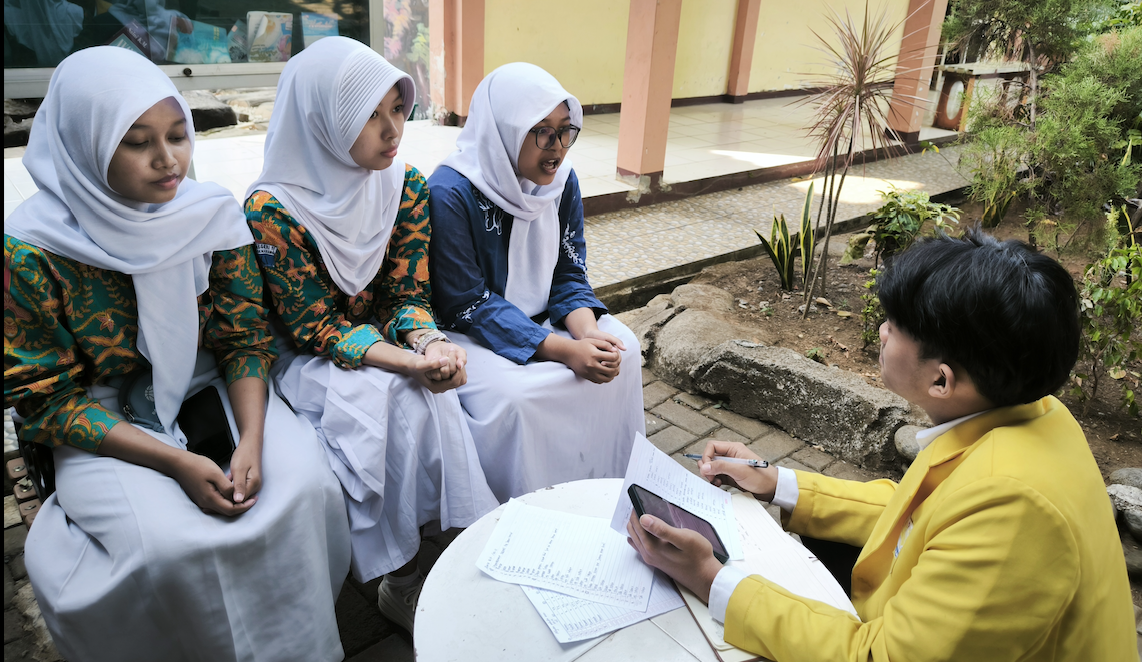
The history of jugun ianfu, or women who became victims of sexual slavery during the Japanese occupation, remains an important subject in history education. This issue drew the attention of Dimas Anggoro, S.Pd., M.Pd., who conducted research at several senior high schools in Semarang in August 2026.

The research was conducted at SMAN 1, SMAN 6, SMAN 11, SMAN 12, and SMAN 13 Semarang. The study examined how students understand the history of jugun ianfu and how they perceive Japan during the occupation period as well as contemporary Japan.

The students had previously learned about the Japanese occupation in their history classes. However, the issue of jugun ianfu had not yet become a subject they understood in depth.

During interviews, several students stated that they studied the Japanese occupation while they were in the eleventh grade. Their knowledge of jugun ianfu emerged when they discussed various policies and forms of violence during the Japanese occupation.

The issue of jugun ianfu itself is not solely related to the history of occupation. It also encompasses women’s experiences, sexual violence, power relations, and human rights issues.

For this reason, learning about jugun ianfu can provide students with an opportunity to view history from a more humane perspective. They are not merely expected to remember historical events, but also to understand the impact of war on civilian communities.

Discussions regarding Japan’s responsibility toward the victims have also become an important point of attention. History does not end with the question of what happened, but also involves how societies understand and remember the past.

Semarang and Its Historical Traces

The selection of Semarang as the research location was not without reason. The city has historical traces from the Japanese occupation that are connected to the issue of jugun ianfu.

Several historical studies have documented the existence of ianjo, or facilities used within the Japanese military sexual slavery system, in Semarang. A study published in the Kiryoku journal of Universitas Diponegoro identified several locations, including Shoko Club, Futabaso, and Hinomaru.

A number of studies on jugun ianfu in Java have also documented the recruitment of women in Central Java, including Semarang and its surrounding areas.

These historical traces demonstrate that the history of jugun ianfu is not a distant story from the lives of the people of Semarang.

Several local historical accounts have also linked Hotel Oewa Asia on Jalan Kolonel Sugiyono in Semarang to the stories of women who were forced to serve Japanese soldiers.

Understanding History Does Not Mean Hating Japan

One important aspect of the research was to examine how knowledge about Japanese atrocities in the past relates to students’ perceptions of contemporary Japan.

The research findings indicate a tendency among students to distinguish between Japan during World War II and Japanese society today.

History education can strengthen critical thinking by encouraging students to condemn sexual slavery and violence against women during wartime while, at the same time, enabling them to view contemporary Japanese society more objectively.

In other words, learning about the atrocities associated with jugun ianfu does not automatically mean that students must hate Japanese society today.

This is where the study finds its relevance to history education.
Related Posts

Leave a Reply

* Kode Akses Komentar:

* Tuliskan kode akses komentar diatas:

GDPR

  • Privacy Policy

Privacy Policy

At unnes.ac.id, the privacy of our visitors is of extreme importance to us. This privacy policy document outlines the types of personal information that is received and collected by unnes.ac.id and how it is used.

Log Files

Like many other Web sites, unnes.ac.id makes use of log files. The information inside the log files includes internet protocol (IP) addresses, type of browser, Internet Service Provider (ISP), date/time stamp, referring/exit pages, and number of clicks to analyze trends, administer the site, track user’s movement around the site, and gather demographic information. IP addresses and other such information are not linked to any information that is personally identifiable.

Cookies

unnes.ac.id uses cookies to store information about visitors’ preferences, to record user-specific information on which pages the site visitor accesses or visits, and to personalize or customize our web page content based upon visitors’ browser type or other information that the visitor sends via their browser.

Third-party ad servers or ad networks use technology in their respective advertisements and links that appear on unnes.ac.id and which are sent directly to your browser. They automatically receive your IP address when this occurs. Other technologies (such as cookies, JavaScript, or Web Beacons) may also be used by our site’s third-party ad networks to measure the effectiveness of their advertising campaigns and/or to personalize the advertising content that you see on the site.

unnes.ac.id has no access to or control over these cookies that are used by third-party advertisers.

You should consult the respective privacy policies of these third-party ad servers for more detailed information on their practices as well as for instructions about how to opt-out of certain practices. unnes.ac.id’s privacy policy does not apply to, and we cannot control the activities of, such other advertisers or web sites.

If you wish to disable cookies, you may do so through your individual browser options. More detailed information about cookie management with specific web browsers can be found at the browsers’ respective websites.

Consent

By using our website, you hereby consent to our privacy policy and agree to its terms.

Update

This Privacy Policy was last updated on: 2023-02-14. Should we update, amend or make any changes to our privacy policy, those changes will be posted here.

Contact Us

If you have any questions, comments, or concerns about our Privacy Policy or our practices with regards to your personal information, please feel free to contact us through the contact form on our website or by emailing us at humas[at]mail.unnes.ac.id.

This Privacy Policy is intended as a general guide to our practices in collecting and using information. If there is any inconsistency between this Privacy Policy and the terms of the Service Agreement or any other terms that may apply to specific services you use, then those specific service terms shall apply.

Terms of Use

By using our website, you agree to abide by this Privacy Policy. If you do not agree with this Privacy Policy, please do not use our website. We reserve the right to update this Privacy Policy from time to time without prior notice. Please review our Privacy Policy periodically to check for changes. Your continued use of our website following the posting of changes to this Privacy Policy means that you accept the changes.

Thank you for reading our Privacy Policy. We are committed to protecting the privacy of our website visitors and will continue to update our Privacy Policy to ensure optimal protection.