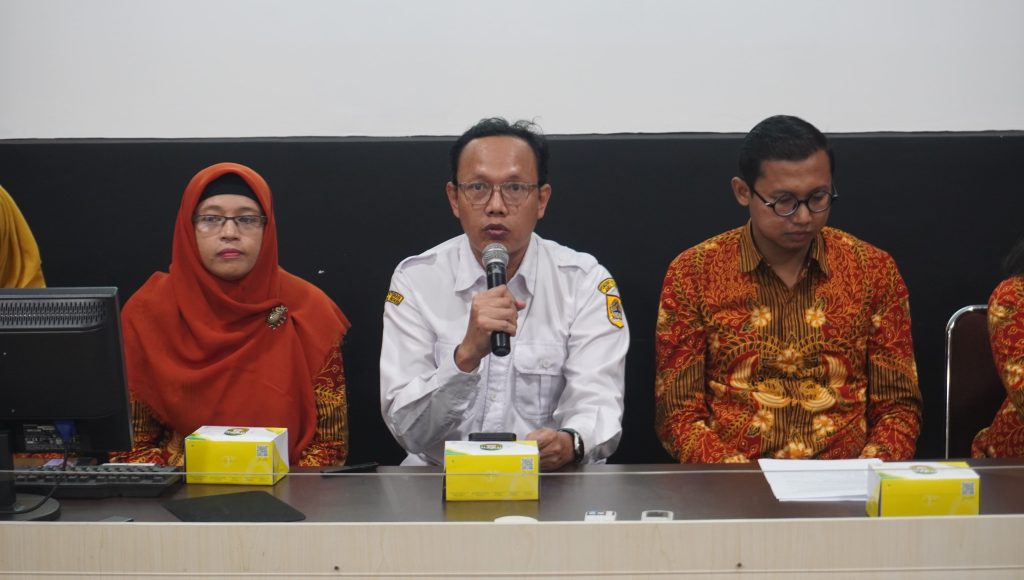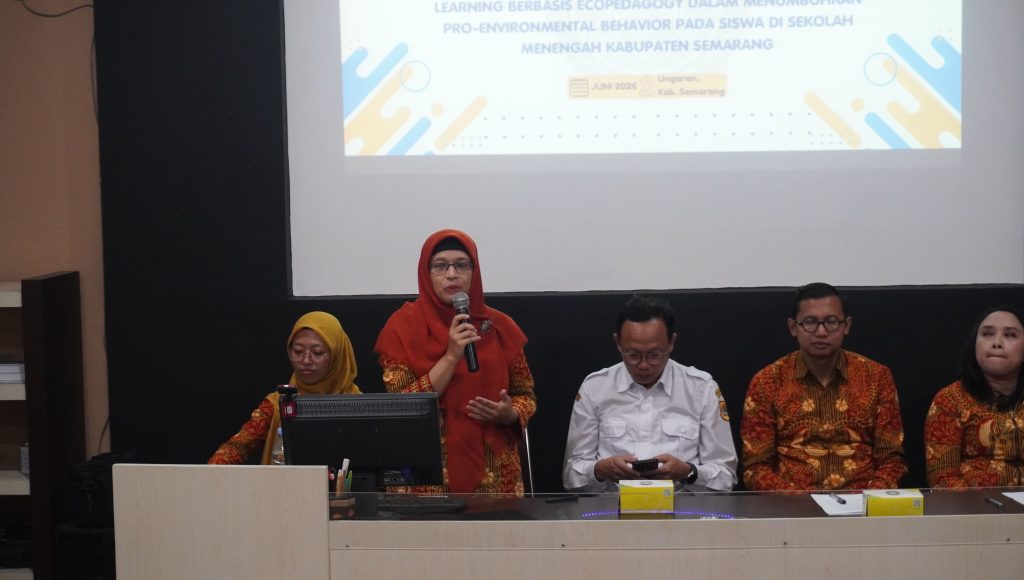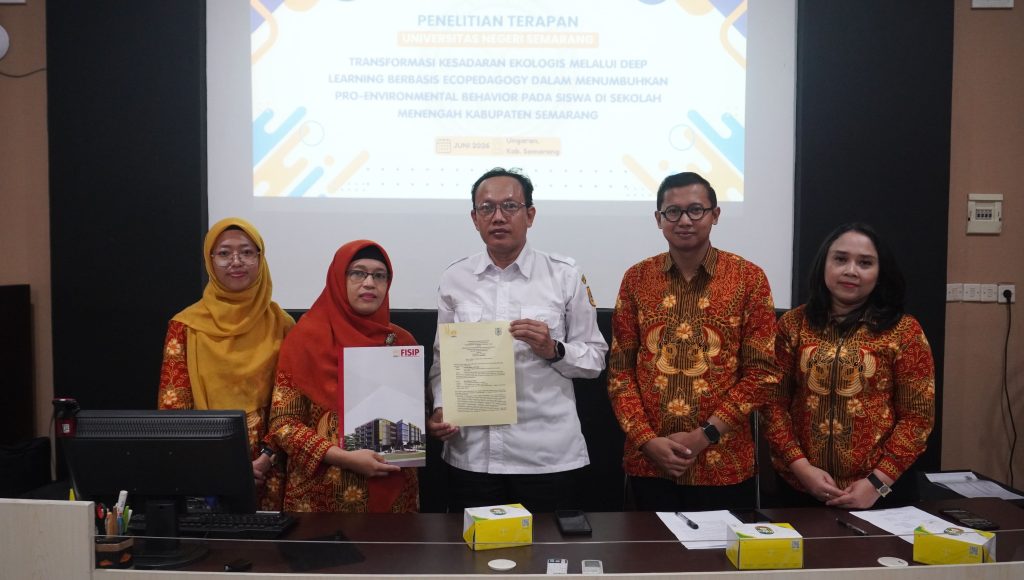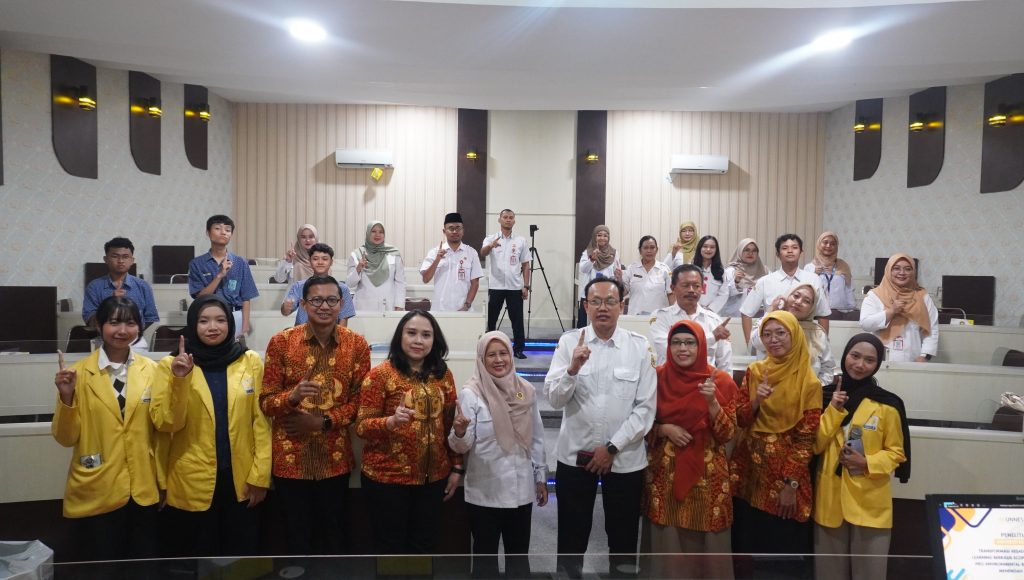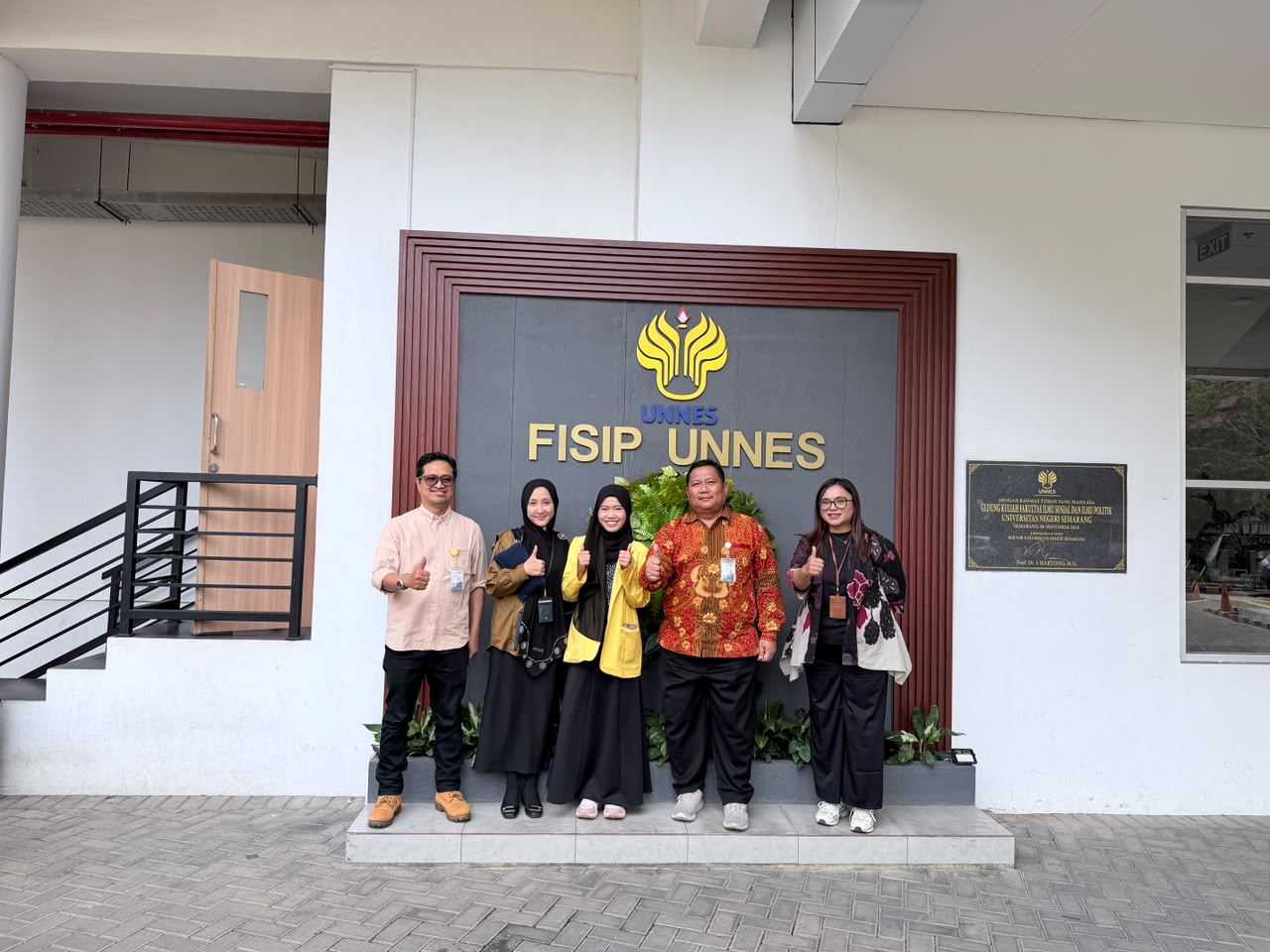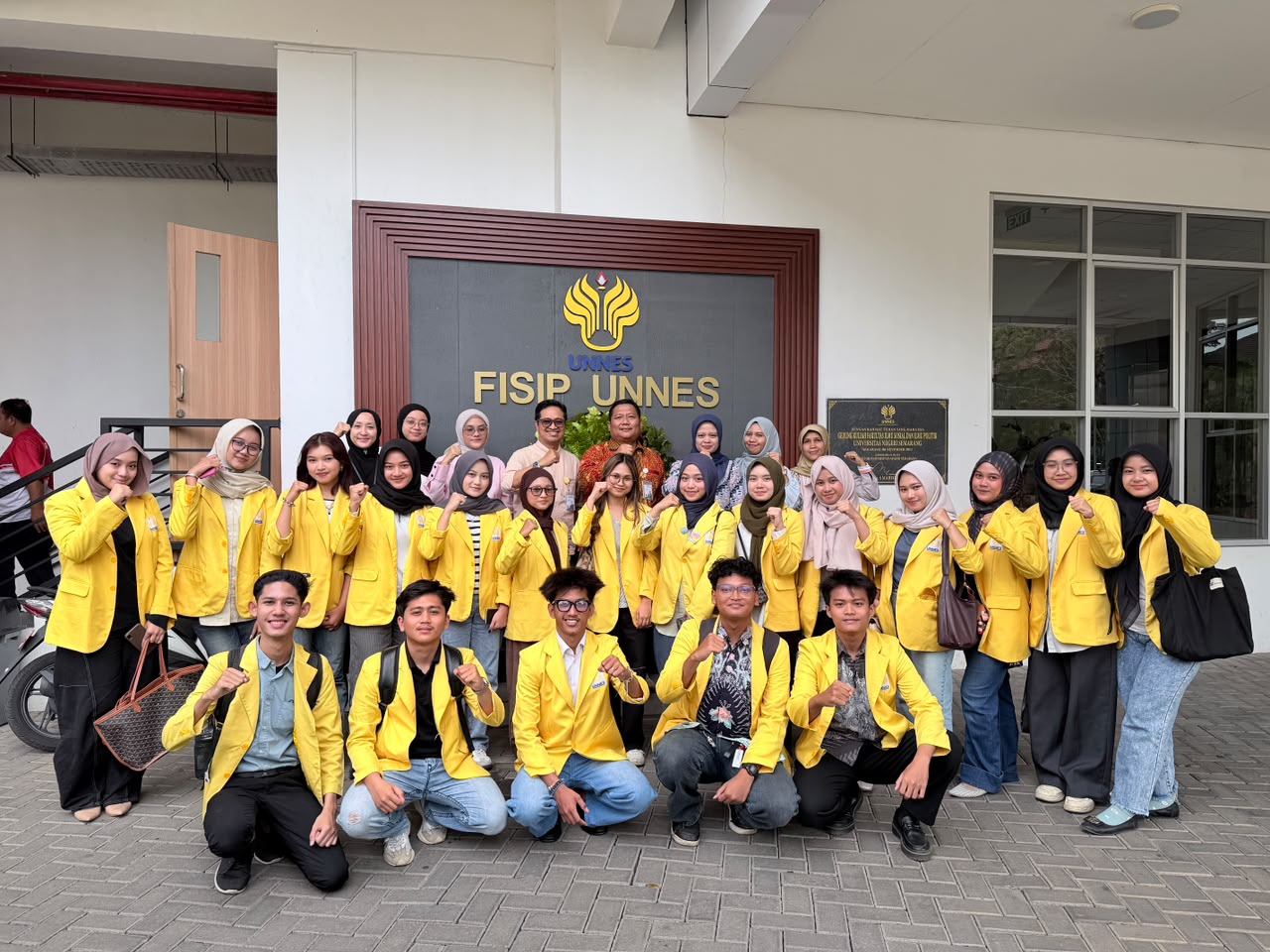


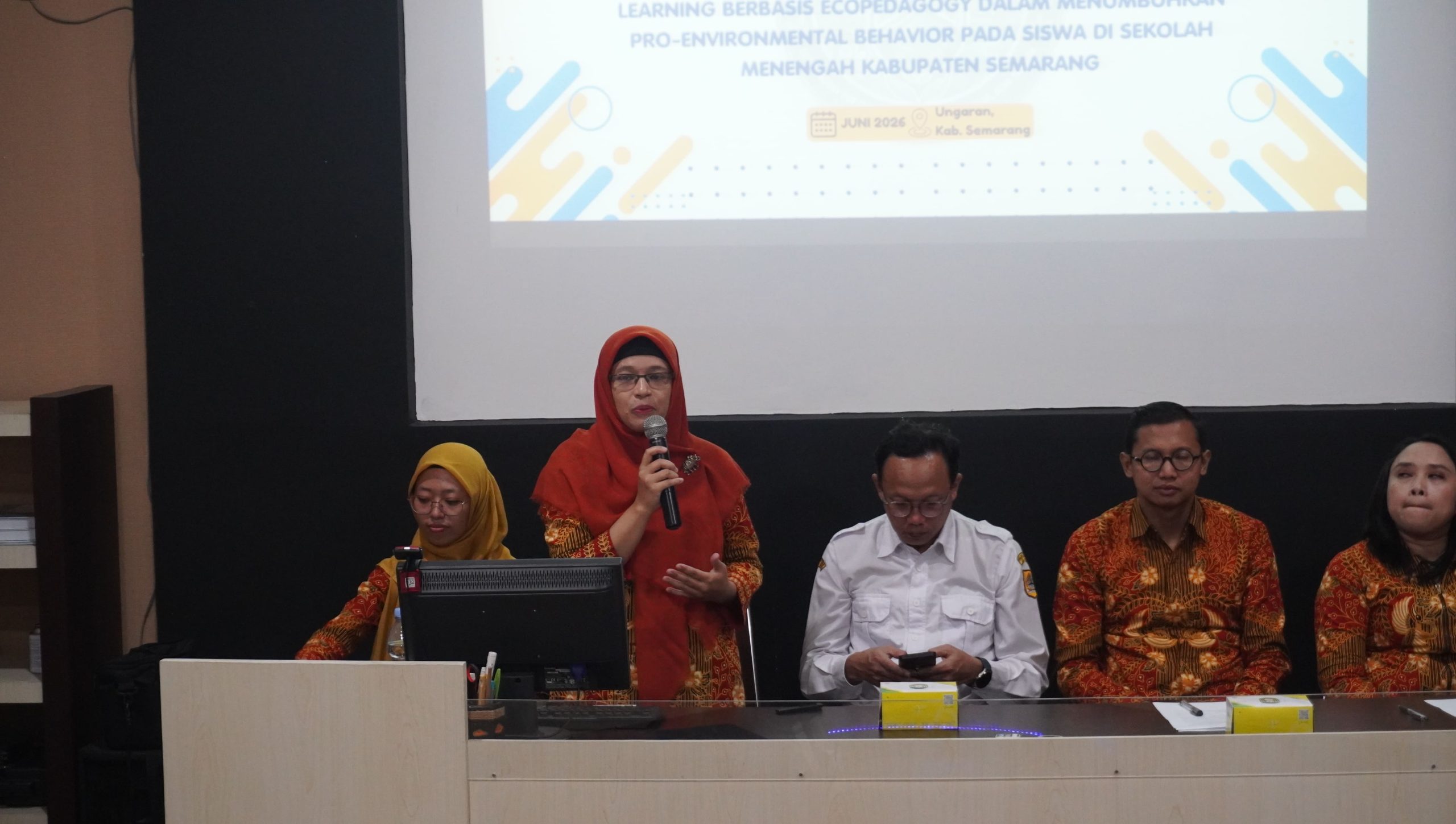
Semarang – Building a generation that possesses a strong commitment to environmental sustainability requires innovative educational approaches that go beyond knowledge acquisition and foster genuine ecological awareness and responsible behavior. Responding to this challenge, a research team from the Faculty of Social and Political Sciences (FISIP), Universitas Negeri Semarang (UNNES), led by Dr. Nurul Fatimah, S.Pd., M.Si., conducted a study entitled “Transforming Ecological Awareness through Ecopedagogy-Based Deep Learning to Foster Pro-Environmental Behavior among Secondary School Students in Semarang Regency” on 10 July 2026 at SMA Negeri 1 Ungaran. The study involved representatives of teachers from various subject areas, students, and the school’s Adiwiyata Team as research partners.
The research aims to identify adaptive environmental education models implemented through both classroom instruction and the Adiwiyata (Green School) program as strategies for fostering pro-environmental behavior among students. Amid increasing environmental challenges—including climate change, pollution, and the degradation of natural resources—schools are viewed as strategic institutions for cultivating ecological literacy and sustainability-oriented character among young people.
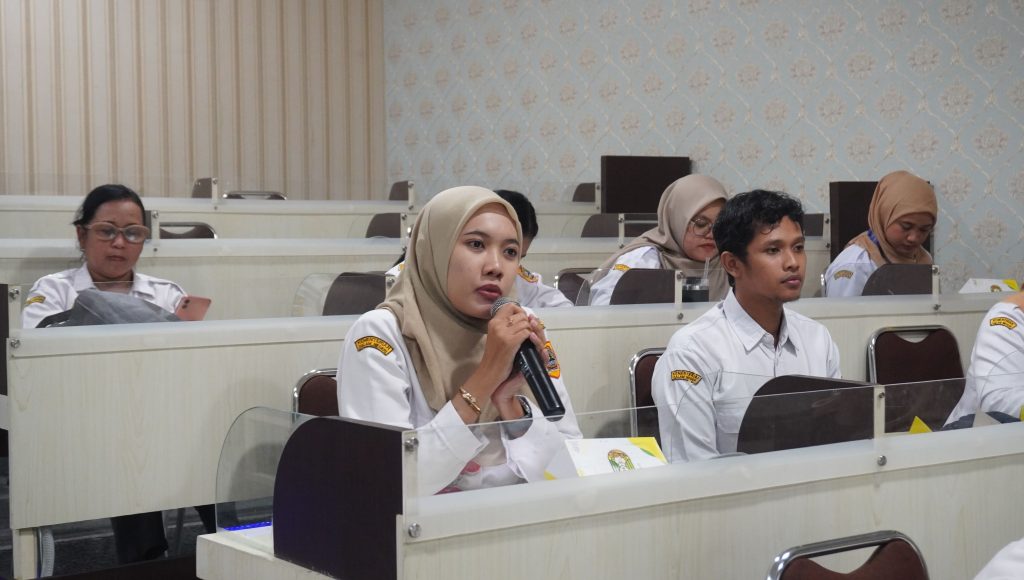
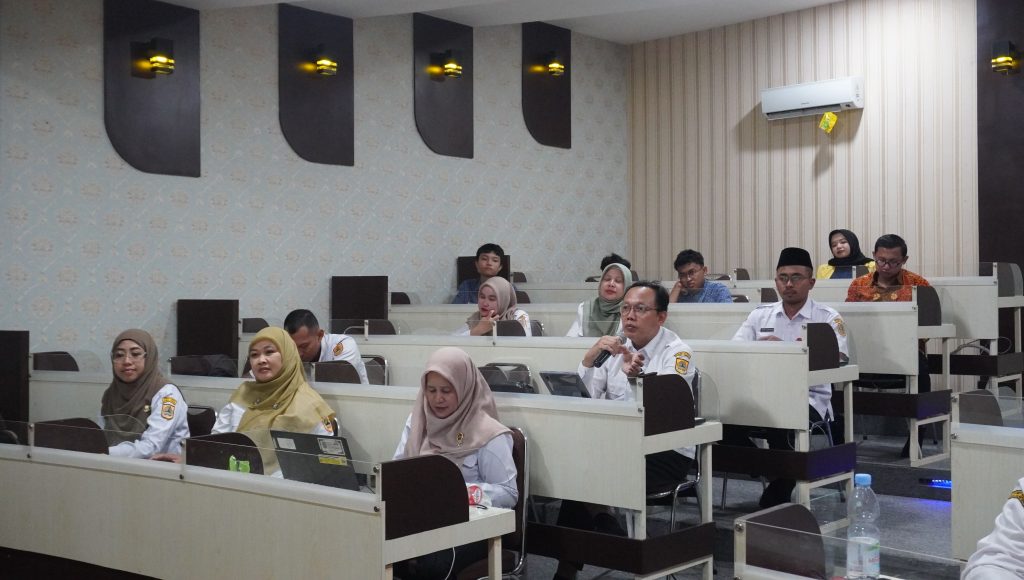
The research was carried out in two main stages. The first stage consisted of Focus Group Discussions (FGDs) conducted separately with teachers and students. Dividing the participants into two discussion groups enabled the research team to collect more open, comprehensive, and authentic insights from each group. The discussions were highly interactive, generating valuable perspectives on how environmental education has been integrated into teaching and learning practices at the school.
During the FGDs, the researchers focused on two key issues. The first concerned the design and implementation of an Ecopedagogy-Based Deep Learning model in classroom instruction to transform students’ ecological awareness. The second explored how this transformation contributes to the development of students’ pro-environmental behavior, both within the school environment and in their daily lives within the wider community. Teachers shared their experiences in integrating environmental issues into different subjects, while students described their participation in various environmentally responsible activities, providing rich qualitative data for the study.
The second stage consisted of direct observations of the school’s environment and its environmental sustainability initiatives. The research team examined a variety of artifacts, documentation, and school practices that reflected SMA Negeri 1 Ungaran’s consistent commitment to cultivating an environmentally responsible school culture. These observations demonstrated that environmental education extends beyond classroom instruction through daily habits, sustainable campus management, and the active participation of all members of the school community in preserving the environment.
The principal investigator, Dr. Nurul Fatimah, S.Pd., M.Si., emphasized that education plays a vital role in shaping the ecological awareness of younger generations. According to her, developing environmentally responsible behavior is a long-term process that must begin early through contextual and transformative educational approaches. “Protecting the environment is a shared responsibility. Developing pro-environmental awareness is not an easy task and must be nurtured from an early age through education. Ecopedagogy is a highly relevant approach for schools because it connects learning with real environmental challenges faced by society,” she explained.
Meanwhile, representatives of SMA Negeri 1 Ungaran expressed their appreciation for being selected as the research site. The principal and the Vice Principal for Facilities and Infrastructure hoped that the collaboration would extend beyond research and evolve into a long-term partnership in strengthening the school’s environmental education initiatives. “We are honored that SMA Negeri 1 Ungaran has been chosen as the research site. We hope this collaboration will continue through mentoring and partnership programs, enabling our school to further develop as an Adiwiyata School and become a model for environmental education and sustainable school management,” they stated.
This research reflects FISIP UNNES’s commitment to producing evidence-based studies that address environmental issues through innovative educational approaches. The findings are expected to contribute to the development of an Ecopedagogy-Based Deep Learning model that can be implemented more broadly in secondary schools as an effective strategy for fostering ecological awareness and developing environmentally responsible citizens.
The study also contributes directly to the achievement of several Sustainable Development Goals (SDGs), particularly SDG 3 (Good Health and Well-being) by promoting healthy and environmentally supportive school environments; SDG 4 (Quality Education) through the development of innovative environmental learning models; SDG 6 (Clean Water and Sanitation) by strengthening awareness of sustainable water management and sanitation practices; SDG 7 (Affordable and Clean Energy) by encouraging responsible energy use through education; SDG 11 (Sustainable Cities and Communities) by cultivating environmentally conscious citizens; SDG 12 (Responsible Consumption and Production) through the promotion of sustainable consumption and resource management practices; SDG 13 (Climate Action) by enhancing climate change literacy and encouraging environmental action in schools; and SDG 15 (Life on Land) by fostering greater awareness of biodiversity conservation and terrestrial ecosystem protection. Through this research, UNNES reaffirms its commitment as a university that advances educational innovation to support sustainable development while nurturing a generation equipped with strong ecological values and environmental responsibility.