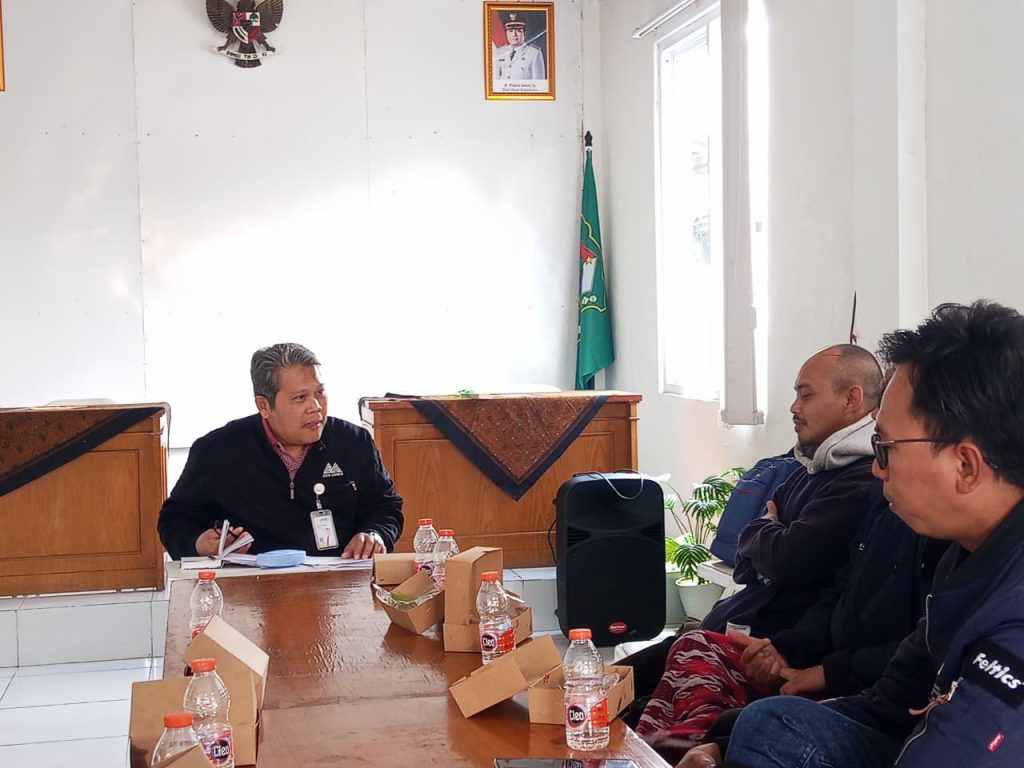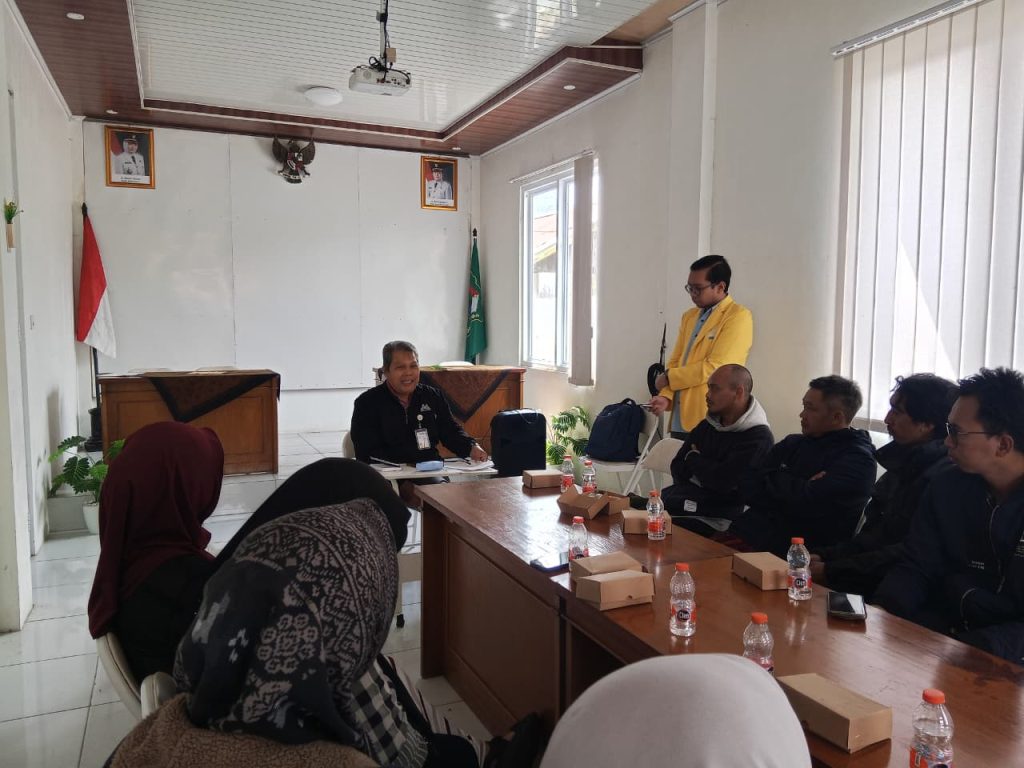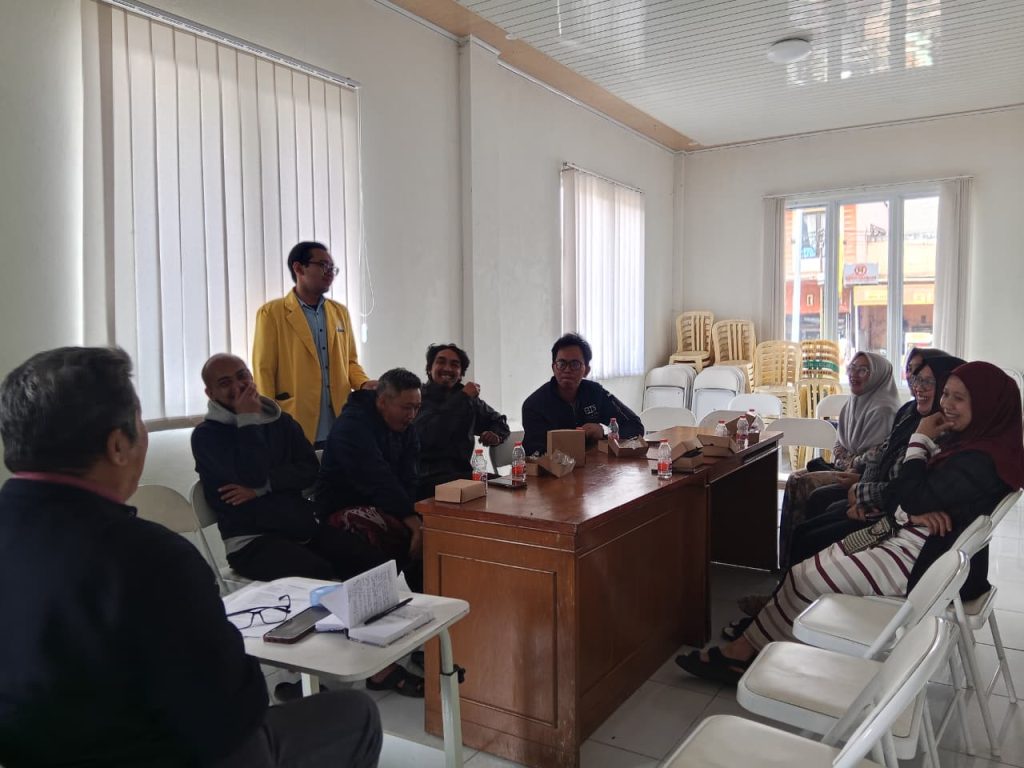


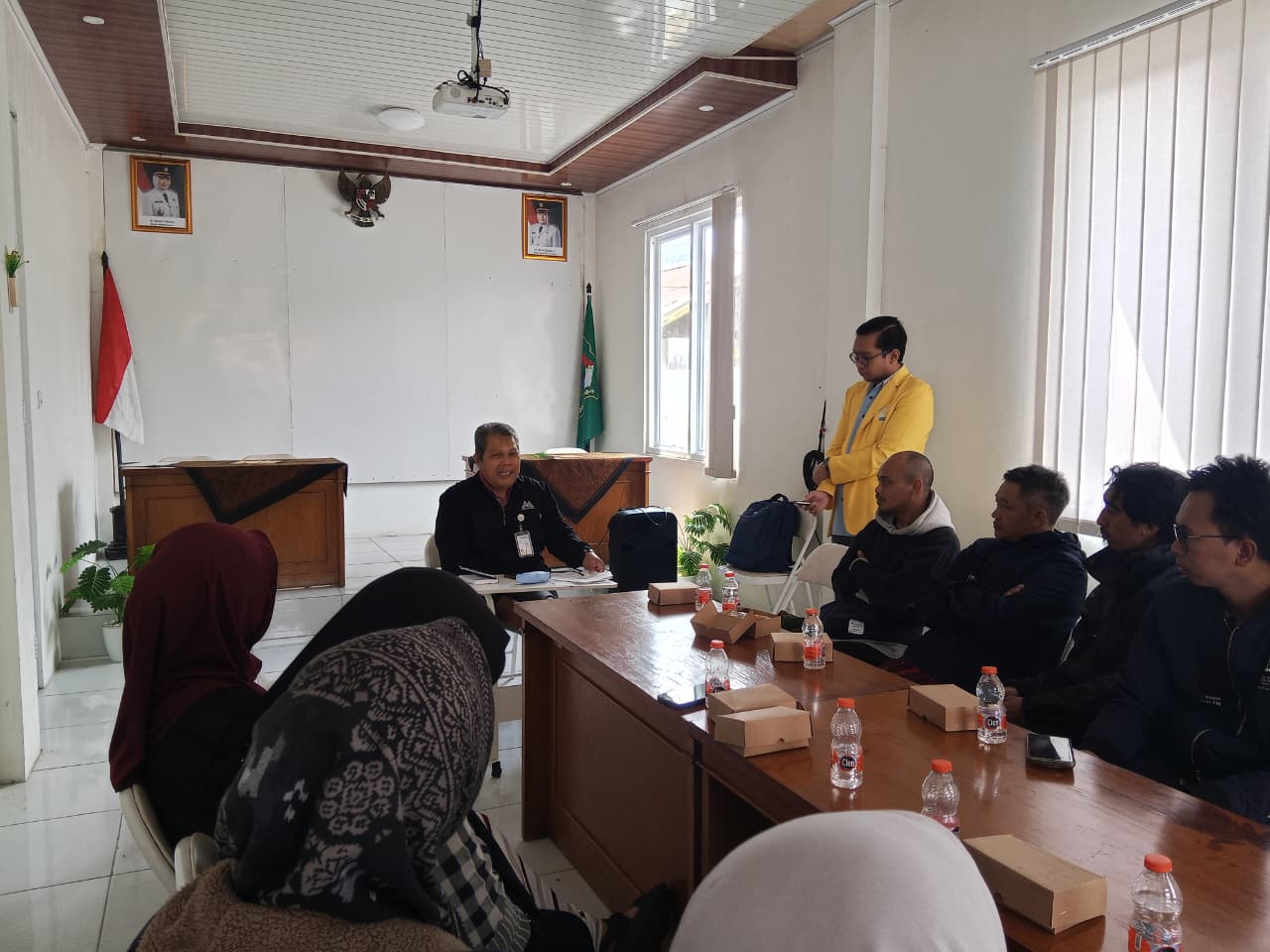
Banjarnegara – A research team from the Faculty of Social and Political Sciences (FISIP), Universitas Negeri Semarang (UNNES), led by Prof. Dr. Nugroho Trisnu Brata, M.Hum., conducted a study entitled “Planting Potatoes or ‘Planting Stones’: The Relationship between Food Security and Agricultural Land-Use Change in the Dieng Highlands” on 3 June 2026 in Dieng Kulon Village, Batur District, Banjarnegara Regency. The research aims to examine the conversion of agricultural land into built-up areas and analyze its impacts on food security, the socio-economic conditions of local communities, and the sustainability of agricultural landscapes in the Dieng Highlands. The study commenced with a Focus Group Discussion (FGD) held at the Dieng Kulon Village Office, involving local residents selected according to the research criteria.
The FGD served as a platform for dialogue between the research team and the local community to explore the changes resulting from the increasing conversion of agricultural land. In recent years, the Dieng Highlands have experienced significant development pressures that have transformed productive farmland into residential buildings and tourism-related infrastructure. At the same time, this trend has created a dilemma for local residents whose livelihoods have long depended on agriculture, particularly potato cultivation, the region’s primary agricultural commodity.
Through the participatory discussions, community members shared their experiences regarding changing patterns of land use, shifts in livelihood strategies, and the challenges of maintaining agricultural productivity amid growing development demands. The research team also explored local perspectives on the relationship between sustainable farmland management and household food security, while identifying the key factors driving land-use conversion. The findings are expected to provide a comprehensive understanding of the social and economic consequences of changing land-use patterns in mountainous areas.
The principal investigator, Prof. Dr. Nugroho Trisnu Brata, M.Hum., explained that the research focuses not only on the physical transformation of agricultural land but also on understanding how these changes affect community welfare and the sustainability of local food systems. According to him, spatial planning in strategic agricultural regions such as Dieng must strike a balance between economic development, the preservation of productive farmland, and the livelihoods of communities that rely heavily on agriculture.
The Focus Group Discussion was conducted successfully and received a positive response from the residents of Dieng Kulon Village. One participant expressed the community’s hope that the research would generate tangible benefits for the village.
“We hope this research will bring meaningful benefits to Dieng Kulon Village,” said one of the participants.
This aspiration reflects the community’s expectation that the research findings will extend beyond academic knowledge and serve as a foundation for policies that support sustainable agriculture and improve the well-being of local residents.
The study represents part of FISIP UNNES’s commitment to producing research that addresses real societal challenges while contributing to the development of evidence-based public policies. The research findings are expected to provide valuable recommendations for local governments and other stakeholders in formulating land management strategies that balance economic development, agricultural land conservation, and long-term food security.
This research also supports the achievement of the Sustainable Development Goals (SDGs), particularly SDG 1 (No Poverty) and SDG 2 (Zero Hunger). By examining the impacts of agricultural land conversion on rural livelihoods, the study seeks to contribute to poverty reduction strategies through the protection of rural communities’ sources of income. By promoting the preservation of productive agricultural land and strengthening local food security, the research is expected to support improved community welfare while fostering more inclusive and sustainable rural development.