

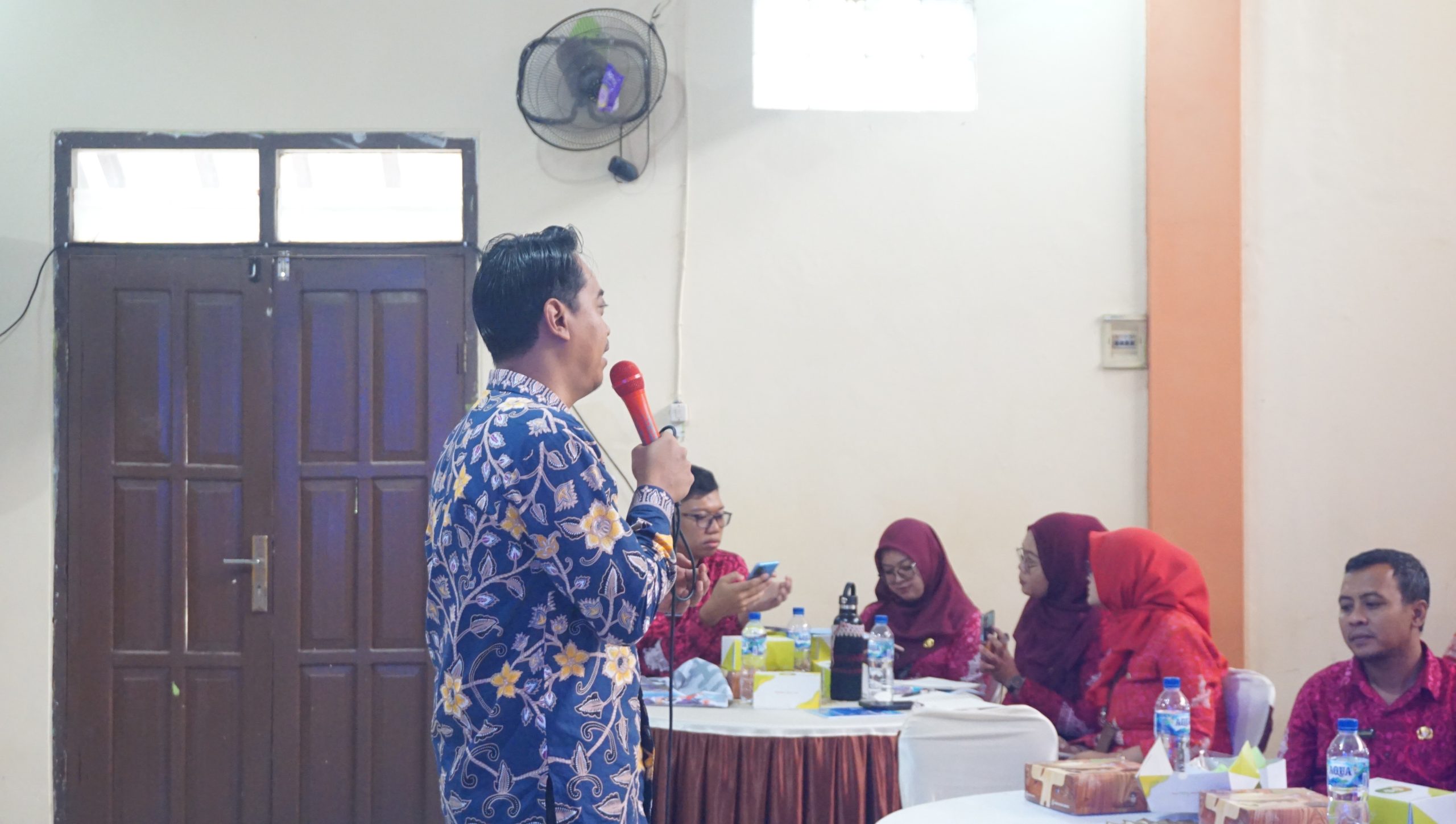
Semarang – In an effort to strengthen climate literacy in schools, the Faculty of Social and Political Sciences (FISIP), Universitas Negeri Semarang (UNNES), conducted a research-based capacity-building program led by Fredy Hermanto, S.Pd., M.Pd. Titled “Strengthening Climate Education in Semarang Regency Schools through a Carbon Footprint Co-Curricular Module,” the program was held on 21 May 2026 in collaboration with the Social Studies Teachers’ Subject Teachers’ Association (MGMP IPS) of Semarang Regency. The activity brought together Social Studies (IPS) teachers from junior secondary schools across the regency to enhance their capacity to integrate climate change education into classroom learning.
The program was designed as a professional development workshop to assist teachers in developing co-curricular modules on climate education that can be implemented in their respective schools. Throughout the training, participants gained a comprehensive understanding of the carbon footprint concept, its relationship to everyday human activities, and its contribution to global climate change. The research team also introduced an action-oriented learning approach, which emphasizes not only conceptual understanding but also encourages students to engage in practical environmental actions that foster sustainable behavior.
According to the project leader, Fredy Hermanto, S.Pd., M.Pd., climate education should become an integral component of Social Studies instruction because climate change is both a social and environmental issue that affects communities worldwide. He emphasized that schools play a strategic role in cultivating ecological awareness among younger generations through contextual and experiential learning.
“Students need to understand the connection between climate change, their daily activities, and the broader environmental impacts. This program aims to help teachers integrate the concept of carbon footprints into Social Studies education so that sustainable habits can be fostered through co-curricular learning,” Fredy explained.
During the workshop, participants not only explored the theoretical foundations of climate education but also collaboratively designed co-curricular learning modules tailored to their schools. The modules were developed to connect Social Studies content with practical activities that students can implement in their daily lives, such as reducing single-use plastics, conserving energy, choosing environmentally friendly transportation, and participating in school greening initiatives. This approach ensures that learning extends beyond knowledge acquisition to inspire meaningful behavioral change toward environmental sustainability.
The training was conducted through interactive discussions, collaborative workshops, and experience-sharing sessions, allowing teachers to exchange ideas and address challenges in integrating climate-related issues into classroom practice. Feedback from participants will contribute to refining the co-curricular module model, ensuring that it aligns with the characteristics of junior secondary school students and the educational needs of schools throughout Semarang Regency.
The Chair of the Social Studies Teachers’ Association (MGMP IPS) of Semarang Regency expressed appreciation for the collaboration with the UNNES research team, noting that initiatives like this are essential for strengthening teachers’ competencies in delivering climate education.
“We need continuous training and mentoring to help Social Studies teachers integrate climate education more effectively into their teaching. By strengthening teachers’ capacities, we hope they will be able to guide students in understanding climate change while fostering awareness and sustainable practices that can be applied throughout their lives,” the representative stated.
Through this collaboration between higher education and the professional teaching community, the research is expected to produce an innovative and practical learning model that addresses contemporary global challenges while remaining applicable in schools. The co-curricular module is envisioned as an effective educational tool for cultivating environmental awareness from an early age and reinforcing the role of education in preparing environmentally responsible future generations.
This initiative also reflects Universitas Negeri Semarang’s commitment to advancing the United Nations Sustainable Development Goals (SDGs). The program contributes to SDG 4 (Quality Education) by promoting innovative and contextual learning, SDG 13 (Climate Action) by enhancing climate literacy and encouraging concrete environmental action within schools, and SDG 17 (Partnerships for the Goals) by strengthening collaboration between higher education institutions and the Social Studies Teachers’ Association (MGMP IPS) of Semarang Regency. Through this partnership, FISIP UNNES continues to demonstrate its commitment to producing impactful research that not only advances academic knowledge but also provides practical solutions to sustainable development challenges.