FISIP UNNES Research Examines Equitable Access to Clean Water and the Religious Tourism Potential of Nyatnyono Village

Universitas Negeri Semarang > Faculty of Social Sciences and Political Science > News > FISIP UNNES Research Examines Equitable Access to Clean Water and the Religious Tourism Potential of Nyatnyono Village

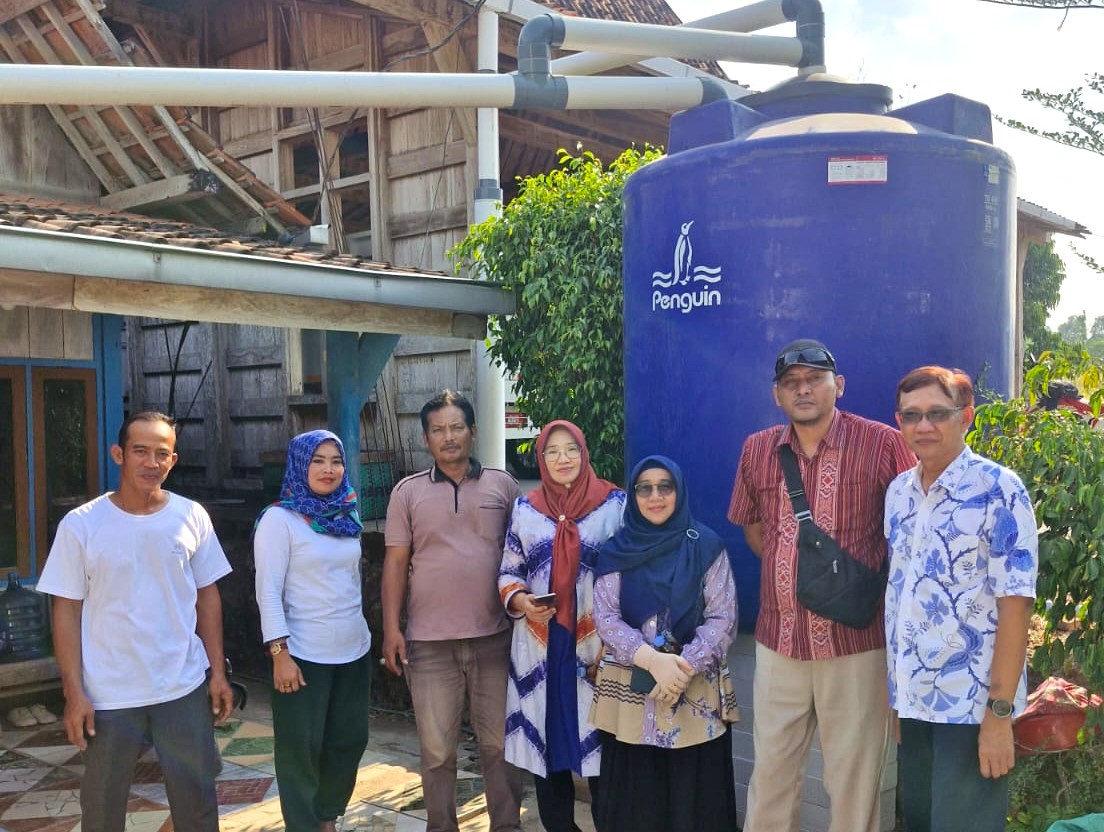
Semarang Regency – A research team from the Faculty of Social and Political Sciences (FISIP), Universitas Negeri Semarang (UNNES), led by Dr. Gunawan, M.Hum., conducted a study on community access to clean water in Nyatnyono Village, West Ungaran District, Semarang Regency, on 21 June 2026. The research aims to assess the extent to which local residents enjoy equitable access to clean water for their daily needs while also exploring the potential of Sendang Khalimah Toyibah, a sacred spring, as a religious tourism destination that can generate social and economic benefits for the surrounding community.

The study employed a participatory research approach, actively involving local water users as the primary sources of information. The research team examined various aspects related to the availability, management, distribution, and utilization of water resources in Nyatnyono Village. In addition, the study investigated how the cultural and spiritual significance of Sendang Khalimah Toyibah could be integrated into the development of sustainable religious tourism without compromising its primary function as a vital source of clean water for local residents.

According to Dr. Gunawan, M.Hum., the study was initiated to ensure that communities living near water sources receive fair and equal access to clean water. The presence of abundant natural water resources should not create a paradox in which local residents struggle to obtain sufficient water for their daily needs. Therefore, the research also evaluates existing water management and distribution systems to determine whether the principles of equity and social justice have been effectively implemented in the utilization of local water resources.

One of the residents of Nyatnyono Village, Mr. Sohin, explained that the Community-Based Water Supply and Sanitation Program (PAMSIMAS) has significantly improved the community’s access to clean water. According to him, the program has enabled households to meet their water needs at a lower cost compared to alternative water sources.

“Since the implementation of PAMSIMAS, our water needs have been adequately met. The cost is much lower than using other water sources. Even during the dry season, water remains available, although we have to implement a rotational distribution system,” he said.

Preliminary findings indicate that the PAMSIMAS program has substantially improved access to clean water for local residents. Nevertheless, challenges remain, particularly during the dry season when reduced water discharge requires a rotational distribution system. These findings provide an important basis for developing recommendations aimed at strengthening sustainable and equitable water resource management in the village.

Beyond examining access to clean water, the research also explores the potential development of Sendang Khalimah Toyibah as a religious tourism destination while preserving its ecological functions and cultural values. This integrated approach is expected to create a balance between environmental conservation, social well-being, cultural preservation, and local economic development, allowing the water resource to generate broader community benefits without compromising the sustainability of the ecosystem.

This research reflects UNNES’s commitment to supporting the Sustainable Development Goals (SDGs), particularly SDG 6 (Clean Water and Sanitation) by promoting equitable, safe, and sustainable access to clean water, and SDG 10 (Reduced Inequalities) by encouraging fair access to water resources and inclusive resource management for all members of the community. Through community-based research that addresses real societal needs, FISIP UNNES continues to strengthen its role in producing evidence-based recommendations that contribute to inclusive, sustainable, and people-centered rural development.
Related Posts

Leave a Reply

* Kode Akses Komentar:

* Tuliskan kode akses komentar diatas:

GDPR

  • Privacy Policy

Privacy Policy

At unnes.ac.id, the privacy of our visitors is of extreme importance to us. This privacy policy document outlines the types of personal information that is received and collected by unnes.ac.id and how it is used.

Log Files

Like many other Web sites, unnes.ac.id makes use of log files. The information inside the log files includes internet protocol (IP) addresses, type of browser, Internet Service Provider (ISP), date/time stamp, referring/exit pages, and number of clicks to analyze trends, administer the site, track user’s movement around the site, and gather demographic information. IP addresses and other such information are not linked to any information that is personally identifiable.

Cookies

unnes.ac.id uses cookies to store information about visitors’ preferences, to record user-specific information on which pages the site visitor accesses or visits, and to personalize or customize our web page content based upon visitors’ browser type or other information that the visitor sends via their browser.

Third-party ad servers or ad networks use technology in their respective advertisements and links that appear on unnes.ac.id and which are sent directly to your browser. They automatically receive your IP address when this occurs. Other technologies (such as cookies, JavaScript, or Web Beacons) may also be used by our site’s third-party ad networks to measure the effectiveness of their advertising campaigns and/or to personalize the advertising content that you see on the site.

unnes.ac.id has no access to or control over these cookies that are used by third-party advertisers.

You should consult the respective privacy policies of these third-party ad servers for more detailed information on their practices as well as for instructions about how to opt-out of certain practices. unnes.ac.id’s privacy policy does not apply to, and we cannot control the activities of, such other advertisers or web sites.

If you wish to disable cookies, you may do so through your individual browser options. More detailed information about cookie management with specific web browsers can be found at the browsers’ respective websites.

Consent

By using our website, you hereby consent to our privacy policy and agree to its terms.

Update

This Privacy Policy was last updated on: 2023-02-14. Should we update, amend or make any changes to our privacy policy, those changes will be posted here.

Contact Us

If you have any questions, comments, or concerns about our Privacy Policy or our practices with regards to your personal information, please feel free to contact us through the contact form on our website or by emailing us at humas[at]mail.unnes.ac.id.

This Privacy Policy is intended as a general guide to our practices in collecting and using information. If there is any inconsistency between this Privacy Policy and the terms of the Service Agreement or any other terms that may apply to specific services you use, then those specific service terms shall apply.

Terms of Use

By using our website, you agree to abide by this Privacy Policy. If you do not agree with this Privacy Policy, please do not use our website. We reserve the right to update this Privacy Policy from time to time without prior notice. Please review our Privacy Policy periodically to check for changes. Your continued use of our website following the posting of changes to this Privacy Policy means that you accept the changes.

Thank you for reading our Privacy Policy. We are committed to protecting the privacy of our website visitors and will continue to update our Privacy Policy to ensure optimal protection.