

Semarang, June 2026 – The History Student Association (HIMA Sejarah) of the Faculty of Social and Political Sciences (FISIP), Universitas Negeri Semarang (UNNES) carried out a community service program at Manarul Mabrur Orphanage in Pudakpayung, Semarang. Emphasizing community empowerment and sustainability, the program focused on food security education through vegetable and fruit planting activities with the orphanage children, supporting Sustainable Development Goal (SDG) 2: Zero Hunger.
The program began with an opening ceremony attended by the orphanage management, the organizing committee, and the children of Manarul Mabrur Orphanage. In his welcoming remarks, Riki, a representative of the orphanage management, expressed his appreciation for the concern and commitment shown by the students of HIMA Sejarah UNNES in choosing the orphanage as a partner for their community engagement initiative.
“I hope the presence of the students from HIMA Sejarah UNNES will not merely be a one-time community service visit, but will provide lasting benefits for the children here,” he said.
As part of the implementation of SDG 2: Zero Hunger, the organizing committee invited the children to plant various vegetables and fruit crops that could potentially serve as sustainable food sources for the orphanage. The activity aimed not only to cultivate productive plants but also to foster children’s understanding of the importance of food security from an early age.
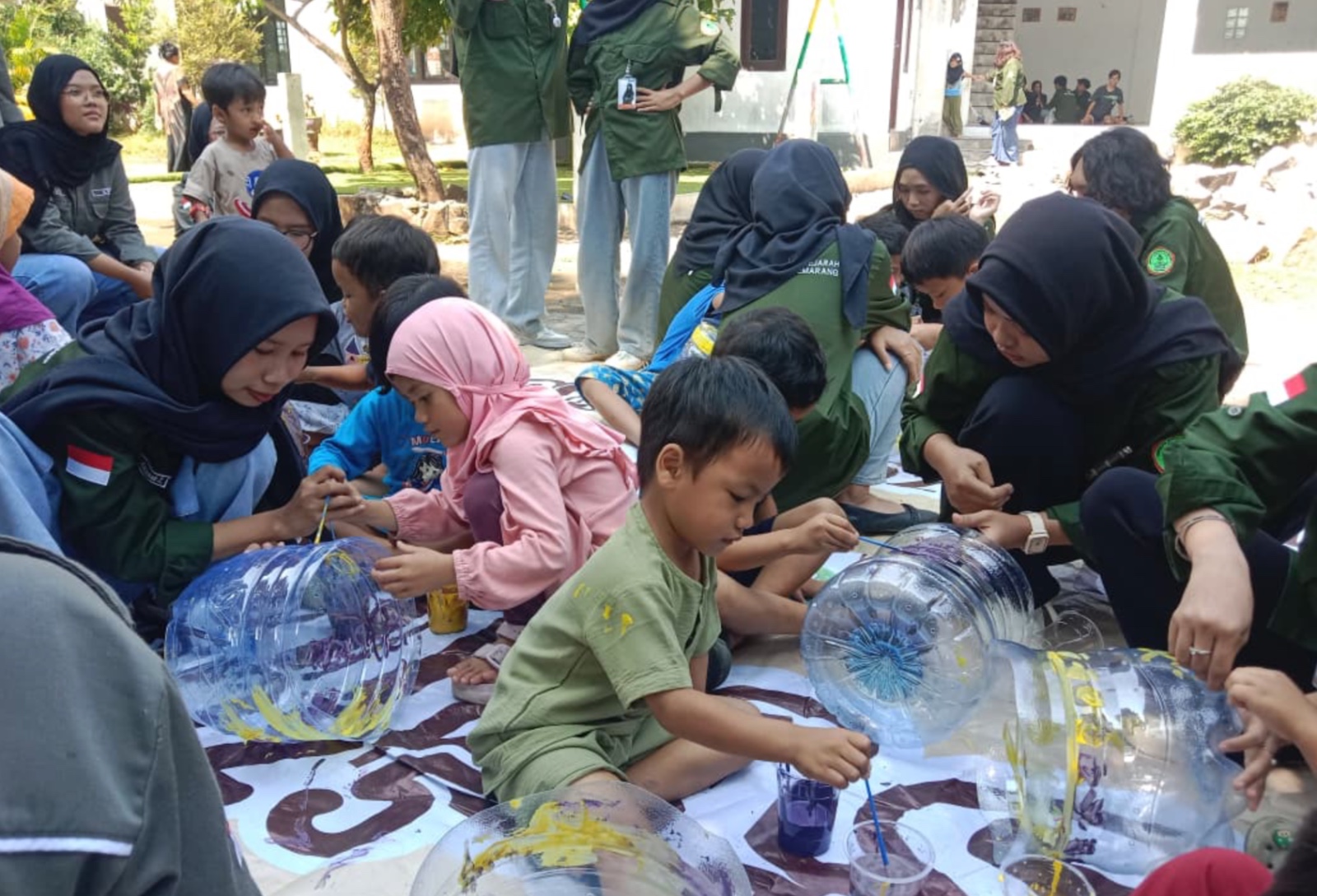
During the activity, the children learned the basic stages of plant cultivation, including preparing the planting medium, filling planting containers, planting seedlings, and watering the newly planted crops. Every stage was carried out through hands-on practice, enabling the children to gain meaningful and enjoyable learning experiences.
One of the highlights of the program was the use of recycled plastic water gallon containers as planting pots. This creative reuse of discarded materials introduced the children to the concept of sustainable resource utilization. Through this simple practice, they learned that food security can begin within their own surroundings by making productive use of available land and recyclable materials.
The children showed great enthusiasm throughout the activity. They eagerly participated in handling the soil, planting seedlings, and watering the plants together with the student volunteers. The experience provided an effective learning opportunity to help them understand the relationship between growing food and ensuring food availability for everyday life.
The Chair of the Community Service Program, Aria Al Dzikri, explained that the planting activity was chosen because of its long-term educational benefits.
“We wanted to provide an experience that is not only enjoyable but also meaningful. By planting vegetables and fruits, the children can learn that food does not always have to be purchased—it can also be produced through simple efforts that begin in their own living environment,” he explained.
In addition to the planting activity, the committee also conducted educational sessions on clean and healthy living habits, particularly proper handwashing techniques, delivered through songs and interactive games. This educational component complemented the overall program by raising children’s awareness of the importance of maintaining good health as part of achieving a better quality of life.
To create an enjoyable learning environment, the organizers also facilitated various educational games and group activities. Among these was an introduction to Indonesian history and culture through age-appropriate games, fostering meaningful interaction between the university students and the orphanage children.
The community service program concluded with the presentation of donations to Manarul Mabrur Orphanage, followed by a group photo with all participants. Through this initiative, HIMA Sejarah FISIP UNNES hopes to cultivate awareness of food security, encourage the productive use of available land, and foster environmental responsibility from an early age.
As part of the implementation of the Tri Dharma of Higher Education, this activity reflects the students’ commitment to contributing to sustainable development. Through the simple yet meaningful act of planting vegetables and fruits, the program is expected to equip orphanage children with valuable knowledge and practical experience that will support greater food self-sufficiency and sustainable living in the future.