

SEMARANG, October 8, 2026 – Students of the Faculty of Social and Political Sciences at Universitas Negeri Semarang (FISIP UNNES) can take advantage of drinking water stations available within the faculty building. The facilities provide convenient access to drinking water for students, lecturers, administrative staff, and visitors, while also serving as an alternative to reduce the purchase of plastic bottled water during campus activities.
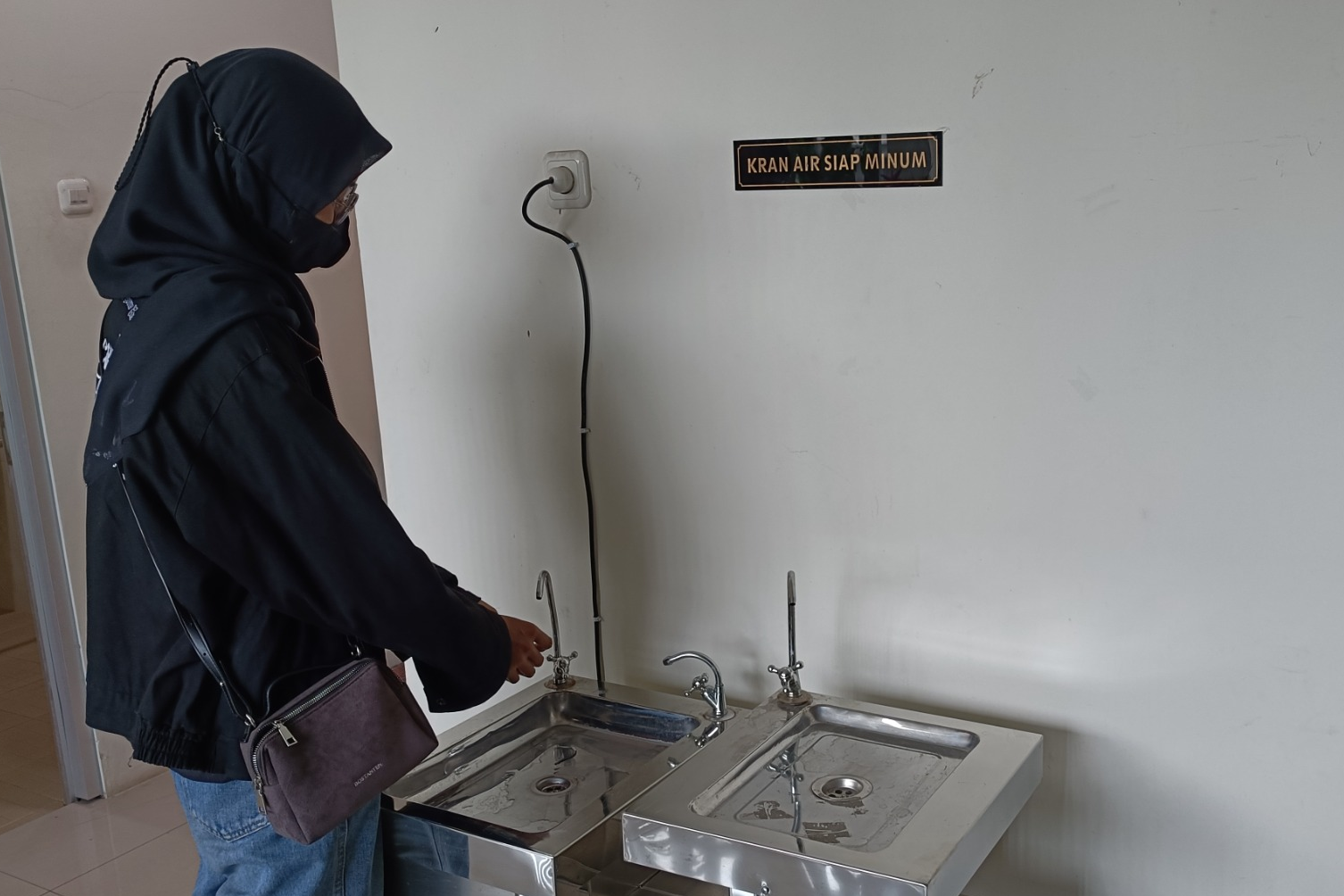
The drinking water stations are equipped with two stainless-steel basins and several taps that can be used to obtain drinking water or refill personal water bottles. A sign reading “DRINKING WATER STATION” is installed on the wall, making the facility easy for users to identify. Its presence serves as a supporting facility for meeting daily needs amid academic activities on campus.
For students who spend most of their time on campus, access to drinking water provides significant convenience. In addition to being practical, students do not have to spend money purchasing bottled water when the supply they bring from home runs out.
Iridia, a student in the Political Science Study Program at FISIP UNNES, welcomed the availability of the facility. She said that the drinking water station helps students meet their drinking water needs during lectures and other academic activities.
“When we have classes from morning until afternoon, the water we bring from home usually runs out. With this drinking water station, we can refill our bottles without having to buy bottled water again. It is not only more economical, but it can also help reduce plastic waste,” said Iridia.
She believes that facilities like this will be even more beneficial if students make it a habit to bring their own reusable water bottles. This simple habit can not only help reduce daily expenses but also encourage greater awareness of keeping the campus environment clean.
Using reusable water bottles can help reduce dependence on single-use plastic packaging, which has long been one of the sources of waste generated by everyday consumption activities.
Nevertheless, the use of these facilities should be accompanied by regular maintenance and water quality monitoring to ensure that the water remains safe and suitable for consumption.