



Semarang — Efforts to prevent stunting at the community level are being strengthened through the utilization of unused land as a source of nutritious food for families. This initiative was implemented through a community service program entitled “Strengthening the Capacity of Dasawisma 02 RT 07 Mangunsari, Semarang City, in Stunting Prevention through the Development of a Living Food Garden as a Community-Based Nutritious Eating Movement.” The program was carried out in collaboration with Dasawisma 02, Mangunsari Urban Village, Gunungpati District, Semarang City, throughout May 2026.
The activity, coordinated by Dr. Kuncoro Bayu Prasetyo, S.Ant., M.A., targeted 19 families and homemakers who are members of Dasawisma 02, as well as residents of RT 007/RW 04, Mangunsari Urban Village. The program was designed to strengthen the community’s capacity to meet family nutritional needs, utilize previously unproductive land, and establish a community-based movement for stunting prevention that can be managed independently by residents.
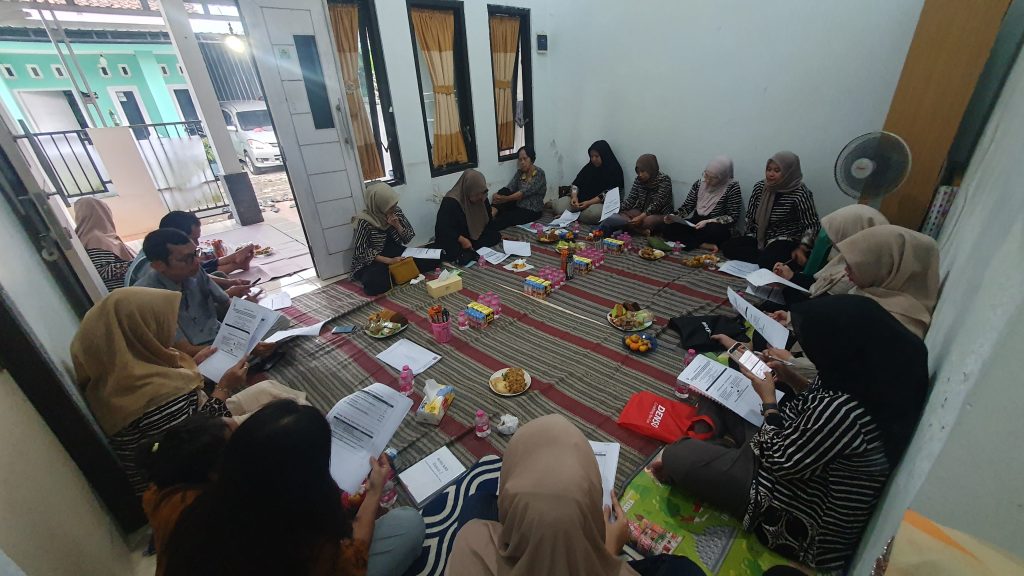
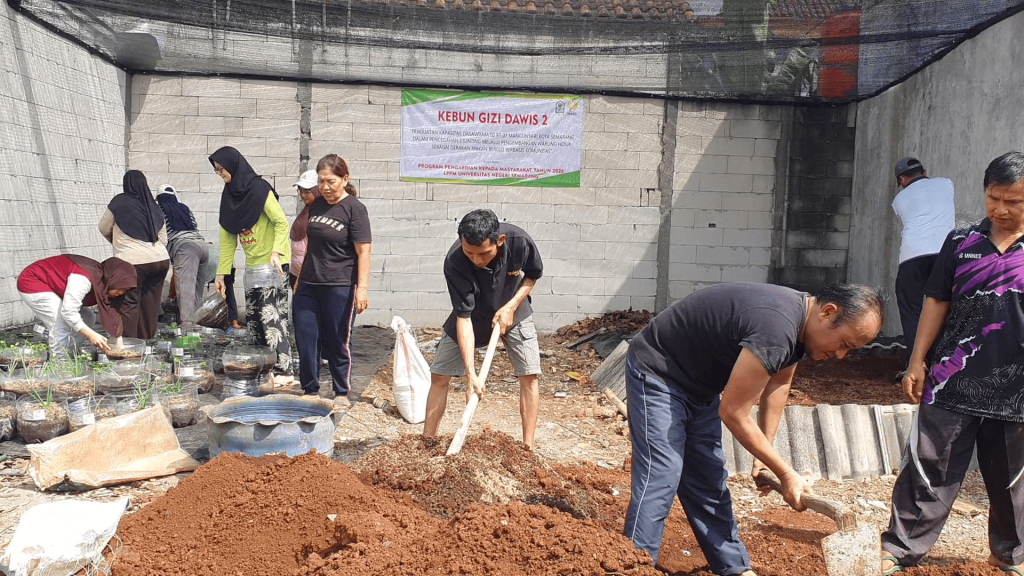
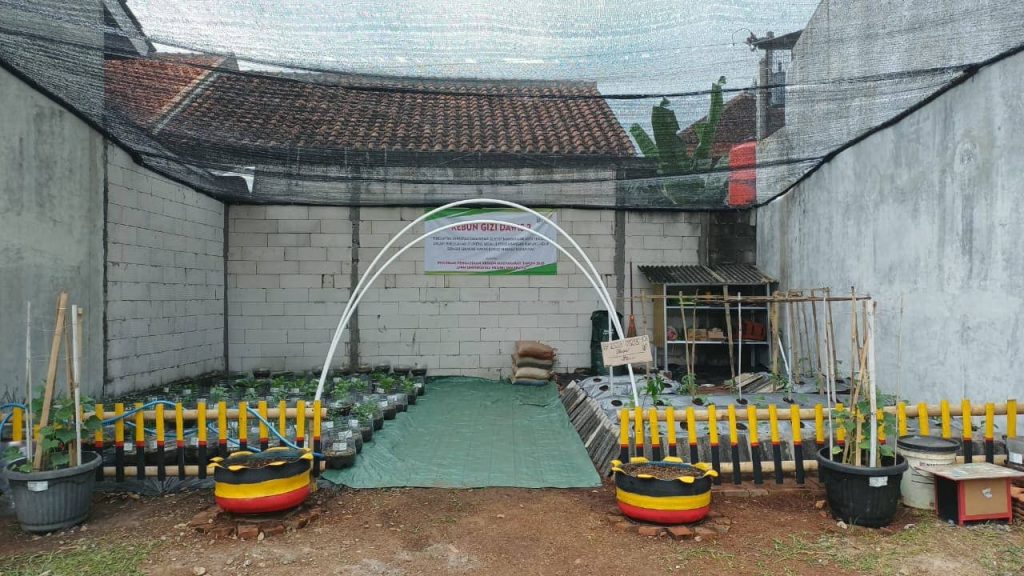
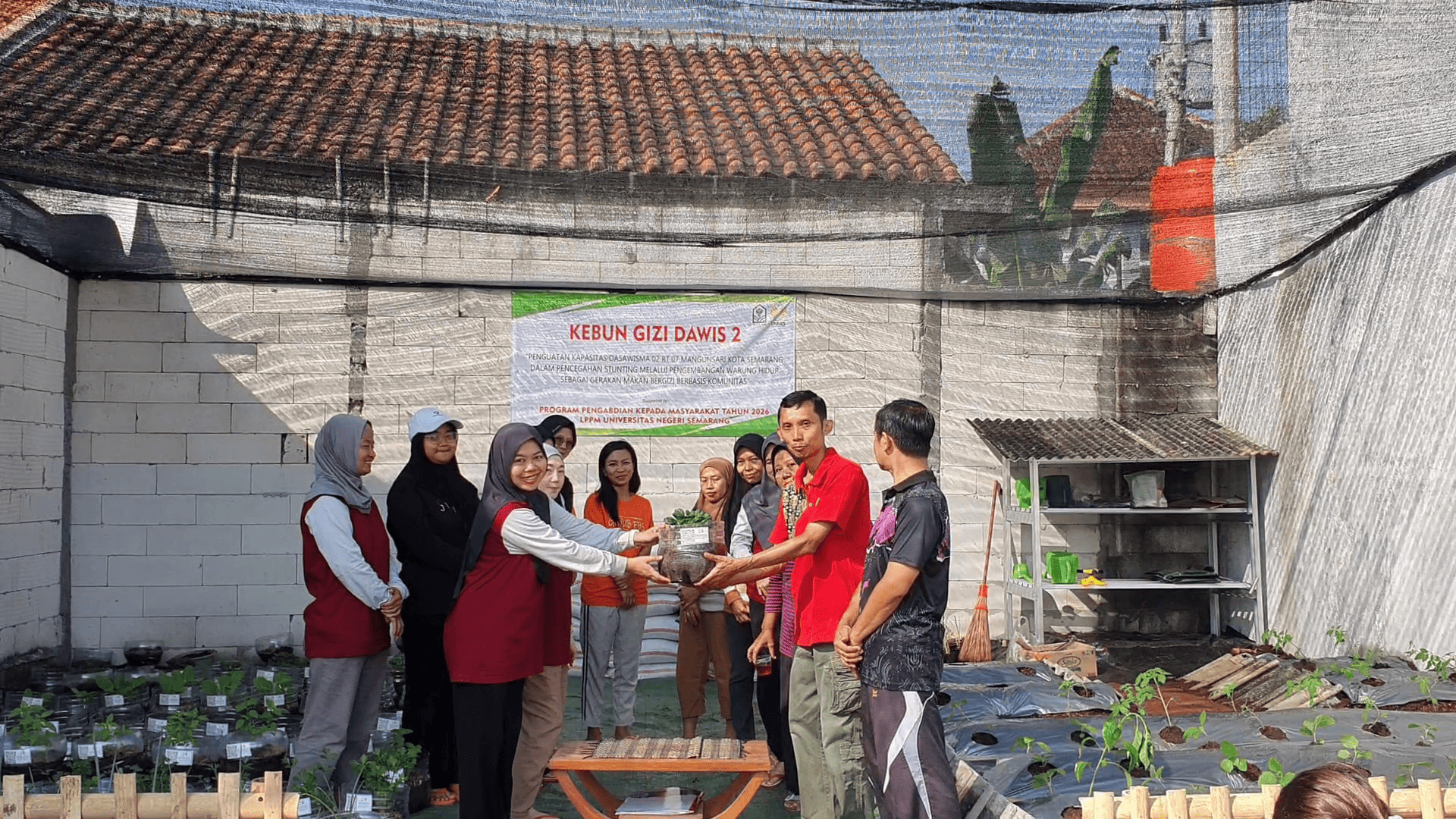
The program began with a socialization session on May 2, 2026, followed by land preparation and arrangement on May 9, seedling procurement on May 13, a communal work session to organize the garden on May 14, and planting and fencing on May 23, 2026. These activities resulted in the development of the “Kebun Gizi Dawis 2” (Dawis 2 Nutrition Garden) as a productive space for cultivating food crops to support the daily needs of local residents.
A variety of vegetables and food crops were planted in the garden, including cucumbers, tomatoes, eggplants, bitter melons, chilies, mustard greens, pak choi, water spinach, spinach, basil, long beans, celery, and lemongrass. The diversity of crops is expected to provide families with easier access to food sources while encouraging healthier dietary habits based on nutritious foods available within the local environment.
The garden is managed through a participatory approach, involving Dasawisma members in a rotating maintenance schedule. This approach is intended to ensure that the garden does not merely become an outcome of a community service program, but instead develops into a shared community asset that can be maintained and utilized sustainably by local residents.
The coordinator of the program explained that the development of the nutrition garden was not solely focused on land utilization, but also on strengthening community capacity to establish a food-supply system and nutrition education at the family level.
“Through strengthening the capacity of Dasawisma, utilizing household yards, and providing community-based nutrition education, this program promotes family food security, stunting prevention, the revitalization of unused land to support better urban planning and settlements, as well as the development of healthy, independent, and sustainable communities,” he said.
He emphasized that community involvement is a key factor in ensuring that the benefits of the program continue after the community service activities have ended. Joint management is expected to foster a sense of ownership while ensuring that the garden continues to provide long-term benefits for residents.
“What we are building is not just the garden, but also the management system. When residents are involved from the planning and organizing stages through planting and maintenance, a sense of ownership will grow, making the program more sustainable,” he added.
Chairperson of Dasawisma 02, Ratna Sari Dewi, welcomed the implementation of the program. She said that the garden provides benefits not only in terms of meeting food needs but also in improving the condition of an area that was previously poorly maintained.
“We are happy with this program because the previously neglected land is now tidier, greener, and, of course, useful for meeting our families’ food needs,” Ratna said.
The development of Kebun Gizi Dawis 2 also demonstrates that stunting prevention can be pursued through simple, community-based measures that utilize local environmental potential and encourage active public participation. Transforming unused land into a productive garden enables families to obtain food from their own surroundings while increasing awareness of the importance of a nutritious diet.
Furthermore, the program strengthens the role of homemakers and Dasawisma groups as agents of change within the community. Through their direct involvement in planning, cultivation, and garden maintenance, women play an important role not only in managing family food resources but also in decision-making and organizing activities that have an impact on community health.
The initiative is aligned with the achievement of the Sustainable Development Goals (SDGs), particularly SDG 2: Zero Hunger, through strengthening family food security and access to food sources; SDG 3: Good Health and Well-being, through efforts to improve nutritional quality and prevent stunting; and SDG 5: Gender Equality, by strengthening the role and capacity of women, particularly members of Dasawisma, in managing resources and supporting family health.
Through the development of a community-based nutrition garden, previously unproductive land has been transformed into a green space that produces food while also serving as a learning environment for residents. The initiative demonstrates that food security, family health, women’s empowerment, and environmental sustainability can be developed simultaneously at the community level.