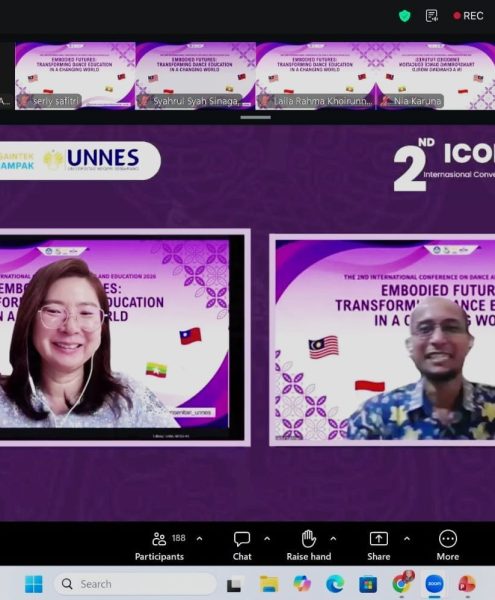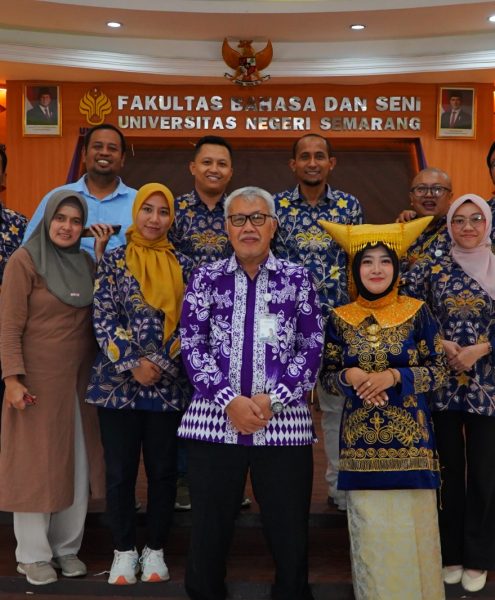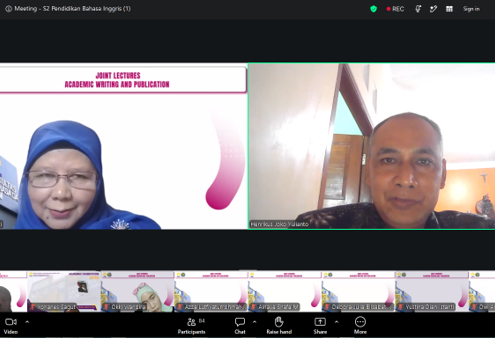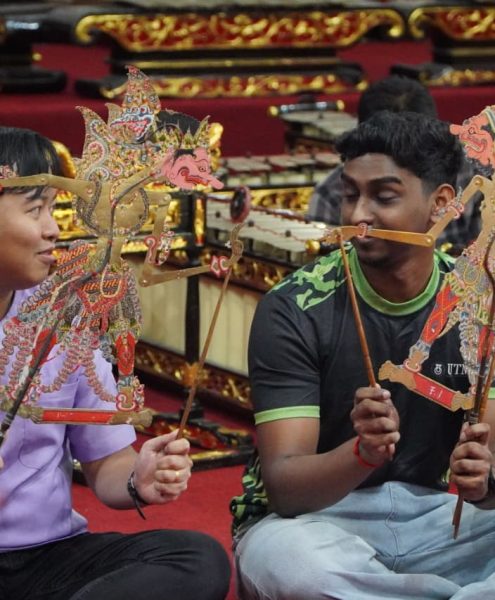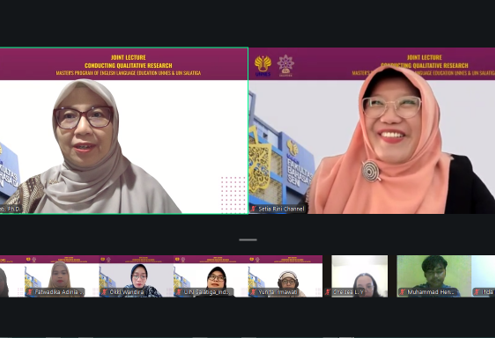


The Faculty of Languages and Arts (FBS), Universitas Negeri Semarang (UNNES), through its Dance Education Study Program, is set to host the 2nd International Conference on Dance and Education (ICODE) 2026 Batch 2, bringing together scholars and practitioners from several countries to explore the future of dance education amid rapid social and cultural change.
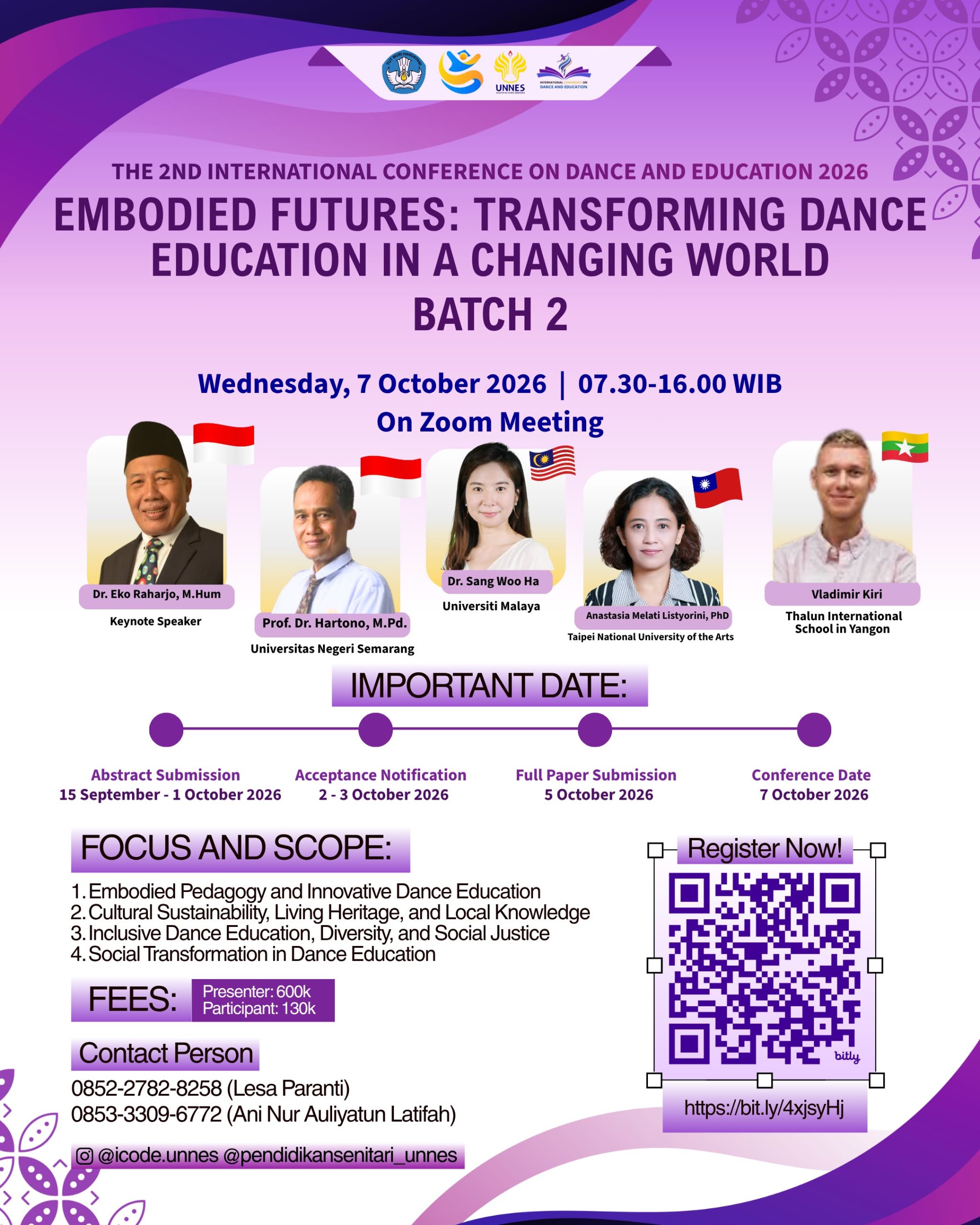
Carrying the theme “Embodied Futures: Transforming Dance Education in a Changing World,” the conference will take place online via Zoom on Wednesday, October 7, 2026, from 7:30 a.m. to 4:00 p.m. Western Indonesian Time.
ICODE 2026 is designed as an international academic platform where dance intersects with education, culture, sustainability, inclusion, and social transformation. Through the idea of “Embodied Futures,” the conference looks beyond dance as artistic expression alone. It places the body, movement, and lived experience at the centre of knowledge-making and educational practice.
The conference will feature scholars and education practitioners from Indonesia and abroad. Dr. Eko Raharjo, M.Hum., Vice Dean for Academic and Student Affairs of FBS UNNES, will deliver the keynote address. Other speakers include Prof. Dr. Hartono, M.Pd. of Universitas Negeri Semarang, Dr. Sang Woo Ha of Universiti Malaya, Malaysia, Anastasia Melati Lystiorini, Ph.D. of Taipei National University of the Arts, Taiwan, and Vladimir Kiri of Thalun International School in Yangon, Myanmar.
Acting Dean of FBS UNNES, Prof. Heri Yanto, M.B.A., Ph.D., said the international conference forms part of the faculty’s broader effort to strengthen academic exchange and expand international networks. He noted that the arts occupy an important position in connecting educational development with the changing social and cultural landscape.
“Arts education must continue to engage with changes taking place in society. Through an international conference such as ICODE, ideas and experiences from different countries can meet and generate new perspectives for the development of arts education. FBS UNNES encourages this forum to go beyond academic discussion and grow into sustainable networks for research and international collaboration,” Prof. Heri Yanto said.
ICODE 2026 covers four major areas of discussion: Embodied Pedagogy and Innovative Dance Education; Cultural Sustainability, Living Heritage, and Local Knowledge; Inclusive Dance Education, Diversity, and Social Justice; and Social Transformation in Dance Education.
The four areas reflect a broader understanding of contemporary dance education. Alongside questions of teaching methods and artistic practice, the conference will examine how dance education can contribute to safeguarding cultural knowledge, embracing diversity, and responding to social change.
Coordinator of the Dance Education Study Program at FBS UNNES, Dr. Eny Kusumastuti, M.Pd., said the conference theme responds to the need to reconsider the role of dance education in a world undergoing significant transformation.
“Dance is not simply about bodily skills or the creation of artistic works. It carries knowledge, identity, cultural memory, and even the ways communities understand themselves. Dance education therefore needs to continue evolving without becoming disconnected from the local knowledge that gives it strength. Through ICODE, we aim to bring these local experiences into a wider international academic conversation,” Dr. Eny Kusumastuti said.
The conference timeline begins with abstract submissions from September 15 to October 1, 2026. Acceptance notifications will be issued between October 2 and 3, followed by the full-paper submission deadline on October 5. The conference will be held on October 7, 2026.
Beyond strengthening international academic engagement, ICODE 2026 also contributes to the United Nations Sustainable Development Goals (SDGs). Its emphasis on pedagogical innovation and inclusive learning supports SDG 4: Quality Education by promoting accessible, relevant, and forward-looking approaches to arts education.
The conference’s focus on cultural sustainability, living heritage, and local knowledge is also closely connected to SDG 11: Sustainable Cities and Communities, particularly efforts to safeguard cultural heritage. Discussions on inclusive dance education, diversity, and social justice align with SDG 10: Reduced Inequalities. Meanwhile, the participation of scholars and practitioners from Indonesia, Malaysia, Taiwan, and Myanmar supports SDG 17: Partnerships for the Goals by strengthening international academic networks and opportunities for future collaboration.
Through ICODE 2026, FBS UNNES continues to position dance education within a wider global conversation while keeping cultural knowledge at its core. Bringing together movement, education, heritage, and diverse international perspectives, the conference seeks to imagine a future of dance education that is more adaptive, inclusive, and sustainable.