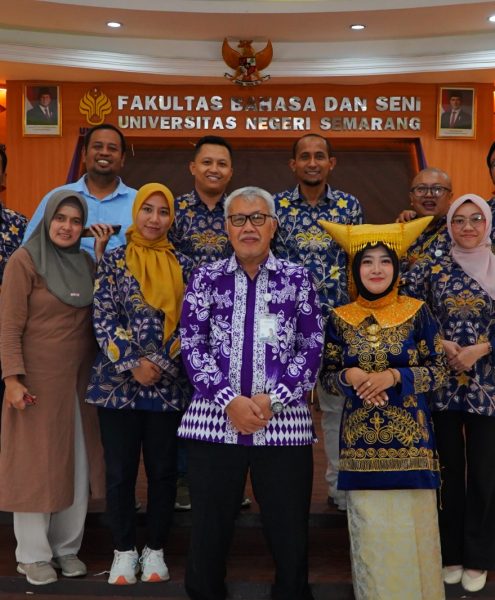


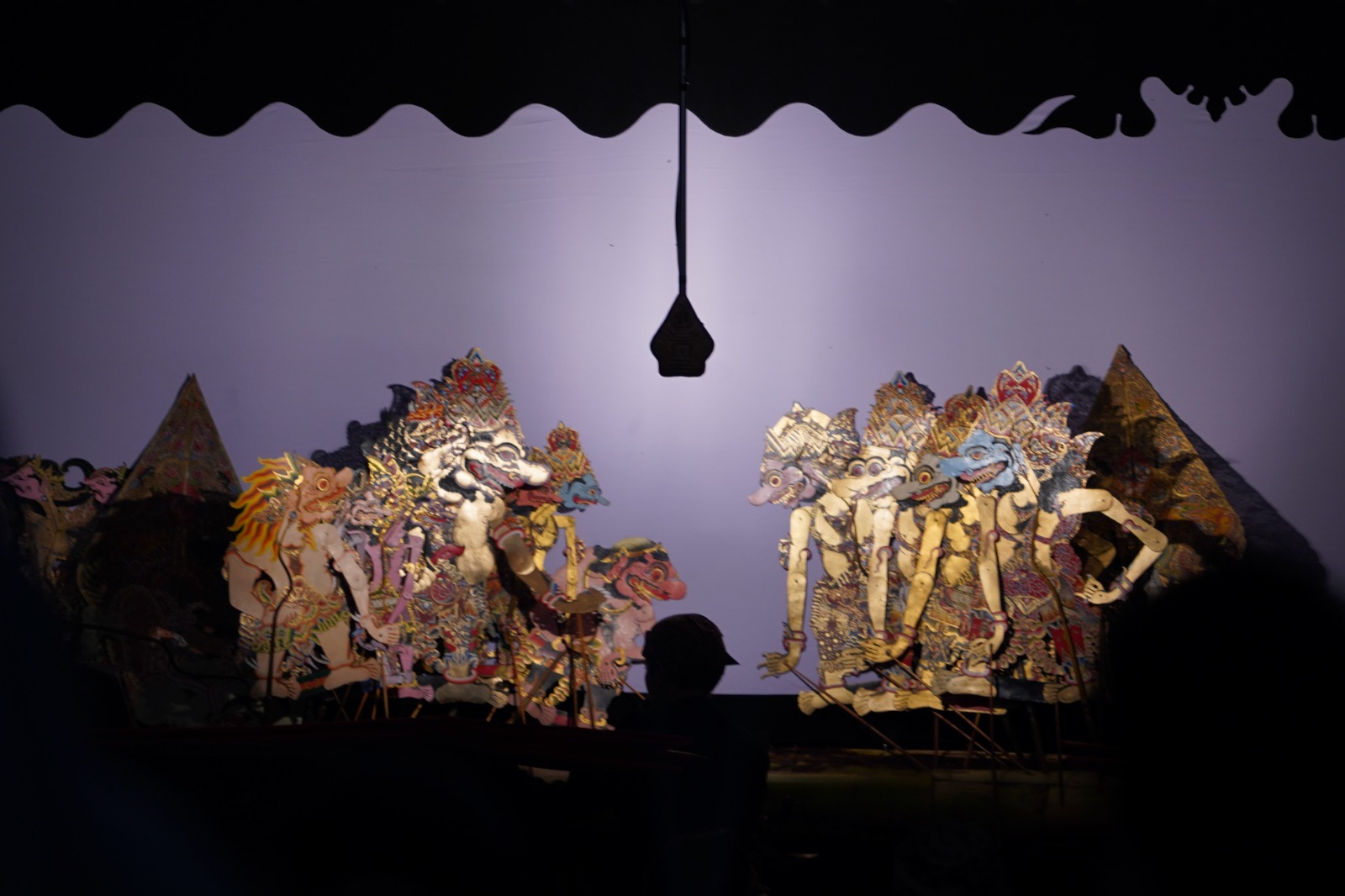
The spirit of Indonesia’s Youth Pledge Day came alive through traditional wayang performances as the Faculty of Languages and Arts (FBS) at Universitas Negeri Semarang (UNNES) opened its Language and Arts Month 2026 celebrations on Wednesday, October 28, 2026.
Marking the 98th anniversary of the historic Youth Pledge, the celebration highlighted the role of younger generations in preserving Indonesia’s cultural heritage while promoting creativity, national unity, and cultural identity.
The event featured a series of cultural activities, including a cultural parade, traditional dance and music performances, and wayang (Javanese puppetry), bringing together members of the university community in a celebration of Indonesia’s artistic traditions.
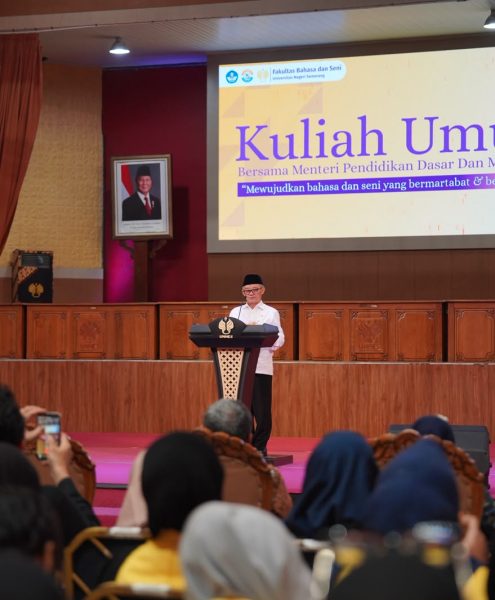
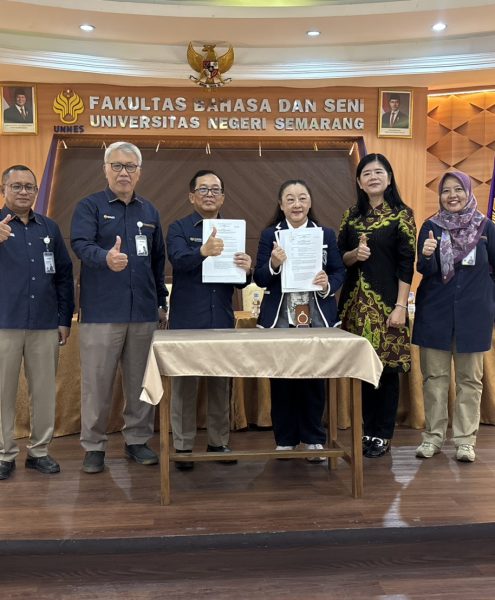
UNNES Rector Prof. Dr. S. Martono, M.Si., attended the opening ceremony and delivered remarks emphasizing the importance of language and the arts in strengthening national identity and shaping the character of younger generations.
Young Puppeteers Keep Javanese Cultural Traditions Alive
Wayang performances were among the highlights of this year’s Language and Arts Month, demonstrating how traditional art forms continue to thrive through the participation of university students.
The opening program featured a condensed wayang performance titled Sastrajendra Titising Katresnan, presented by Ki Salman Hilal from the Javanese Literature Study Program at FBS UNNES.
The performance provided an opportunity to appreciate Javanese puppetry while highlighting its continued relevance in contemporary cultural and academic life.
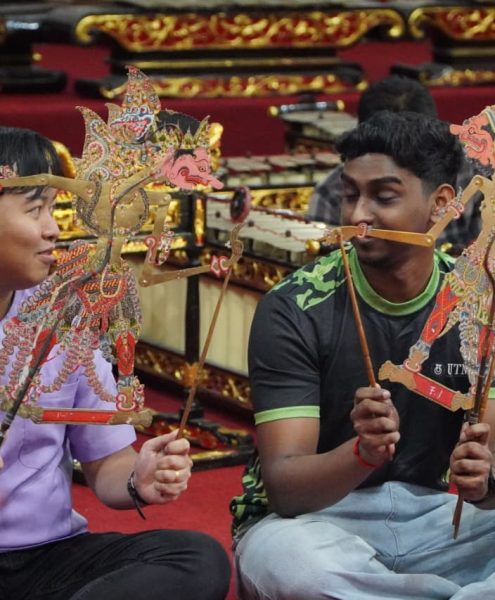
The celebrations continued in the evening with a wayang kulit (shadow puppet) performance featuring Kikis Tunggarana, presented by four students from the Javanese Language and Literature Education Study Program: Yudha Bagus Setiawan, Diva Setiandra Rara Rahmadani, Wahyu Pundhut Prasetyo, and Danang Priadi.
Their involvement as puppeteers reflected the importance of cultural regeneration, particularly in ensuring that traditional performing arts remain accessible and meaningful to younger generations.
Through these performances, students demonstrated that wayang is more than an academic subject or a historical art form. It remains a living tradition that can be learned, practiced, and developed through education and creative engagement.
Wayang also serves as a medium for communicating moral values, cultural knowledge, and reflections on human relationships and social life.
At a time when digital entertainment and popular culture increasingly shape young people’s interests, student participation in traditional puppetry offers an encouraging example of how cultural heritage can remain relevant through active engagement and artistic development.
UNNES Rector Highlights the Importance of Cultural Identity
In his opening remarks, UNNES Rector Prof. Dr. S. Martono, M.Si., emphasized the significance of Youth Pledge Day as an opportunity to strengthen national identity and encourage younger generations to preserve Indonesia’s diverse cultural traditions.
“The spirit of the Youth Pledge reminds us that national unity is built upon a shared sense of identity. Indonesian serves as our unifying language, while the diversity of our arts and cultures represents a national treasure that must be preserved. I hope UNNES students will not only appreciate cultural traditions but also take an active role in preserving and developing them,” he said.
He highlighted the responsibility of higher education institutions to provide learning experiences that extend beyond academic knowledge to include character development, cultural awareness, and creativity.
The involvement of students in traditional performing arts, he noted, demonstrated how universities can contribute to the continuity of cultural traditions while nurturing the talents of younger generations.
“Wayang performances presented by young people demonstrate that traditional arts have a future. Through education, creativity, and innovation, our cultural heritage can continue to flourish without losing the values that define its identity,” he added.
The Rector also encouraged the university community to continue developing cultural and artistic initiatives in line with UNNES’s commitment to conservation-oriented education.
Cultural Parade Brings Youth Pledge Day Celebrations to Campus
The celebrations began with a Youth Pledge Day ceremony at the FBS UNNES grounds, followed by a cultural parade involving students and members of the faculty community.
Participants wore culturally themed attire and carried traditional musical instruments and other sound-making objects as they moved through several areas of the UNNES campus.
The parade route included the Entrepreneurship Roundabout, the Faculty of Mathematics and Natural Sciences, the Rectorate area, the Institute for Educational and Professional Development (LP3), and the university’s main gate before returning to FBS.
Coordinated by the FBS Student Executive Board and student associations from various study programs, the parade reflected the spirit of unity, participation, and cultural diversity.
Following the parade, the opening ceremony featured a welcoming dance performed by students, a reflective poetry reading, a dance flash mob, and a panembrama performance featuring traditional Javanese vocal music.
Together, these performances created a celebration that connected artistic expression with the values of national unity and cultural appreciation.
Celebrating Student Creativity Through Film and Performing Arts
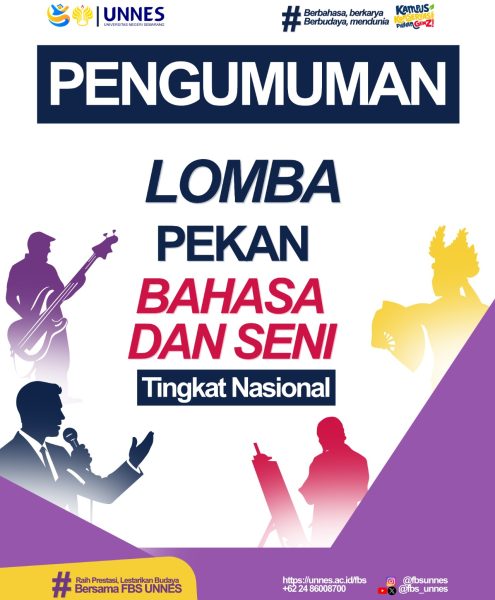
In addition to wayang performances, the opening program included the presentation of the Rector’s Cup for the 2026 Javanese-Language Short Film Festival.
The award recognized creative achievements in audiovisual storytelling using the Javanese language, highlighting the potential of film as a contemporary medium for preserving and promoting regional languages.
By encouraging students to create films in Javanese, the festival demonstrated how traditional languages can remain relevant through digital media and contemporary artistic expression.
The Language and Arts Month celebrations also featured traditional Javanese musical performances and a Study Program Inauguration Stage showcasing various student productions.
The program included monologues, fashion presentations, Kalang Sunda dance, modern dance, Light Pink dance, Tahiyya creative dance, and traditional Chinese dance.
The diversity of performances reflected FBS UNNES’s commitment to creating an inclusive environment for artistic expression and intercultural appreciation.
These activities also provided opportunities for students to develop their performance skills, collaborate across disciplines, and gain practical experience in organizing cultural productions.
Connecting the Youth Pledge with Cultural Preservation
Youth Pledge Day commemorates the historic declaration made by Indonesian youth on October 28, 1928, affirming their commitment to one homeland, one nation, and one unifying language: Indonesian.
Nearly a century later, the values embodied in the Youth Pledge remain relevant to younger generations navigating an increasingly interconnected world.
National unity does not require the disappearance of cultural diversity. Instead, Indonesia’s regional languages, artistic traditions, and cultural expressions form an essential part of its collective identity.
In this context, Language and Arts Month 2026 provided an opportunity to translate the spirit of the Youth Pledge into meaningful cultural activities.
The participation of student puppeteers demonstrated that preserving cultural heritage requires more than appreciation. It also depends on developing new generations of artists who possess the knowledge, skills, and commitment to carry traditional practices forward.
Through education, performances, and creative initiatives, students can help ensure that cultural traditions remain dynamic and accessible to future generations.
The event also reinforced FBS UNNES’s role as an academic institution that integrates language, literature, and arts education with character development and cultural preservation.
Supporting Quality Education and Cultural Heritage Preservation
The celebration also aligned with UNNES’s commitment to advancing the United Nations Sustainable Development Goals (SDGs), particularly SDG 4 (Quality Education) and SDG 11 (Sustainable Cities and Communities).
Its contribution to SDG 4 was reflected in experiential learning opportunities that encouraged students to participate actively in artistic and cultural activities.
Wayang performances, film festivals, and other creative presentations provided opportunities to develop artistic competencies, teamwork, cultural literacy, and appreciation for Indonesia’s diverse traditions.
Meanwhile, the event supported SDG 11 through efforts to safeguard cultural heritage, particularly Javanese puppetry, regional languages, traditional dance, and Indonesian musical traditions.
By bringing traditional arts into the university environment and involving students directly in their performance, FBS UNNES contributed to the transmission of cultural knowledge and skills across generations.
Through Language and Arts Month 2026, FBS UNNES reaffirmed that the spirit of the Youth Pledge extends beyond commemorating a historic event. It also calls for concrete efforts to strengthen national identity, celebrate cultural diversity, and preserve Indonesia’s artistic heritage.
The involvement of young puppeteers and student performers demonstrated how the next generation can serve not only as custodians of tradition but also as creative innovators who help shape its future.
By connecting the values of the Youth Pledge with cultural education and artistic expression, FBS UNNES continues to encourage students to become academically accomplished, culturally aware, and actively engaged in preserving Indonesia’s heritage in an increasingly globalized world.