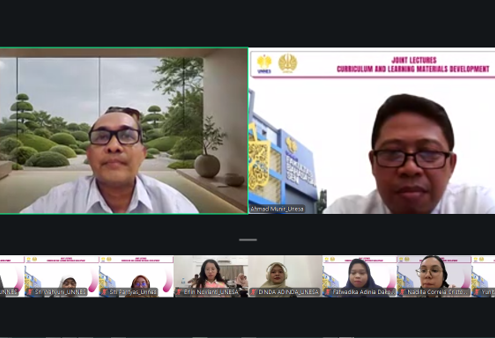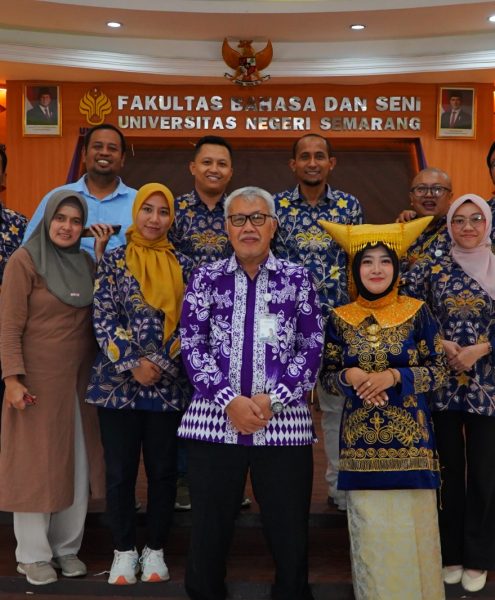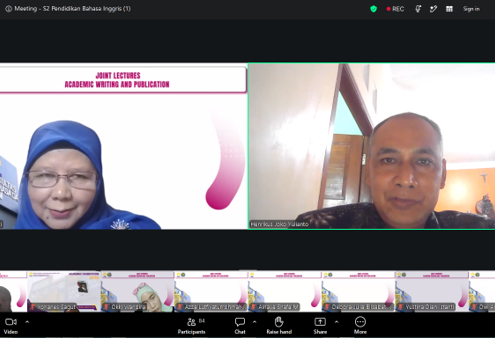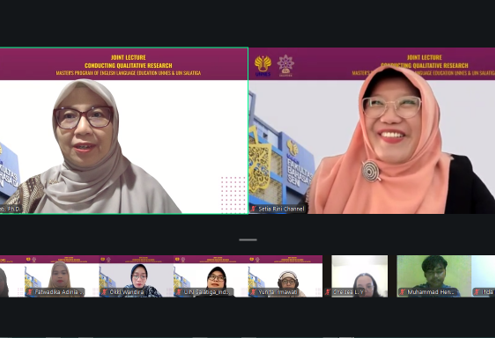


The Master’s Program in English Language Education at the Faculty of Languages and Arts (FBS), Universitas Negeri Semarang (UNNES), held a joint lecture titled “Quantitative Research in ELT” on September 16, 2026, bringing together graduate students from UNNES and Universitas Negeri Yogyakarta (UNY) to strengthen their research competencies in English language teaching.
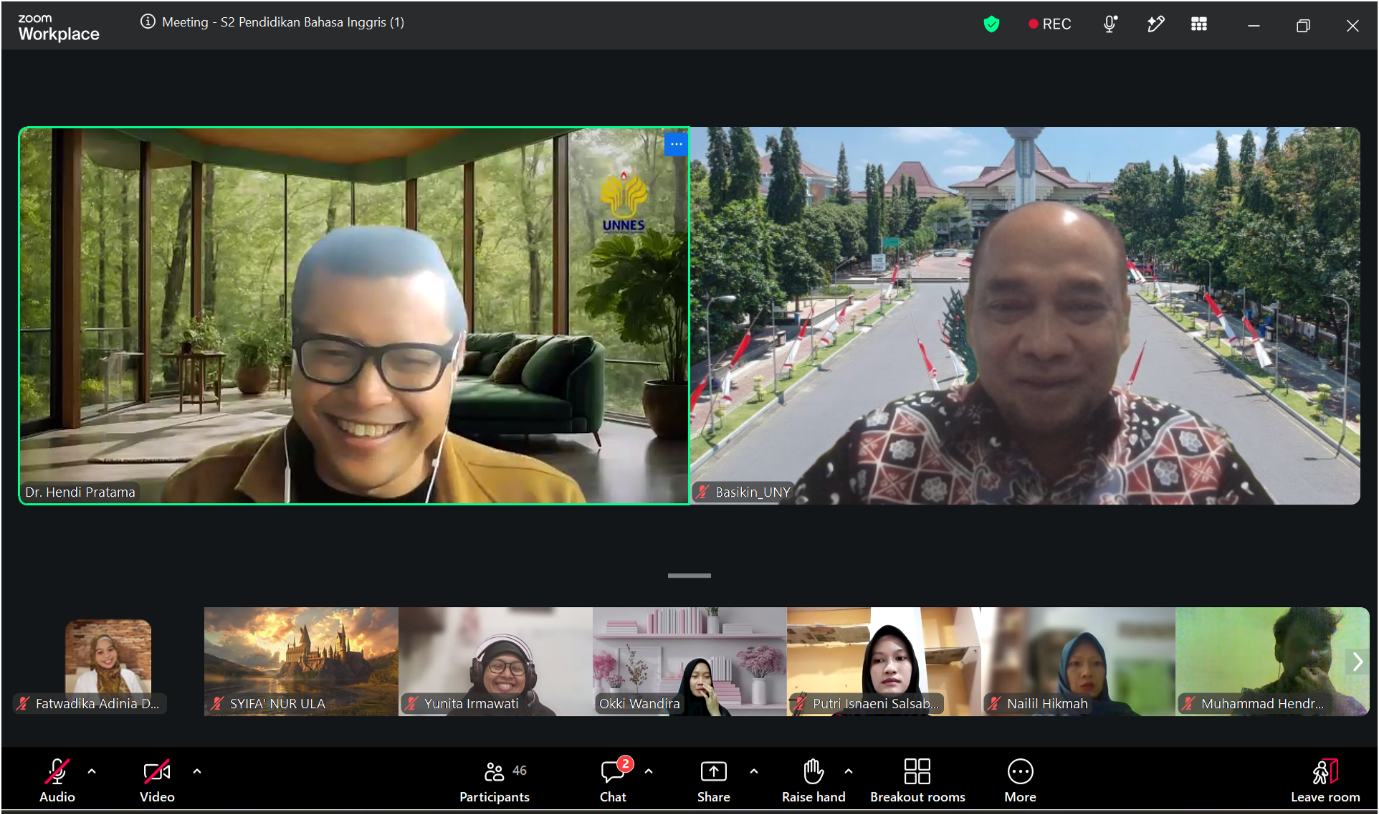
Conducted virtually via Zoom, the lecture focused on quantitative research methodology and the use of statistical analysis software in English Language Teaching (ELT). The event provided an academic platform for students from both universities to explore how research ideas can be transformed into empirical evidence through systematic inquiry and appropriate data analysis.
The session featured two scholars who addressed quantitative research from complementary theoretical and practical perspectives. Prof. Basikin, S.Pd., M.Phil., M.Ed., Ph.D., from Universitas Negeri Yogyakarta, delivered a presentation titled “From Ideas to Evidence: The Logic of Quantitative Research,” while Dr. Hendi Pratama, S.Pd., M.A., from UNNES, introduced JASP as an alternative statistical analysis tool to SPSS.
Through these sessions, participants gained insights into the relationship between research design, empirical evidence, and statistical analysis, while exploring digital tools that can support quantitative research in English language education.
In his presentation, Prof. Basikin highlighted the importance of understanding the underlying logic of quantitative research to produce systematic, credible, and evidence-based findings. His discussion addressed the connections among research problems, research questions, data collection, and the selection of appropriate analytical techniques.
The session emphasized that quantitative research involves more than processing numerical data. It also requires sound scientific reasoning, clearly defined variables, appropriate methodological decisions, and careful interpretation of empirical findings.
Meanwhile, Dr. Hendi Pratama introduced JASP, a statistical software package that offers an accessible alternative to SPSS for quantitative data analysis. His session familiarized students with the potential of digital tools to support statistical procedures, data processing, and the interpretation of research results.
The introduction to JASP also highlighted the importance of statistical and digital literacy in graduate education, particularly for students conducting quantitative studies in English language teaching. Familiarity with such tools is expected to help students select suitable statistical techniques and communicate their findings more systematically.
Promoting Evidence-Based Research and Academic Excellence
Dr. Sri Wahyuni, M.Pd., Coordinator of the Master’s Program in English Language Education at FBS UNNES, emphasized the importance of joint academic activities in strengthening students’ methodological knowledge and research capabilities.
She noted that a solid understanding of research methodology is essential for graduate students seeking to conduct rigorous studies that not only meet academic standards but also address practical challenges in English language education.
The joint lecture encouraged students to connect theoretical understanding with practical research skills, particularly in designing studies, analyzing quantitative data, and critically interpreting research findings.
The initiative also aligns with the vision of the Master’s Program in English Language Education at UNNES to become a leading program in advancing innovative English language education through the integration of language education theories, linguistics, and literacy approaches, with a strong research orientation and a commitment to character development and quality education.
By strengthening students’ understanding of quantitative research, the program seeks to support the development of master’s theses and scholarly publications grounded in sound methodological principles and empirical evidence.
Beyond enhancing research skills, the collaboration between UNNES and UNY provided students with opportunities to engage with academic perspectives from different institutions. Such exchanges contribute to a collaborative and research-oriented academic environment while encouraging broader scholarly engagement.
Advancing SDG 4 and SDG 17 Through Research Capacity Building
The joint lecture also reinforced FBS UNNES’s commitment to advancing the United Nations Sustainable Development Goals (SDGs), particularly SDG 4 (Quality Education) and SDG 17 (Partnerships for the Goals).
Its contribution to SDG 4 was reflected in efforts to improve the quality of higher education through research methodology training, statistical literacy, and the integration of digital technologies into academic learning. By promoting evidence-based research, the initiative encouraged students to generate findings that can inform and improve English language teaching practices.
Meanwhile, the partnership between UNNES and UNY supported SDG 17 by facilitating interuniversity collaboration, knowledge exchange, and the development of academic networks. The joint lecture demonstrated how cooperation between higher education institutions can strengthen research capacity and create opportunities for sustained educational partnerships.
Through this initiative, the Master’s Program in English Language Education at FBS UNNES reaffirmed its commitment to fostering a strong research culture, methodological innovation, and the responsible use of technology in academic inquiry.
The lecture is expected to equip graduate students with the knowledge and practical skills needed to conduct more systematic, valid, and relevant research in English language education.
The collaboration between UNNES and UNY also represents a step toward strengthening institutional partnerships and advancing research-based educational practices that contribute to quality education and sustainable development.