

A degree in history can open doors to more than teaching and academic research. Historical knowledge can also become a source of income through consultancy, research-based writing, cultural heritage management, and the creative industries. Asep Kambali, founder of the Historia Indonesia Community, revealed that he had earned more than IDR 40 million from a single historical consultancy project.
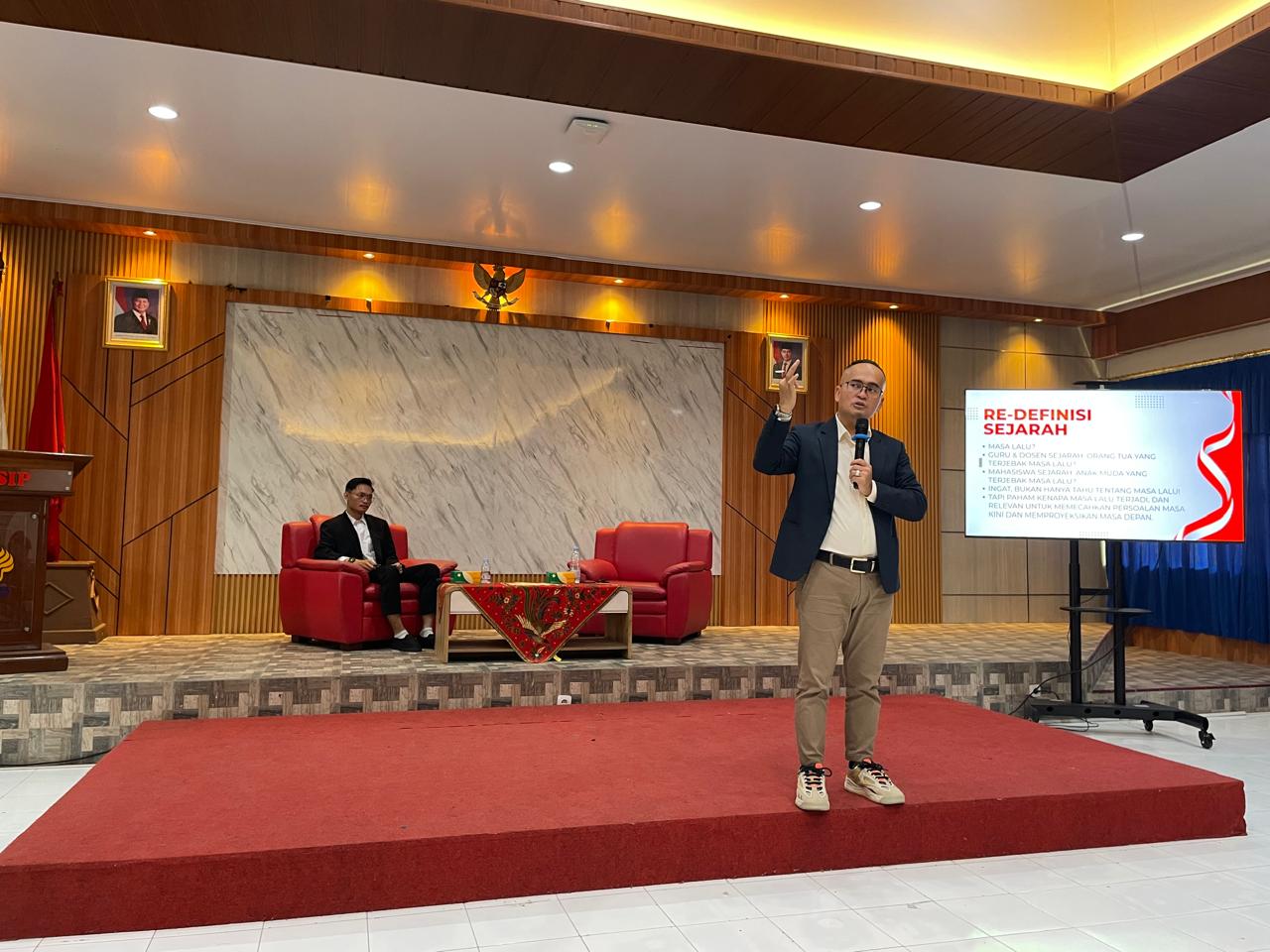
“Studying history does not mean you have to become a teacher. You can also become an entrepreneur,” Asep said during the History Department’s Stadium Generale at Universitas Negeri Semarang (UNNES), held at the Faculty of Social and Political Sciences (FISIP) auditorium on Thursday (October 8, 2026).
The event, themed “History Is Calling, Are You In? Scroll Less, Explore More,” brought together 181 students from the History and History Education study programs. Asep encouraged students to see history not merely as the study of the past, but also as a field with economic potential and diverse career opportunities.
Drawing on his professional experience, Asep explained that historical expertise can be valuable to institutions, businesses, and communities. He has worked as a historical consultant for Bank Indonesia and was among those who proposed the inclusion of Frans Kaisiepo, a national hero from Papua, on Indonesian rupiah banknotes.
According to Asep, skills in archival research, historical interpretation, writing, and storytelling can be transformed into professional services. Opportunities extend to historical consultancy, book and article writing, documentary and short film production, museum management, heritage tourism, and digital educational content.
He encouraged students to develop history entrepreneurship by turning their knowledge and ideals into sustainable business opportunities. Students, he said, do not need to wait until graduation to begin. They can start by researching local history and transforming their findings into popular articles, digital content, educational products, or creative projects that appeal to wider audiences.
“Experience matters, and networks matter,” Asep said, emphasizing the importance of building professional connections and gaining practical experience while still at university.Beyond its economic potential, Asep highlighted the importance of historical awareness in an increasingly digital society. He argued that history helps shape collective identity and strengthens the bonds that unite people as a nation.
“History is as important as our soul and spirit. It connects people and brings them together as one nation,” he said.
However, the digital era also presents challenges. Asep warned that misinformation, hoaxes, and misleading online content can influence how people understand the past and perceive their national identity.
He urged history students to verify sources, assess the credibility of online information, and critically examine historical claims before sharing them. Short and engaging content, he stressed, is not necessarily accurate or reliable.
Asep also called for more inclusive historical narratives that represent Indonesia’s diversity. Historical accounts should not focus exclusively on prominent figures or heroes from particular regions. Stories from Papua and other parts of the country deserve greater recognition in the national historical narrative.
He encouraged students to use digital technology, historical films, interactive applications, and entertaining educational content to make history more accessible to younger audiences.
Dean of FISIP UNNES, Prof. Arif Purnomo, expressed hope that the event would strengthen students’ confidence in their chosen field of study.
He encouraged history students to recognize the importance of their discipline and demonstrate its relevance through their academic work and public engagement. Students, he said, should not only encourage others to remember history but also actively study, develop, and communicate it to society.
Meanwhile, M. Shokheh, Ph.D., Coordinator of the History Study Program, encouraged students to enjoy exploring historical knowledge and discover opportunities through academic activities and experiences beyond the classroom.
The event was also intended to introduce the History Department to new students from the History and History Education study programs. Committee chair Fransiska Ratu expressed hope that the event would benefit participants and inspire new ideas and innovations in the development of history.
For students, Asep’s presentation offered a fresh perspective on their future careers. Syifa Rumaisha, a History Education student, said she had previously encountered negative perceptions about studying history, including concerns from her parents about career prospects.
“After attending this event, I gained a broader understanding of the career opportunities available to history graduates. There are many potential professional connections, and history can also provide opportunities to earn an income,” she said.
Rio Hamdani, a History student, said the event broadened his understanding of the discipline’s potential. He emphasized that students themselves play an important role in creating engaging classroom experiences by actively participating, responding to discussions, and developing innovative ideas.
The Stadium Generale highlighted the importance of moving beyond the conventional perception of history as a discipline concerned solely with the past. Through research, entrepreneurship, creativity, and digital innovation, historical knowledge can contribute to education, cultural preservation, and the creative economy while opening up diverse professional opportunities for graduates.