



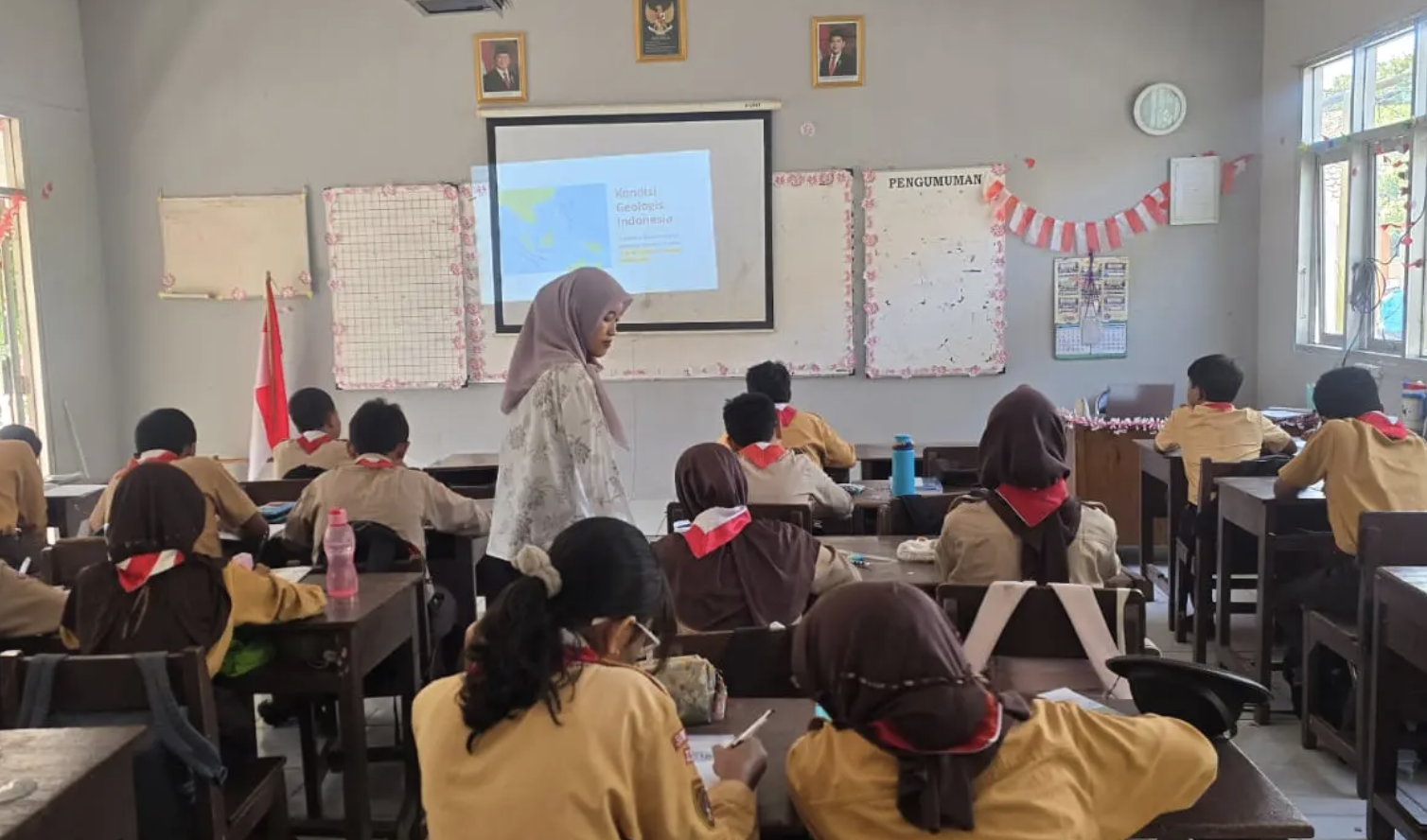
A lecturer from the Faculty of Social and Political Sciences (FISIP) at Universitas Negeri Semarang (UNNES), Siti Ekowati Rusdini, conducted a research study titled “Development of a Moral Courage-Based Digital Empathy Model to Encourage Upstander Behavior in Student Cyberbullying Cases in Semarang” at SMP Negeri 6 Semarang. The initiative targeted junior high school students to foster a safer and more supportive digital interaction ecosystem within the school environment.
The research aims to design a digital empathy model anchored in moral courage, encouraging students to step forward and perform positive interventions as upstanders when witnessing cyberbullying. The study began by mapping and identifying students’ bystander behaviors—specifically examining how students respond when they see, become aware of,or are indirectly involved in cyberbullying incidents.
Based on these initial mapping results, the researcher formulated the Moral Courage-Based Digital Empathy Model framework. This model is designed to sharpen students’ sensitivity in understanding the emotional state of victims in digital spaces while cultivating the moral courage needed to move beyond being passive spectators toward taking constructive, positive action.
FISIP UNNES researcher Siti Ekowati Rusdini explained that witnesses (bystanders) play a pivotal role in breaking the chain of bullying across social media and youth digital platforms.
“This research stems from the reality that in cyberbullying cases, students often act not only as victims or perpetrators, but also as bystanders witnessing the incident. Therefore, this study is directed toward developing a moral courage-based digital empathy model so that students possess both sensitivity toward the victim’s condition and the courage to carry out positive, safe, and responsible interventions in the digital space,” said Siti Ekowati Rusdini.
Meanwhile, partners from SMP Negeri 6 Semarang enthusiastically welcomed the research initiative, noting its strong alignment with the daily challenges students face in the digital era.
“This research is highly relevant to the current condition of students as their interactions increasingly take place in the digital space. We hope the developed model will not only help students understand the impact of cyberbullying, but also foster empathy and the courage to act when they see a peer becoming a victim. In doing so, students will not merely remain spectators, but will be capable of providing appropriate and positive responses,” stated a representative of SMPN 6 Semarang.
Through this educational intervention model, schools are expected to gain an applicable character-learning instrument to prevent cyberbullying, strengthen digital ethics literacy, and cultivate an inclusive, child-friendly learning environment.