FISIP UNNES Lecturer Studies the Empty Ballot Movement in Brebes to Promote Meaningful Democracy

Universitas Negeri Semarang > Faculty of Social Sciences and Political Science > News > FISIP UNNES Lecturer Studies the Empty Ballot Movement in Brebes to Promote Meaningful Democracy

Semarang – Bambang Hermanto, S.Pd., M.IP., a lecturer in the Political Science Program at the Faculty of Social and Political Sciences (FISIP), Universitas Negeri Semarang (UNNES), has conducted research on the Empty Ballot Movement in Brebes Regency. The study seeks to understand how the movement reflects public responses to local democratic dynamics, particularly during the 2024 Brebes Regency Regional Head Election.

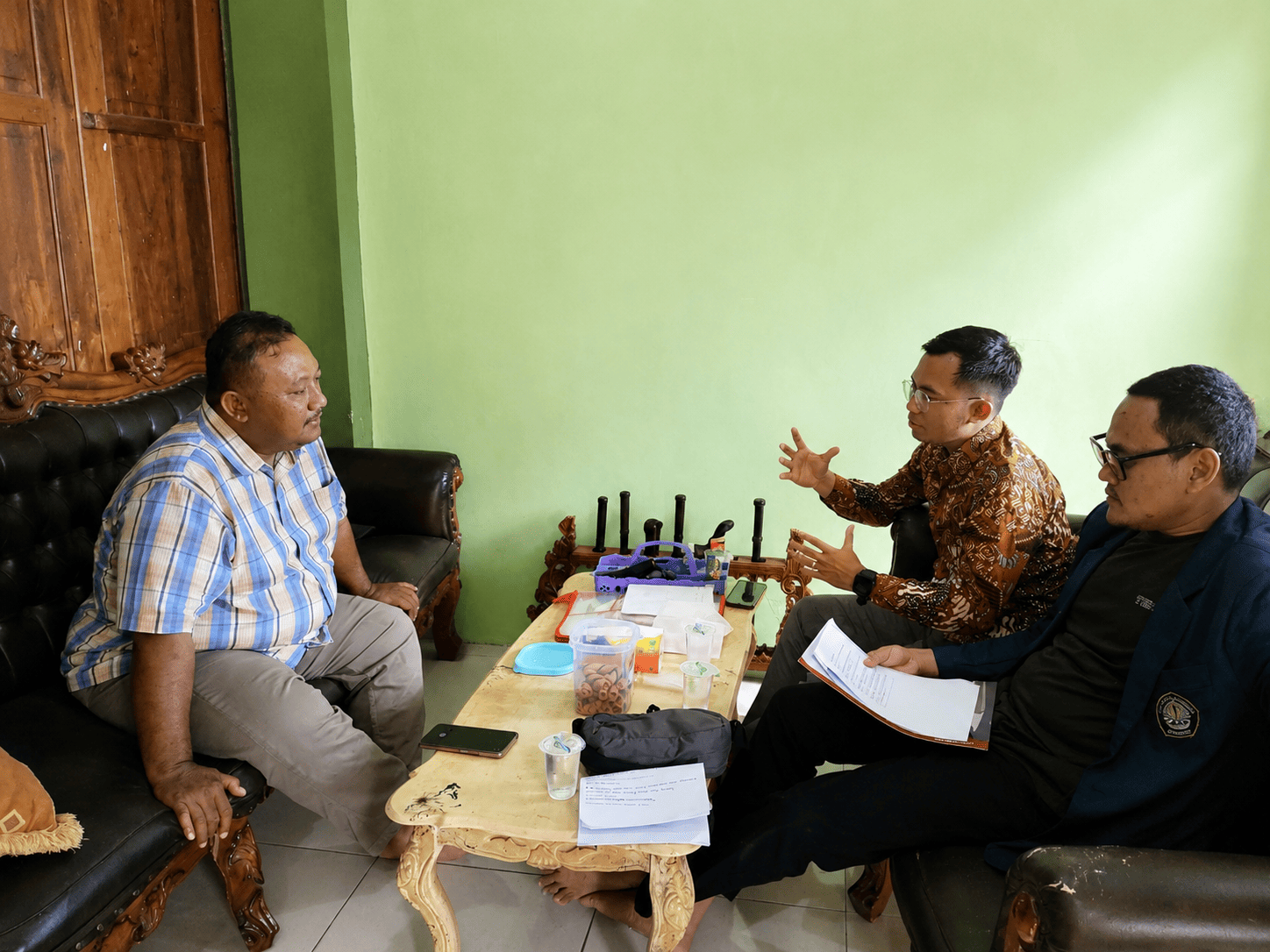
The research was conducted over approximately two months, beginning in May 2026. As part of the study, Bambang Hermanto conducted field research in Brebes Regency and carried out in-depth interviews with individuals involved in and knowledgeable about the Empty Ballot Movement.

The informants included Maryoko, also known as Jarot, the Chairperson of the Empty Ballot Movement (GERTAK); community leader Kaji Likhun; and Cahrudin, a former member of the Brebes Regency Regional Legislative Council (DPRD) who served for three terms.

The study also involved Suntoro and Edi, both former village heads, as well as Zakaria and Kholik, who served as volunteers in the Empty Ballot Movement. In addition to conducting interviews, the researcher examined the movement’s digital footprint and activities on Facebook to gain a more comprehensive understanding of how the movement developed, communicated its narratives, and mobilized public support.

The findings indicate that the Empty Ballot Movement in Brebes cannot be understood merely as a form of protest voting. More significantly, the movement represents a form of moral protest by members of the community in response to local democratic conditions.

One of the prominent narratives developed within the movement was, “The Empty Ballot Is Not a Crime, but a Constitutional Right.” This narrative reflects the movement’s effort to emphasize that voting for the empty ballot is a legitimate political choice and a lawful expression of citizens’ political rights within a democratic system.

According to Bambang Hermanto, the study was conducted to explore how democracy can be understood in a more substantive and meaningful way at the local level.

“This research seeks to examine a more meaningful form of democracy at the local level. Democracy is not merely about holding elections; it must also provide healthy political competition and meaningful choices for citizens,” he said.

Meanwhile, Maryoko, also known as Jarot, Chairperson of the Empty Ballot Movement, explained that the movement emerged from a shared sense of public concern. According to him, the movement was driven by conscience and was not created through coercion.

“This movement emerged from a shared concern and was driven by conscience. It was not a movement imposed on anyone. We did not want democracy in Brebes to be damaged by the presence of a single candidate who had secured the support of nearly all political parties, leaving others unable to participate in the 2024 Brebes Regional Head Election,” Jarot said.

Through this research, FISIP UNNES continues to contribute to the development of academic studies that address real issues within society. The study of the Empty Ballot Movement in Brebes is expected to provide insights into the importance of maintaining open political competition, public participation, and citizens’ freedom to make meaningful political choices.

The phenomenon of the Empty Ballot Movement in Brebes also demonstrates that democracy is not solely about election results. More importantly, democracy depends on the extent to which citizens have opportunities to participate, express their aspirations, and contribute to the development of a more meaningful democratic process.
Related Posts

Leave a Reply

* Kode Akses Komentar:

* Tuliskan kode akses komentar diatas:

GDPR

  • Privacy Policy

Privacy Policy

At unnes.ac.id, the privacy of our visitors is of extreme importance to us. This privacy policy document outlines the types of personal information that is received and collected by unnes.ac.id and how it is used.

Log Files

Like many other Web sites, unnes.ac.id makes use of log files. The information inside the log files includes internet protocol (IP) addresses, type of browser, Internet Service Provider (ISP), date/time stamp, referring/exit pages, and number of clicks to analyze trends, administer the site, track user’s movement around the site, and gather demographic information. IP addresses and other such information are not linked to any information that is personally identifiable.

Cookies

unnes.ac.id uses cookies to store information about visitors’ preferences, to record user-specific information on which pages the site visitor accesses or visits, and to personalize or customize our web page content based upon visitors’ browser type or other information that the visitor sends via their browser.

Third-party ad servers or ad networks use technology in their respective advertisements and links that appear on unnes.ac.id and which are sent directly to your browser. They automatically receive your IP address when this occurs. Other technologies (such as cookies, JavaScript, or Web Beacons) may also be used by our site’s third-party ad networks to measure the effectiveness of their advertising campaigns and/or to personalize the advertising content that you see on the site.

unnes.ac.id has no access to or control over these cookies that are used by third-party advertisers.

You should consult the respective privacy policies of these third-party ad servers for more detailed information on their practices as well as for instructions about how to opt-out of certain practices. unnes.ac.id’s privacy policy does not apply to, and we cannot control the activities of, such other advertisers or web sites.

If you wish to disable cookies, you may do so through your individual browser options. More detailed information about cookie management with specific web browsers can be found at the browsers’ respective websites.

Consent

By using our website, you hereby consent to our privacy policy and agree to its terms.

Update

This Privacy Policy was last updated on: 2023-02-14. Should we update, amend or make any changes to our privacy policy, those changes will be posted here.

Contact Us

If you have any questions, comments, or concerns about our Privacy Policy or our practices with regards to your personal information, please feel free to contact us through the contact form on our website or by emailing us at humas[at]mail.unnes.ac.id.

This Privacy Policy is intended as a general guide to our practices in collecting and using information. If there is any inconsistency between this Privacy Policy and the terms of the Service Agreement or any other terms that may apply to specific services you use, then those specific service terms shall apply.

Terms of Use

By using our website, you agree to abide by this Privacy Policy. If you do not agree with this Privacy Policy, please do not use our website. We reserve the right to update this Privacy Policy from time to time without prior notice. Please review our Privacy Policy periodically to check for changes. Your continued use of our website following the posting of changes to this Privacy Policy means that you accept the changes.

Thank you for reading our Privacy Policy. We are committed to protecting the privacy of our website visitors and will continue to update our Privacy Policy to ensure optimal protection.