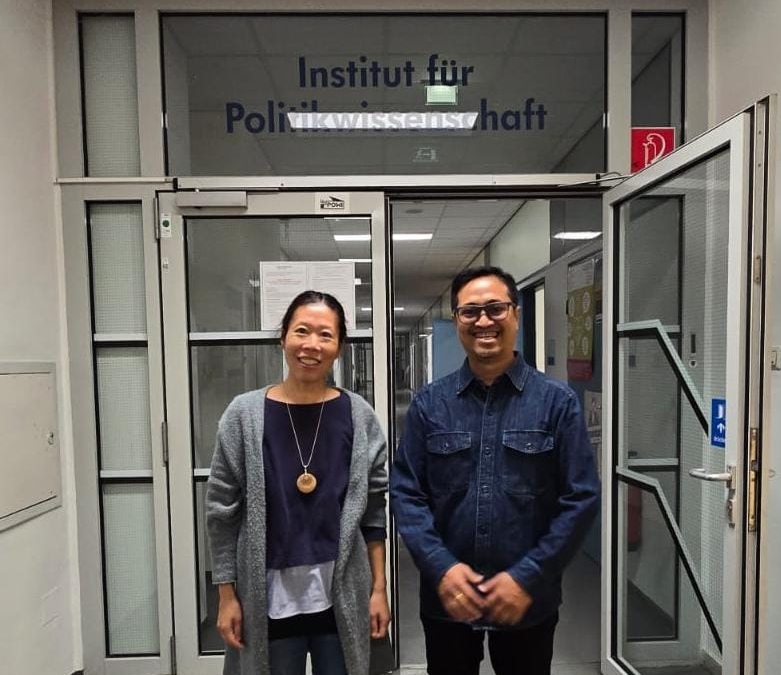


Researchers from the Faculty of Social and Political Sciences at Universitas Negeri Semarang, or FISIP UNNES, are examining how local knowledge, spirituality and community institutions shape water governance in Nyatnyono Village, Semarang Regency.
The study, conducted on June 22, 2026, was led by Dr. Gunawan, M.Hum., together with Moh Yasir Alimi, S.Ag., M.A., Ph.D. and Dr. Kuncoro Bayu Prasetyo, S.Ant., M.A.
The research focuses on how residents understand, manage and preserve local water sources, particularly springs that serve not only as sources of clean water but also as part of the village’s religious and cultural life.
“In several areas, including Nyatnyono, water is understood not only as an ecological resource for daily needs, but also as a sacred entity whose sustainability must be protected,” Gunawan said.
According to Gunawan, the spiritual meaning attached to water has a direct influence on how it is used, distributed and maintained by the local community.
“The spiritual context shapes water governance, perceptions of sacredness and even the mechanisms through which local institutions regulate its distribution,” he said.
Using a qualitative approach, the FISIP UNNES research team conducted field observations, interviews with residents and local managers, and documented ritual practices and economic activities around the springs.
The study found that water governance in Nyatnyono is closely connected to social and cultural practices. The springs support household needs while also playing an important role in religious activities and pilgrimage tourism.
These activities have also contributed to the local economy, particularly for residents whose livelihoods are connected to visitors and religious tourism.
At the same time, the community continues to maintain traditional practices aimed at protecting the springs.
“We have protected the springs and maintained these spiritual traditions for generations, following the teachings passed down by our ancestors,” one resident said.
The research suggests that local traditions can function as an important part of environmental governance. Rather than standing in opposition to modern development, community knowledge and cultural values can strengthen efforts to preserve natural resources.
The FISIP UNNES team also found that strong local institutions play an important role in maintaining a balance between environmental protection, social values and economic benefits.
“By integrating local wisdom with strong village governance, communities are able not only to protect environmental sustainability, but also to gain economic and spiritual benefits in a balanced way,” Gunawan said.
For FISIP UNNES, the research contributes to a broader academic discussion on environmental anthropology, community-based resource management and sustainable development.