

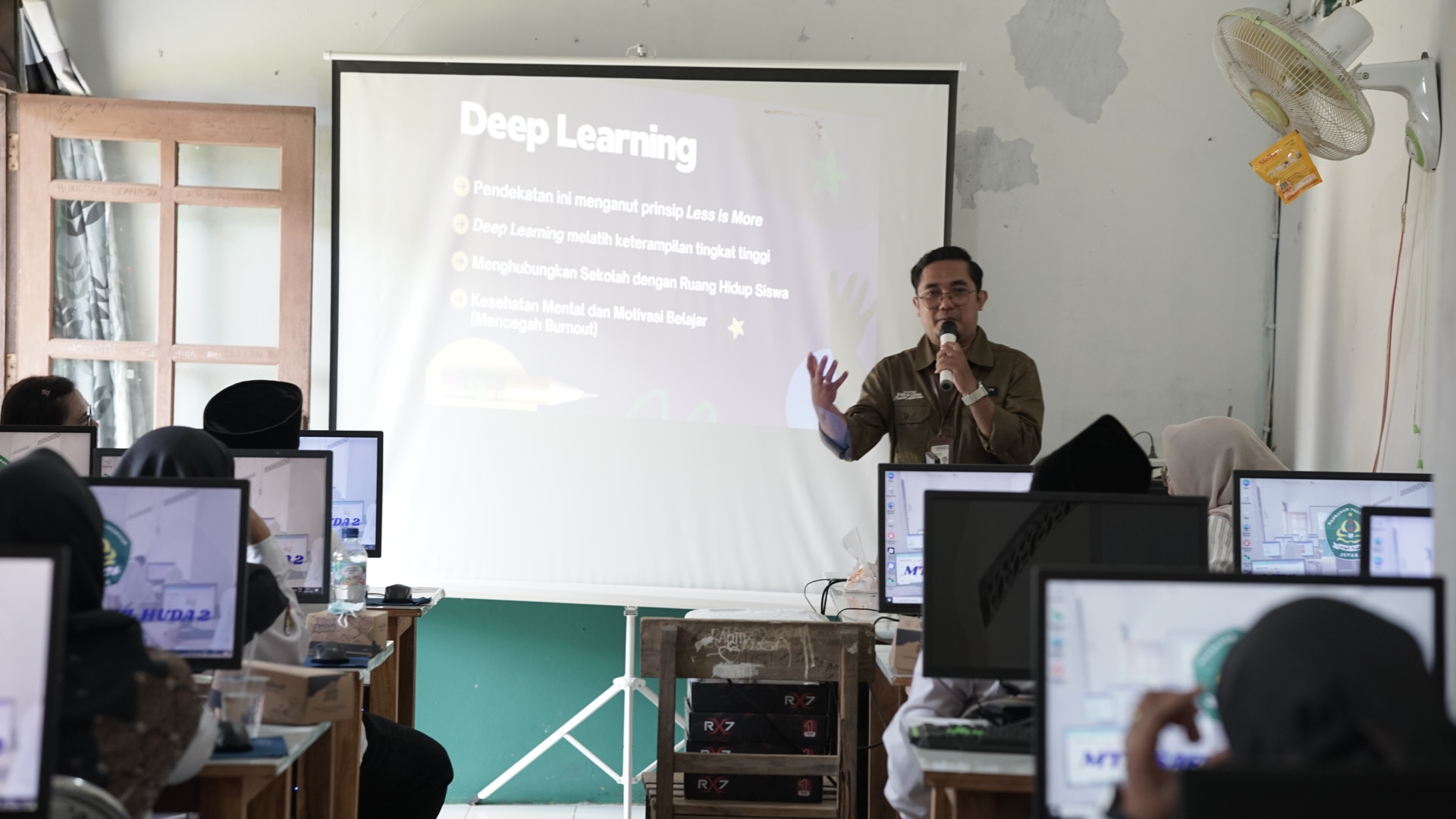
Karimunjawa, Jepara — Limited access and geographical isolation remain significant challenges for teachers working in Indonesia’s island regions. Therefore, when the Community Service Team from the Social Studies Education (Pendidikan IPS) Program visited MTs Safinatul Huda 2 Kemujan, Karimunjawa District, Jepara Regency, Central Java, on Thursday (June 18, 2026), the teachers welcomed the opportunity with great enthusiasm.
The program, titled “Strengthening Deep Learning and SDGs for Teachers in Remote Schools,” was designed to enhance teachers’ professional competencies in response to the demands of 21st-century education while supporting the implementation of the Sustainable Development Goals (SDGs) in the education sector.
The activity represented an effort to strengthen teachers’ capacity in delivering meaningful and student-centered learning. In addition to introducing the concept of deep learning, the program also provided insights into integrating SDG values into classroom practices and school culture.
Sanita Carolina Sasea, the head of the community service team, explained that the initiative reflected the university’s commitment to engaging directly with communities, particularly those with limited access to professional development opportunities.
“This program is a tangible manifestation of our commitment as educators not only to focus on theories in the classroom but also to engage directly with communities by sharing knowledge, skills, and listening to their aspirations. We hope this activity can provide positive contributions, alternative solutions, and serve as a catalyst for progress at MTs Safinatul Huda 2 Kemujan, Karimunjawa,” she said.
The program consisted of three main sessions. The first two sessions focused on introducing the concept of deep learning and discussing the implementation of SDGs in educational settings. Teachers were encouraged to explore learning approaches that are deeper, more meaningful, and centered on students’ needs and experiences.
The third session featured hands-on training in developing digital learning media using Book Creator and Canva. During this practical workshop, participants learned how to design creative, interactive, and engaging teaching materials to support effective classroom instruction.
Tajukding, Principal of MTs Safinatul Huda 2, expressed his appreciation for the initiative. According to him, professional development programs are particularly important for schools located in island communities where access to educational training is often limited.
“We warmly welcome this program to our school. We hope similar activities will continue in the future because our teachers truly need opportunities like this to support their professional growth,” he said.
A similar sentiment was expressed by Sri Hayati, a teacher at MTs Safinatul Huda 2 and a 2010 alumna. She noted that teachers in Karimunjawa frequently face challenges in participating in Subject Teacher Forums (MGMP) and other professional training activities due to distance and time constraints.
“After such a long time, we finally had the opportunity to receive this knowledge directly. We hope the materials presented today will be beneficial for our school. We also hope that similar training programs can be conducted here every year,” she said.
Sri added that educational policy updates and curriculum developments, including the concept of deep learning, often reach teachers in remote island areas much later than those in urban schools.
“We are often unable to attend MGMP activities because of transportation and time limitations. As a result, developments in curriculum and educational approaches such as deep learning tend to reach us quite late. We hope that the university can continue supporting us, especially in the areas of learning media development and curriculum innovation,” she explained.
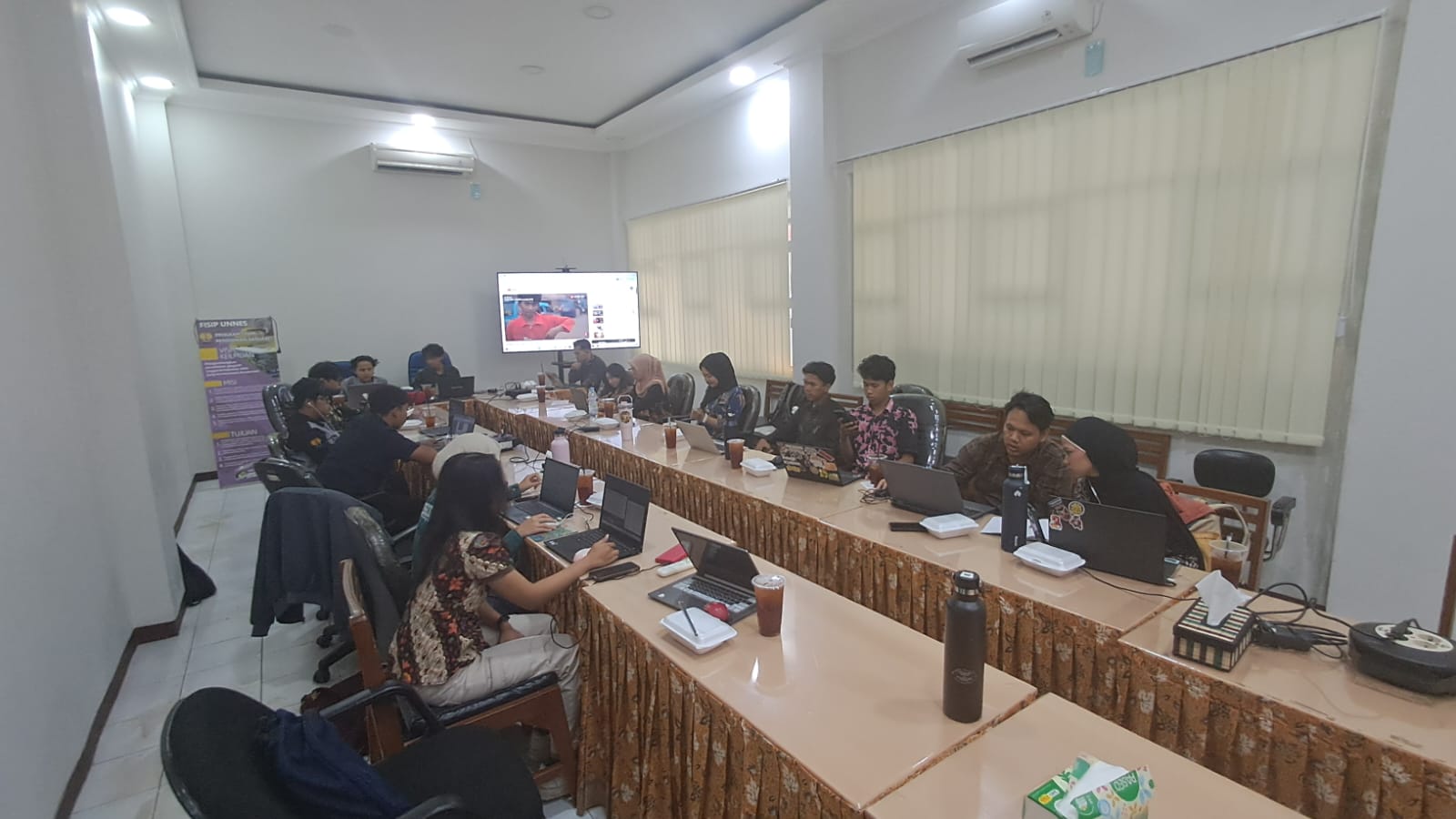
Throughout the event, participants actively engaged in discussions, practical exercises, and question-and-answer sessions. Their enthusiasm highlighted the strong need for professional development programs among teachers in remote and island-based schools.
For educational institutions located in outer and remote regions such as Karimunjawa, the presence of universities provides not only access to knowledge and expertise but also opportunities for collaboration that can help reduce educational disparities. Amid geographical challenges, initiatives like this demonstrate the importance of ensuring that efforts to improve educational quality reach all communities, including those far from major educational centers.
The community service team from the Social Studies Education Program consisted of Sanita Carolina Sasea, Yadi Suryadi, Aisyah Nur Sayidatun Nisa, Muh. Sholeh, Fahrudin Hanafi, Radini Sinta, Mahdahtul Maesiyah, Tazkiyah Imtanan H.M., and Ahmah Khiyas Muktafa.