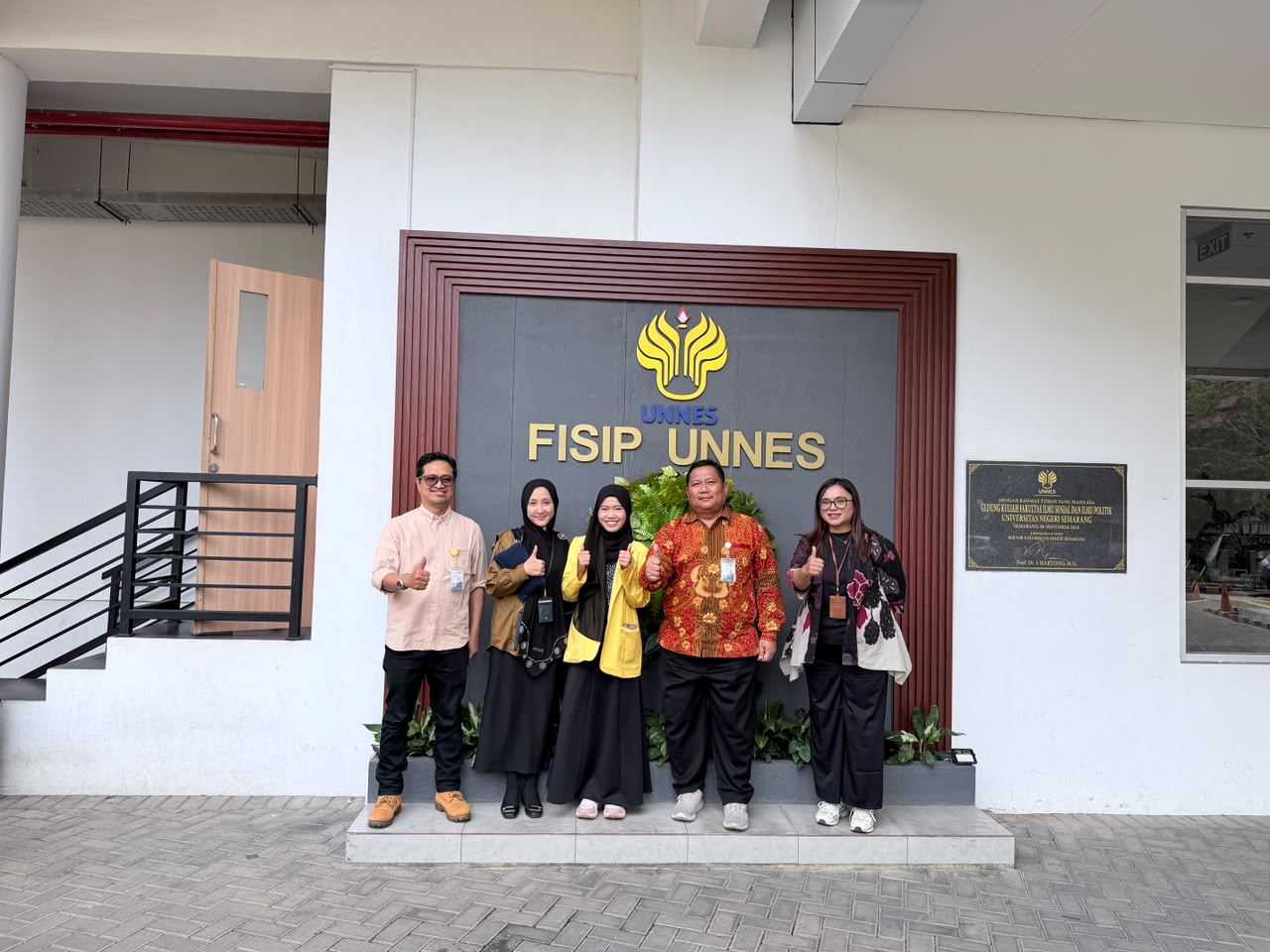


The Faculty of Social and Political Sciences (FISIP), Universitas Negeri Semarang (UNNES), continues to strengthen the role of higher education in improving educational quality while preserving local wisdom. Through a community service program, the FISIP UNNES team supported teachers at SMKN 1 Karimunjawa in developing learning approaches that integrate local historical and cultural values with the use of Artificial Intelligence (AI).
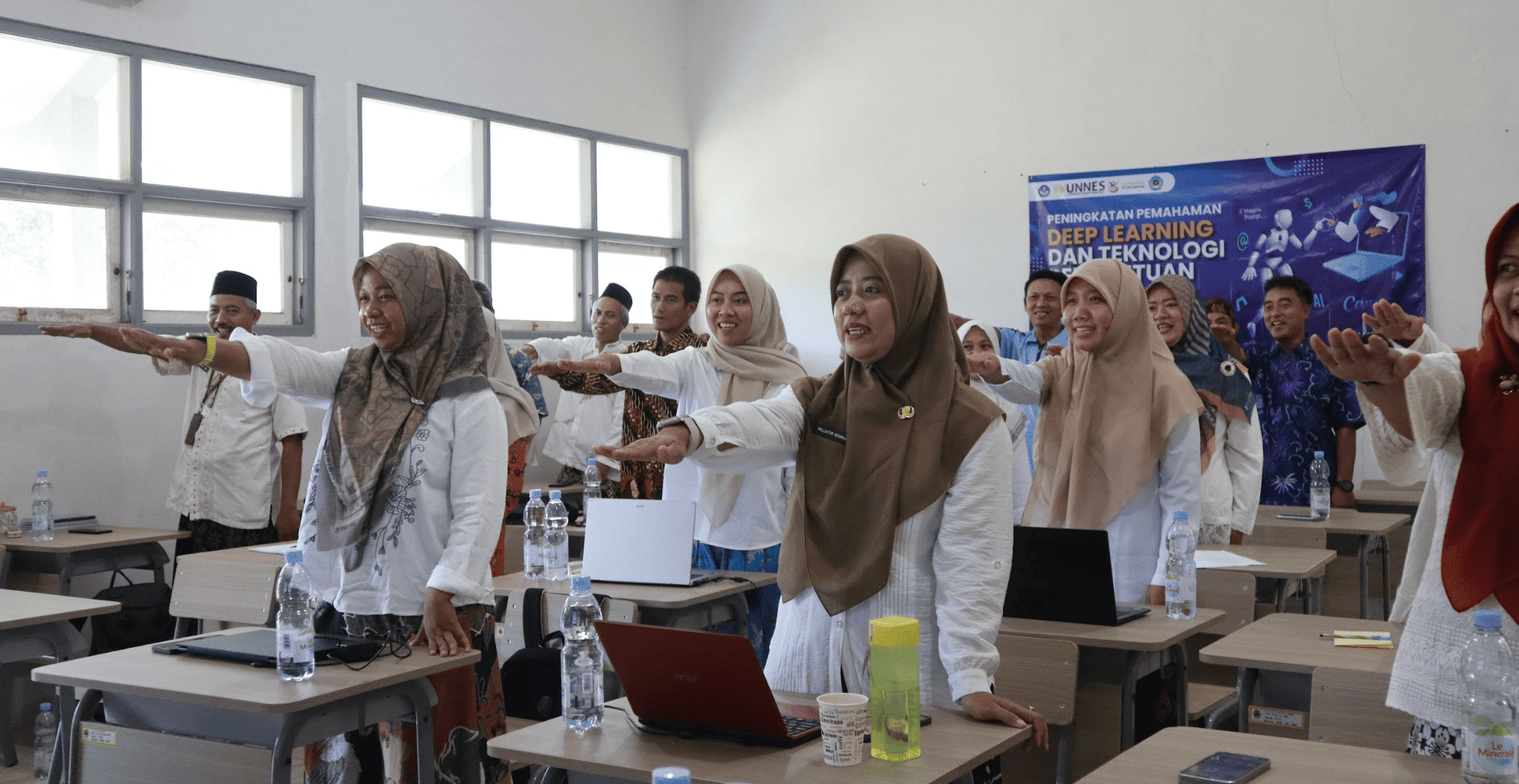
Held on June 10–11, 2026, at SMKN 1 Karimunjawa, Jepara Regency, the program was led by Dimas Anggoro, S.Pd., M.Pd. It was designed to strengthen teachers’ capacity to deliver contextual and innovative learning while remaining rooted in the identity of the Karimunjawa island community.
The development of contextual learning has become increasingly important amid the social changes taking place in Karimunjawa. As one of Indonesia’s prominent tourism destinations, Karimunjawa has experienced increasingly intensive interaction between local communities and domestic and international visitors. While this development creates new opportunities, it also presents challenges in maintaining local identity, collective memory, and cultural values among younger generations.
In response, the FISIP UNNES team encouraged the school to use Karimunjawa’s social and cultural environment as a learning resource. Local history, island community characteristics, traditions, and the dynamics of everyday life can be incorporated into classroom learning so that students develop not only academic and vocational competencies but also a strong understanding of their social and cultural environment.
The program adopted a Participatory Action Research (PAR) approach, positioning teachers and school management as active partners. Rather than simply receiving training materials, teachers were directly involved in identifying needs, designing learning activities, and developing ways to integrate local wisdom and technology in accordance with the school’s characteristics.
As part of the program, the team also mapped the social, cultural, and tourism conditions of Karimunjawa. Observations of tourism areas, including Tanjung Gelam Beach, provided insights into local changes and environmental potential that could be developed as learning resources through a place-based learning approach.
During a workshop facilitated by Andy Suryadi, S.Pd., M.Pd., teachers developed learning designs that connected school subjects with the real-life context of the Karimunjawa community. One of the program’s outputs was an adaptation matrix for the Seven Habits of Great Indonesian Children Program, enriched with local philosophies, social values, and the collective memory of the Karimunjawa community.
In addition to strengthening the integration of local wisdom, participants were introduced to the use of AI in developing instructional media and learning materials. Technology was positioned as a tool to support teachers’ creativity rather than replace the pedagogical process. The integration of digital technology and local culture is expected to help teachers provide learning experiences that are more relevant to students while remaining responsive to technological developments.
One of the program’s resource persons, Dr. Syaiful Amin, S.Pd., M.Pd., emphasized the importance of education that goes beyond the mastery of technical skills. Learning should also incorporate local history, culture, and community life so that students develop a strong sense of identity while gaining the competencies needed to respond to changes in the world of work.
Through this initiative, FISIP UNNES encourages the development of an educational ecosystem that combines character education, Project-Based Learning (PjBL), place-based learning, local wisdom, and digital technology. The model is expected to be further developed independently by teachers in accordance with the needs of SMKN 1 Karimunjawa and the characteristics of the island community.
The program also contributes to the achievement of the Sustainable Development Goals (SDGs). Strengthening teacher competencies, promoting learning innovation, and utilizing educational technology directly support SDG 4: Quality Education. Integrating Karimunjawa’s history, culture, and local wisdom into education also contributes to SDG 11: Sustainable Cities and Communities, particularly efforts to safeguard cultural heritage and strengthen local community identity. Meanwhile, collaboration between the university and SMKN 1 Karimunjawa reinforces SDG 17: Partnerships for the Goals.
In addition, efforts to connect learning with developments in the tourism sector and students’ readiness for the world of work are relevant to SDG 8: Decent Work and Economic Growth, while the use of AI as part of educational innovation is aligned with the broader objectives of SDG 9: Industry, Innovation and Infrastructure.
Through the synergy of education, technology, and local wisdom, FISIP UNNES seeks to ensure that educational transformation does not distance younger generations from the identity of their communities. Instead, technology is positioned as a means of keeping local historical and cultural heritage relevant within education amid rapid social and technological change.