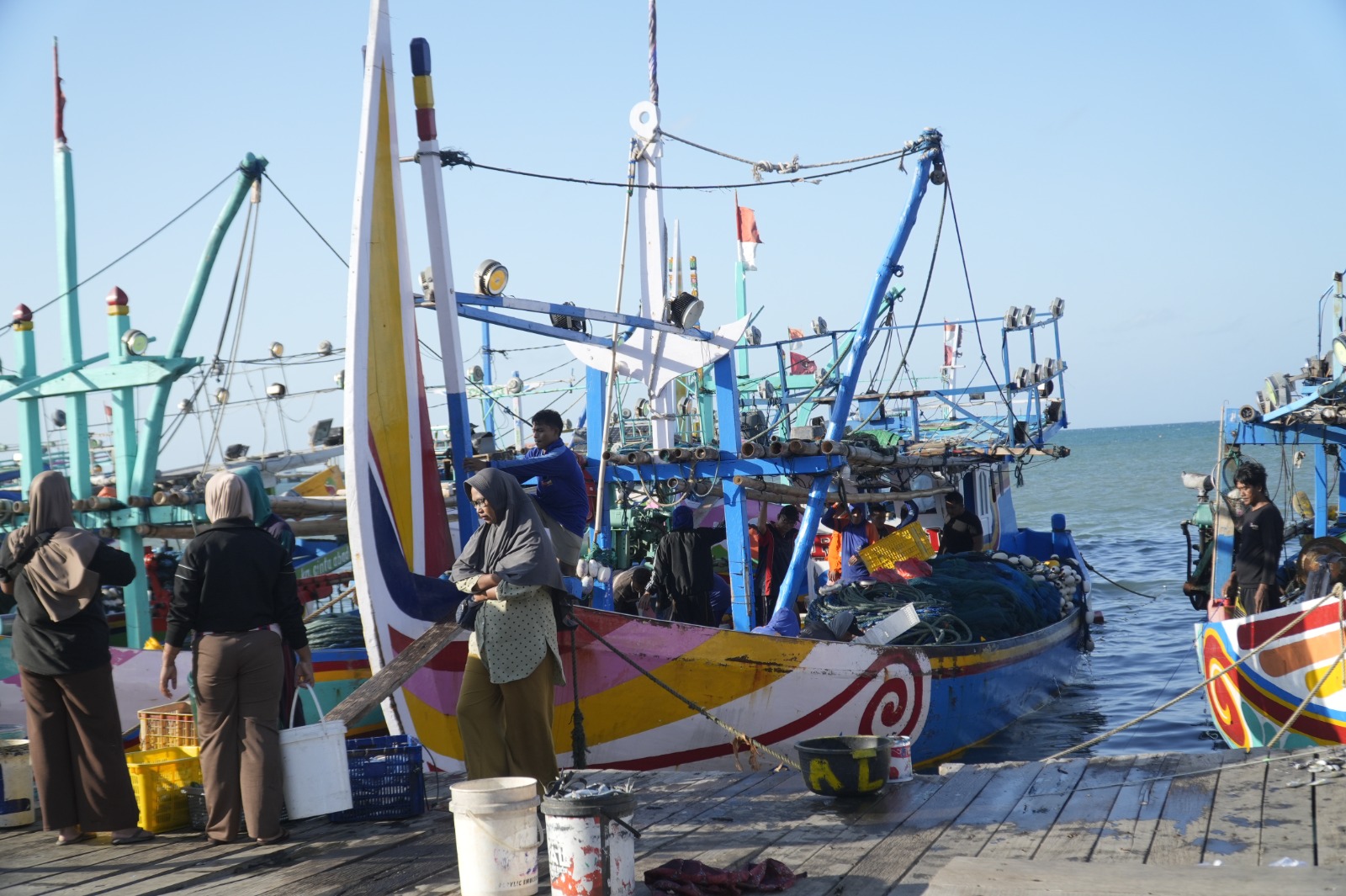


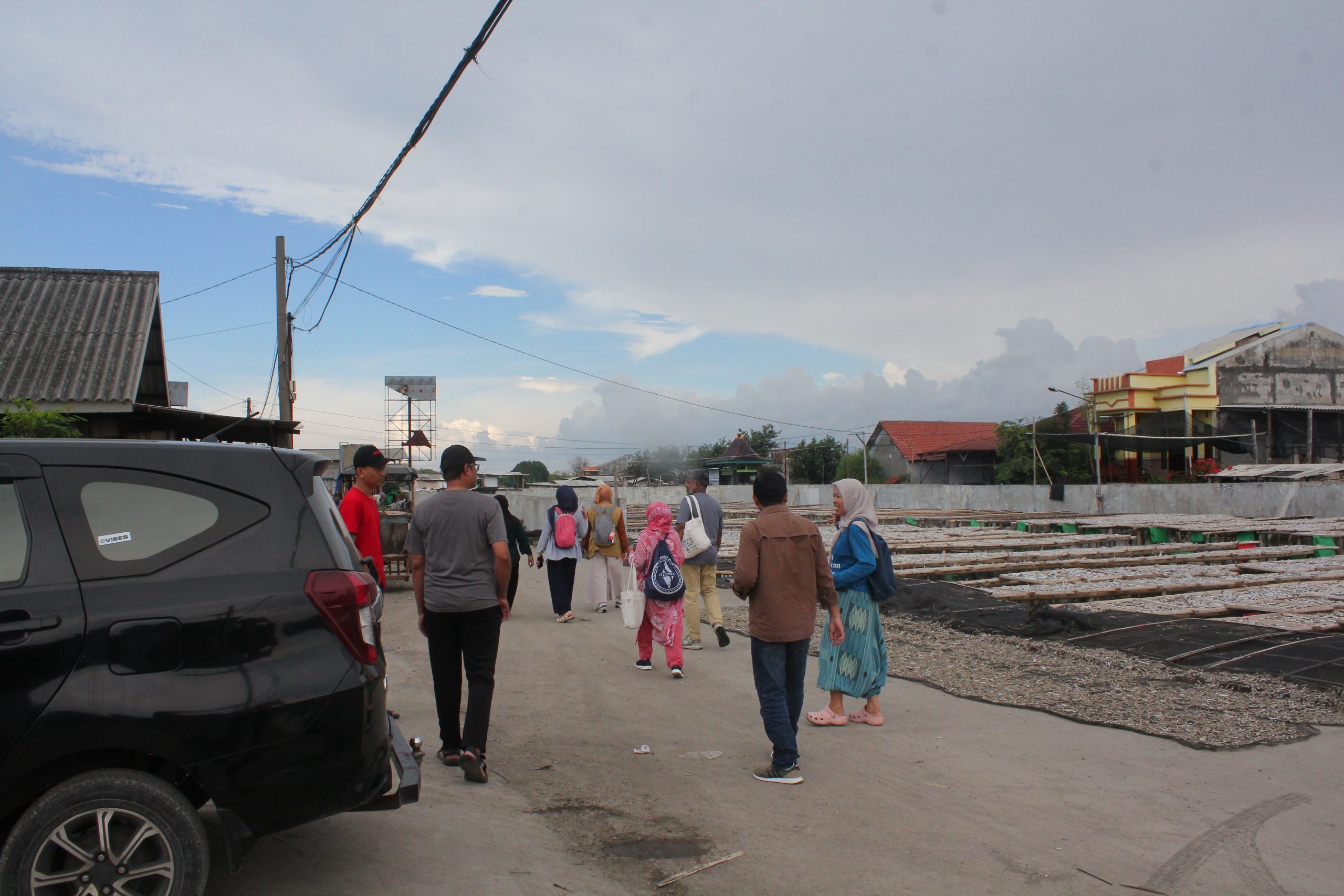
The threat of climate change, which has triggered severe tidal flooding along the northern coast of Java, has drawn international academic attention. A delegation from the Faculty of Social and Political Sciences (FISIP) of Universitas Negeri Semarang, together with experts from Japan and Bangladesh, visited Morodemak Village in Demak, Central Java.
They came to observe field conditions and examine local community adaptation strategies. The visit, held on April 9, 2026, involved disaster experts Md. Anwarul Abedin from Bangladesh Agricultural University and Gulsan Ara Parfin from Ritsumeikan University, Japan.
Accompanied by the FISIP lecturers team, they directly surveyed areas severely affected by tidal flooding, which has worsened due to rising sea levels and coastal abrasion. Their main focus was to assess the resilience of coastal communities, particularly women fisher groups.
One key highlight of the visit was the Puspita Bahari community. The delegation held discussions with its leader, Masnu’ah, to explore survival strategies amid increasingly degraded environmental conditions.
Masnu’ah explained that one of their main efforts is advocating their issues to the government. “Our community continuously voices advocacy to the government while engaging other coastal communities to protect our living space. This is also part of our struggle for gender equality, so that women fishers are recognized and granted equal rights,” she said.
For the international academics, Morodemak serves as a “living laboratory” that reflects the resilience of grassroots communities. Amid the threat of land loss, women fishers are not standing still they are actively seeking alternative livelihoods while advocating for marine ecosystem preservation.
The interdisciplinary collaboration from UNNES, combining geographical and socio-anthropological approaches, is considered crucial in producing comprehensive solutions. This approach is expected to generate practical academic recommendations for addressing the ecological crisis in Demak’s coastal areas and serve as a reference for regional disaster mitigation policies.