

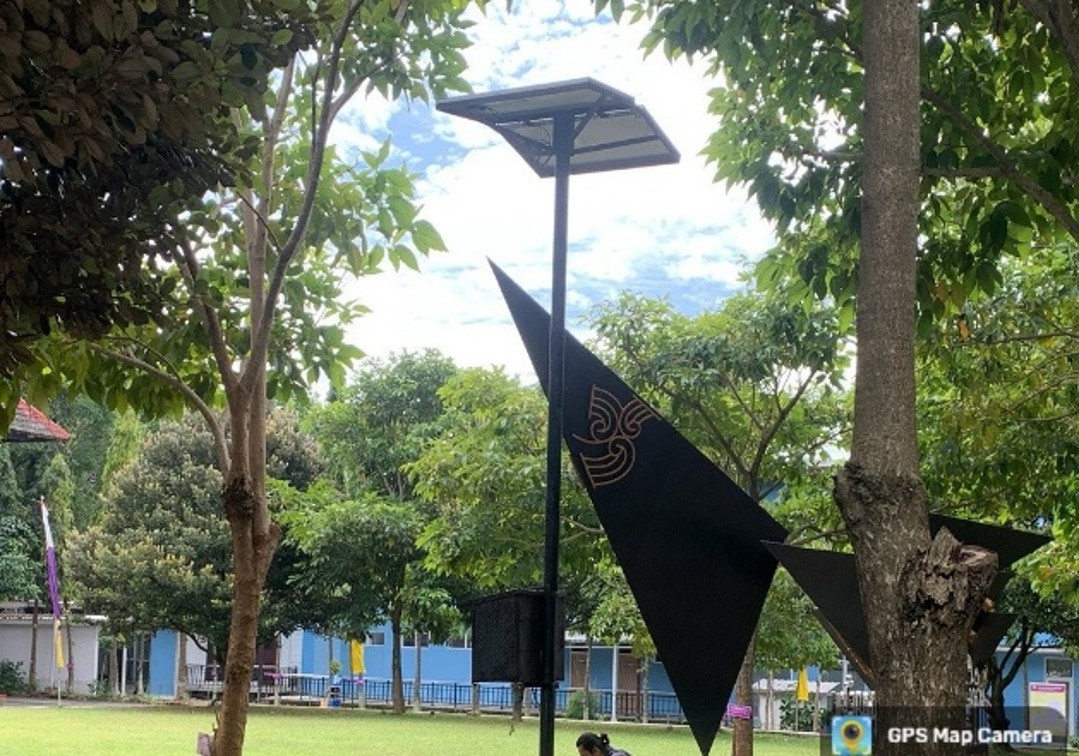
Semarang, March 20, 2025 – The Faculty of Languages and Arts (FBS) of Universitas Negeri Semarang (UNNES) continues to strengthen its commitment to environmental management and sustainable energy utilization through the installation of solar panels in the FBS UNNES field area. The installation of these solar panels is part of the faculty’s efforts to improve energy efficiency while reducing overall energy consumption.
The installation of the panels was carried out after the FBS UNNES facilities and infrastructure team carried out an energy review in 2024. The review was conducted to identify significant energy waste and determine strategic steps to improve energy efficiency in the faculty environment. Furthermore, the installation of panels will be realized using the 2025 budget.
The use of solar panels as a renewable energy source improves energy efficiency in the FBS UNNES environment. Through this installation, FBS UNNES is projected to save 6,132 kWh of energy per year. This step demonstrates the faculty’s real efforts to optimize the use of more sustainable alternative energy sources.
The use of solar energy is also part of FBS UNNES’ efforts to encourage the transition to a more environmentally friendly energy source. The use of renewable energy in the faculty environment is expected to reduce dependence on conventional energy sources while increasing the academic community’s awareness of the importance of energy efficiency and sustainability.
The panel installation initiative aligns with Sustainable Development Goal (SDG) 7: Affordable and Clean Energy, which promotes access to affordable, reliable, sustainable, and modern energy. By utilizing solar energy as a renewable energy source, FBS UNNES contributes to creating a more energy-efficient and sustainable campus environment.
Through these concrete steps, FBS UNNES shows that energy management in the university environment is not only oriented towards operational efficiency, but also part of the institutional commitment to support sustainable development and the implementation of the SDGs.