



YOGYAKARTA – A lecturer from the Faculty of Social and Political Sciences (FISIP) at Universitas Negeri Semarang (UNNES), Eka Yudha Wibowo, together with a research team, conducted data collection and historical source tracing at the Central Board (PP) of Aisyiyah in Yogyakarta on Thursday (July 23, 2026). The activity focused on uncovering the historical track record of Aisyiyah’s role in fostering educational awareness for women and underprivileged (dhuafa) children in Yogyakarta during the 1917–1950 period.
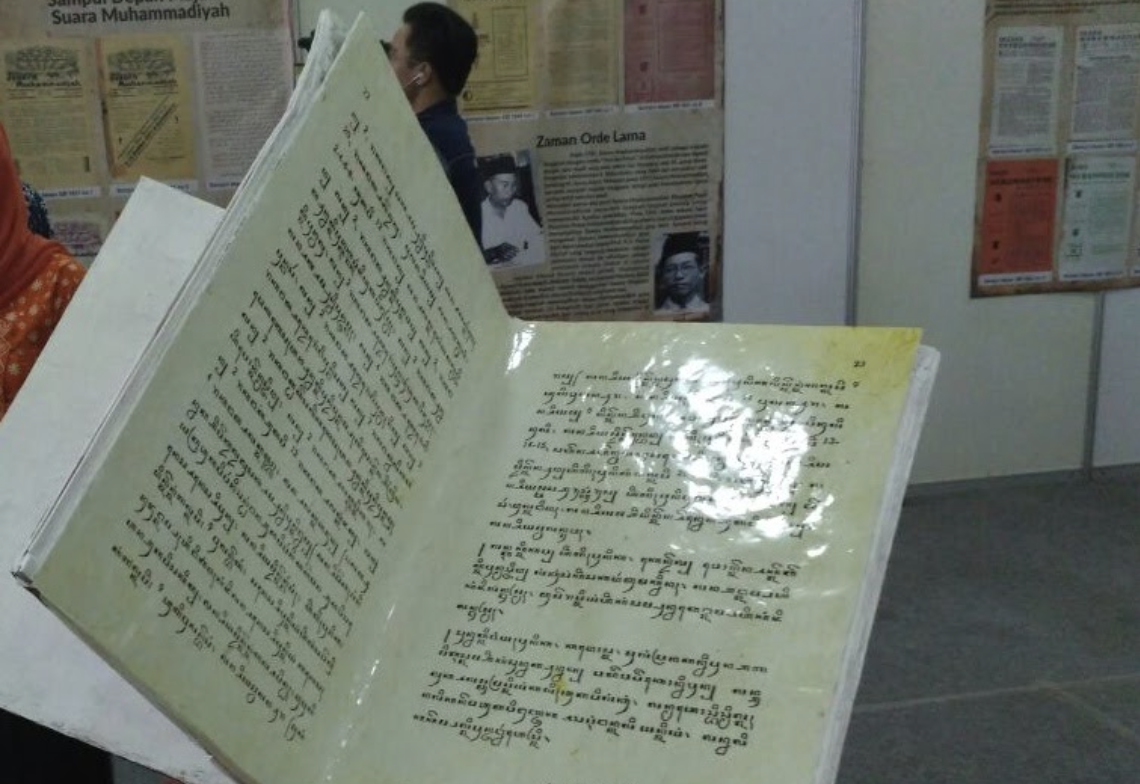
This archival investigation aims to obtain primary sources, institutional records, and relevant documentation to support a comprehensive historical reconstruction for the study. During the fieldwork, the research team identified, documented, and cataloged numerous historical archives—including early editions of Suara Muhammadiyah as well as rare books and archival documents related to Muhammadiyah and Aisyiyah in Yogyakarta—while holding discussions with partner representatives regarding the availability of additional supporting records.
All historical data and documents gathered will subsequently undergo rigorous historical methodology stages,encompassing source classification, source criticism, and historical analysis.
Lead researcher Eka Yudha Wibowo emphasized that meticulous primary source gathering serves as the cornerstone of credible historical writing.
“Source tracing is a crucial part of ensuring that this research can historically reconstruct Aisyiyah’s role based on accountable and verifiable sources,” said Eka Yudha Wibowo.
Meanwhile, partner representatives from PP Aisyiyah Yogyakarta welcomed the archival research initiative, noting its strategic contribution to preserving the collective memory of both the organization and the wider community.
“This research holds significant value in recording the history of education, women’s empowerment, and social services in Yogyakarta,” stated a representative of PP Aisyiyah Yogyakarta.
Through this research synergy between FISIP UNNES and PP Aisyiyah Yogyakarta, Indonesian historiography—particularly concerning women’s movements, poverty alleviation through education for underprivileged children, and social welfare from the early national awakening era to early independence—is expected to be scientifically documented as a lasting reference for future generations.