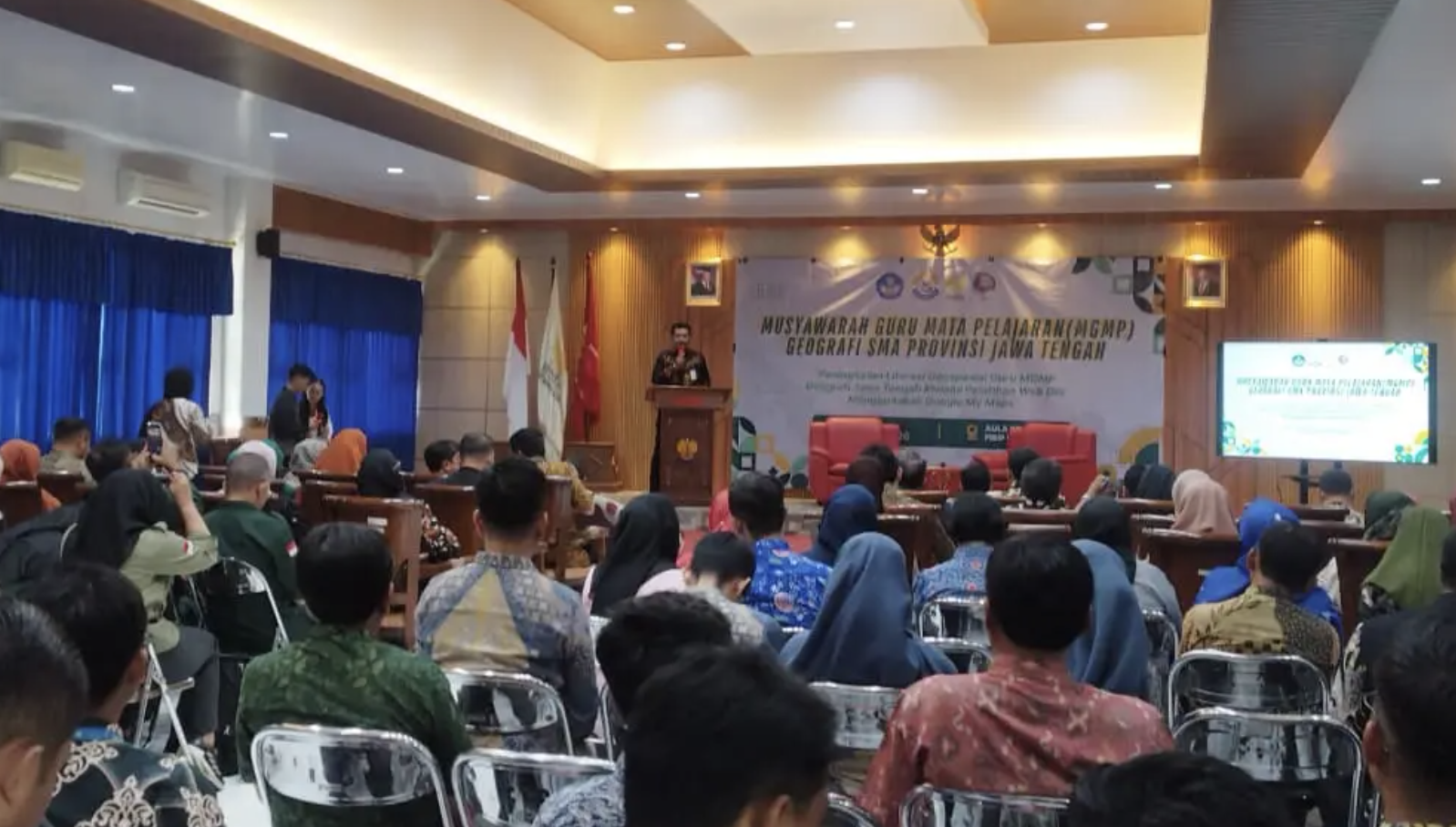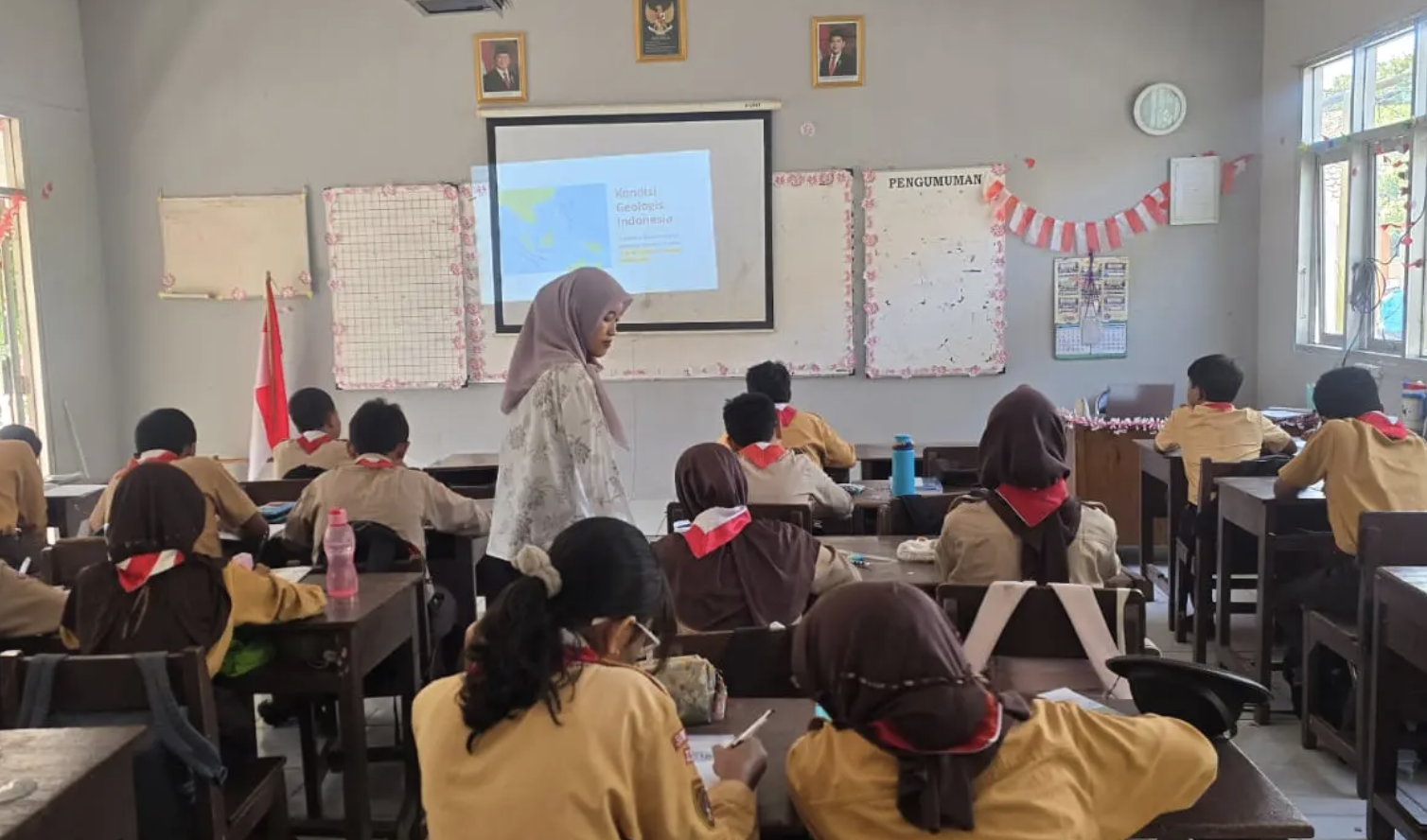




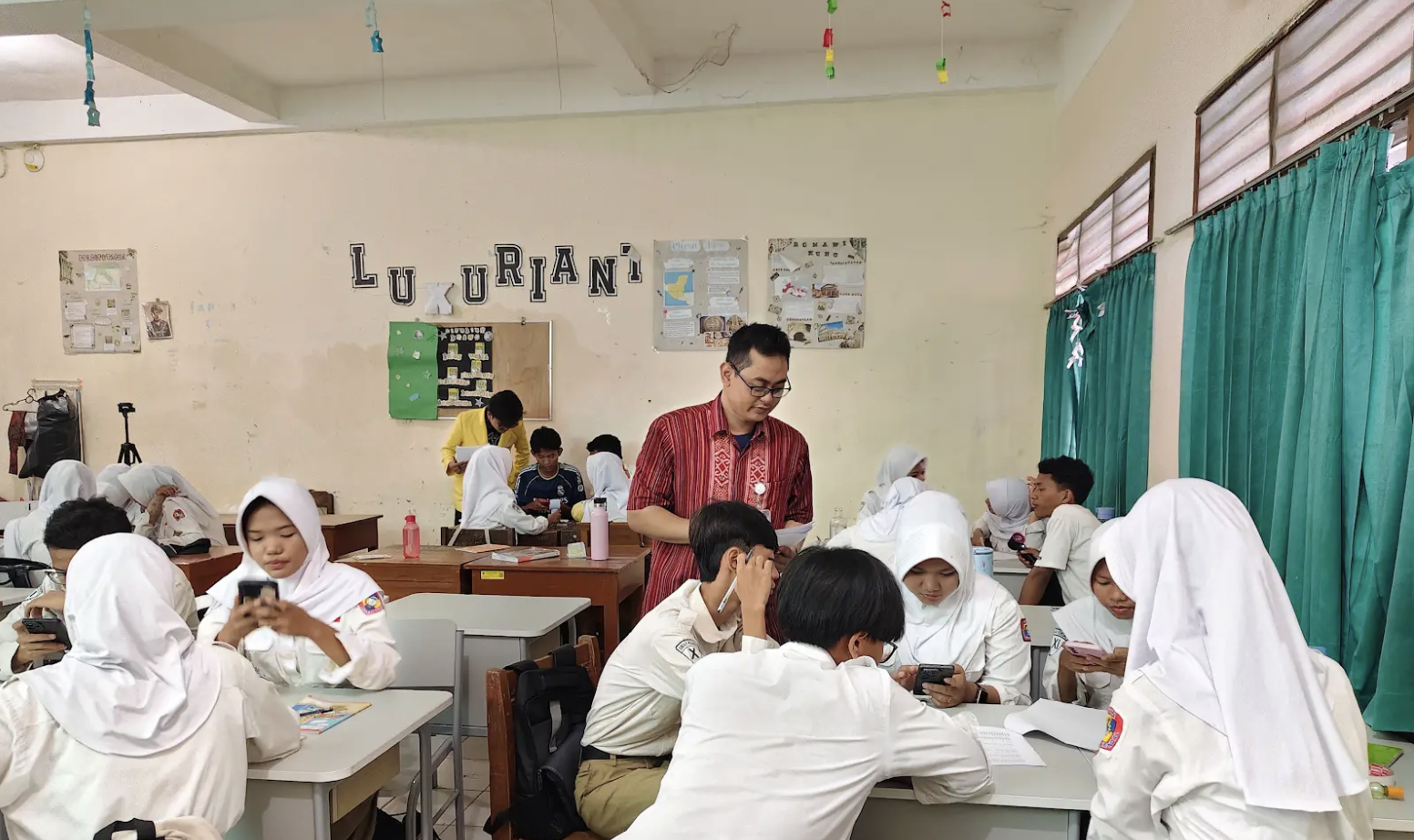
KENDAL – A lecturer from the Faculty of Social and Political Sciences (FISIP) at Universitas Negeri Semarang (UNNES), Pradika Adi Wijayanto, S.Pd., M.Pd., conducted a research initiative titled “Geography Learning Innovation Through the Integration of Deep Learning, TPACK, and WebGIS to Enhance Spatial and Numeracy Literacy of Secondary School Students” on Wednesday (May 20, 2026). The activity was carried out in collaboration with SMAN 1 Kendal and SMAN NU 05 Brangsong Kendal, involving Geography teachers and Social Sciences (IPS) students from both schools.
The study focuses on designing and testing the effectiveness of integrating the Deep Learning model, the Technological Pedagogical Content Knowledge (TPACK) framework, and Web Geographic Information System (WebGIS) into secondary school Geography instruction. Through this spatial technology and deep-learning approach, students are encouraged to sharpen both their spatial analysis skills (spatial literacy) and their ability to process and interpret quantitative data (numeracy literacy).
Lead researcher Pradika Adi Wijayanto, S.Pd., M.Pd., noted that the integrated learning model has proven effective and feasible for classroom implementation.
“The Geography learning model integrating Deep Learning, TPACK, and WebGIS is viable for classroom use because it delivers comprehensive positive impacts for students across cognitive, affective, and psychomotor domains,” said Pradika Adi Wijayanto, S.Pd., M.Pd.
Echoing this assessment, school partners welcomed the trial results of the learning innovation and expressed hope for its continued optimization in classroom practice.
“This Deep Learning, TPACK, and WebGIS model is highly suitable for Geography education as it provides positive impacts on students’ cognitive, affective, and psychomotor aspects. Moving forward, this model should be practiced consistently in classroom instruction so that any remaining limitations can be effectively minimized,” stated a representative of the partner schools.
Through this research collaboration between higher education and secondary schools, the quality of digital technology-based Geography education is expected to advance further, equipping young generations with strong spatial literacy,numeracy skills, and awareness of environmental and disaster-related issues.