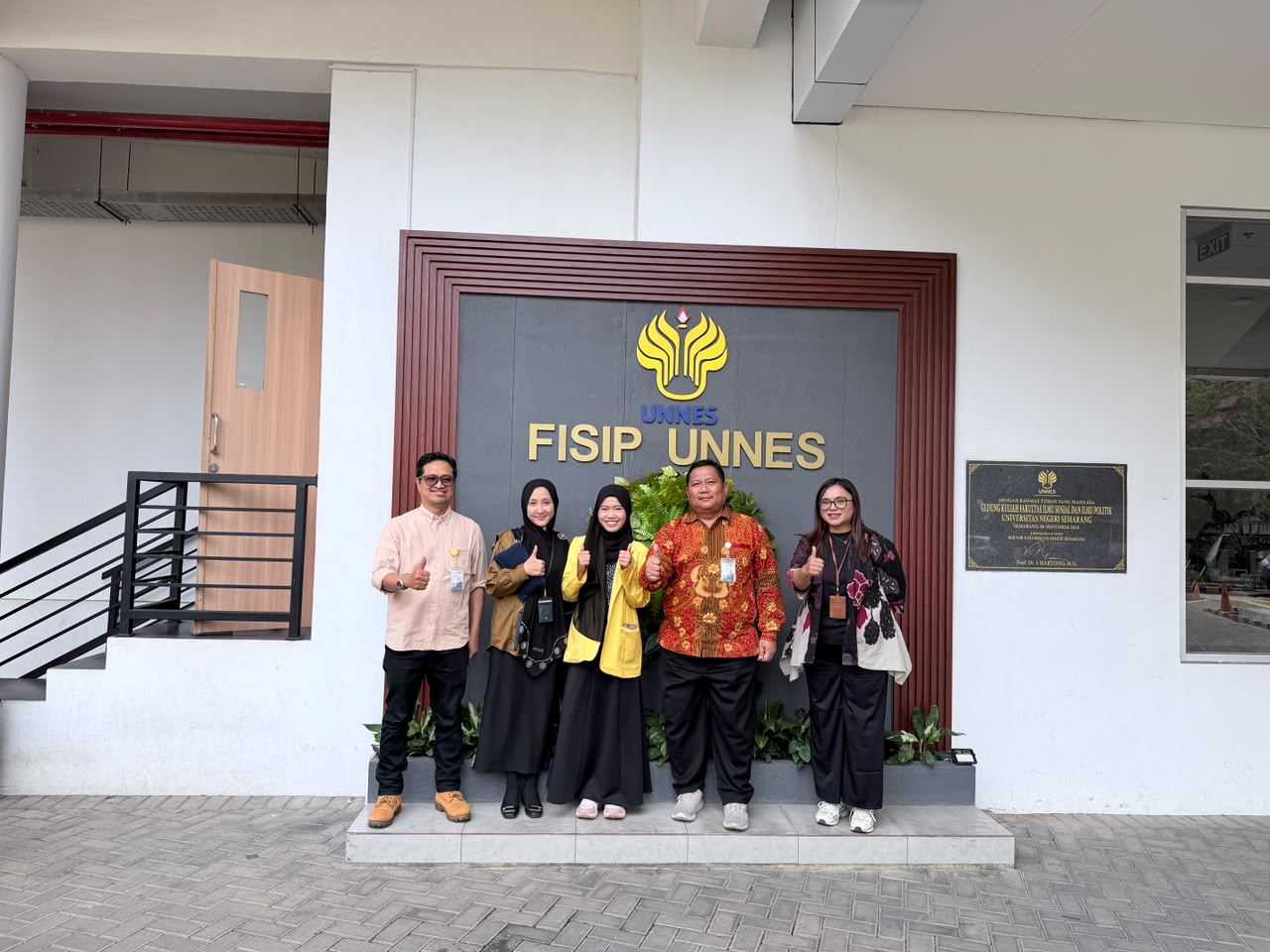


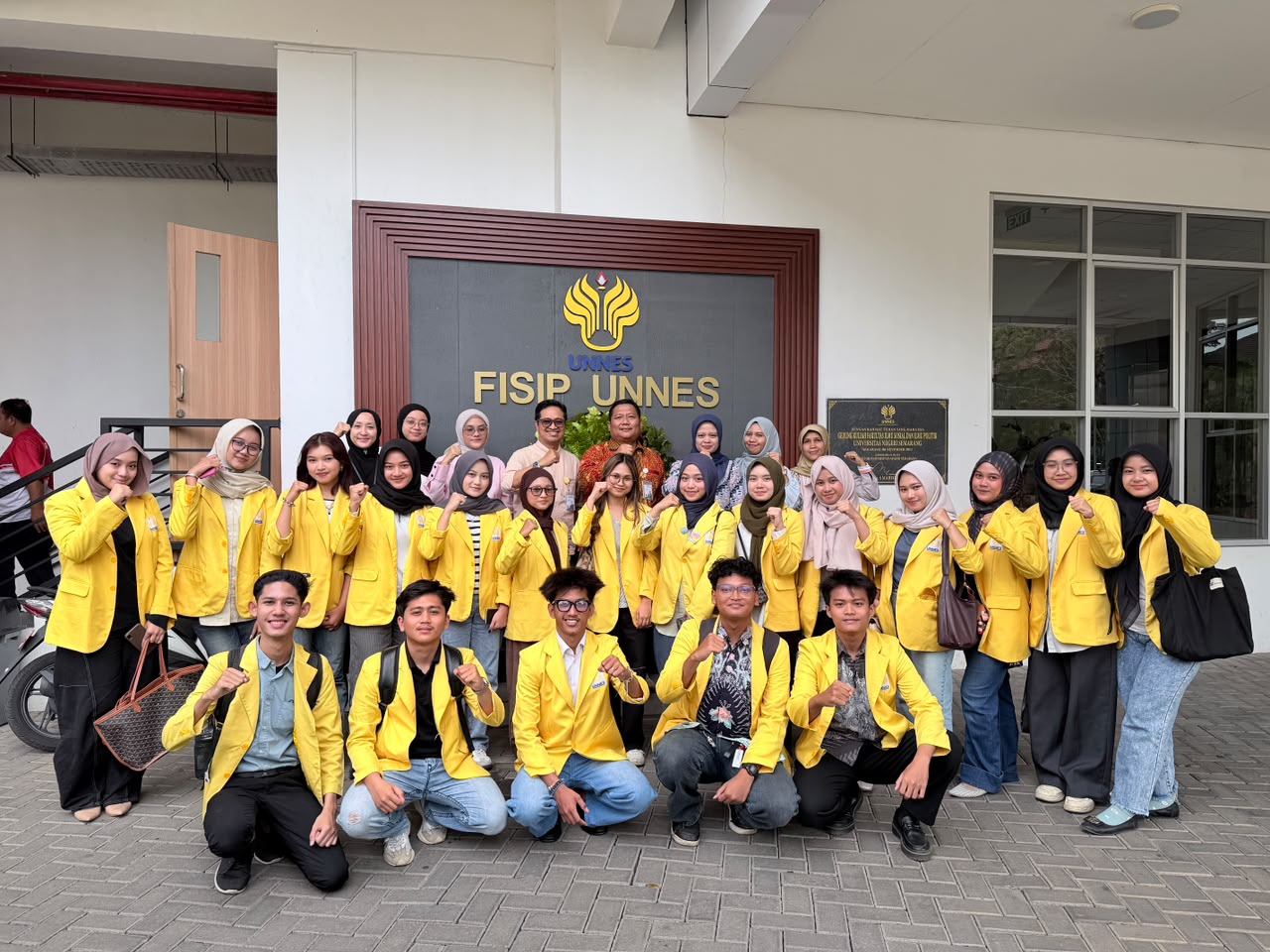
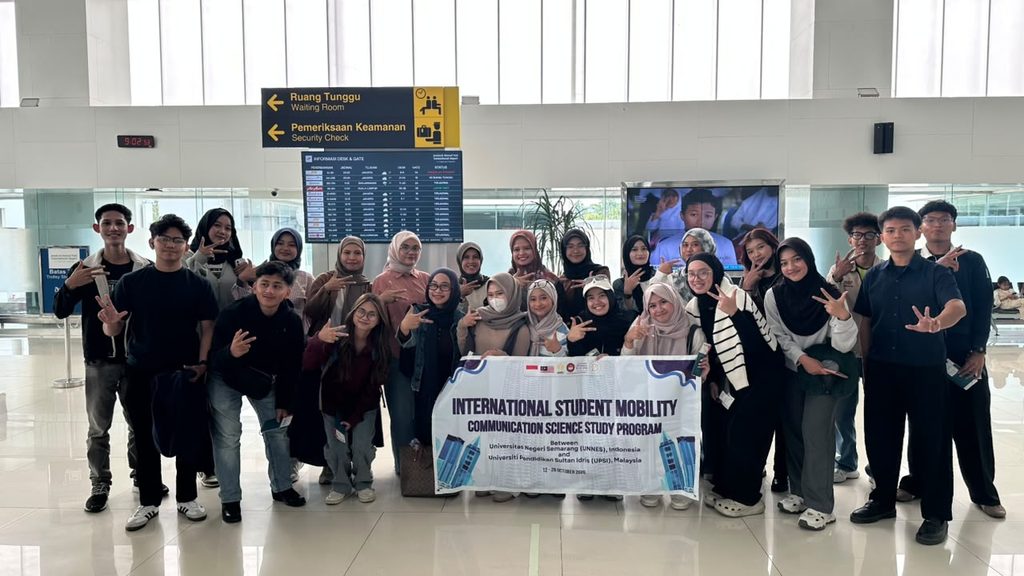
SEMARANG – The Faculty of Social and Political Sciences (FISIP) of Universitas Negeri Semarang (UNNES) has officially sent off 20 students from its Communication Science Study Program to participate in the 2026 Student Mobility Program at Universiti Pendidikan Sultan Idris (UPSI), Malaysia. Scheduled for October 12–26, 2026, the program is part of the faculty’s efforts to broaden students’ academic experiences through cross-border learning, cultural exchange, and international educational collaboration.
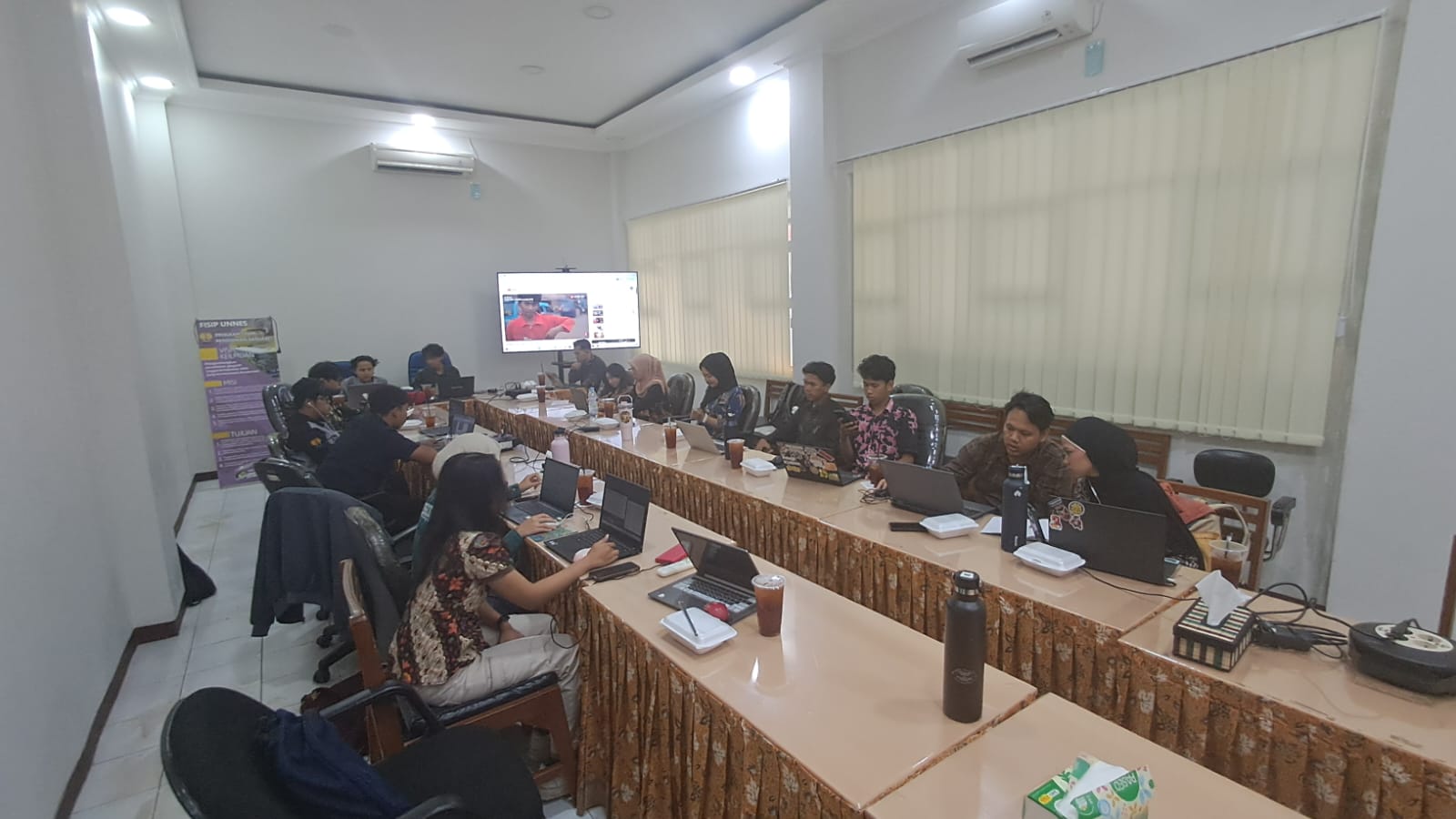
The students were officially sent off by the Dean of FISIP UNNES, Prof. Dr. Arif Purnomo, S.Pd., S.S., M.Pd. The 20 participants comprise eight third-semester students and 12 fifth-semester students. During their stay at UPSI, they will participate in lectures, academic discussions, campus communication observations, small-scale research activities, and digital communication project development in collaboration with local students.
The program is designed to provide students with firsthand learning experiences in an international academic environment while strengthening their competencies in Communication Science. Through interactions with UPSI students and academic community members, participants are expected to broaden their perspectives on communication practices, social dynamics, and cultural differences between Indonesia and Malaysia.
The program is scheduled to begin with the participants’ departure from Semarang to Malaysia on October 12, 2026. The following day, they are scheduled to attend a guest lecture on intercultural communication, discussions on educational and research collaboration between UNNES and UPSI, and sessions on the development of inbound and outbound student mobility programs. The agenda also includes exploring research collaboration on ASEAN Digital Wellbeing between the Communication Science Study Program at UNNES and its counterpart at UPSI.
On October 14, 2026, students will participate in a campus tour and library visit, observe academic services, and attend a research clinic to identify communication issues in Indonesia and Malaysia. These activities will be followed by an introduction to student organizations at UPSI, a student laboratory session on digital wellbeing, and collaborative group discussions. Throughout the program, participants are also scheduled to attend regular lectures alongside UPSI students, engage in case study discussions, and reflect on their learning experiences.
Academic research and competency development are important components of the program. On October 19, 2026, participants are scheduled to attend a research clinic to develop research questions and finalize simple research instruments with UPSI lecturers or mentors. Limited data collection activities on campus are also planned, subject to the necessary permissions and respondents’ informed consent. Subsequently, students will conduct preliminary analyses of campus media and communication channels, map relevant stakeholders, and compare digital media phenomena in Indonesia and Malaysia.
In addition to academic activities, the program provides opportunities for students to develop content production and digital communication skills. Participants will work in mixed groups comprising UNNES and UPSI students to produce projects in the form of videos, educational carousel posts, or digital campaigns. The process will include message development, audience identification, communication channel selection, content editing, bilingual caption writing, fact-checking, and reviews of ethical considerations and documentation permissions. The students’ work will subsequently be presented at an academic forum to receive feedback from their peers.
Through this series of activities, the 2026 Student Mobility Program is expected not only to enrich students’ learning experiences but also to foster academic networks and sustainable cross-border collaboration. Direct interaction within an international campus environment offers students an opportunity to develop intercultural communication skills, critical thinking, teamwork in multicultural settings, and a deeper understanding of the responsible use of digital media.
The program aligns with the Sustainable Development Goals (SDGs), particularly SDG 4: Quality Education, by providing learning experiences that broaden perspectives, enhance competencies, and facilitate cross-border knowledge exchange. It also supports SDG 17: Partnerships for the Goals through stronger educational cooperation, the exploration of collaborative research opportunities, and the development of institutional ties between UNNES and UPSI.
Furthermore, discussions on digital wellbeing, communication ethics, and digital media analysis provide opportunities for students to critically understand communication challenges in the digital era. By combining academic learning, small-scale research, and educational content production, the program is expected to contribute to the development of adaptable, globally minded human resources capable of communicating responsibly in an increasingly digitally connected society.
The program is scheduled to conclude on October 26, 2026, with a final evaluation, reflection on academic experiences, completion of learning logs, and preparations for the participants’ return to Indonesia. Through their participation in this program, FISIP UNNES continues to strengthen its efforts to internationalize education and encourage students to use cross-cultural experiences as a foundation for developing their academic and professional competencies.