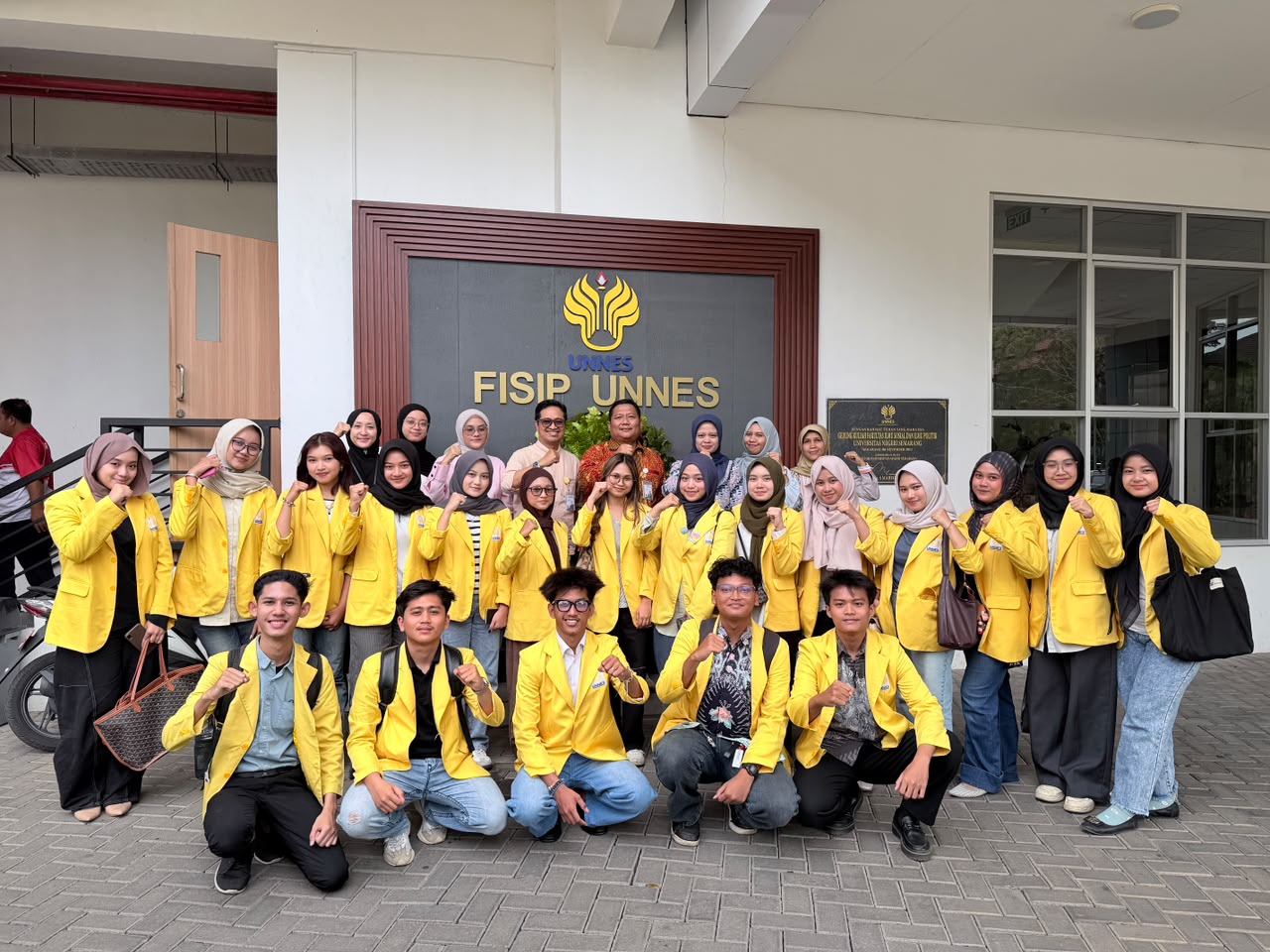


For some students, participating in campus activities is more than simply filling their free time. The 2026 Higher Education Scouting Orientation (Orientasi Kepramukaan Perguruan Tinggi/OKPT) at the Faculty of Social and Political Sciences (FISIP), Universitas Negeri Semarang (UNNES), became an opportunity to meet other students, broaden their knowledge, and learn more about Scouting activities in the university environment.
The FISIP UNNES OKPT was held on Sunday (August 23, 2026), at the C1 Hall on the third floor. Participants attended the event wearing complete Scout uniforms.
One of the participants, Febri Yanti Fitria Anggraeni, a Social Studies Education student, said she joined OKPT to expand her network and gain new insights.
“One of the reasons I wanted to join OKPT was to meet new people and broaden my knowledge,” Febri said.
Febri described the experience as enjoyable. She said the materials presented by lecturers and senior students provided useful information that helped participants become more familiar with the FISIP UNNES environment and Scouting activities on campus.
“The event was really fun. The materials presented by the lecturers and senior students were very informative. They really helped us get to know the FISIP UNNES environment and Scouting activities here,” she said.
For Febri, OKPT was not merely an introduction to Scouting activities. Meeting other participants was also an important part of the experience. Interactions during the event created opportunities for students to build connections within the university community.
A different perspective was shared by Raditya Pradipta, a Geography student. He said he joined OKPT because he wanted to spend his time doing a positive activity.
“I joined OKPT because I had nothing to do at home, so I wanted to spend my time doing something positive, such as participating in OKPT,” Raditya said.
Although the number of participants was relatively small, Raditya remained enthusiastic throughout the activity. For him, joining OKPT was a way to make productive use of his time while gaining new experiences.
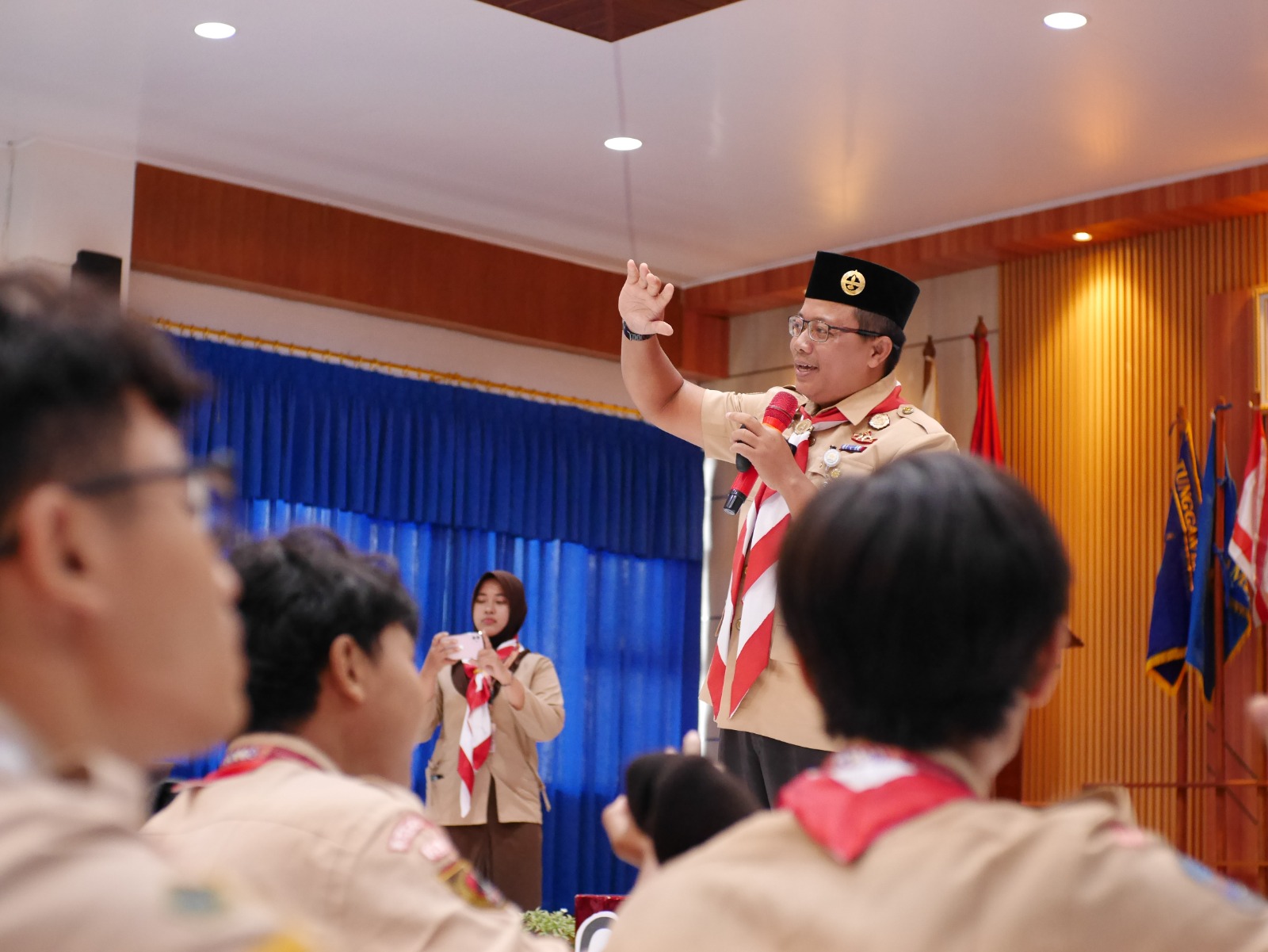
In addition to building connections, participants received material on Scouting leadership from Ruhadi, a Scout instructor at FISIP UNNES. The session introduced Ambalan and Racana Wijaya Tungga Wijaya as platforms for developing Scout members at the Penegak and Pandega levels at UNNES.
Ruhadi explained that Scouting activities in higher education serve as a space to develop Penegak and Pandega Scouts into qualified and character-driven future mentors and leaders. Through Ambalan and Racana Wijaya Tungga Wijaya, students are expected to develop leadership skills and contribute to addressing various challenges in society.
Participants were also introduced to the characteristics of Penegak Scouts, which emphasize independence and responsibility. The session included discussions on social projects and leadership.
OKPT also introduced participants to environmental conservation through a session delivered by Rudi Salam, Chair of the FISIP UNNES Conservation and SDGs Group.
Rudi presented the theme “UNNES Scouts as a Pillar for Achieving the SDGs.” He explained that conservation involves efforts to preserve the environment while maintaining its benefits for people today and ensuring its sustainability for future generations.
Participants were introduced to tree planting and maintenance as examples of conservation activities. The session also introduced the 2026 Tree Planting Information System (SIOMON) to support the documentation of tree-planting activities.
In practice, tree planting involves more than simply planting seedlings. Location data, geo-tagged documentation, and tree maintenance are also important components. Students can even regularly update tree maintenance data throughout their studies.
For participants, these sessions broadened the meaning of OKPT. Scouting activities are not only a space to become familiar with an organization but also an opportunity to learn about leadership, responsibility, conservation, and building connections with fellow students.
From the participants’ experiences, OKPT ultimately became part of the process of adapting to university life. Amid the academic activities they are about to undertake, the program provided students with an opportunity to learn beyond the classroom, meet new people, and begin discovering ways to contribute to the campus community.