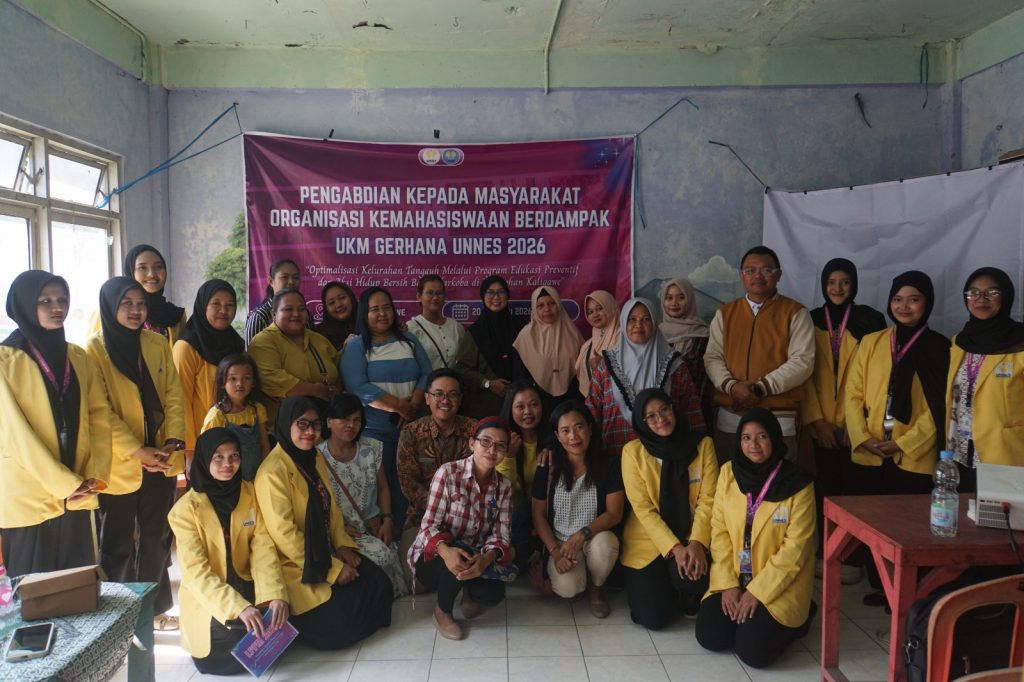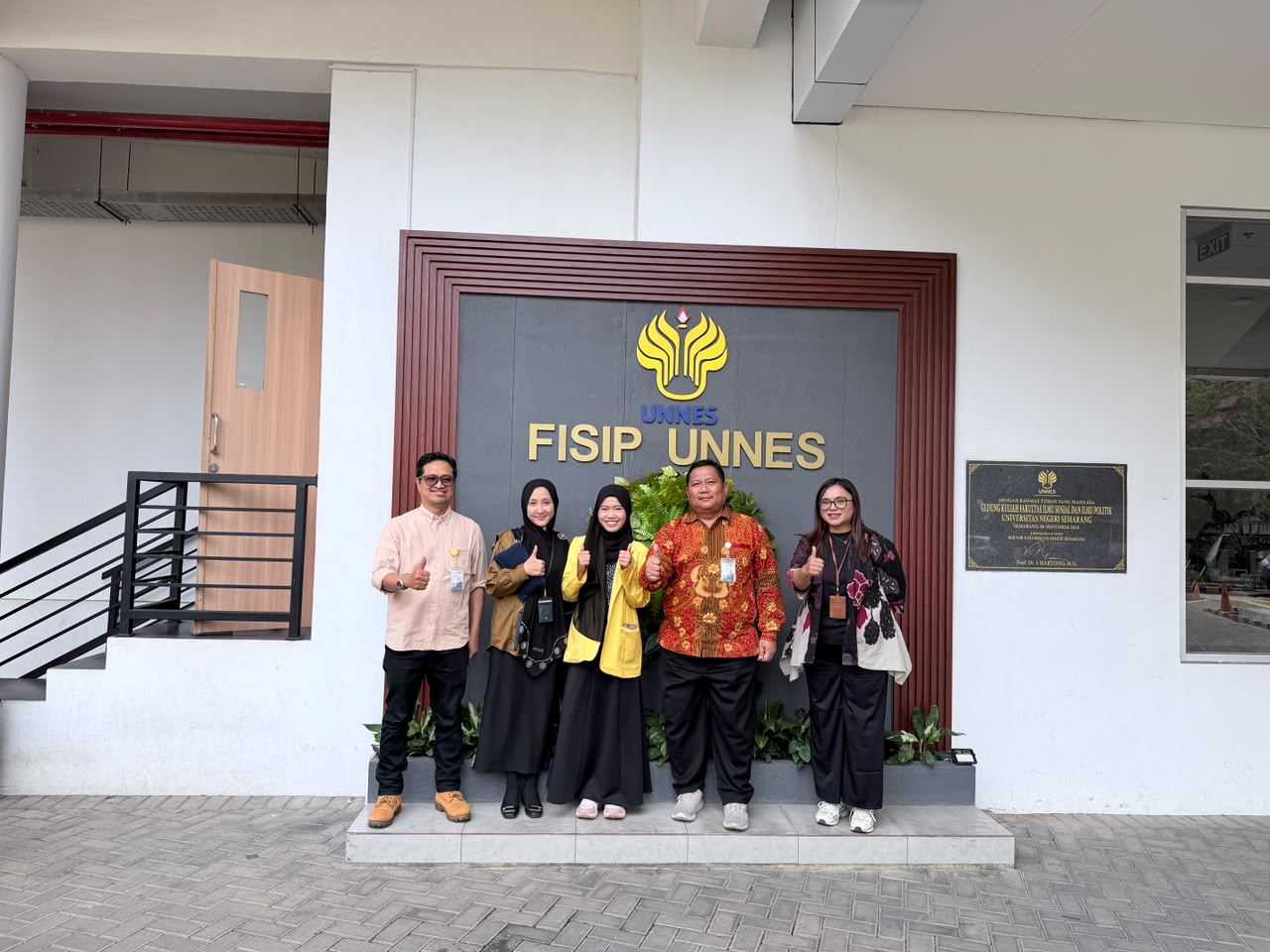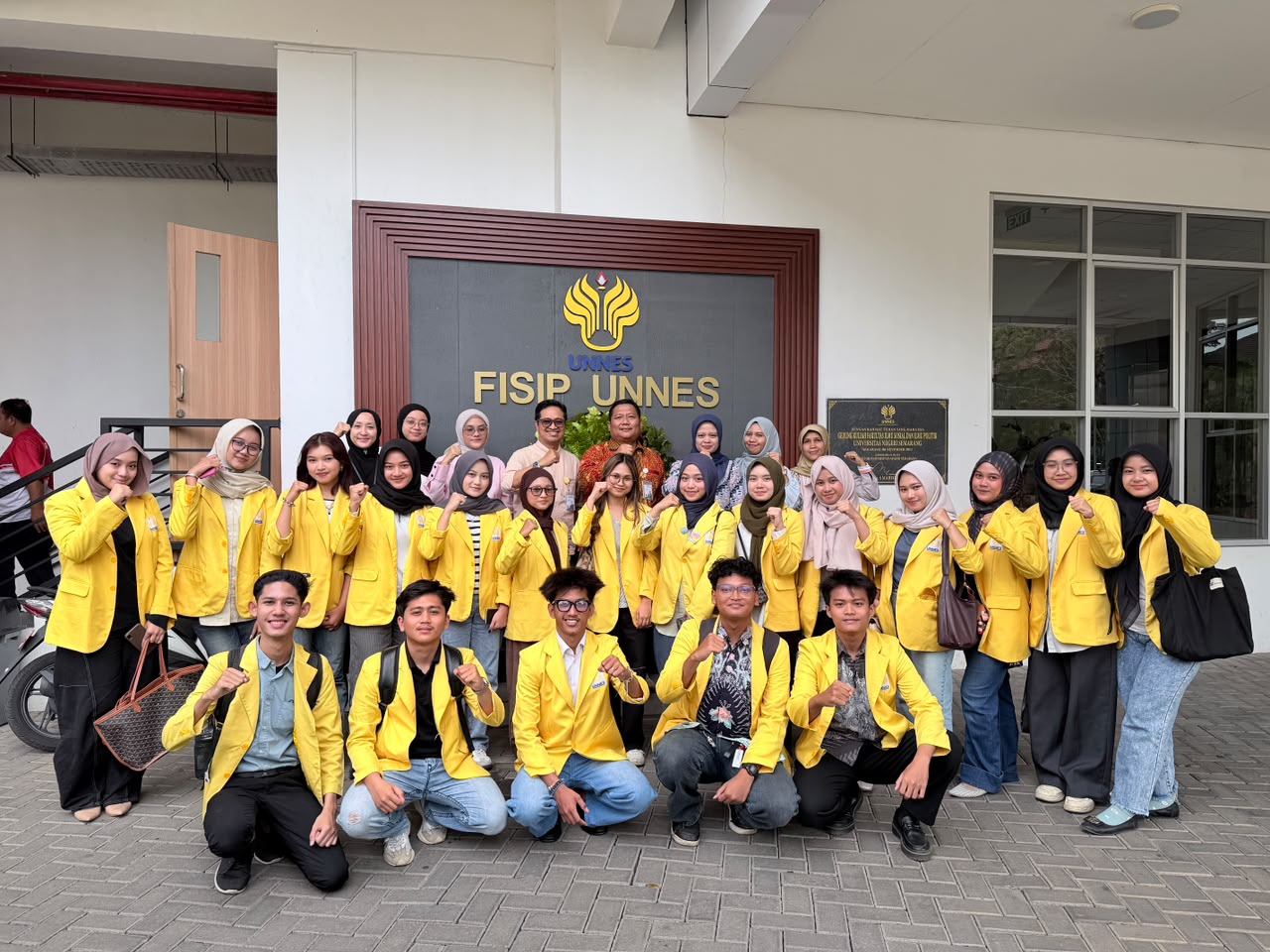


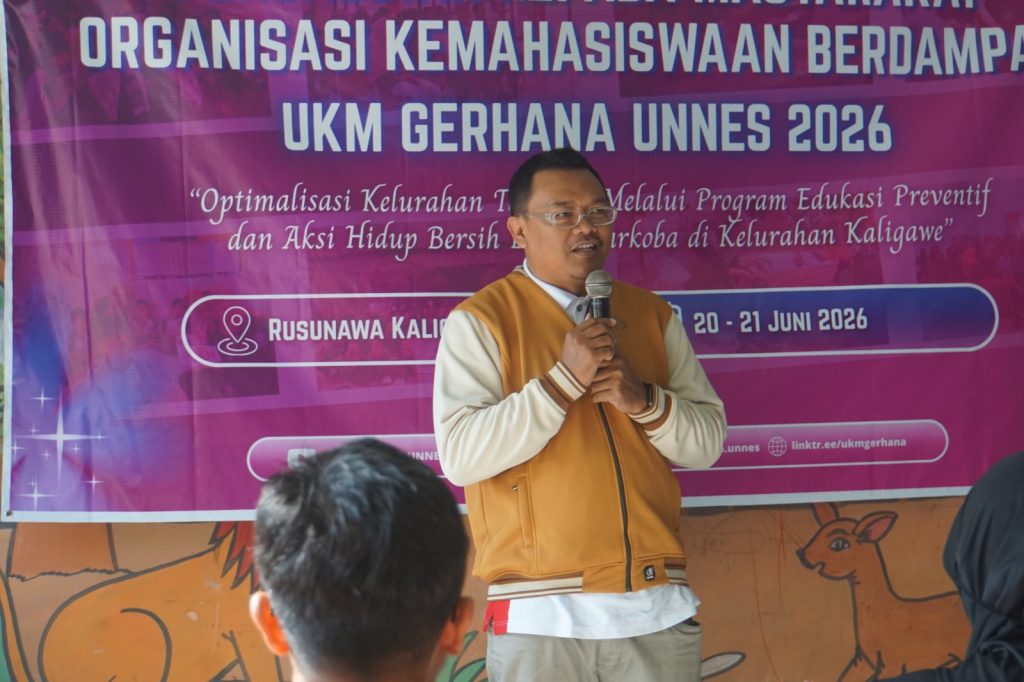
Semarang, 21 June 2026 – Lecturers from the Pancasila and Civic Education (PPKn) Study Program, Faculty of Social and Political Sciences (FISIP), Universitas Negeri Semarang (UNNES), organized the 2026 Impactful Community Service Program in collaboration with the National Narcotics Agency of Central Java Province (BNNP Central Java) and UKM Gerhana UNNES at the Kaligawe Public Housing Complex (Rusunawa Kaligawe) in Semarang. The program carried the theme, “Optimizing a Resilient Community through Preventive Education and Healthy, Drug-Free Living Initiatives in Kaligawe Village,” as part of UNNES’s commitment to implementing the Tri Dharma of Higher Education, particularly in the area of community engagement.
The two-day program was held on 20–21 June 2026, aiming to raise public awareness about the dangers of drug abuse, promote the implementation of Clean and Healthy Living Behavior (PHBS), and foster a healthier, safer, and more resilient community through active public participation.
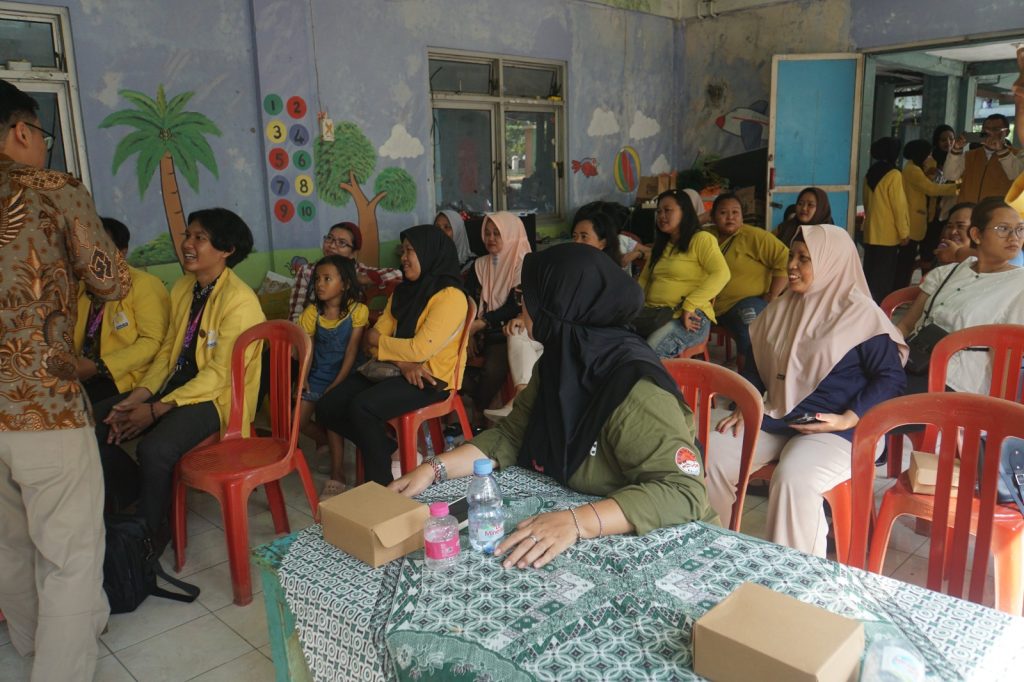
On the first day, Saturday (20 June), the program began with a community outreach session introducing the objectives and activities of the initiative to residents of Rusunawa Kaligawe. Participants then attended educational sessions on the dangers of drug abuse and the importance of adopting Clean and Healthy Living Behavior (PHBS) in their daily lives. The first day’s activities also featured free health screening services, encouraging residents to pay greater attention to their health and the importance of regular medical check-ups.
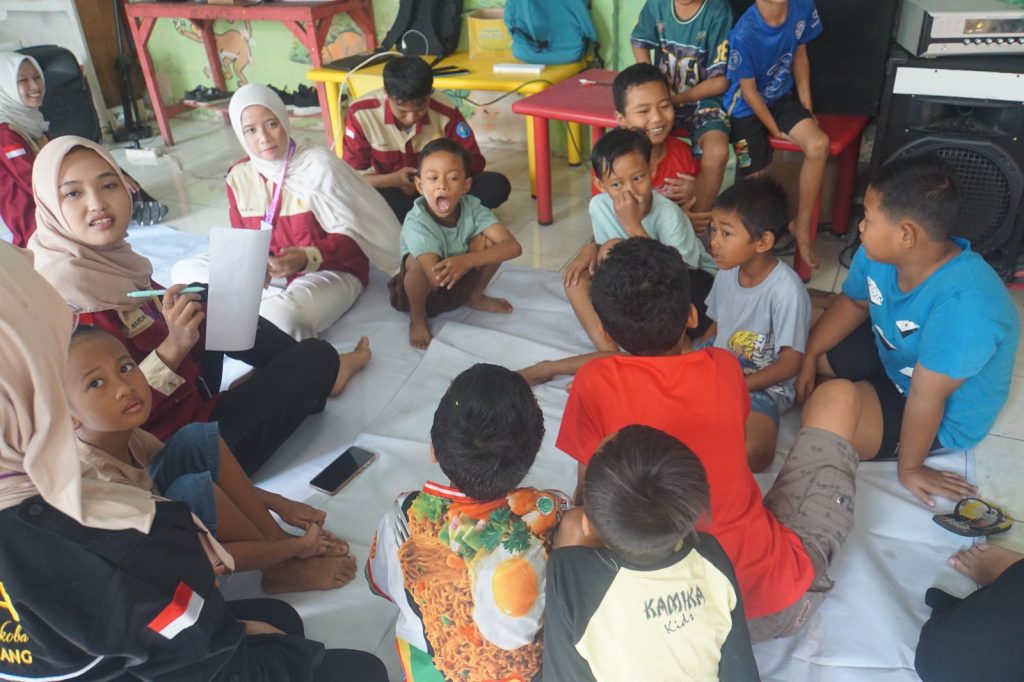
On the second day, Sunday (21 June), the program focused on children living in the Kaligawe Public Housing Complex. During this session, participants received age-appropriate education on Clean and Healthy Living Behavior (PHBS), delivered through interactive, engaging, and easy-to-understand learning methods. The educational materials emphasized the importance of personal hygiene, environmental cleanliness, and the development of healthy habits from an early age.
Beyond classroom-style instruction, the children participated in a variety of enjoyable activities, including healthy lifestyle practices and educational games. This interactive approach was designed to create an engaging learning environment, enabling participants to better understand and apply the messages conveyed in their everyday lives.
Through this Impactful Community Service Program, UNNES seeks to implement initiatives that are not only educational but also generate tangible benefits for local communities. The program serves as a meaningful contribution by university students in supporting the creation of healthier, more productive communities that are free from drug abuse.
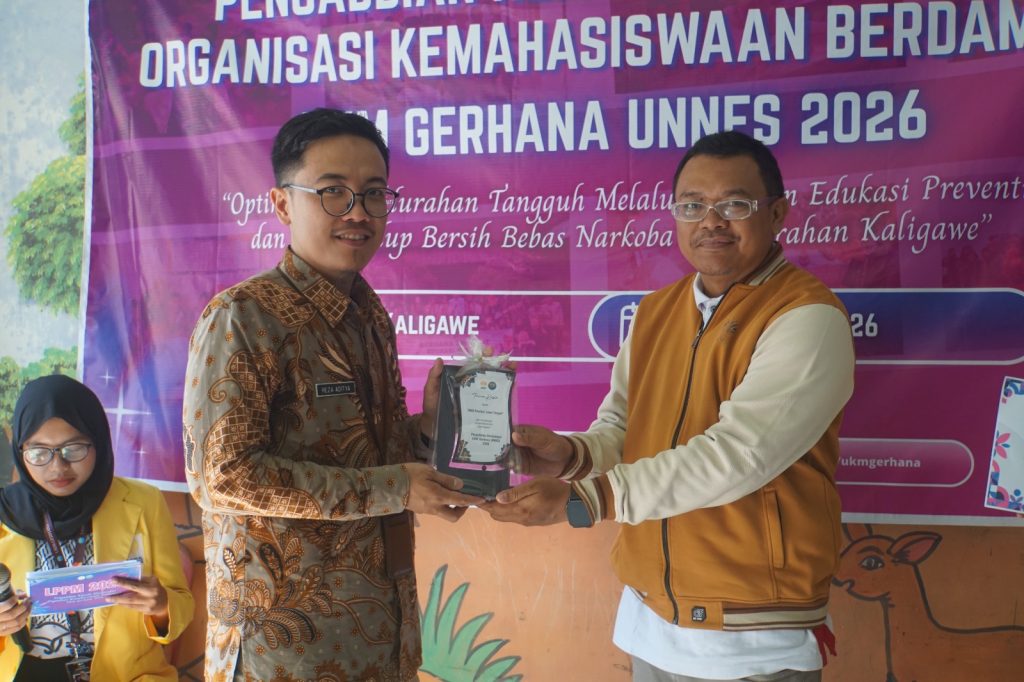
The 2026 Impactful Community Service Program is expected to become an important first step in strengthening collective awareness among residents of Rusunawa Kaligawe to consistently adopt healthy lifestyles and reinforce sustainable drug prevention efforts. Furthermore, the program demonstrates the vital role of university students as agents of change who can create positive social impact through community-centered initiatives that directly address local needs.
The 2026 Impactful Community Service Program also reflects Universitas Negeri Semarang’s strong commitment to advancing the Sustainable Development Goals (SDGs). The initiative contributes to SDG 3 (Good Health and Well-being) by promoting drug abuse prevention, encouraging Clean and Healthy Living Behavior (PHBS), and providing free health screening services to improve community health. It also supports SDG 4 (Quality Education) by delivering inclusive preventive education to both adults and children through participatory and age-appropriate learning approaches. Furthermore, the collaboration among Universitas Negeri Semarang, the National Narcotics Agency of Central Java Province (BNNP Central Java), UKM Gerhana UNNES, and the local community exemplifies SDG 17 (Partnerships for the Goals) by fostering cross-sector partnerships to build healthier, more resilient, and drug-free communities. Through this initiative, UNNES not only fulfills its commitment to the Tri Dharma of Higher Education but also reinforces the role of higher education institutions in promoting sustainable development and generating meaningful social impact.