FISIP Revitalizes Biopores Together with 150 Social Studies Education Students

Universitas Negeri Semarang > Faculty of Social Sciences and Political Science > Konservasi > FISIP Revitalizes Biopores Together with 150 Social Studies Education Students

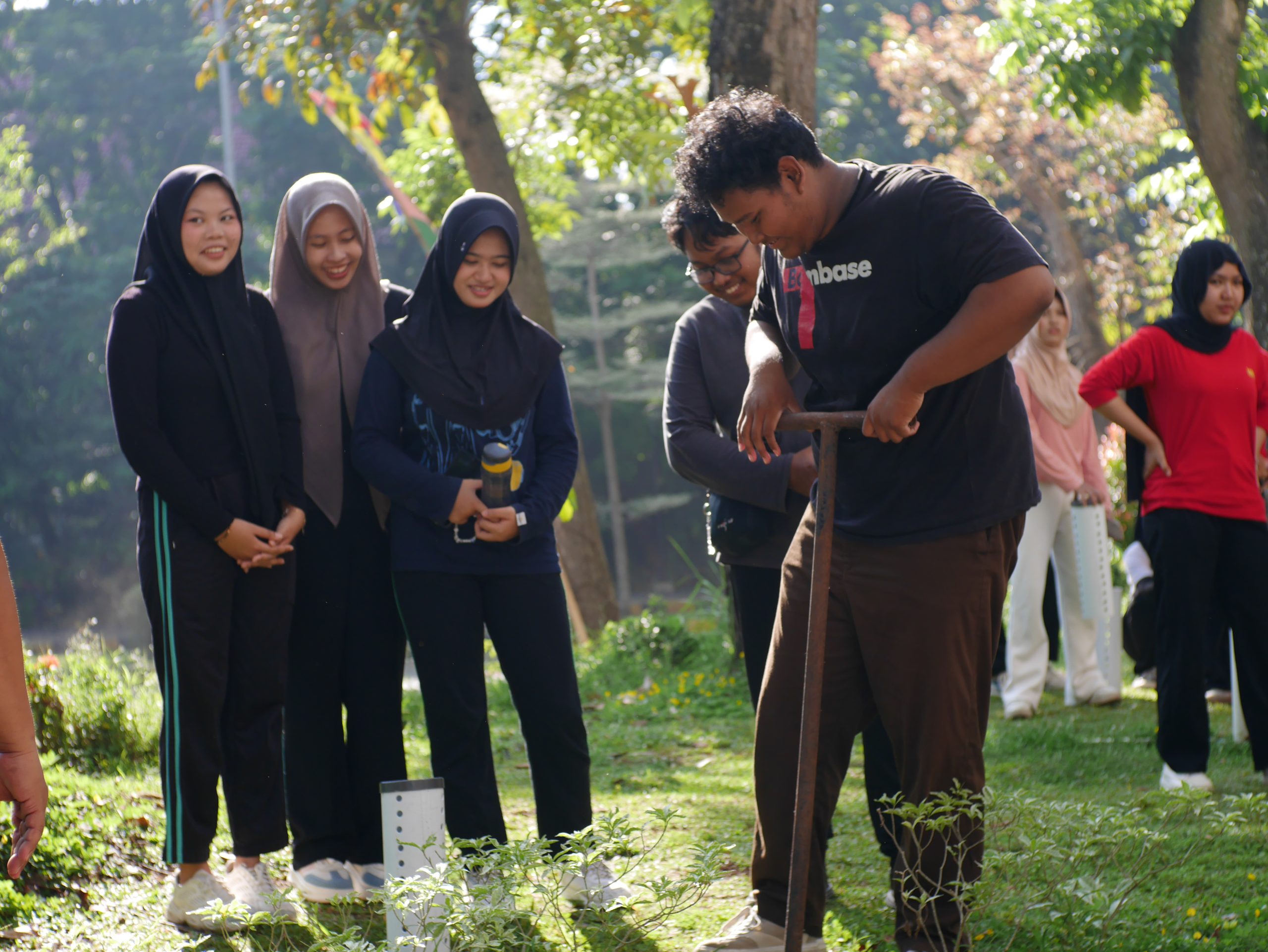
The Faculty of Social and Political Sciences (FISIP) organized a biopore revitalization and planting activity as part of its commitment to strengthening the culture of conservation within the campus environment. The activity involved approximately 150 students from the Social Studies Education Study Program as part of the implementation of the Conservation Education course.

The event began with a group exercise session attended by all participants in the courtyard of Building C8. A lively and enthusiastic atmosphere was evident from the morning as students, lecturers, and committee members joined the exercise before commencing the biopore planting activities across the faculty area.

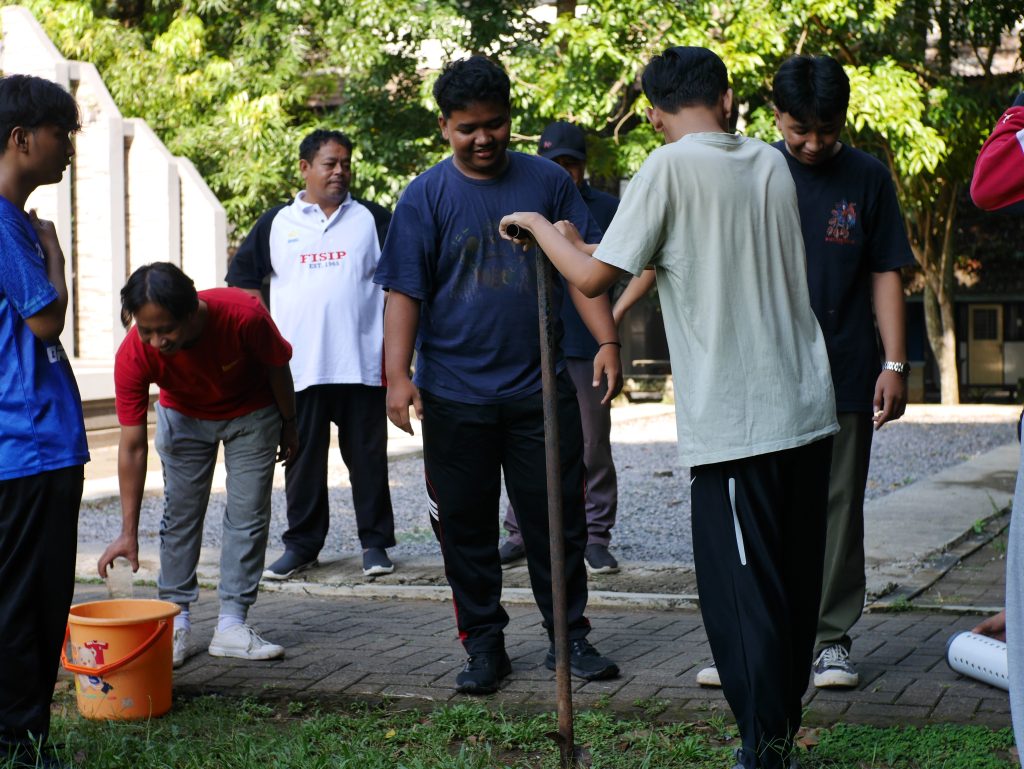
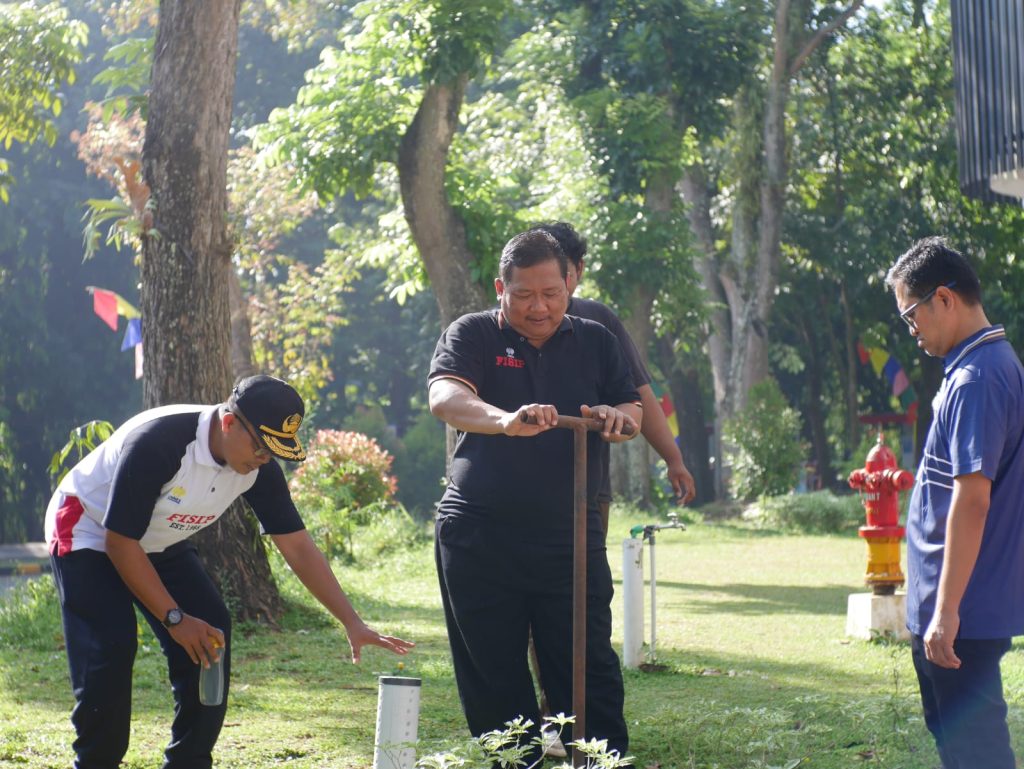
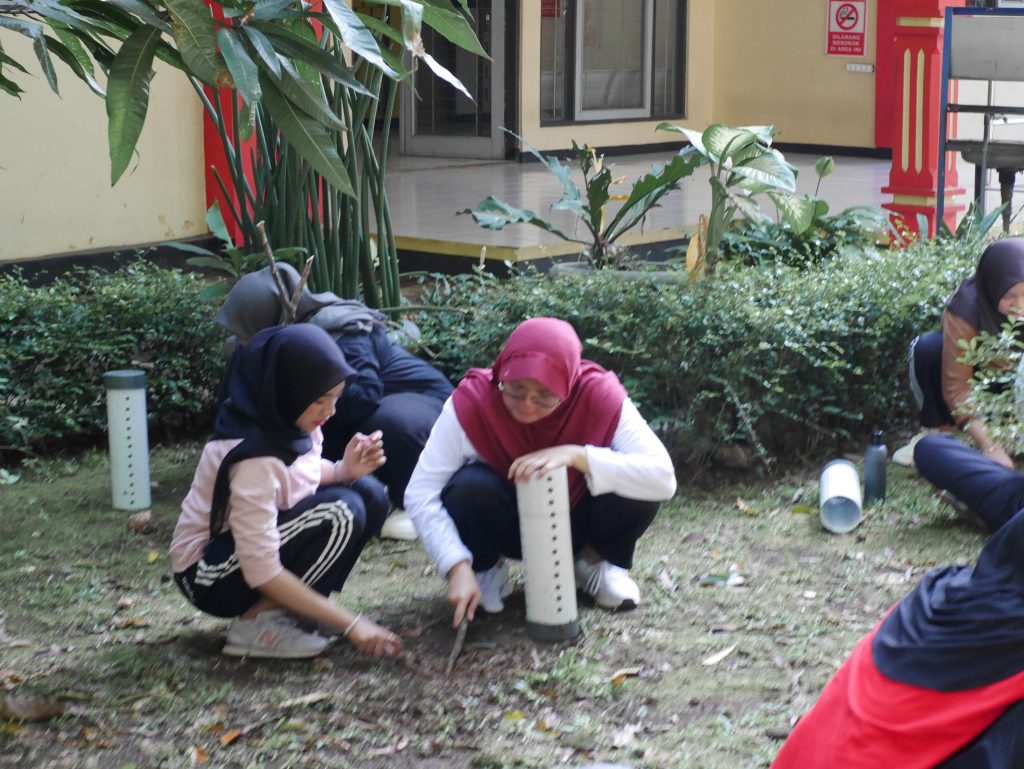
Following the exercise session, participants started drilling the soil using biopore drilling tools in turns. Students enthusiastically excavated designated locations while working collaboratively within their respective groups. During the activity, approximately 50 biopores were installed across four locations within the faculty environment, namely in front of Buildings C5, C6, C2, and the C8 area. Participants were divided into three groups to ensure that the implementation process was carried out effectively and evenly across all designated areas.

The Dean of FISIP, Prof. Arif Purnomo, officially opened the event. In his remarks, he expressed his hope that the biopore revitalization initiative would provide tangible environmental benefits for the campus.

“We hope that this biopore planting activity will improve water absorption capacity, reduce standing water, and help prevent flooding,” he stated.

The activity was also directly supervised by the Head of the Conservation Cluster and the Green and Smart Society (SGS) Unit of FISIP, Rudi Salam, who coordinated the technical implementation in the field. He assigned participants into three groups according to the planting locations to ensure that all areas were properly managed.

Through this initiative, FISIP not only encourages students to understand conservation concepts theoretically in the classroom, but also promotes direct practical engagement in preserving environmental sustainability. The biopore planting activity is expected to improve water infiltration, reduce waterlogging during heavy rainfall, and support the achievement of the Sustainable Development Goals (SDGs), particularly Goal 6: Clean Water and Sanitation, through sustainable environmental and water management practices.
Related Posts

Leave a Reply

* Kode Akses Komentar:

* Tuliskan kode akses komentar diatas:

GDPR

  • Privacy Policy

Privacy Policy

At unnes.ac.id, the privacy of our visitors is of extreme importance to us. This privacy policy document outlines the types of personal information that is received and collected by unnes.ac.id and how it is used.

Log Files

Like many other Web sites, unnes.ac.id makes use of log files. The information inside the log files includes internet protocol (IP) addresses, type of browser, Internet Service Provider (ISP), date/time stamp, referring/exit pages, and number of clicks to analyze trends, administer the site, track user’s movement around the site, and gather demographic information. IP addresses and other such information are not linked to any information that is personally identifiable.

Cookies

unnes.ac.id uses cookies to store information about visitors’ preferences, to record user-specific information on which pages the site visitor accesses or visits, and to personalize or customize our web page content based upon visitors’ browser type or other information that the visitor sends via their browser.

Third-party ad servers or ad networks use technology in their respective advertisements and links that appear on unnes.ac.id and which are sent directly to your browser. They automatically receive your IP address when this occurs. Other technologies (such as cookies, JavaScript, or Web Beacons) may also be used by our site’s third-party ad networks to measure the effectiveness of their advertising campaigns and/or to personalize the advertising content that you see on the site.

unnes.ac.id has no access to or control over these cookies that are used by third-party advertisers.

You should consult the respective privacy policies of these third-party ad servers for more detailed information on their practices as well as for instructions about how to opt-out of certain practices. unnes.ac.id’s privacy policy does not apply to, and we cannot control the activities of, such other advertisers or web sites.

If you wish to disable cookies, you may do so through your individual browser options. More detailed information about cookie management with specific web browsers can be found at the browsers’ respective websites.

Consent

By using our website, you hereby consent to our privacy policy and agree to its terms.

Update

This Privacy Policy was last updated on: 2023-02-14. Should we update, amend or make any changes to our privacy policy, those changes will be posted here.

Contact Us

If you have any questions, comments, or concerns about our Privacy Policy or our practices with regards to your personal information, please feel free to contact us through the contact form on our website or by emailing us at humas[at]mail.unnes.ac.id.

This Privacy Policy is intended as a general guide to our practices in collecting and using information. If there is any inconsistency between this Privacy Policy and the terms of the Service Agreement or any other terms that may apply to specific services you use, then those specific service terms shall apply.

Terms of Use

By using our website, you agree to abide by this Privacy Policy. If you do not agree with this Privacy Policy, please do not use our website. We reserve the right to update this Privacy Policy from time to time without prior notice. Please review our Privacy Policy periodically to check for changes. Your continued use of our website following the posting of changes to this Privacy Policy means that you accept the changes.

Thank you for reading our Privacy Policy. We are committed to protecting the privacy of our website visitors and will continue to update our Privacy Policy to ensure optimal protection.