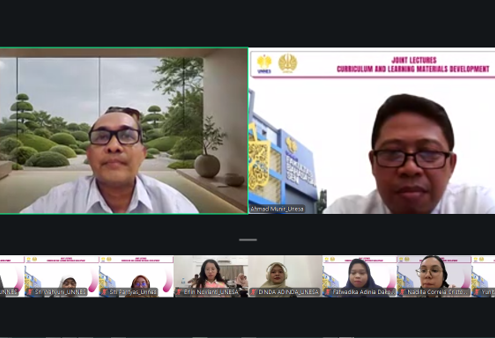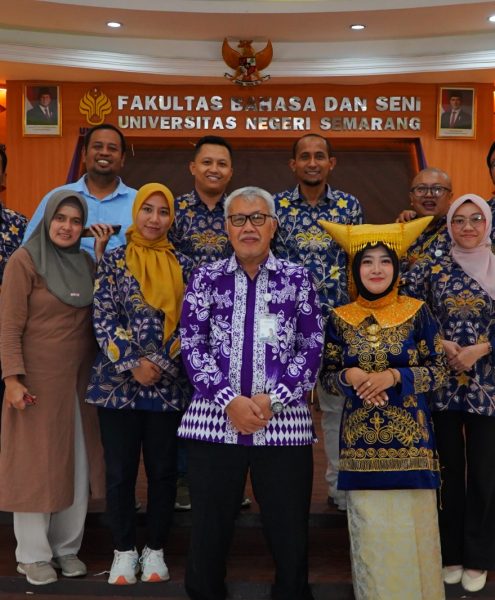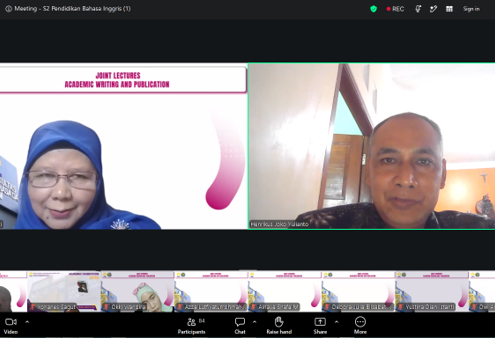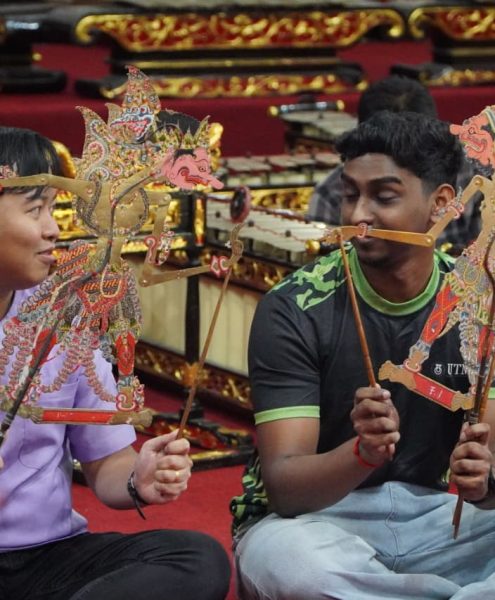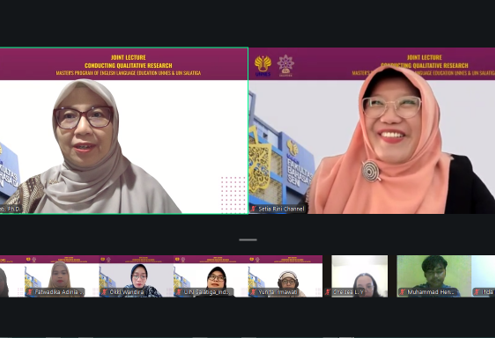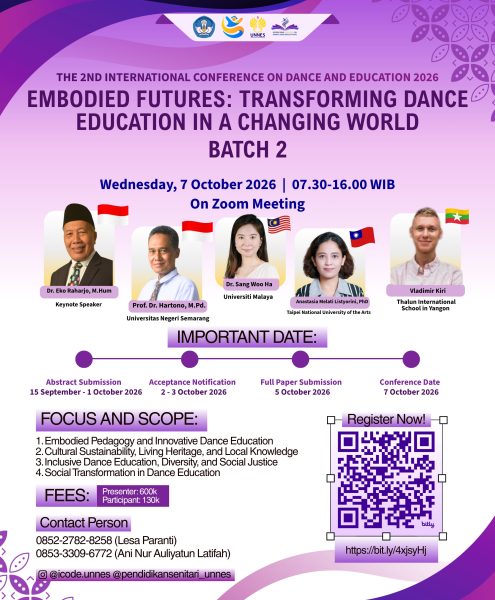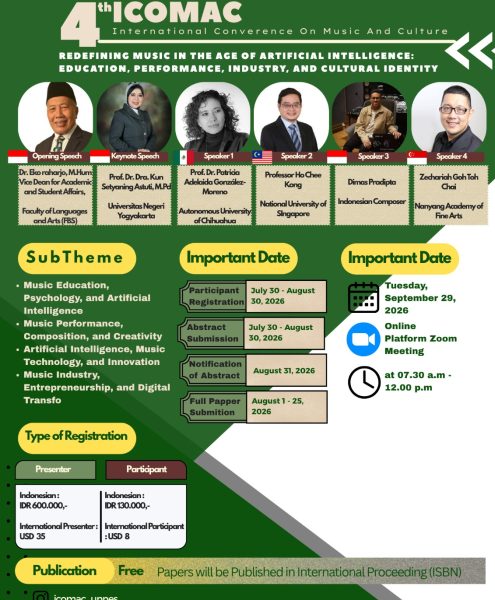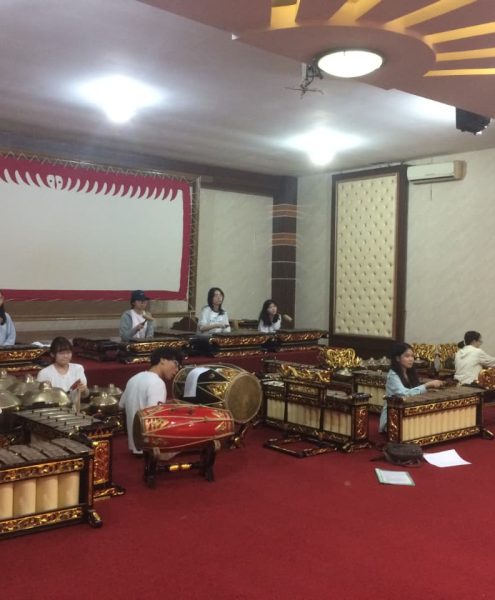


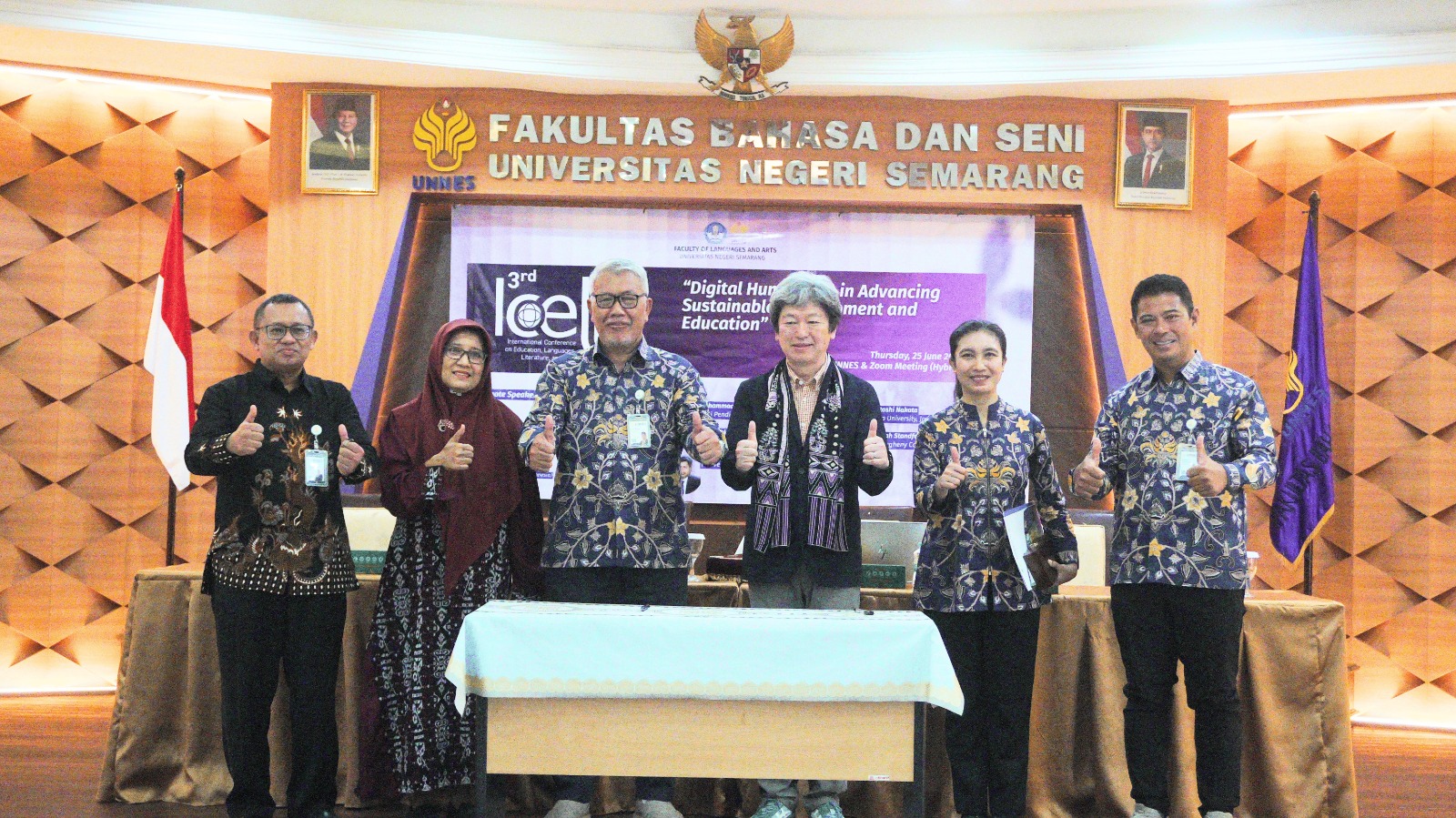
The Faculty of Languages and Arts (FBS), Universitas Negeri Semarang (UNNES), successfully hosted the prestigious international conference, The 3rd International Conference on Education, Languages, Literature, and Arts (ICOELLA) 2026. Under the theme “Digital Humanities in Advancing Sustainable Development and Education,” the conference took place on Thursday, June 25, 2026, in a hybrid format that combined on-site participation at the FBS UNNES campus and online participation via Zoom Meeting.
The conference aimed to provide a global platform for researchers, academics, educators, students, artists, and practitioners to exchange ideas, present research findings, and discuss innovative approaches at the intersection of digital humanities, education, languages, literature, arts, and culture. This year’s theme highlighted the growing role of digital technologies and artificial intelligence in promoting sustainable development, transforming educational practices, preserving cultural heritage, and fostering intercultural understanding in the digital era.
The event commenced with an opening session attended by key stakeholders within the UNNES community. The ceremony featured welcoming speeches from the Chairperson of the Organizing Committee, Lispridona Diner, and the Dean of the Faculty of Languages and Arts UNNES, Prof. Dr. Tommi Yuniawan, M.Hum.
In her remarks, the Chairperson of the ICOELLA 2026 Organizing Committee, Lispridona Diner, expressed her deep appreciation to all parties who had supported the successful organization of the conference. She emphasized that ICOELLA 2026 was designed as a platform for intellectual exchange, bringing together academics from around the world to share research findings and discuss contemporary issues in education, languages, literature, arts, and digital humanities.
“We are deeply honored to welcome our distinguished keynote speakers and invited speakers from Indonesia, Malaysia, Japan, Nigeria, and the United States. Their expertise and insights will undoubtedly enrich our academic discussions and inspire future collaborations. We believe that the exchange of ideas during this conference will contribute significantly to the advancement of knowledge and strengthen international cooperation. May ICOELLA 2026 provide valuable insights, fruitful discussions, and lasting collaborations for all participants,” said Lispridona Diner.
Meanwhile, the Dean of the Faculty of Languages and Arts UNNES, Prof. Dr. Tommi Yuniawan, M.Hum., in his speech, reaffirmed FBS UNNES’s commitment to fostering academic excellence, innovation, and international collaboration in the fields of education, languages, literature, arts, and culture.
“The theme of this year’s conference, ‘Digital Humanities in Advancing Sustainable Development and Education,’ is highly relevant to the challenges and opportunities of the contemporary world. The rapid development of digital technologies and artificial intelligence has transformed the ways we teach, learn, communicate, create, and preserve cultural heritage. As scholars and educators, we are challenged to harness these technological advancements responsibly while maintaining humanistic values and cultural diversity. I sincerely hope that the discussions and collaborations initiated during ICOELLA 2026 will lead to meaningful academic contributions, innovative research projects, and sustainable partnerships that benefit both local and global communities,” expressed Prof. Tommi.
The conference featured a distinguished lineup of keynote speakers and invited speakers from various countries, offering diverse perspectives on contemporary issues in education, language studies, literature, arts, culture, and digital innovation. The speakers included:
Prof. Dr. Sri Rejeki Urip, M.Hum. from Universitas Negeri Semarang, Indonesia; Prof. Hitoshi Nakata from Osaka University, Japan; Prof. Amirullah Abduh, Ph.D. from Universitas Negeri Makassar, Indonesia; Hannah Standiford, Ph.D. from Allegheny College, United States; Assoc. Prof. Dr. Mohammad Zaffwan bin Idris from Universiti Pendidikan Sultan Idris, Malaysia; and Verlum Celestine Gever, Ph.D. from the University of Nigeria, Nsukka.
The plenary session was divided into two parts. The first session took place from 09:00 to 10:50, featuring the first three speakers, moderated by Dr. Karina Hanum Luthfia, S.S., M.A. The second session continued from 10:50 to 12:30 with the next three speakers, moderated by Pasca Kalisa, S.Pd., M.Pd., M.A.
Following the plenary sessions, the conference continued with parallel sessions divided into five rooms, each led by a moderator. These parallel sessions ran from 13:30 to 16:30, providing opportunities for participants to present their research papers to more specific audiences aligned with their respective fields of study.
ICOELLA 2026 welcomed research papers and presentations under various subthemes, including: Transforming Languages and Arts Education for Sustainable Futures, AI-Based Language Learning, Digital Humanities in Language and Cultural Education, AI for Cultural Heritage Preservation, AI for Intercultural Learning, Digital Cultural Literacy for Sustainable Education, AI-Based Art, Design, and Art Education, Integration of Digital Technology in Art and Design Practices, and New Media and Digital Aesthetic Exploration.
As part of its commitment to promoting high-quality scholarly publications, conference papers will be published in the conference proceedings, while selected papers will be considered for publication in reputable journals, including Harmonia Journal (Scopus Q1), International Journal of Language Education (IJOLE) (Scopus Q1), and VAKANA Tekstil (Q4), subject to the respective review and editorial processes.
The organization of ICOELLA 2026 also aligns with the support for the Sustainable Development Goals (SDGs). By raising the theme of digital humanities in advancing sustainable development and education, this conference contributes to SDG 4 (Quality Education) through strengthening the quality of higher education and developing human resource competencies in the fields of education, languages, literature, arts, and culture. The utilization of digital technologies and artificial intelligence in educational transformation also supports SDG 9 (Industry, Innovation and Infrastructure) by encouraging innovation and technological transformation in education. Furthermore, the presence of speakers and participants from various countries and the establishment of international collaborations reflect the implementation of SDG 17 (Partnerships for the Goals) through strengthening global partnerships in education, research, and human resource development.
Through the successful organization of this conference, UNNES once again demonstrates its commitment to continuously presenting innovation in learning, strengthening international cooperation, and producing graduates and academic works that are ready to face global challenges in the digital era. ICOELLA 2026 is expected to make a tangible contribution to the advancement of knowledge and to strengthen the role of education, languages, literature, arts, and digital humanities in creating a more sustainable future.