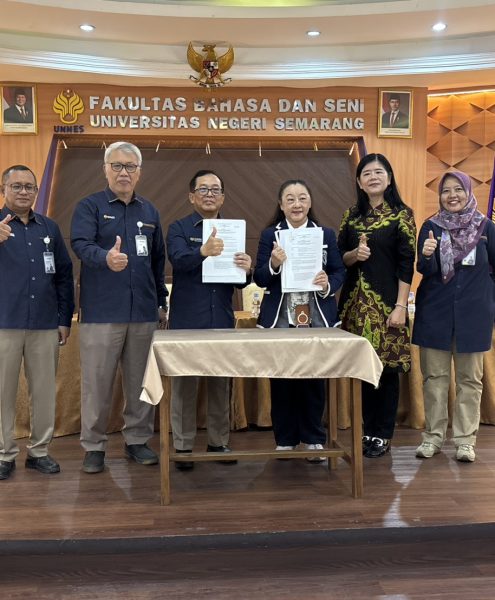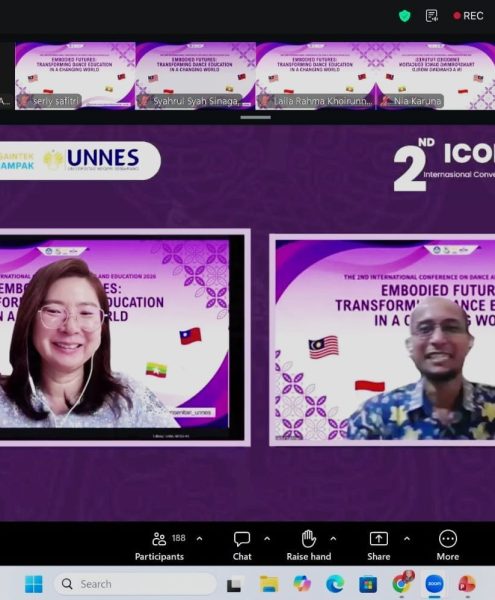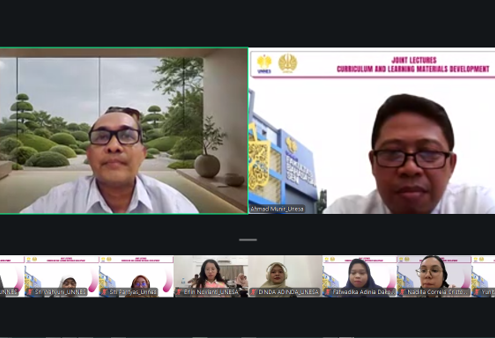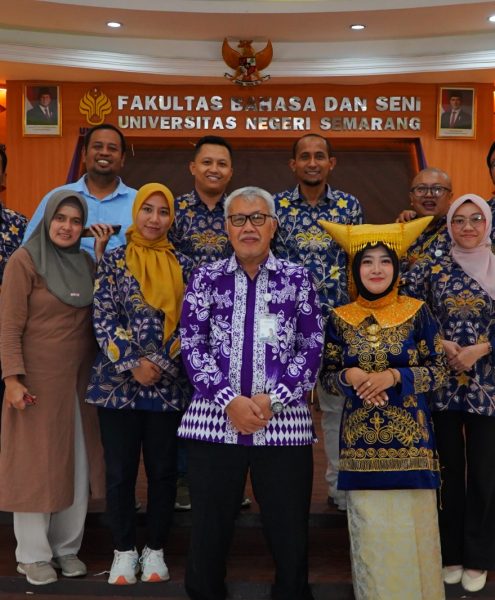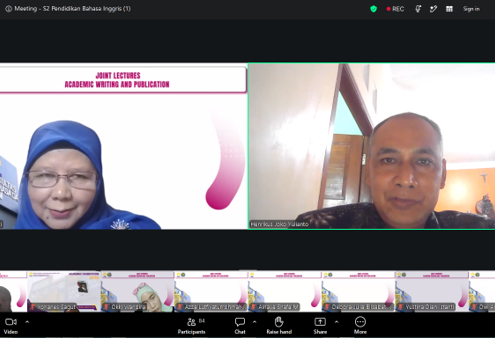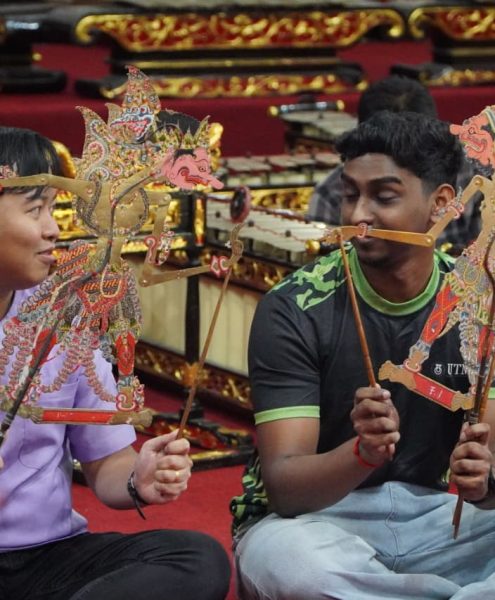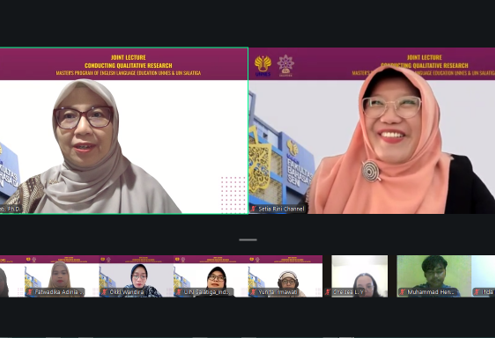


The Faculty of Languages and Arts (FBS) at Universitas Negeri Semarang (UNNES) hosted an international workshop titled “Mainstreaming Gender in Our Research and Teaching” on Wednesday, June 17, 2026, at the Ruang Bundar, Dean’s Office, FBS UNNES. The event, held from 8:30 AM to 12:00 PM local time, featured two keynote speakers: Prof. Mindy Blaise from Edith Cowan University, Australia, and Dr. Inaya Rakhmani from the University of Indonesia.
The workshop served as a space for critical reflection for academics, particularly within FBS UNNES, to examine how gender perspectives can be substantively integrated into research and teaching practices, rather than being reduced to mere administrative formalities.
Gender as a Lens, Not Just a Number
Dr. Inaya Rakhmani, a senior researcher at the Asia Research Centre, University of Indonesia, opened the session with a reflective approach. She stressed that gender mainstreaming is often reduced to simply counting the number of women in academic spaces or adding “gender” as a variable in research without fundamentally changing the questions being asked.
“Gender as an analytical lens changes the questions you think are worth asking, changes the methods you choose to use, and changes the claims you can honestly make. It asks whose labor and whose knowledge get valued—and why that distribution is gendered,” Rakhmani said in her presentation.
She outlined how three historical layers—Dutch colonialism, the centralist New Order regime, and neoliberalism—have shaped the structure of Indonesian universities, which remain steeped in patriarchal logic. According to her, neoliberalisation is not a clean break from the past but rather reassembles colonial and patriarchal logics.
One of the most striking findings from her collaborative research was the existence of “temporal scarcity”—a stark lack of material time and space for women academics to read, discuss, and respond to each other’s work. “Care and pastoral work—mentoring, listening, holding cohorts and colleagues together—are essential and constant, yet never rewarded by metrics,” she asserted.
#FEAS: Confronting Everyday Sexisms through Creative Means
The second session was led by Prof. Mindy Blaise, founder and co-convenor of #FEAS (Feminist Educators Against Sexism) from Edith Cowan University, Australia. Blaise brought a distinct approach: creative, playful, and subversive strategies to address both structural and everyday sexism within academia.
“#FEAS does not aim to name, blame, or shame, but still acknowledges where problems, power, and patriarchy lie. We look for creative ways to work together, take risks, and step way out of our comfort zones,” Blaise explained.
She showcased various interventions undertaken by #FEAS, ranging from feminist zine-making and survival kits to “The #FEAS Wheel of (mis)Fortune”—a stage performance satirising sexism in universities. Blaise also highlighted research findings indicating that male academics are less likely to view sexism as a problem affecting the career progression of their female and gender-diverse colleagues.
“If universities truly wish to ameliorate gender-based inequalities, much more attention needs to be paid to the micro, the interactional, the seemingly banal—the everyday of sexisms,” she emphasised.
From the Classroom to Campus Policy
Both speakers agreed that change must begin with small, concrete steps. Rakhmani offered several entry points: in research, by stating one’s positionality, treating relationships and care work as data, and choosing methods that share rather than extract. In teaching, she recommended a dialogical, problem-posing approach inspired by Paulo Freire, as well as including women and local thinkers on syllabi.
Meanwhile, Blaise invited participants to join the #FEAS Cite Club and to take the micro-credential on everyday sexisms, available at everydaysexisms.com.
The workshop concluded with Rakhmani’s call to start with small circles: “Two people and a standing meeting are enough to begin.” She also reminded participants that hope is not naive optimism, but something practised together—against precarity, through collective care and solidarity.
The workshop aligns with the Sustainable Development Goals (SDGs), particularly SDG 5: Gender Equality, through efforts to integrate gender perspectives in education and research. In addition, the event supports SDG 4: Quality Education by promoting inclusive and critical pedagogy, as well as SDG 17: Partnerships for the Goals, through international collaboration between UNNES, the University of Indonesia, and Edith Cowan University.