


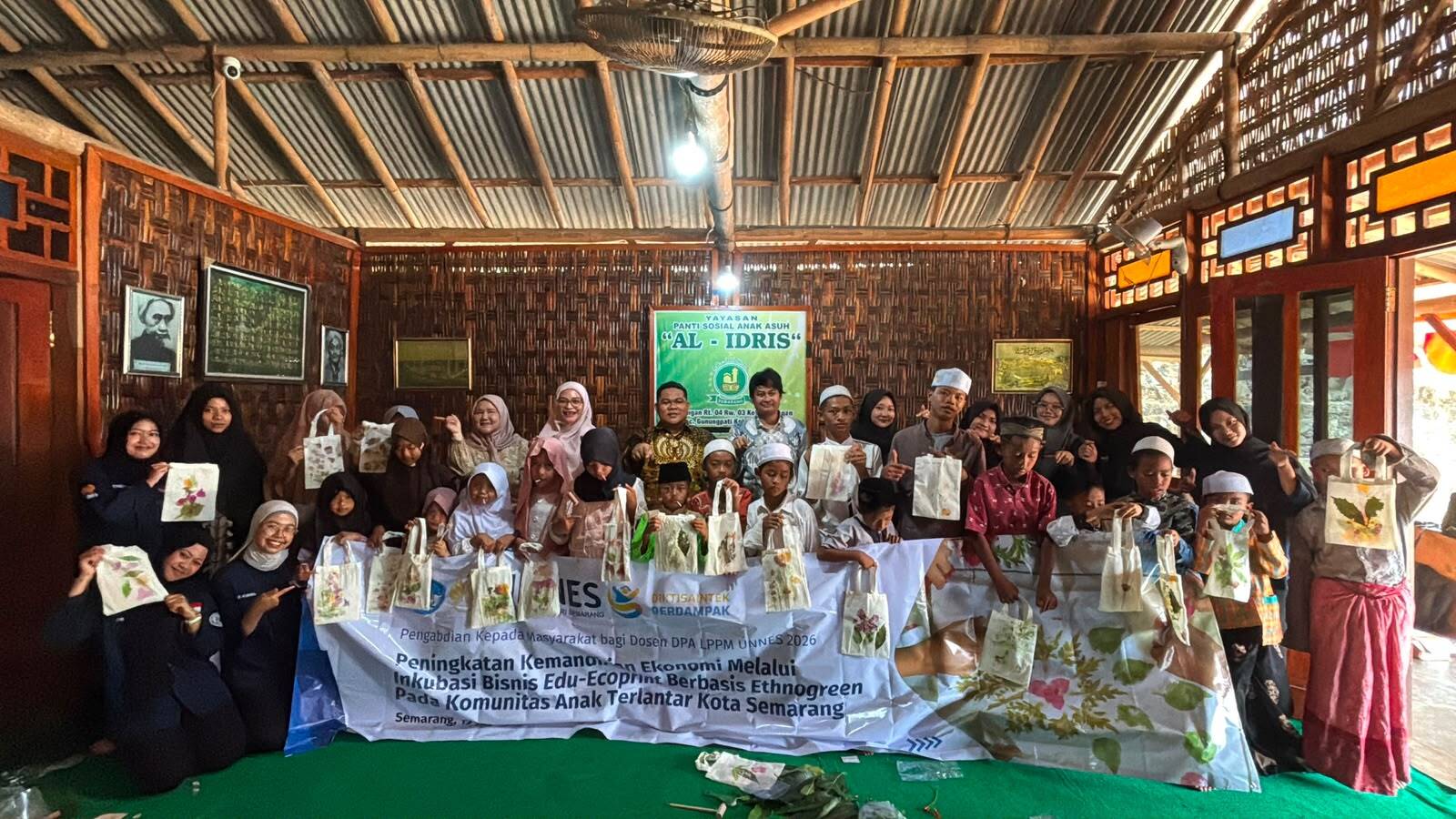
SEMARANG — A Community Service Team from Universitas Negeri Semarang (UNNES) conducted an economic empowerment and environmental sustainability program entitled “Improving Economic Independence through Ethnogreen-Based Edu-Ecoprint Business Incubation for Disadvantaged Children in Semarang.”
The program was initiated by a multidisciplinary academic team led by Yahya Nur Ifriza, S.Pd., M.Kom., with members Dr. Alamsyah, S.Si., M.Kom.; Endang Sugiharti, S.Si., M.Kom.; Abas Setiawan, S.Kom., M.Cs.; Lola Kurnia Pitaloka, S.Pd., M.Pd.; Nur Fateah, S.Pd., M.A.; Widodo, M.Pd.; and Dra. Sri Prastiti Kusuma A., M.Pd.
The program focused on providing environmentally friendly vocational skills and developing entrepreneurial capabilities among children under the care of the Al-Idris community in Semarang. Through this initiative, the participants were encouraged to develop their creativity, strengthen their self-confidence, and acquire practical skills to support their future economic independence.
Through the innovative Ethnogreen Edu-Ecoprint approach, the children received intensive guidance in creating natural patterns using locally available plants. Leaves, flowers, and other plant materials were carefully arranged on fabric and processed to produce distinctive natural patterns and colors.
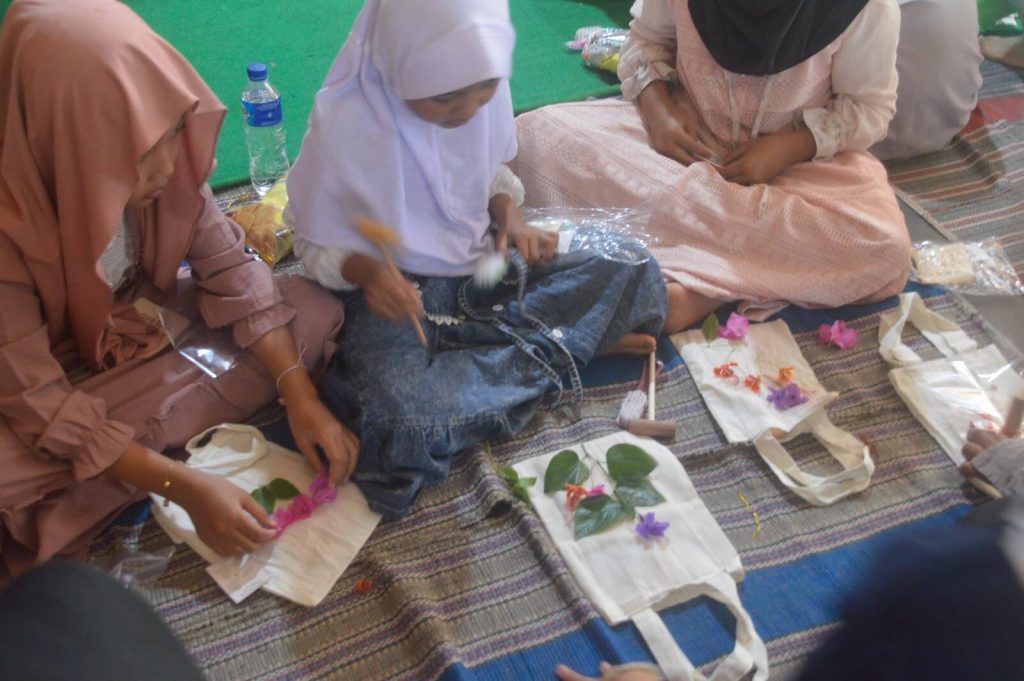
Participants arrange leaves and flowers on tote bags as the initial stage of creating natural ecoprint patterns.
The resulting designs were combined with traditional Indonesian decorative elements, particularly those inspired by the cultural heritage of Central Java. This approach introduced participants not only to environmentally friendly craft production but also to the cultural and ecological value of local biodiversity.
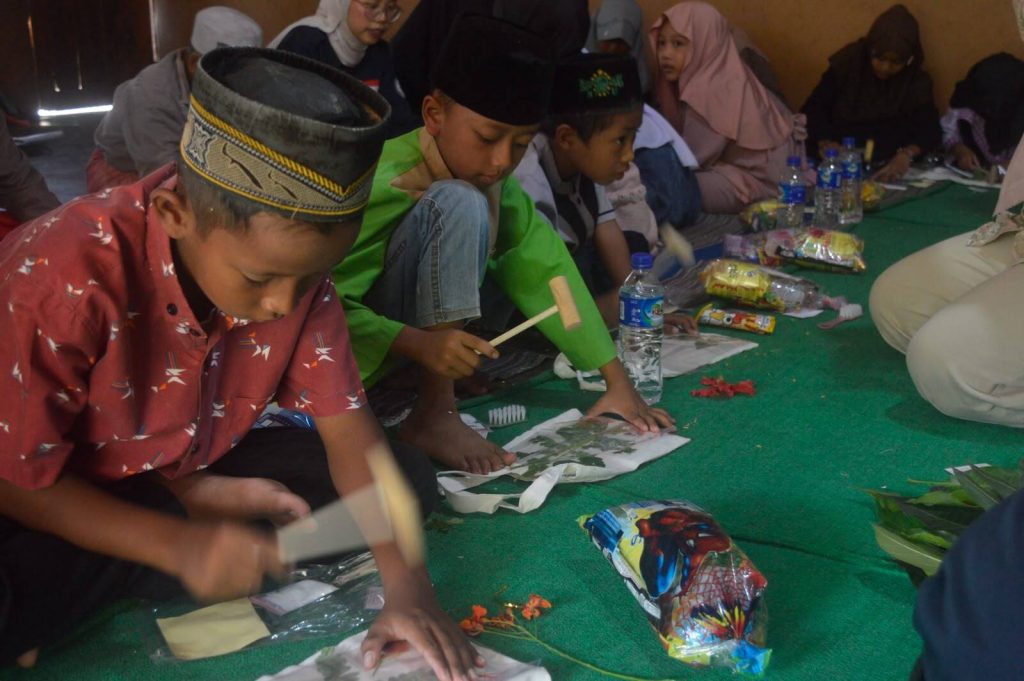
Participants practice the pounding technique to transfer the natural shapes and pigments of leaves and flowers onto fabric.
In addition to technical production training, the UNNES team provided comprehensive business incubation assistance. The program covered the selection of environmentally friendly materials, product standardization, quality control, cost-of-goods calculations, packaging, and digital marketing strategies through social media and e-commerce platforms.
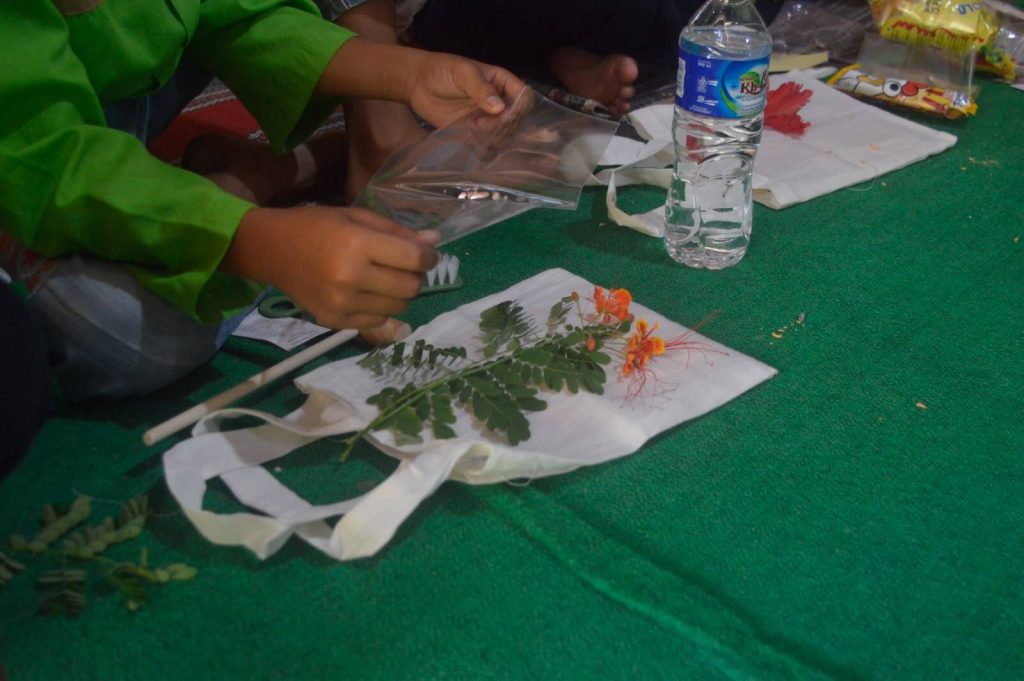
A participant carefully arranges locally sourced leaves and flowers to create a natural composition for an ecoprint product.
The assistance was designed to ensure that products such as tote bags, pashminas, clothing, and ecoprint-based souvenirs would not merely remain training outputs but could also be developed into marketable products with economic value. Participants therefore gained an understanding of the entire business process, from production to marketing.
The community service program also contributes to the achievement of the Sustainable Development Goals (SDGs). It supports SDG 1: No Poverty and SDG 8: Decent Work and Economic Growth by developing entrepreneurial skills and creating opportunities for independent income generation among vulnerable groups.
The initiative also advances SDG 4: Quality Education by providing inclusive access to life-skills training and entrepreneurial literacy. It supports SDG 10: Reduced Inequalities by involving disadvantaged children in productive economic activities, while the use of natural dyes and biodegradable materials aligns with SDG 12: Responsible Consumption and Production.
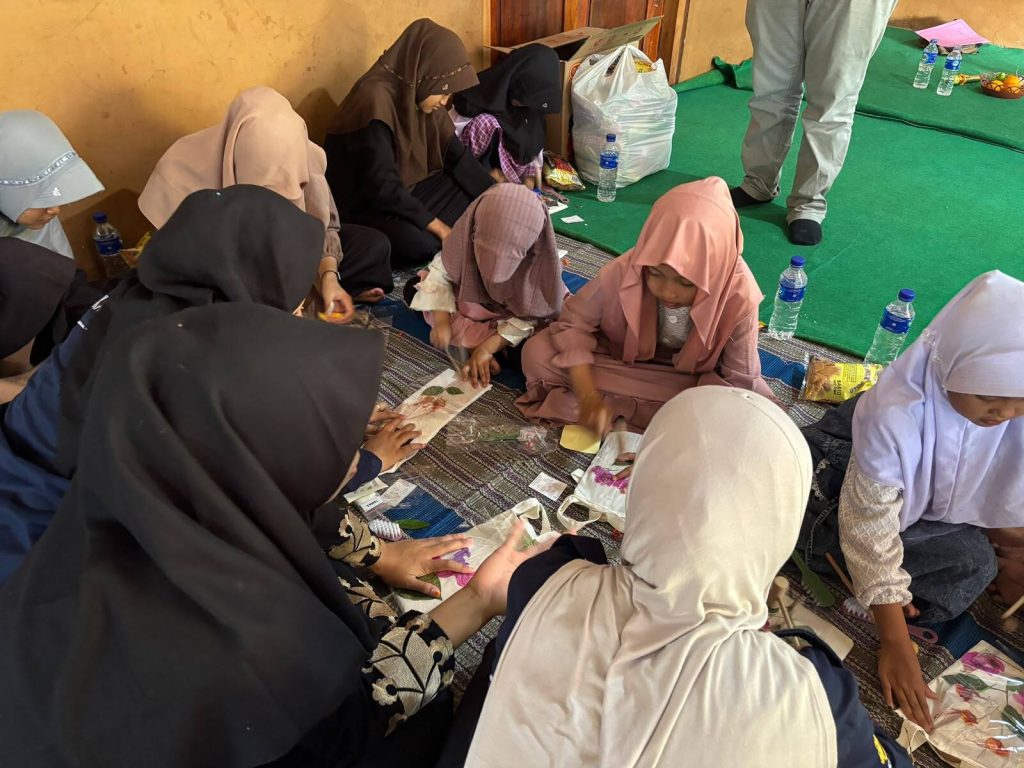
The UNNES Community Service Team assists participants during hands-on training in producing environmentally friendly ecoprint products.
Muhammad Syafii, Head of the Al-Idris community, expressed his appreciation for the involvement and support of the UNNES academic team. He stated that the program had brought renewed hope and valuable experiences to children who previously had limited access to structured skills training.
The ecoprint-based business incubation program provided participants with an opportunity to demonstrate their creativity and potential. With appropriate guidance and support, the skills gained through the program are expected to become valuable assets for developing independence and future business opportunities.
The multidisciplinary collaboration between UNNES lecturers and the administrators of the Al-Idris community is expected to generate meaningful and long-term benefits. Through continuous business incubation assistance, participants are not only trained to produce ecoprint products but are also encouraged to become creative, confident, environmentally conscious, and competitive young entrepreneurs.