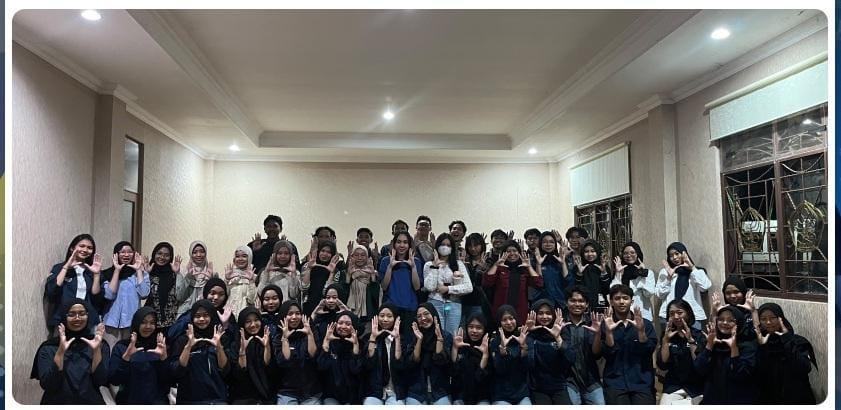



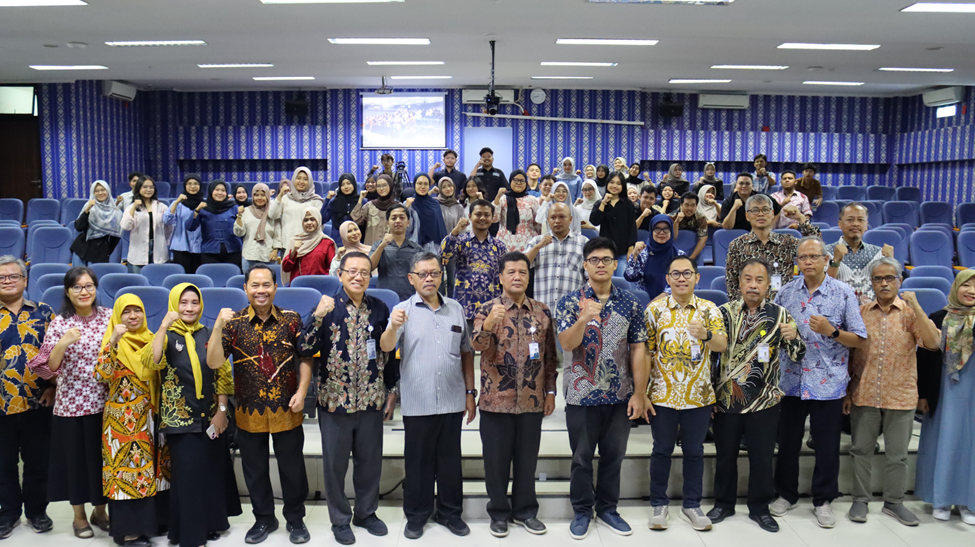
Semarang — The Faculty of Mathematics and Natural Sciences at Universitas Negeri Semarang (FMIPA UNNES) successfully organized an Academic Career Development Workshop themed “Beyond Graduation: Building Careers and Etching Achievements” on Friday, 16 October 2026. Held on the 3rd floor of Building D12, FMIPA UNNES, this event was mandatory for all prospective graduates of Period 143 and also open to general students wanting to strategically prepare for their post-study steps.
The event began with opening remarks by the Dean of FMIPA UNNES. In his remarks, he emphasized that graduation is not the end of the learning process, but rather the beginning of a new journey to develop potential, build careers, and make real contributions to society. Therefore, prospective graduates need to equip themselves not only with academic competence, but also with communication skills, leadership, adaptability, and integrity in facing the challenges of the professional world and advanced education.
To provide comprehensive preparation, the workshop—which started at 08.00 Western Indonesian Time (WIB)—featured three speakers from complementary backgrounds. The speakers delivered in-depth presentations ranging from strategies to secure advanced study scholarships, alumni mapping through tracer studies, to the importance of ethics and integrity in the professional world. This event serves as one of FMIPA UNNES’s efforts to support improving educational quality, graduate employability, and the formation of professional character with integrity.
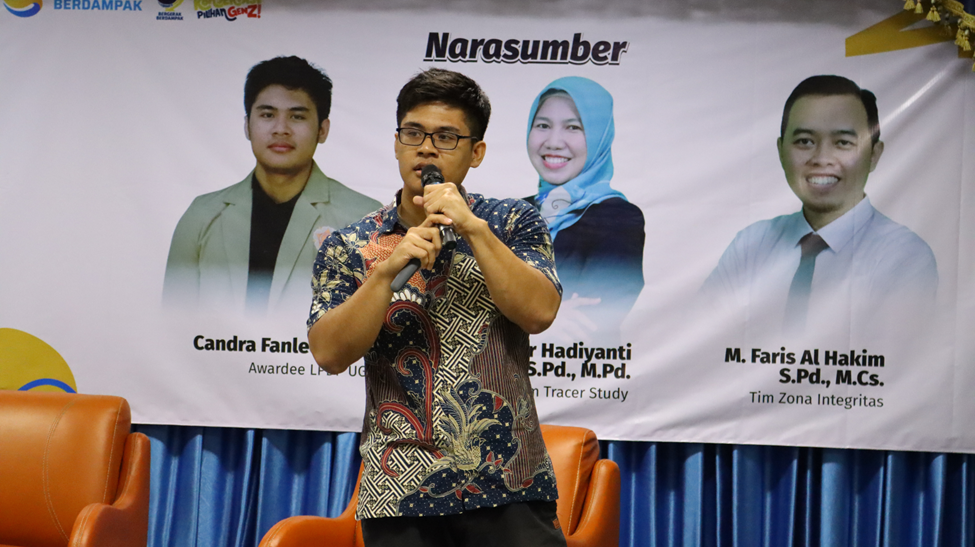
The first session was presented by Candra Fanleon, S.Si., an LPDP Awardee and Master of Physics student at Universitas Gadjah Mada (UGM), who delivered a presentation titled “From Bachelor’s Experience to LPDP”. In his presentation, the UNNES Physics alumnus shared practical tips on passing the LPDP scholarship selection, covering neat and consistent administrative document arrangement, strategies for tackling the Scholastic Talent Selection (SBS), and techniques for conveying self-narration and contributions during interviews.
Candra also emphasized that his achievement in securing the LPDP scholarship is inseparable from his track record during his bachelor’s studies. Active experience in the Student Creativity Program (PKM), the HIMAFI board, his role as head assistant of the Basic Physics Laboratory, and community service activities became major capitals in building a leadership and academic portfolio. “What we go through during our bachelor’s degree is not just the past, but the primary capital to determine the direction of our next steps,” he asserted before the participants.
This material aligns with Sustainable Development Goal (SDG) 4: Quality Education, particularly in promoting access to higher education and continuous learning opportunities. Through sharing experiences and scholarship acquisition strategies, participants are expected to be increasingly motivated to pursue further education, develop competencies, and plan their academic future in a structured manner.
The session continued with Lutfia Nur Hadiyanti, S.Pd., M.Pd., from the Tracer Study Team, who explained the importance of alumni participation in filling out the graduate tracking system to evaluate curriculum relevance and map the labor market absorption rate. Tracer study data serves as a source of information to understand the alignment of graduate competencies with industry needs and supports the improvement of educational quality at FMIPA UNNES.
Next, M. Faris Al Hakim, S.Pd., M.Cs., from the Integrity Zone Team, concluded the series of presentations by emphasizing mental readiness, professionalism, and the application of integrity values that must be upheld by FMIPA UNNES graduates when entering the workforce or society.
This preparation regarding career planning and job market readiness supports SDG 8: Decent Work and Economic Growth. Through this activity, prospective graduates are expected to have better preparedness to enter the workforce, develop careers productively, and contribute according to their competencies. Meanwhile, strengthening ethics and integrity aligns with SDG 16: Peace, Justice, and Strong Institutions, which emphasizes the importance of responsible behavior, transparency, and accountability in professional and social life.
The organization of this workshop also reflects the spirit of SDG 17: Partnerships for the Goals through the involvement of speakers with diverse experiences and roles, ranging from LPDP scholarship recipients and postgraduate students to the Tracer Study Team and the Integrity Zone Team. This synergy enriches participants’ perspectives regarding academic development, transition into the workforce, and the formation of graduates with high integrity.
Through this workshop, the leadership of FMIPA UNNES hopes that the prospective graduates of Period 143 can step forward with confidence, possess structured career or advanced study plans, and continuously carve out achievements that honor the alma mater. This activity simultaneously reaffirms FMIPA UNNES’s commitment to contributing to the achievement of the Sustainable Development Goals (SDGs), particularly SDG 4 on Quality Education, SDG 8 on Decent Work and Economic Growth, SDG 16 on Peace, Justice, and Strong Institutions, and SDG 17 on Partnerships for the Goals.