



The local wisdom of Gusjigang, which has long been closely associated with the identity of the people of Kudus, can be developed as a foundation for character education for future teachers. The values of gus—being good in character, ji—learning through religious study and cultivating a love of knowledge, and gang—engaging in trade and creating added value—need not remain merely a cultural philosophy. Instead, they can be brought to life within the higher education ecosystem.
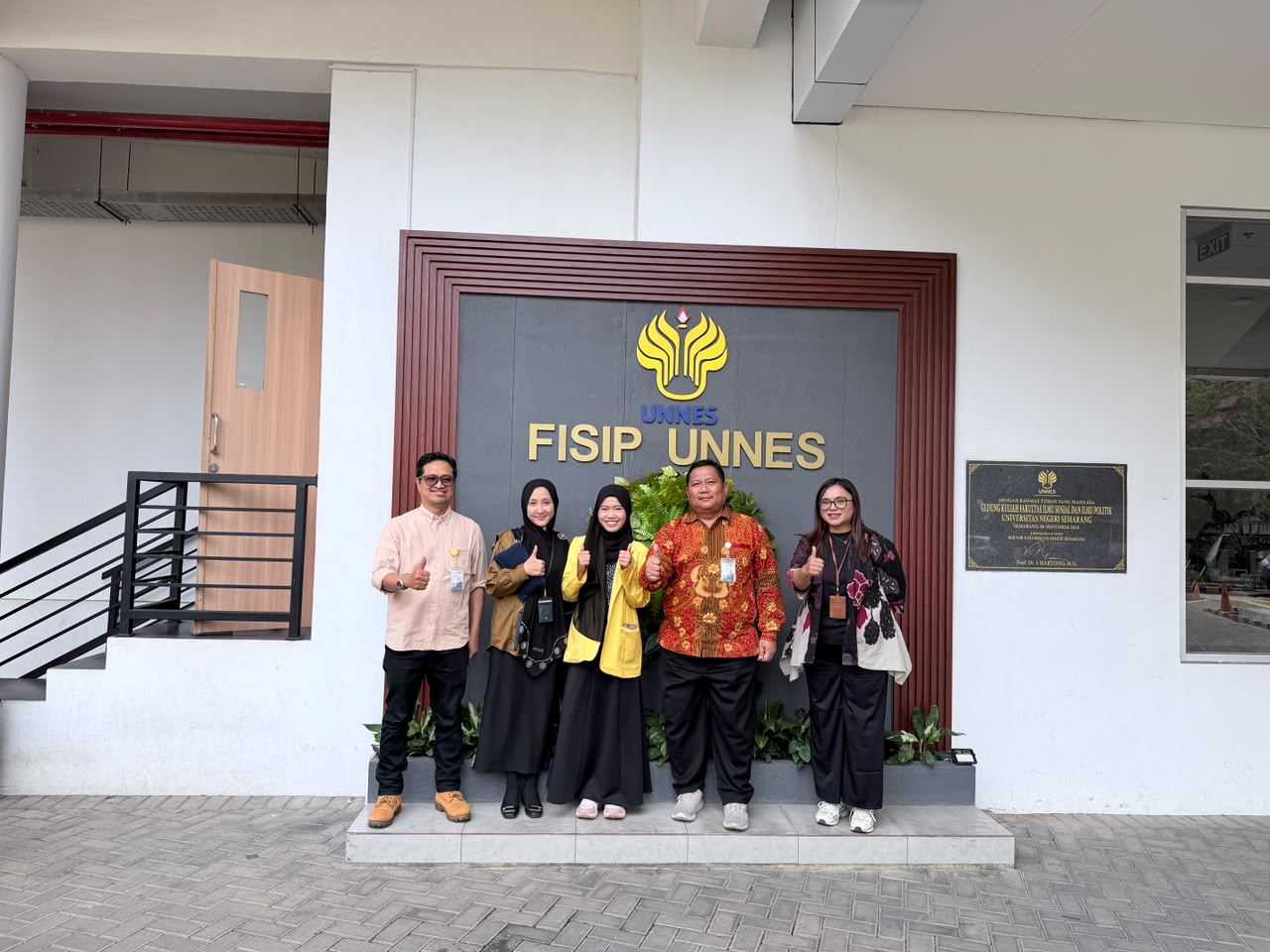
This finding is one of the key results of Santoso’s doctoral research, presented in his dissertation entitled “Strengthening Character Education Based on Local Wisdom of Gusjigang.” The dissertation was examined during the Open Doctoral Examination of the Doctoral Program in Social Studies Education at the Faculty of Social and Political Sciences (FISIP), Universitas Negeri Semarang (UNNES), held at the FISIP UNNES Hall, Sekaran, Gunungpati, Semarang, on Wednesday (August 12, 2026).
Santoso’s research was motivated by challenges in character education for future teachers amid globalization, digital disruption, and an increasingly instant-oriented culture. According to the study, students in the Elementary School Teacher Education (PGSD) program need a character foundation that is not only religious but also scientific, creative, independent, and grounded in integrity.
The research employed a qualitative approach using a phenomenological design and was conducted in the PGSD Study Program at Universitas Muria Kudus. The research informants consisted of program leaders, lecturers, mentors, and students. Data were collected through interviews, observations, and documentation, and subsequently analyzed using thematic-phenomenological analysis.
The findings show that character education based on Gusjigang is not effective when implemented as a standalone program. Instead, its values need to be integrated into the curriculum, semester lesson plans, teaching methods, academic culture, student activities, social interactions, lecturer role modeling, and students’ experiences in partner schools.
In Santoso’s research, “gus” refers to the development of character and ethics. This value is manifested through politeness, discipline, responsibility, integrity, the culture of 5S (senyum, salam, sapa, sopan, and santun), and respect for lecturers. Through habituation and role modeling, students’ compliance, which initially may be externally motivated, is expected to develop into moral awareness as future teachers.
Meanwhile, “ji” is not understood merely as the practice of religious study in a conventional sense. In the context of higher education, the value is expanded into a combination of spirituality and scientific literacy. Students are encouraged to pray, engage in reflection, read academic journals, participate in critical discussions, verify sources, and use technology and artificial intelligence ethically.
Meanwhile, “gang” is interpreted as the ability to create value through creativity and educational entrepreneurship. Students are not only encouraged to understand educational problems but are also expected to transform those problems into useful media, teaching aids, or educational programs that benefit learners and society.
Thus, “gang” is not narrowly interpreted as trading activities. The research found that the value can be manifested through project-based learning, innovative learning media, educational products, bazaars, and educational entrepreneurship, or edupreneurship.
Based on these findings, the 41-year-old Kudus-born researcher conceptualized Gusjigang as a “moral ecology” for future teacher education. Local values interact with academic systems, authentic experiences, and student reflection to form the professional habitus of prospective teachers.
The value of gus develops morality and social ethics. The value of ji connects spirituality with scientific literacy and academic ethics. Meanwhile, gang encourages creativity, innovation, independence, and edupreneurship. According to the research, these three dimensions become effective when consistently implemented within an educational ecosystem.
The research also identified a hierarchical structure of values. “Ngaji,” or ji, serves as the foundation for knowledge and spirituality. This knowledge is then manifested in ethical behavior through the value of gus. Subsequently, the combination of these two dimensions provides the basis for productive action through the value of gang, including the development of learning media and educational entrepreneurship oriented toward social benefit.
The father of one son emphasized that these findings are important because future teachers need more than academic knowledge. They also need character, critical-thinking skills, creativity, independence, and the ability to develop educational solutions.
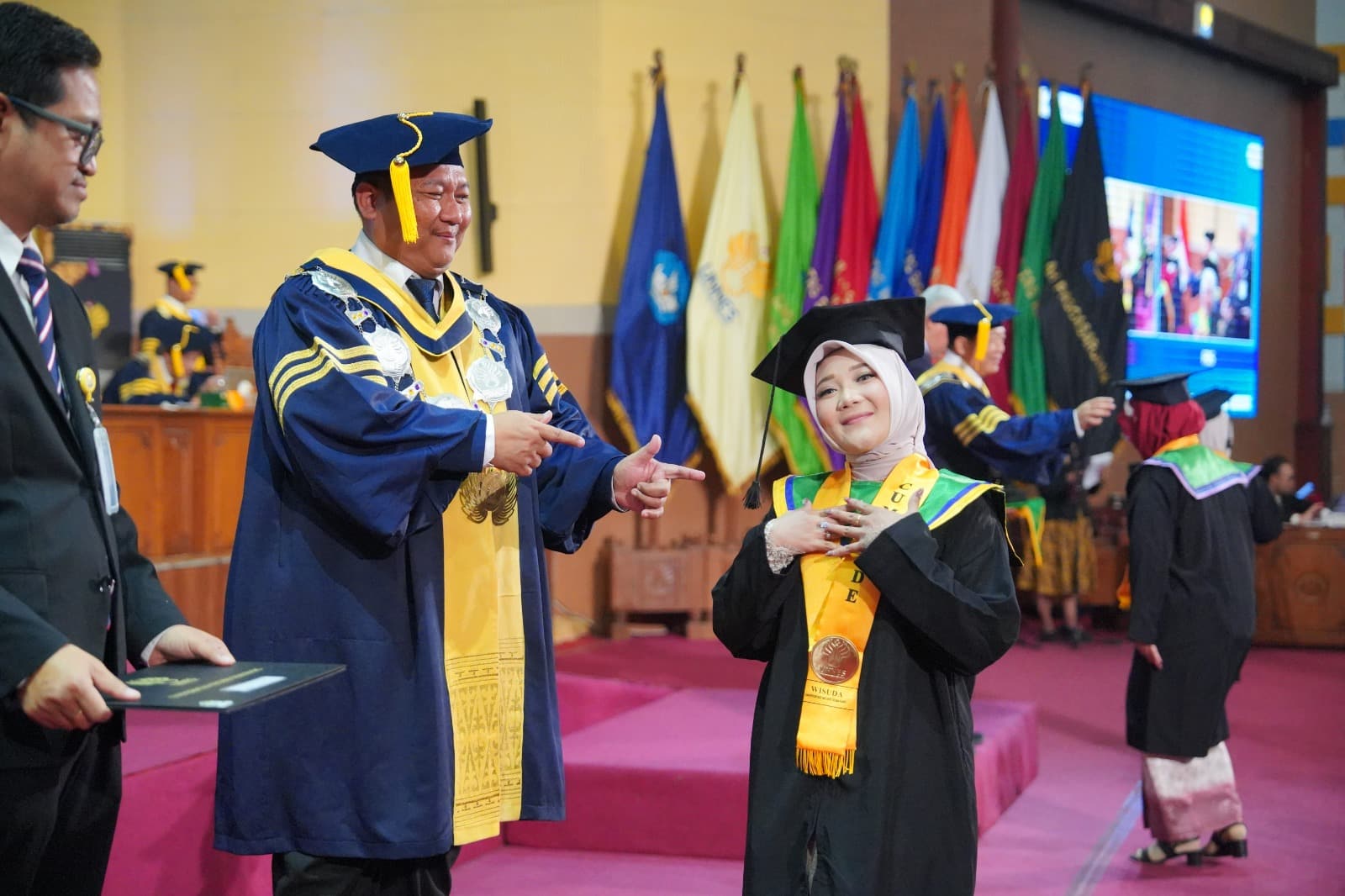
Chair of the Examination Committee, Prof. Arif Purnomo, said that the open examination was the second stage of the dissertation examination in the Doctoral Program in Social Studies Education. Based on the decision of the examination committee, Santoso was declared to have passed and was awarded a doctoral degree.
Santoso became the 16th doctoral graduate of FISIP UNNES. He completed his doctoral studies in six years and 11 months. His dissertation received a score of 3.86, with a Very Satisfactory distinction.
On the occasion, Prof. Arif also highlighted the long journey Santoso had undertaken to complete his doctoral education. According to him, such a lengthy process should ultimately produce work that can be shared and provide broader benefits.
“What matters now is how the results can be put into practice for the benefit of others. High-quality and meaningful local wisdom can contribute to the development of PGSD,” Prof. Arif said in his message to Santoso.
He expressed hope that the ideas would not remain confined to the higher education institution where the research was conducted. According to him, elementary school teacher education needs innovations that can be developed more broadly, including through concrete experiences in schools.
Prof. Arif also emphasized the importance of balancing academic expertise with moral development. Future teachers, he said, must possess strong academic knowledge and technological competence while continuing to make moral values the foundation of their conduct.
This message is consistent with Santoso’s research findings, which position Gusjigang as a contemporary moral ecology. In the model developed through the study, the expected characteristics of future teachers include being religious, courteous, critical, having integrity, creative, and independent.
Promoter Prof. Suyahmo said that Santoso’s doctoral graduation was the result of a long struggle that could not be separated from family support. According to him, the family was one of the key factors that encouraged Santoso to complete his doctoral studies.
“From this point forward, Santoso officially carries the title of Doctor. Such a long journey could not have been separated from the encouragement of his family,” Prof. Suyahmo said.
He assessed that Santoso had demonstrated strong commitment to improving the quality of his education and academic work. Various challenges that arose throughout his studies were faced with patience and trust in God.
For Prof. Suyahmo, Santoso’s academic journey can also be viewed as an embodiment of Gusjigang values. His efforts to improve the quality of his knowledge and academic work reflect the ji dimension, while his efforts to develop character and conduct reflect the gus dimension.
“As long as there is life, never stop,” Prof. Suyahmo said.
Santoso has an educational background closely connected to the field of education. He completed his undergraduate degree at Universitas Negeri Semarang in Civic Education (PPKn). He subsequently continued developing his academic expertise in areas related to Social Studies Education and Elementary School Teacher Education (PGSD). Born on March 8, 1985, Santoso also has experience working in educational institutions covering elementary through senior secondary levels.
Outside his academic activities, Santoso is known to enjoy drinking coffee and is active at Baiturroh Mosque. His academic journey culminating in a doctoral degree, he said, is part of his continuing commitment to developing his personal capacity.
Ultimately, his dissertation offers one central message: local wisdom does not have to remain merely a cultural symbol. When translated into the curriculum, teaching practices, role modeling, student experiences, and academic culture, Gusjigang can become a means of developing future teachers who are not only academically competent but also possess good character, integrity, creativity, and a strong commitment to the social benefits of education.
The findings also open opportunities for further development through the creation of Gusjigang character measurement instruments, mixed-methods research, longitudinal studies, and comparative research on its implementation across different higher education institutions.