



Artificial intelligence (AI) is becoming increasingly integrated into everyday activities, including the workplace. However, making effective use of AI is not simply a matter of choosing the right application. The way users formulate instructions, or prompts, also determines the quality and relevance of the responses generated.
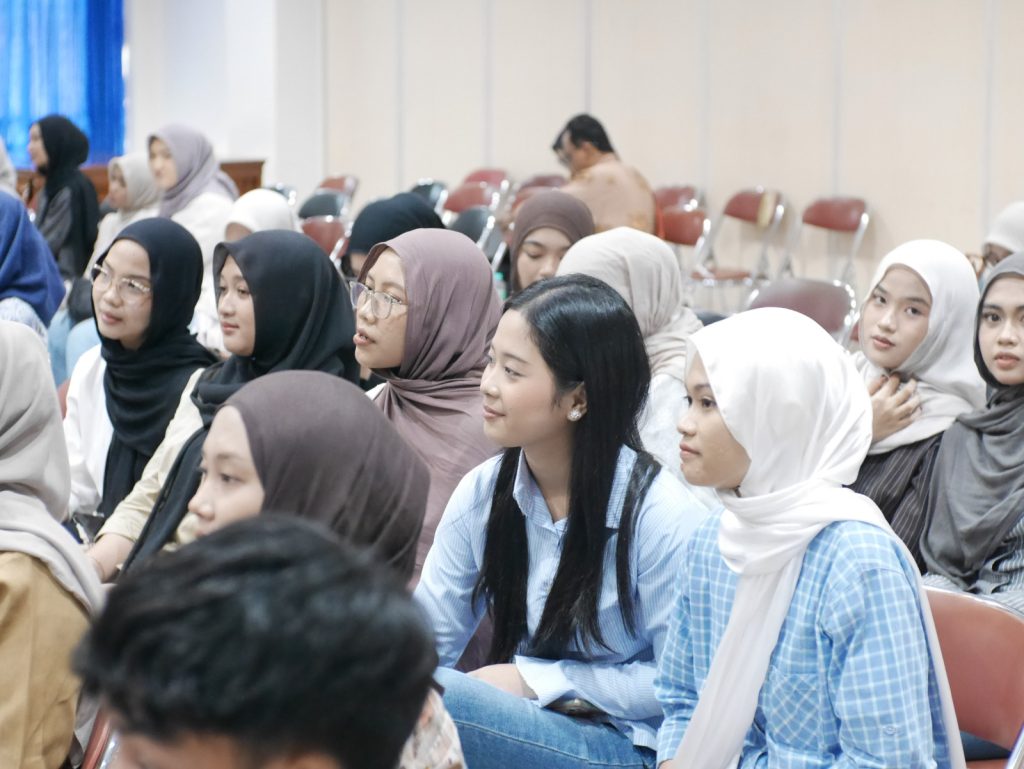
This was among the skills introduced to 173 graduates of the Faculty of Social and Political Sciences (FISIP) at Universitas Negeri Semarang (UNNES), who are scheduled to graduate in August 2026. The graduates were given practical guidance on using AI to support various work activities as they transition from university into the professional world.
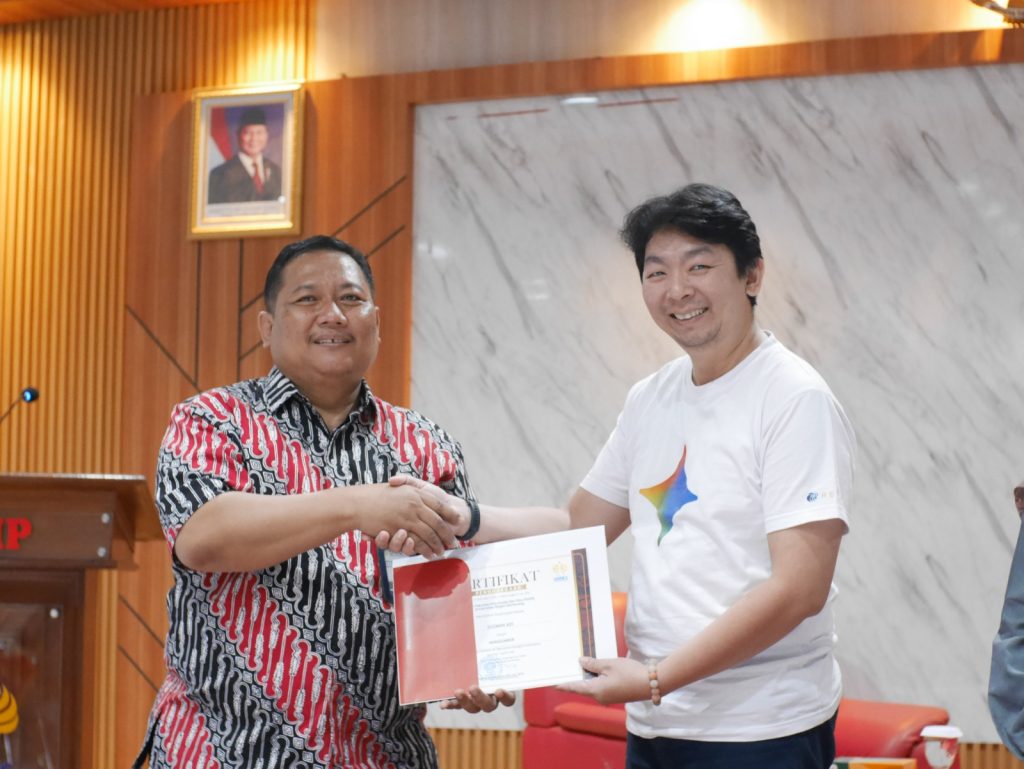
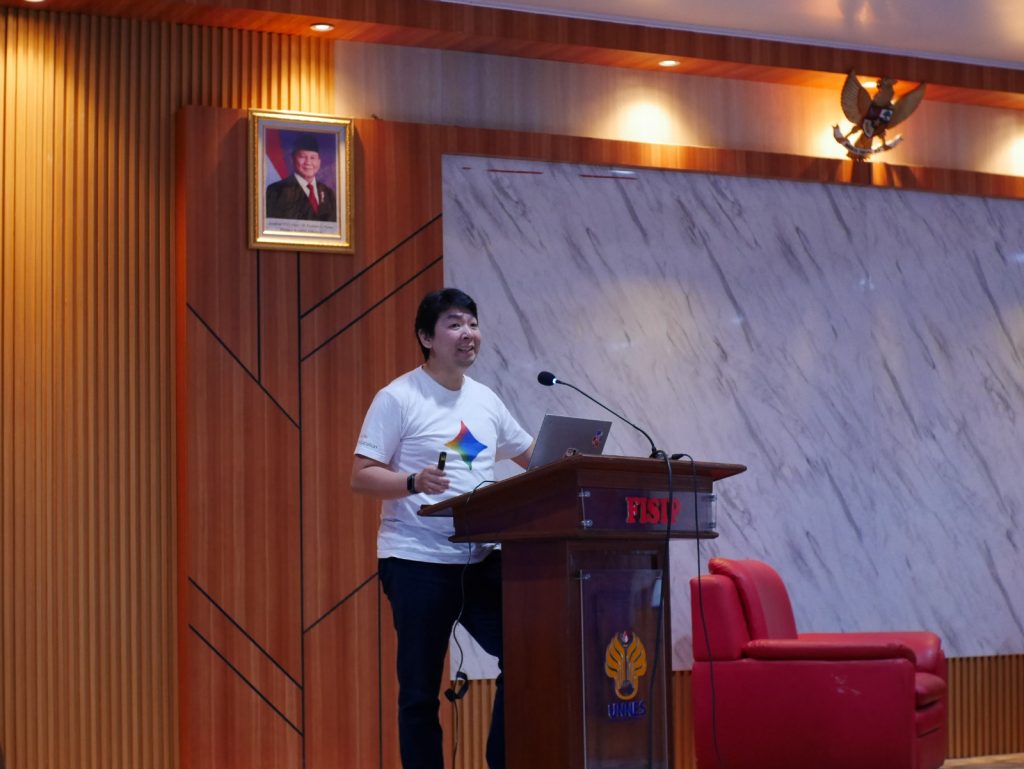
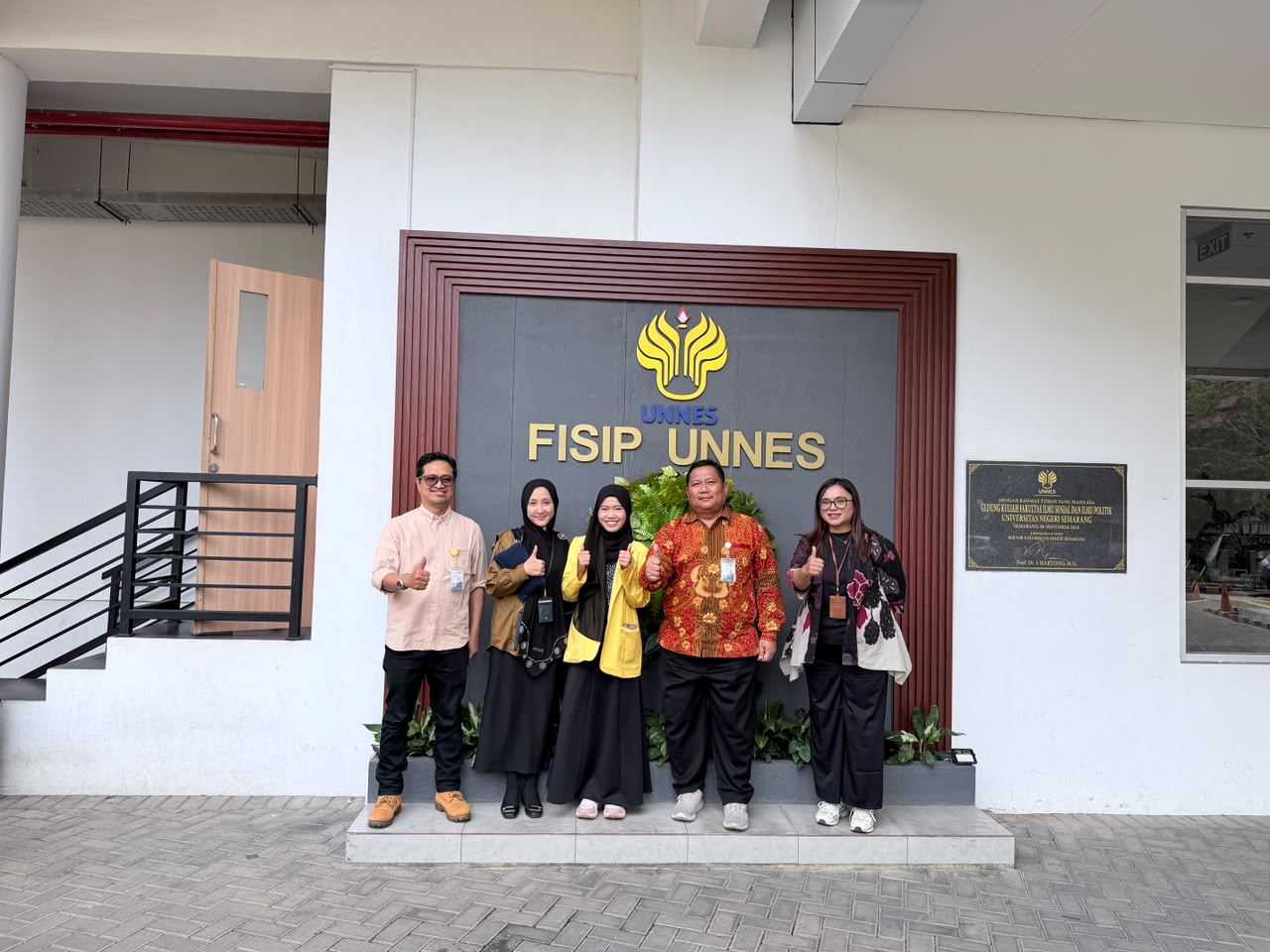
The training was part of the FISIP UNNES graduation send-off held at the FISIP Hall, Sekaran, Gunungpati, Semarang, on Friday (August 7, 2026).
Gusman Adi, Senior Learning Consultant at REFO, explained that one of the basic skills users need when working with AI is the ability to provide clear instructions. A good prompt should provide sufficient context so that AI can understand what the user needs.
“Persona, Aim, Recipients, Theme, Structure,” Gusman said while explaining the elements that can be used to create a more effective prompt.
For general users, these five terms can be simplified into five basic questions: Who should the AI act as? What is the goal? Who is the intended audience? What is the subject? And what form should the final output take?
The first step is to determine the persona or role. Users need to explain what role the AI should take. For example, “You are a career consultant” or “You are an experienced lecturer in social studies education.” This gives the AI a clearer perspective from which to respond.
The next step is to define the aim or objective. Users need to explain what they want to achieve. Instead of simply writing, “Create a CV,” it is better to explain that the CV is intended for a particular position.
The third element is recipients, or the intended audience. Content prepared for university students will be different from content intended for a company, school students, managers, or the general public. Therefore, users need to identify who will read or use the output.
The fourth element is the theme, which refers to the main subject or issue being discussed. The more specific the theme, the more focused the AI’s response is likely to be.
The final element is structure. Users should specify the desired format of the output, whether it should be a paragraph, table, list, presentation, set of questions, letter, CV, or another format.
Gusman explained, “State your role in relation to the task you are being asked to perform.” He also emphasized the importance of having a clear objective because a well-defined goal helps AI produce a more focused response.
The difference between a simple prompt and a more effective one can be seen when graduates use AI to prepare for employment.
A simple prompt might be: “Create a CV for me.” Such an instruction is too general because the AI does not know who the user is, what position they are applying for, what experience they have, or what kind of CV they need.
“You are a career consultant. I am a graduate of a Bachelor’s degree in Civic Education and am looking for a position as an administrative staff member or program officer. I have experience in student organizations, event management, report writing, and digital applications. Create a professional one-page CV tailored to these positions. Use formal English. Highlight the competencies that are relevant based only on the information I provide, and do not add experiences that I do not have.”
This prompt is more effective because the AI receives information about the role, objective, user’s background, subject, and desired output.
The prompt can be further developed by including information from a specific job advertisement.
“Compare the requirements of the following job vacancy with my competencies and experience. Identify the five most relevant competencies and recommend which parts of my CV I should emphasize. Do not create or add any experience that I do not have.”
In this way, AI is not merely used to create a CV. It can also serve as a tool to analyze job requirements and help applicants tailor their application documents.
Syahin Muhammad Alhadi, a graduate of the Master’s Program in Social Studies Education, said AI can support activities related to management, innovation, concept development, question creation, and the development of learning media.
He views AI as a tool that can simplify various tasks in the 21st century, particularly when people need to develop ideas and produce different types of materials.
Meanwhile, Febrina Rohmatul Cholifah, a Civic Education graduate, sees AI as one of the tools that can support graduates in preparing for the workplace. International certifications, for example, can become part of a CV when applying for jobs.
She also uses AI tools such as Gemini and GPT to help develop arguments. For her, however, AI is better positioned as a tool for developing ideas rather than replacing human thinking.
A similar view was expressed by Kemla Khoeronisa. She said AI can help graduates prepare more professional documents for job applications while also supporting activities that require analysis and research.
For new graduates, prompt-writing skills can be applied to a wide range of workplace activities. When preparing a job application letter, for example, users can ask AI to act as a career consultant, provide information about the position they are targeting and their experience, and then request a letter with a specific word limit and tone.
AI can also support research-related tasks. Users can ask AI to act as a research assistant and provide interview data or research findings for thematic analysis. The prompt can also explicitly instruct the AI not to generate information that is not contained in the original data.
In education, AI can be used to develop learning materials. Users can specify the students’ educational level, learning topic, language style, examples, and assessment format.
These examples show that an effective prompt is not necessarily the longest one. What matters most is the clarity of the context, objective, and expected output.
Despite its usefulness, AI-generated information still needs to be checked. AI can produce inaccurate information, including when it is asked to summarize material, analyze data, or provide information about companies and job vacancies.
Graduates therefore need to verify sources, check the accuracy of data, and ensure that AI-generated content accurately reflects their own experience and competencies.
This is increasingly important because the workplace needs not only people who can use AI, but also people who can provide effective instructions, evaluate AI-generated results, and make decisions critically.
For the 173 FISIP UNNES graduates, the AI training is part of their preparation for entering the professional world. Rather than simply asking questions to a machine, they were encouraged to understand how to formulate clear questions and instructions so that AI can become a useful working partner.
Ultimately, an effective prompt does not begin with the sophistication of AI technology, but with the user’s ability to understand clearly what they want to achieve.