



Pati, Central Java – Students from the Faculty of Social and Political Sciences (FISIP), Universitas Negeri Semarang (UNNES), conducted a three-day field observation from 15–17 July 2026 in the Sedulur Sikep community of Sukolilo Village, Pati Regency, Central Java. The activity formed part of an experiential learning program designed to deepen students’ understanding of ethnopedagogy, food security, cultural preservation, and the indigenous wisdom that continues to shape the daily lives of the Sedulur Sikep community.
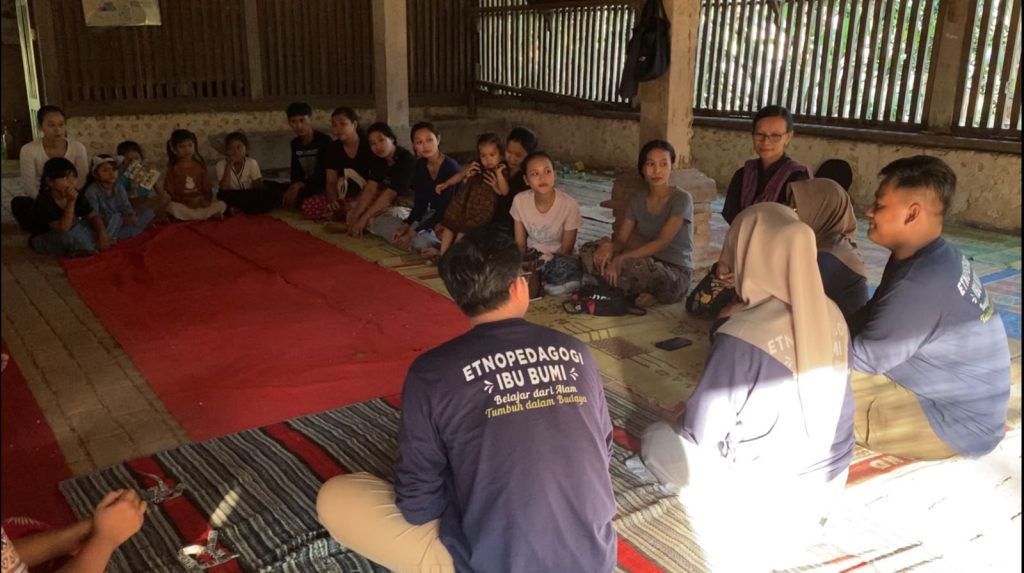
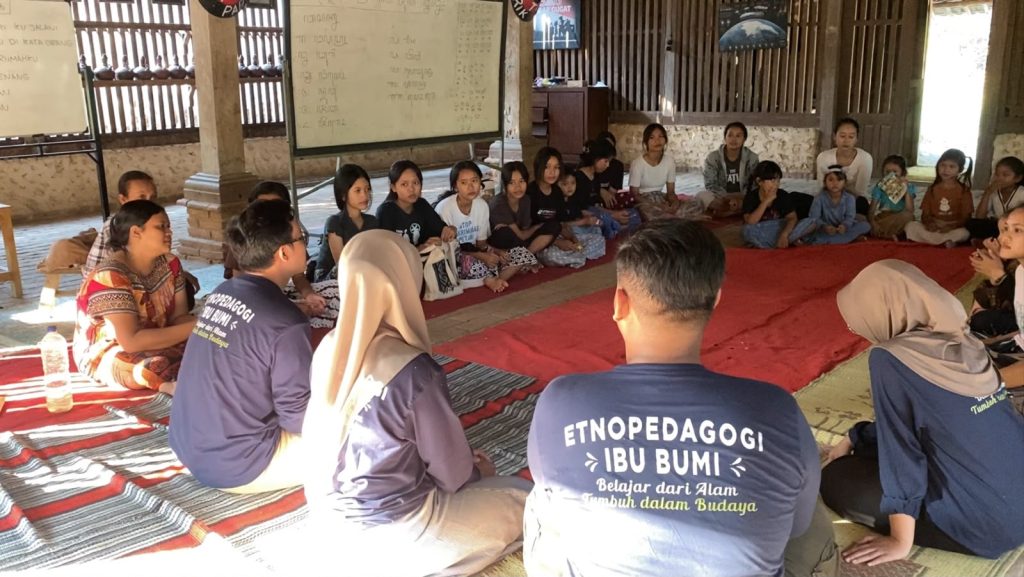
The field study was carried out using a participatory approach, in which the students lived with members of the Sedulur Sikep community, engaged in their daily activities, conducted in-depth interviews and Focus Group Discussions (FGDs), and observed learning activities at Rumah Kendeng. Throughout the program, the students were welcomed and guided by the family of Bu Gunarti and Pak Kukoh, who introduced them to various aspects of Sedulur Sikep life, including traditional farming practices, cultural traditions, and a philosophy centered on honesty, simplicity, and harmony with nature.
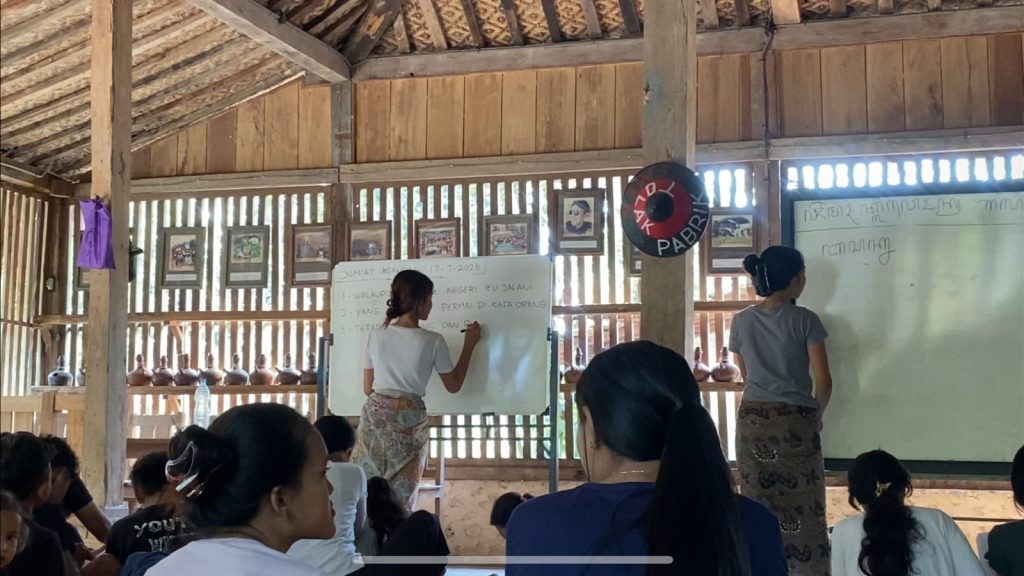
One of the most significant findings of the observation was the community-based educational practice implemented at Rumah Kendeng. More than simply serving as a learning center for literacy, Rumah Kendeng functions as a hub for transmitting cultural values, teaching Javanese script, strengthening character education, and fostering moral development among Sedulur Sikep children. During the learning sessions, children were taught Javanese songs, Javanese script, etiquette, and fundamental life values such as honesty, harmony, patience, responsibility, and respect for others.
The students also participated directly in agricultural activities alongside community members. They assisted with watering crops, maintaining vegetable fields, and discussing the food security strategies practiced by the Sedulur Sikep people. Community members explained that agricultural produce is not only used to meet household needs but is also managed collectively through a communal rice barn system, ensuring food availability during difficult times. This practice reflects the community’s strong commitment to mutual cooperation and sustainable local resource management.
In addition to learning about agricultural practices, the students explored the history of the Sedulur Sikep community’s environmental movement to protect the Kendeng Mountains. Rumah Kendeng itself was constructed without cement as a symbolic expression of resistance against the proposed cement factory, which the community believed would threaten the surrounding ecosystem. Today, the building serves as a center for education, community meetings, and cultural preservation. Inside the building are 64 earthen jars, each representing a natural spring in the Kendeng region, symbolizing the importance of safeguarding water resources and environmental sustainability.
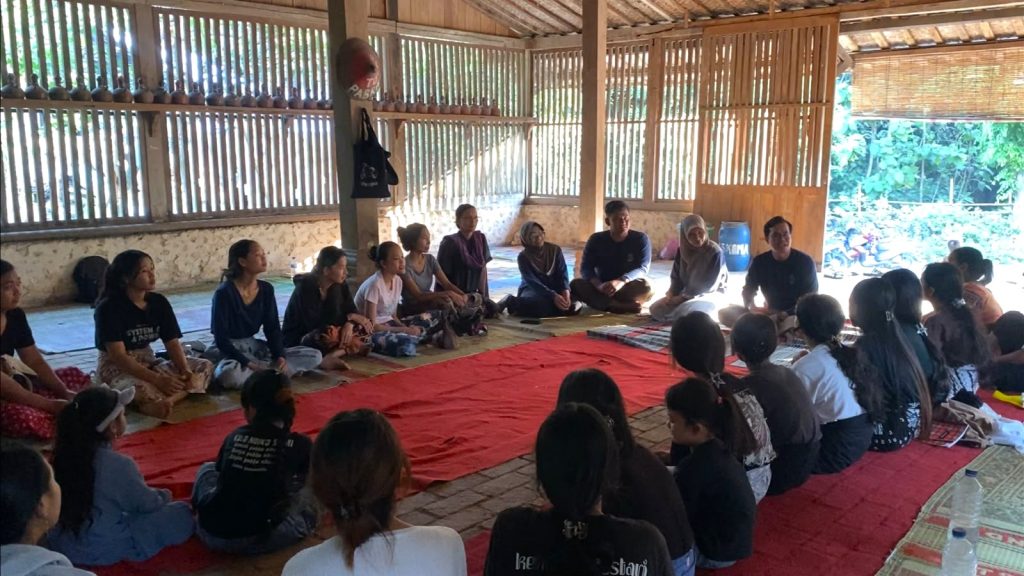
During the observation, the research team also conducted Focus Group Discussions with Sedulur Sikep youth to explore the intergenerational transmission of knowledge, the use of digital technology, and how younger generations maintain their cultural identity amid rapid social change. The discussions revealed that although the younger generation is familiar with social media and digital technology, they continue to uphold the community’s core values, particularly respect for nature, commitment to farming, and preservation of the traditions inherited from their ancestors.
The field observation provided the students with an authentic learning experience, demonstrating that education extends far beyond the classroom and is deeply embedded in community life. Through direct engagement with the Sedulur Sikep community, the students gained valuable insights into ethnopedagogy as an educational approach that integrates local culture, character development, and environmental sustainability into the learning process.
The activity also reinforces FISIP UNNES’s commitment to promoting experiential learning while preserving local wisdom as an essential component of contextual social science education. The experience in the Sedulur Sikep community is expected to strengthen students’ academic perspectives by fostering greater inclusivity, cultural sensitivity, and responsiveness to Indonesia’s rich social and cultural diversity.
This field observation also aligns with Universitas Negeri Semarang’s commitment to achieving the Sustainable Development Goals (SDGs). The program contributes to SDG 4 (Quality Education) by strengthening experiential learning and preserving indigenous knowledge; SDG 11 (Sustainable Cities and Communities) through the preservation of cultural heritage and local identity; SDG 13 (Climate Action) by promoting environmental awareness and sustainable natural resource management; and SDG 15 (Life on Land) through efforts to protect ecosystems and conserve the Kendeng Mountain landscape. Through initiatives such as this, FISIP UNNES continues to demonstrate its commitment to producing graduates who excel academically while possessing a strong sense of social responsibility, cultural awareness, and environmental stewardship.