



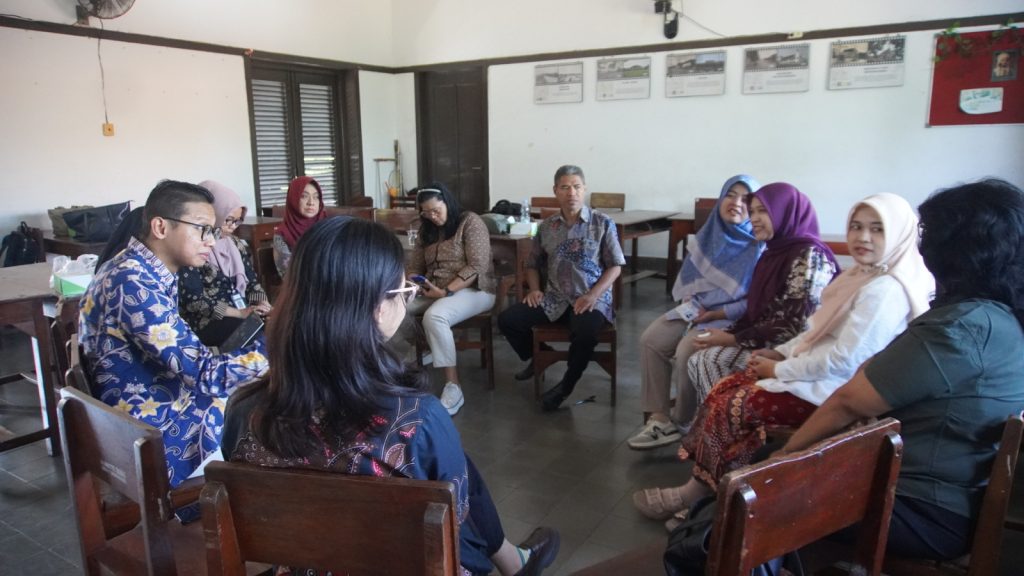
Semarang – As temperatures in Semarang continue to rise and tidal flooding (rob) increasingly threatens the city’s coastal areas, senior high school sociology teachers are discovering a new arena for action: the classroom. It has become the first space where the climate crisis is discussed, interpreted, and addressed collaboratively with students. This spirit was evident during a Focus Group Discussion (FGD) entitled “From Curriculum Policy to Classroom Practice: An Analysis of Sociology Teachers’ Agency in Climate Change Education in Senior High Schools in Semarang City,” held at SMA Negeri 1 Semarang, which also serves as the Secretariat of the Semarang City Sociology Teachers’ Working Group (MGMP).
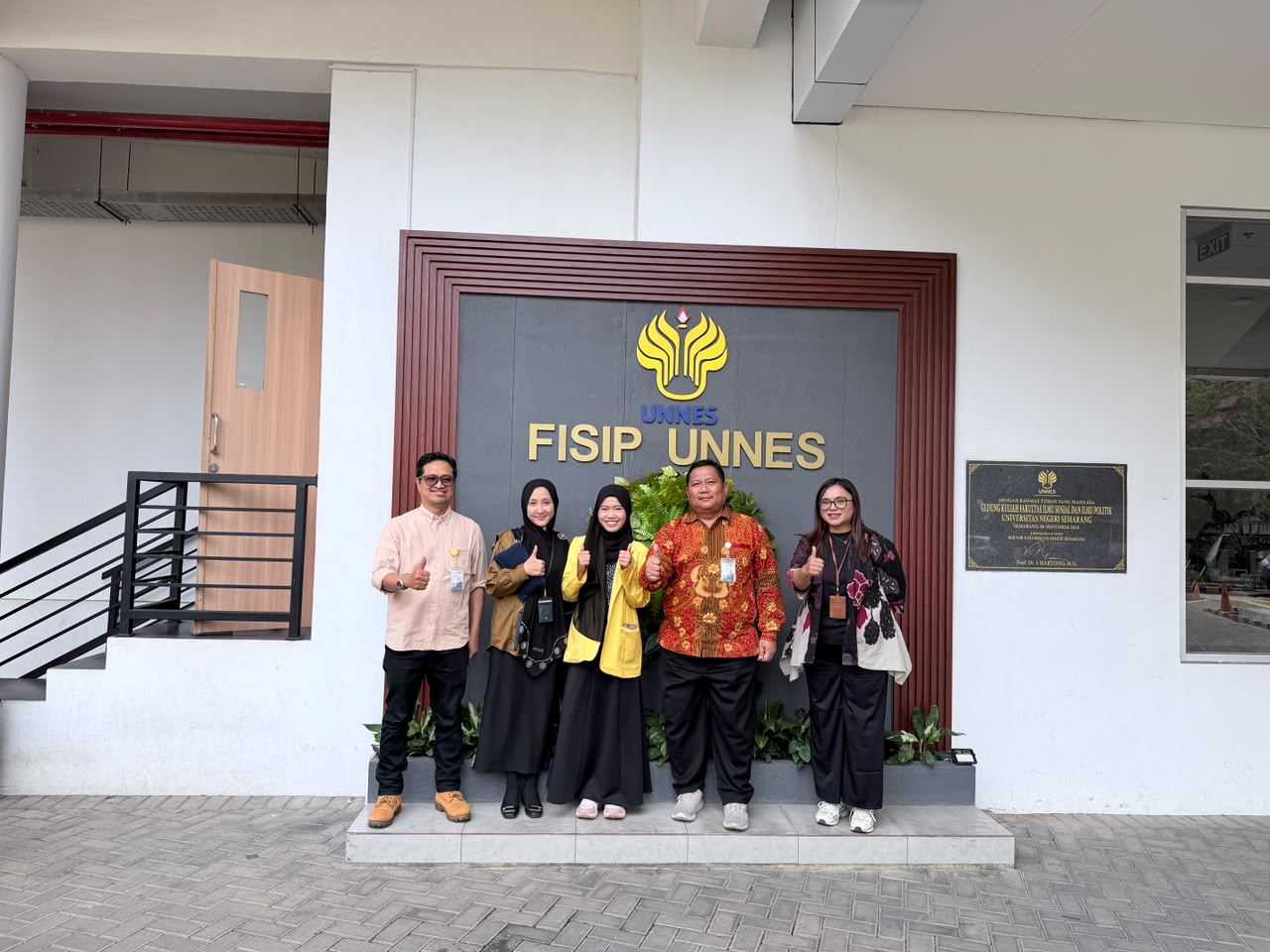
The university-funded basic research was initiated by a research team from the Sociology and Anthropology Education Study Program, Faculty of Social and Political Sciences (FISIP), Universitas Negeri Semarang (UNNES). The discussion was led by Amrin Ma’ruf, S.Pd., M.Pd., the principal investigator, together with Dr. Nurul Fatimah, S.Pd., M.Si., supported administratively by AH. Sobri, S.Pd., while Sae Panggalih, S.Pd., Gr. represented the Sociology teachers. The documentation and recording of the discussion were meticulously handled by Nabila Tsuraya Ramadhani and Alya Regita as rapporteurs, with Ahmad Hasbi Mubarok and Decelsa Gracia Septigita Gaho capturing the event through photographs and video documentation.
The FGD brought together eighteen sociology teachers representing various public senior high schools, including SMA Negeri 1, 4, 5, 9, 11, 13, 14, and 16 Semarang, as well as private schools such as SMA Institut Indonesia, SMA Terang Bangsa, SMA Nusantara, SMA Sula 1, and SMA Al-Azhar 14. The discussion was coordinated by Dandang Dwi, Chair of the Semarang City Sociology MGMP, creating a collaborative forum for teachers to exchange experiences and perspectives on integrating climate change education into sociology learning.
Education Policies Continue to Evolve, and Teachers Continue to Adapt
One of the central themes emerging from the discussion was the dynamic nature of environmental education policies, which continually require teachers to reassess their teaching strategies and instructional approaches. Public schools, supported by relatively adequate facilities, were considered well-positioned to implement environmental education. Meanwhile, private schools, despite depending on the policies of their respective foundations, demonstrated an equally compelling strength: their willingness to innovate rather than merely implement policies passively.
Participants also highlighted the lack of synchronization among government agencies in assigning various school labels and programs, such as Adiwiyata Schools, Healthy Schools, Inclusive Schools, and other institutional recognitions. In practice, these overlapping initiatives often create additional administrative burdens for schools instead of strengthening the substance of environmental education itself.
Despite these challenges, teacher agency has continued to flourish. Sociology teachers in Semarang demonstrated that they are not simply curriculum implementers but active educational actors who negotiate national education policies with the socio-ecological realities surrounding their schools. Innovative learning practices continue to emerge and are enthusiastically received by students—an encouraging indication that young people in Semarang are eager for educational experiences that directly address the environmental challenges they encounter in their daily lives.
Global Perspectives Confirm That Teacher Agency Is More Than a Buzzword
The findings from Semarang both align with and enrich international scholarship on teachers’ roles in climate change education. A study conducted in Finland, involving an international student inquiry-based project, found that teachers’ agency in climate change education is strongly influenced by their own sustainability backgrounds, school culture, learning environments, public discourse, and the educational principles they consider meaningful (Sihvonen et al., 2023).
The Finnish study also revealed that teachers use the United Nations Sustainable Development Goals (SDGs) as a guiding framework for integrating climate change issues across different subjects. This strategy of negotiating between macro-level educational policies and classroom realities closely mirrors the approaches adopted by Semarang’s sociology teachers as they contextualize the national curriculum within the realities of their coastal communities.
Similarly, a narrative study involving eleven teachers in Aceh, Indonesia, identified comparable patterns. The study found that climate change topics were often incorporated only sporadically into classroom instruction due to their limited integration within the national curriculum and the absence of systematic instructional planning. These findings reinforce the challenges identified during the Semarang FGD while emphasizing the importance of strengthening teacher agency in responding to contemporary environmental issues.
Semarang: A Warming Coastal City and the SDGs Agenda
As a major city on Java’s northern coast, Semarang faces a unique combination of environmental challenges, including seawater intrusion, increasingly frequent tidal flooding, land subsidence, and rising air temperatures. These conditions make Semarang a living social laboratory for environmental sociology, where students can directly observe the impacts of climate change—from the coastal communities of Tambaklorok to flood-prone areas in the city center.
The discussion directly supports the Sustainable Development Goals (SDGs), particularly SDG 4 (Quality Education) through the development of relevant and transformative learning, SDG 11 (Sustainable Cities and Communities) by fostering awareness of urban resilience, and SDG 13 (Climate Action) through education that encourages climate literacy and environmental responsibility. Participants also discussed Indonesia’s newly introduced Free Nutritious Meals (MBG) program as an example of a cross-sectoral policy that influences students’ consumption patterns and the environmental management of school canteens, illustrating how sustainability issues increasingly permeate educational policies and daily school life.
Within this context, sociology teachers serve as crucial bridges connecting national environmental education policies with students’ lived experiences as residents of a climate-vulnerable coastal city. Rather than teaching climate change merely as a global phenomenon, they help students understand how it shapes the social, economic, and cultural dynamics of communities in Semarang.
FISIP and the Sociology and Anthropology Education Study Program: Accompanying Change, Not Merely Studying It
For the Faculty of Social and Political Sciences (FISIP), Universitas Negeri Semarang, this research represents more than an academic project. The Sociology and Anthropology Education Study Program positions itself as an integral part of the broader ecosystem of social transformation, working alongside teachers, schools, and local communities to formulate meaningful responses to a climate crisis that can no longer be postponed.
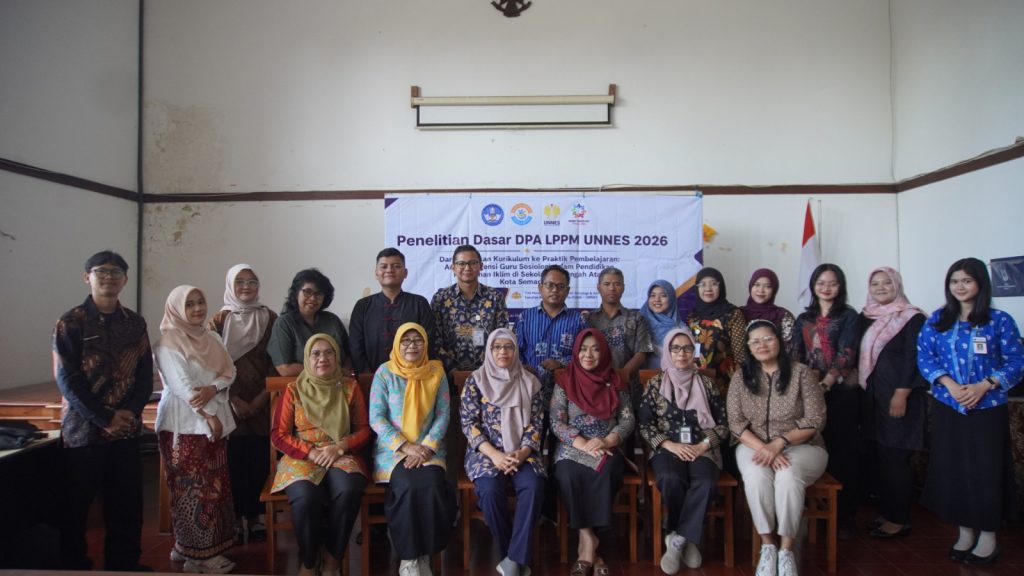
The collaboration fostered through this FGD—bringing together lecturers, educational staff, teachers from public and private schools, and students responsible for documenting and recording the discussions—reflects FISIP UNNES’ commitment to making social science and education directly relevant to society. Rather than remaining an isolated academic institution, the faculty seeks to ensure that its scholarship contributes to solving real-world social and environmental challenges.
Looking ahead, the Study Program is committed to strengthening its partnership with the Semarang City Sociology MGMP, relevant government agencies, and coastal communities that are most vulnerable to the impacts of climate change. This research represents a sustained effort to preserve dialogue between educational policy and classroom practice, grounded in the belief that teachers are not merely subjects of educational policy but active agents who interpret and adapt those policies to the realities of their students and communities. Guided by this vision, the Sociology and Anthropology Education Study Program at UNNES is committed not only to preparing future educators but also to nurturing social change agents who will work collaboratively with schools and communities in addressing the increasingly urgent climate challenges facing Semarang’s coastal region.