

Bantul, Indonesia – As part of its commitment to experiential learning, Universitas Negeri Semarang (UNNES) continues to provide students with opportunities to gain hands-on professional experience through independent internship programs. One such initiative was undertaken by Umi Rahmawati (Student ID: 2303070105), a student of the Sociology and Anthropology Education Study Program, Faculty of Social and Political Sciences (FISIP), UNNES, who completed an internship at the Protean Career Indonesia Foundation, an organization dedicated to human resource development, education, mental health, research, training, and community empowerment. The internship was conducted over approximately four months and ten days, from 3 February to 13 June 2026, at the foundation’s office in Pandes II, Wonokromo Village, Pleret District, Bantul Regency, Special Region of Yogyakarta.
The internship was designed to provide practical learning experiences by enabling the student to apply sociological and anthropological perspectives in the fields of mental health, education, and community development. In addition to enhancing academic knowledge, the program aimed to strengthen competencies in developing educational materials, designing sociology-based online courses, writing popular scientific articles, producing digital promotional content, improving public communication skills, and conducting social analysis through direct involvement in the foundation’s various programs.
Prior to the internship, the student completed several preparatory stages, including the internship placement application, coordination with the host institution, participation in university internship orientation sessions, and familiarization with the foundation’s organizational profile and work programs. These preparatory activities ensured that the student understood the institution’s vision, organizational culture, and professional responsibilities before entering the workplace.
During the internship, Umi Rahmawati was assigned to the Mental Health and Sociology Division, where she participated in a wide range of activities demonstrating the relevance of the social sciences to mental health promotion. Her responsibilities included developing sociology-based mental health courses, designing educational flyers, writing popular articles, preparing podcast briefs, serving as a podcast speaker, and producing digital promotional content aimed at expanding public awareness of mental health issues.
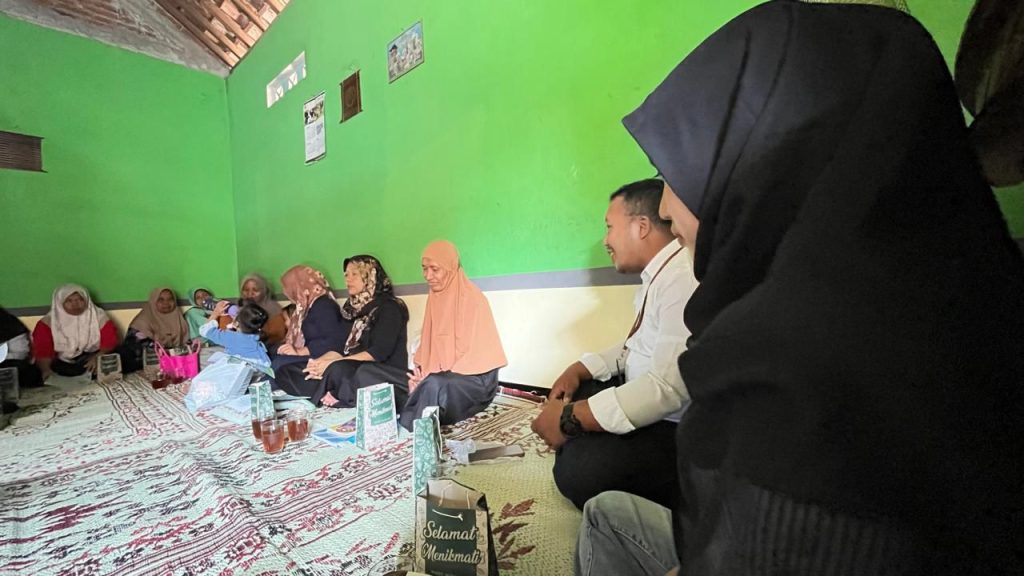
Beyond content development, the internship also provided opportunities for direct engagement with community empowerment initiatives organized by the foundation. The student participated in school outreach programs promoting educational courses, assisted in organizing community activities such as Syawalan, Khotmil Qur’an, Pesantren for Kids, and tutoring programs, and joined field visits to beneficiaries of Indonesia’s Family Hope Program (PKH). These experiences enabled her to gain a deeper understanding of social realities while developing practical skills in community facilitation, communication, and social assistance.
The internship experience was further enriched through participation in weekly evaluation meetings (weekly reports), where program achievements and implementation challenges were reviewed collaboratively. In addition, the student contributed to the development of an educational book entitled Tired of Being a Teenager (Capek Jadi Anak Remaja), which addresses psychosocial issues commonly experienced by adolescents. Throughout the internship, all activities were carried out systematically through close coordination with mentors, field observations, educational media development, documentation, periodic evaluations, and the preparation of a final internship report.
According to representatives of the Protean Career Indonesia Foundation, the presence of the UNNES intern made a positive contribution to the foundation’s educational and community empowerment programs. They emphasized that collaboration between higher education institutions and community organizations plays a vital role in fostering innovation while preparing young people to address contemporary social challenges, particularly those related to mental health, education, and community well-being.
For the Sociology and Anthropology Education Study Program, FISIP UNNES, this internship represents an important component of its practice-oriented educational approach, bridging academic theory with real-world professional experience. Through direct engagement with community-based programs, students are encouraged to apply sociological and anthropological perspectives to analyze social issues contextually while developing the professional competencies required in today’s workforce. Such experiences are expected to produce graduates who are adaptive, socially responsible, and capable of serving as agents of positive social change.
The internship also contributes to the achievement of the United Nations Sustainable Development Goals (SDGs). It supports SDG 3 (Good Health and Well-being) by promoting mental health education and public awareness, SDG 4 (Quality Education) by providing experiential learning opportunities that enhance students’ professional competencies, SDG 8 (Decent Work and Economic Growth) by strengthening career readiness and workplace skills, and SDG 17 (Partnerships for the Goals) through collaboration between a university and a community-based organization in advancing education, mental health services, and sustainable community empowerment. Through this partnership, FISIP UNNES reaffirms its commitment to producing graduates who not only excel academically but also make meaningful contributions to building healthier, more inclusive, and sustainable communities.