Blue Economy Offers a New Path for Sustainable Tourism in Karimunjawa

Universitas Negeri Semarang > Faculty of Social Sciences and Political Science > News > Blue Economy Offers a New Path for Sustainable Tourism in Karimunjawa

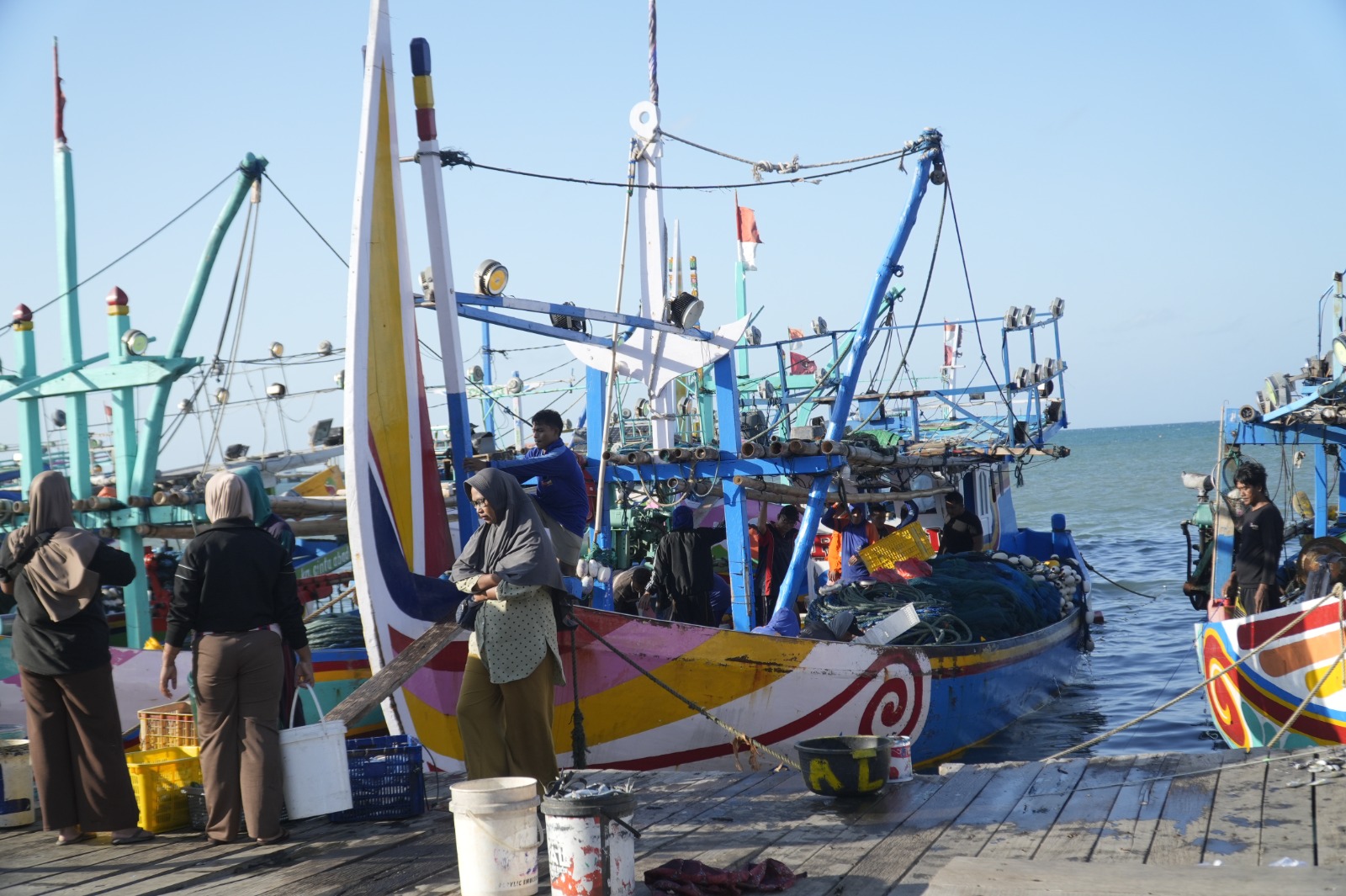
In Karimunjawa, the sea is both a source of livelihood and a source of change.

For years, coastal communities have depended on fishing, seaweed farming and other marine resources. Now, as tourism expands, more residents are earning income from guesthouses, transportation, food services and other tourism-related businesses.

The shift has created new economic opportunities. It has also placed greater pressure on the environment that makes tourism possible in the first place.

That tension is at the center of a study conducted by researchers from the Faculty of Social and Political Sciences at Universitas Negeri Semarang, or FISIP UNNES, in Kemujan Village, Karimunjawa District, Jepara Regency.

The research, carried out on May 10, 2026, was led by Dr. Atika Wijaya, S.A.P., M.Si. and examines how the principles of the blue economy can support more sustainable tourism in small-island communities.

“Karimunjawa is an important example of how coastal and small-island regions are facing increasingly complex development dynamics,” Atika said.

“Tourism has opened new economic opportunities for local communities, but at the same time it has created challenges for environmental and social sustainability.”

The research involved the Kemujan Village Government, coastal community groups, tourism business operators, fishers, seaweed farmers and local residents.

Through in-depth interviews and field observations, the research team examined changing livelihoods and the ways tourism growth has affected access to coastal resources.

In many coastal areas, such economic shifts are rarely simple. Tourism can generate higher incomes, while also increasing dependence on a sector that is vulnerable to environmental degradation and fluctuations in visitor numbers.

For Karimunjawa, the issue is especially important because both the local economy and the tourism industry rely on the same resource: the sea.

“Through this research, we want to understand how blue economy principles can be applied in tourism governance so that economic benefits can be shared by local communities without sacrificing the sustainability of marine resources that support their lives,” Atika said.

The blue economy approach places economic growth and marine conservation within the same framework. The sea can generate jobs and income, but its use must not undermine the long-term health of coastal and marine ecosystems.

In Kemujan, that challenge is reflected in the increasingly close relationship between fishers, seaweed farmers, tourism operators, village officials and residents.

Some people continue to depend directly on the sea for their livelihoods. Others are moving into tourism. Many are now connected to both.

That transition means coastal management can no longer rely on a single sector or institution.

The Kemujan Village Government said the rapid growth of tourism has brought significant changes to both the community and the coastal environment.

“We welcome this research because Karimunjawa is undergoing major changes as tourism continues to grow,” a village representative said.

The village government said the findings could help inform development policies that balance economic interests, social needs and environmental protection.

The research also seeks to develop a collaborative governance model for small-island regions, bringing together local government, coastal communities, fishers, seaweed farmers, tourism operators and universities in the decision-making process.

For the FISIP UNNES research team, Karimunjawa offers a clear picture of a dilemma faced by many coastal communities: how to gain economic benefits from the sea without exhausting the resources that make those benefits possible.

Related Posts

Leave a Reply

* Kode Akses Komentar:

* Tuliskan kode akses komentar diatas:

GDPR

  • Privacy Policy

Privacy Policy

At unnes.ac.id, the privacy of our visitors is of extreme importance to us. This privacy policy document outlines the types of personal information that is received and collected by unnes.ac.id and how it is used.

Log Files

Like many other Web sites, unnes.ac.id makes use of log files. The information inside the log files includes internet protocol (IP) addresses, type of browser, Internet Service Provider (ISP), date/time stamp, referring/exit pages, and number of clicks to analyze trends, administer the site, track user’s movement around the site, and gather demographic information. IP addresses and other such information are not linked to any information that is personally identifiable.

Cookies

unnes.ac.id uses cookies to store information about visitors’ preferences, to record user-specific information on which pages the site visitor accesses or visits, and to personalize or customize our web page content based upon visitors’ browser type or other information that the visitor sends via their browser.

Third-party ad servers or ad networks use technology in their respective advertisements and links that appear on unnes.ac.id and which are sent directly to your browser. They automatically receive your IP address when this occurs. Other technologies (such as cookies, JavaScript, or Web Beacons) may also be used by our site’s third-party ad networks to measure the effectiveness of their advertising campaigns and/or to personalize the advertising content that you see on the site.

unnes.ac.id has no access to or control over these cookies that are used by third-party advertisers.

You should consult the respective privacy policies of these third-party ad servers for more detailed information on their practices as well as for instructions about how to opt-out of certain practices. unnes.ac.id’s privacy policy does not apply to, and we cannot control the activities of, such other advertisers or web sites.

If you wish to disable cookies, you may do so through your individual browser options. More detailed information about cookie management with specific web browsers can be found at the browsers’ respective websites.

Consent

By using our website, you hereby consent to our privacy policy and agree to its terms.

Update

This Privacy Policy was last updated on: 2023-02-14. Should we update, amend or make any changes to our privacy policy, those changes will be posted here.

Contact Us

If you have any questions, comments, or concerns about our Privacy Policy or our practices with regards to your personal information, please feel free to contact us through the contact form on our website or by emailing us at humas[at]mail.unnes.ac.id.

This Privacy Policy is intended as a general guide to our practices in collecting and using information. If there is any inconsistency between this Privacy Policy and the terms of the Service Agreement or any other terms that may apply to specific services you use, then those specific service terms shall apply.

Terms of Use

By using our website, you agree to abide by this Privacy Policy. If you do not agree with this Privacy Policy, please do not use our website. We reserve the right to update this Privacy Policy from time to time without prior notice. Please review our Privacy Policy periodically to check for changes. Your continued use of our website following the posting of changes to this Privacy Policy means that you accept the changes.

Thank you for reading our Privacy Policy. We are committed to protecting the privacy of our website visitors and will continue to update our Privacy Policy to ensure optimal protection.