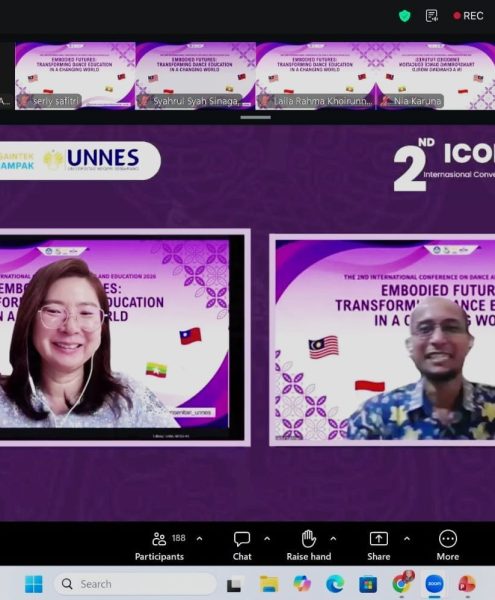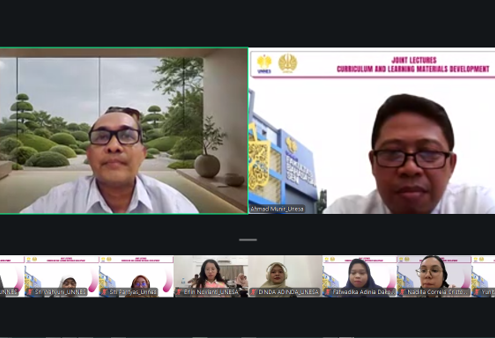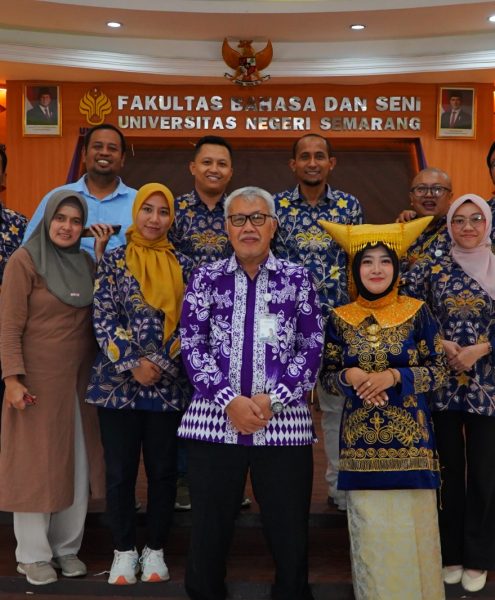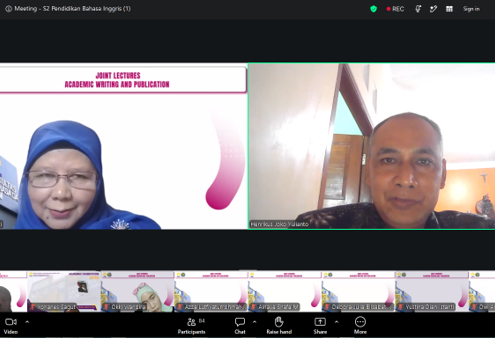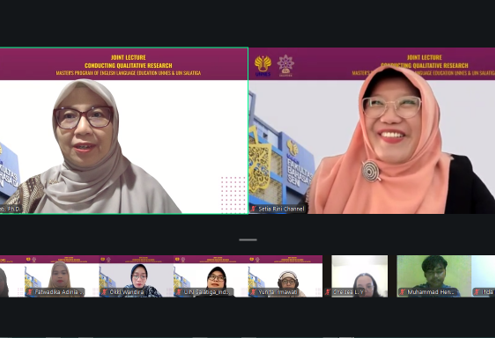


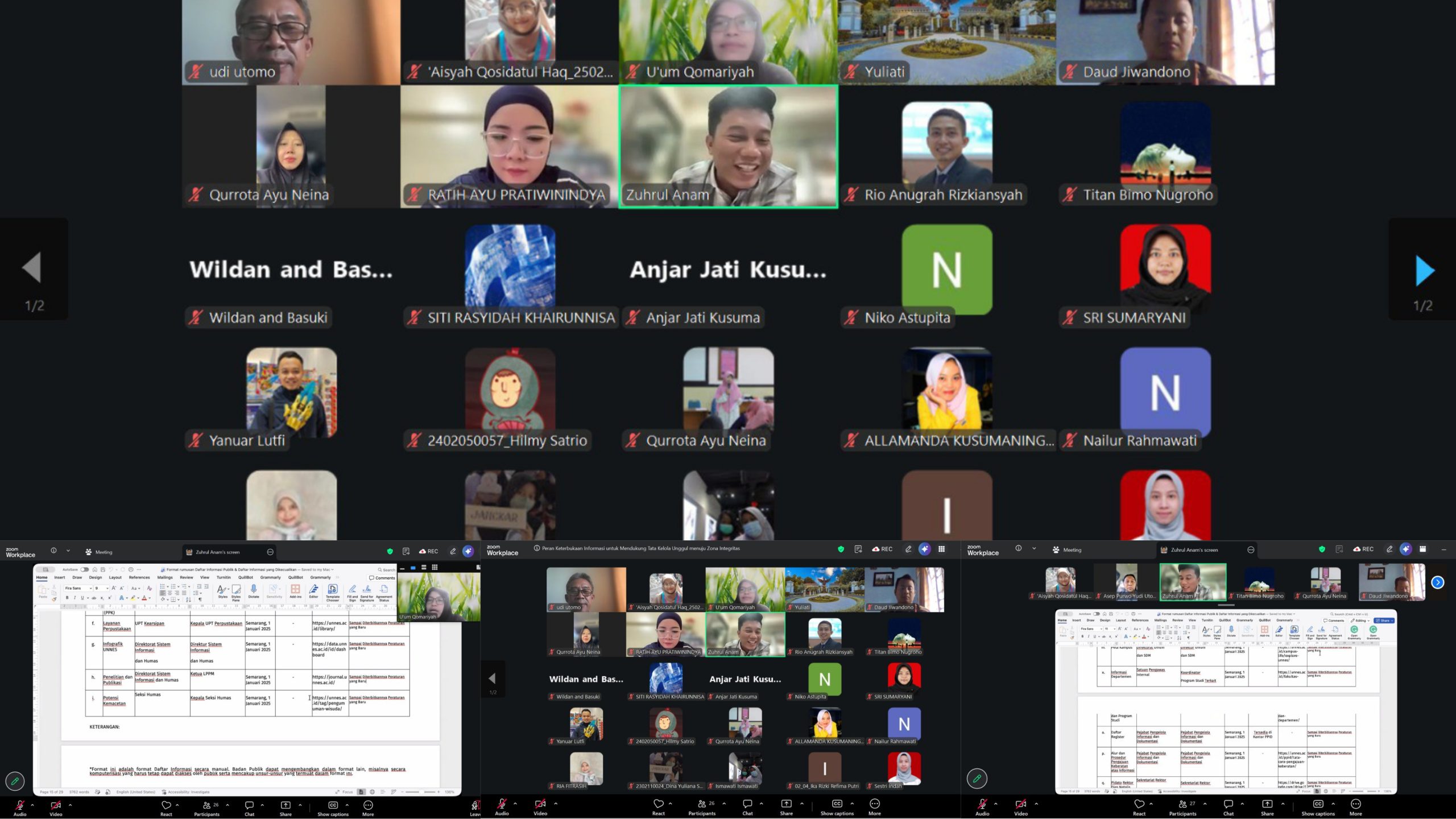
The Faculty of Languages and Arts (FBS) of Universitas Negeri Semarang (UNNES) held a socialization event on the development of the Integrity Zone (ZI) towards the predicate of Corruption-Free Region (WBK) and Clean and Serving Bureaucracy Region (WBBM) on Friday, May 8, 2026. The online event via Zoom was attended by lecturers, education staff, and student representatives.
The socialization aims to strengthen clean, accountable, and service-oriented governance within the faculty. During the material presentation, the development of the Integrity Zone was linked to the achievement of Higher Education Key Performance Indicators (IKU), particularly IKU 1 (successful graduates) and IKU 2 (students engaged in activities outside campus), as well as supporting the Sustainable Development Goals (SDGs), especially Goal 16 (Peace, Justice, and Strong Institutions) and Goal 4 (Quality Education).
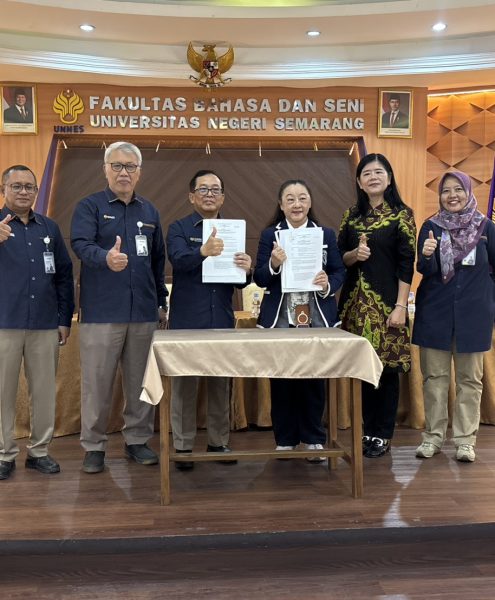
The event began with a presentation on the eight areas of Integrity Zone change, followed by a panel discussion, and concluded with the reading and symbolic signing of the Integrity Pact by all participants.
The Head of the FBS Integrity Zone Team and Vice Dean II of FBS, Dr. Muhamad Burhanudin, M.A., stated that Integrity Zone development must not stop at ceremonial activities.
“We will ensure that every work unit within FBS has concrete programs integrated with IKU and SDGs, for example through digitalization of academic services and a transparent performance reporting system. Cross-unit collaboration is the key to achieving WBK/WBBM,” he said.
The Acting Dean of FBS, Prof. Dr. Nur Qudus, M.T., IPM., emphasized the importance of real action following the socialization.
“Integrity is the foundation of clean and service-oriented governance. I hope this socialization is followed by improvements in educational services, strengthening of student participation, and periodic monitoring of IKU achievements and contributions to the SDGs,” he remarked.
The Assessor of the FBS Integrity Zone Team, Dr. U’um Qomariyah, M. Hum., provided three important notes to maintain consistency.
“First, strengthening the whistleblowing system at the faculty level. Second, integrating integrity values into the curriculum and learning processes. Third, periodic mapping of IKU and SDGs achievements. Without the involvement of all lecturers, staff, and students, the Integrity Zone will remain merely a slogan,” she stressed.
FBS UNNES hopes that this socialization will strengthen the culture of integrity while continuously improving the quality of educational services. Through collaboration and shared commitment, FBS is optimistic about realizing an academic environment that is integrity-driven, high-quality, and competitive.