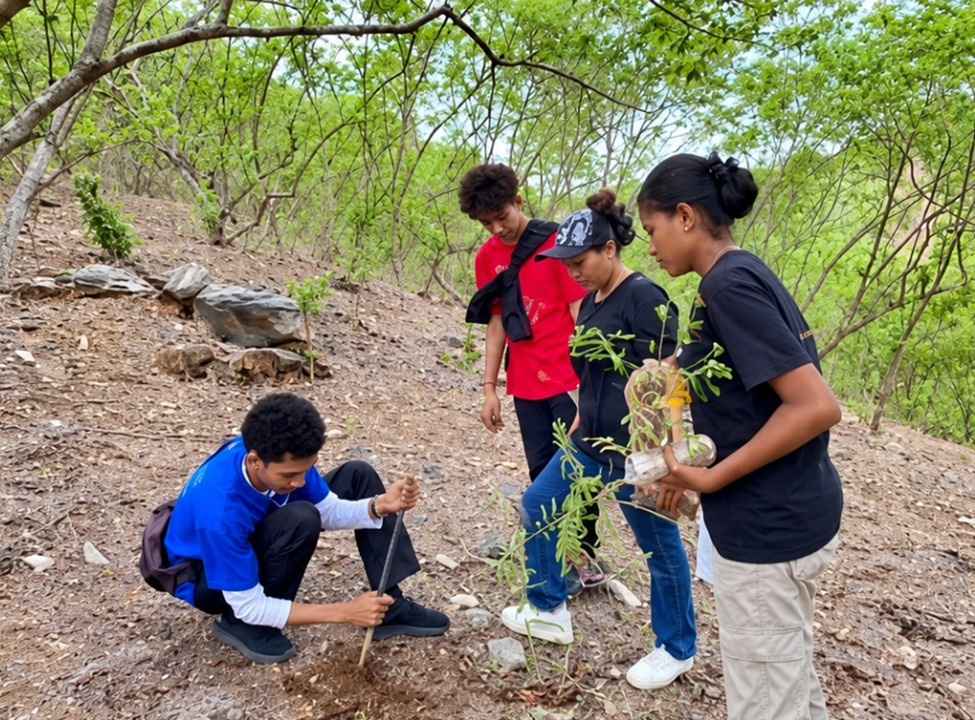



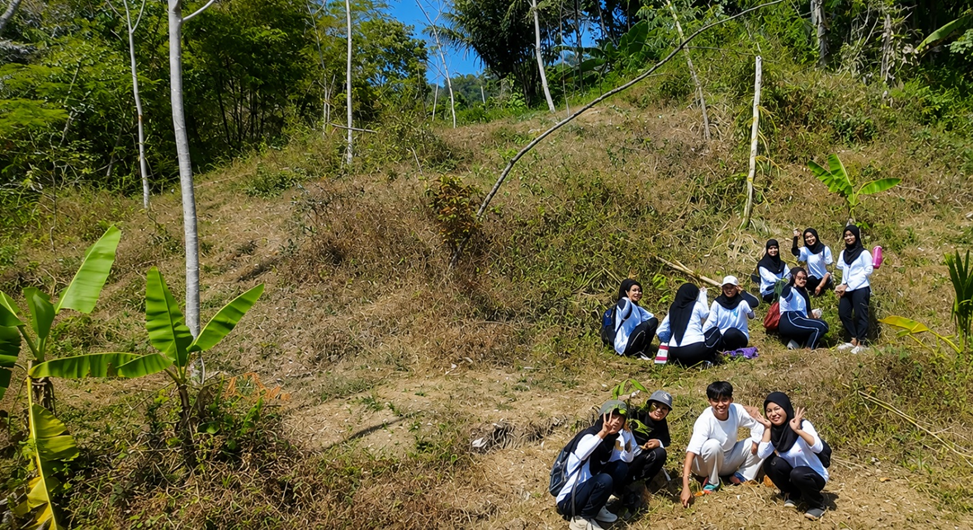
The Student Organization Capacity Strengthening Program (PPK Ormawa) of BEM FMIPA UNNES collaborated with local communities, higher education institutions, businesses, and government agencies in a tree-planting activity held on Saturday, August 29, 2026, in Peron Village, Limbangan District, Kendal Regency. The activity was part of efforts to strengthen environmental conservation and restore the hydrological functions of the upstream area of the Bodri Watershed, which is one of the priority watersheds targeted for restoration.
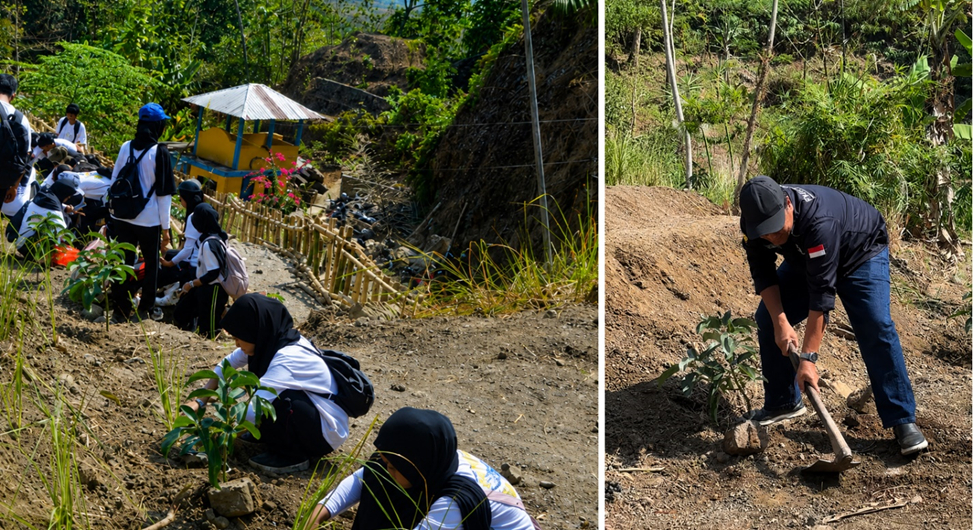
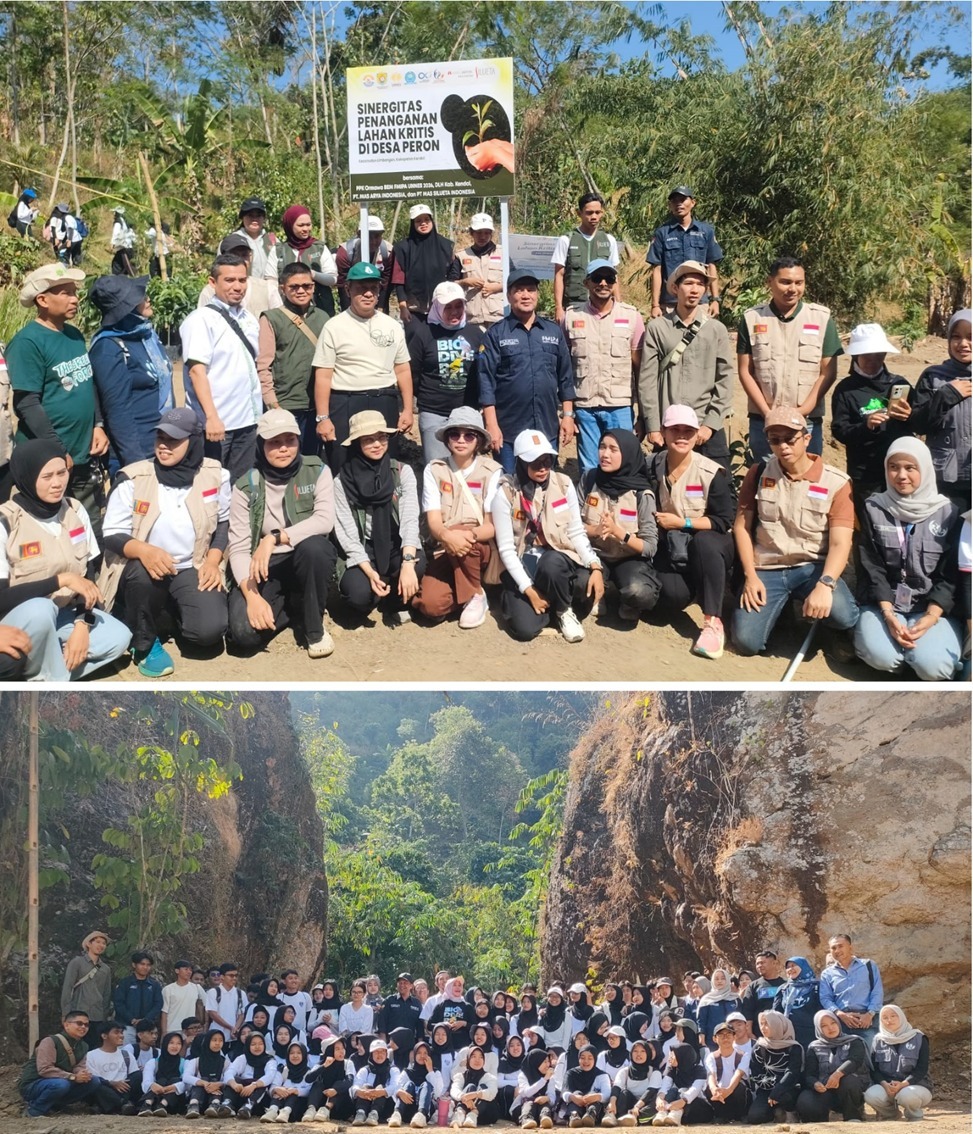
The tree-planting activity involved various stakeholders. A total of 120 FMIPA UNNES freshmen, 100 residents of Peron Village, and 50 representatives from PT Mas Arya Indonesia and PT Silueta participated in the activity. From the business sector, Mr. Waluyo, the head of PT Mas Arya Indonesia, was also present and supported environmental conservation efforts through the company’s involvement in reforestation activities in the upstream Bodri Watershed.
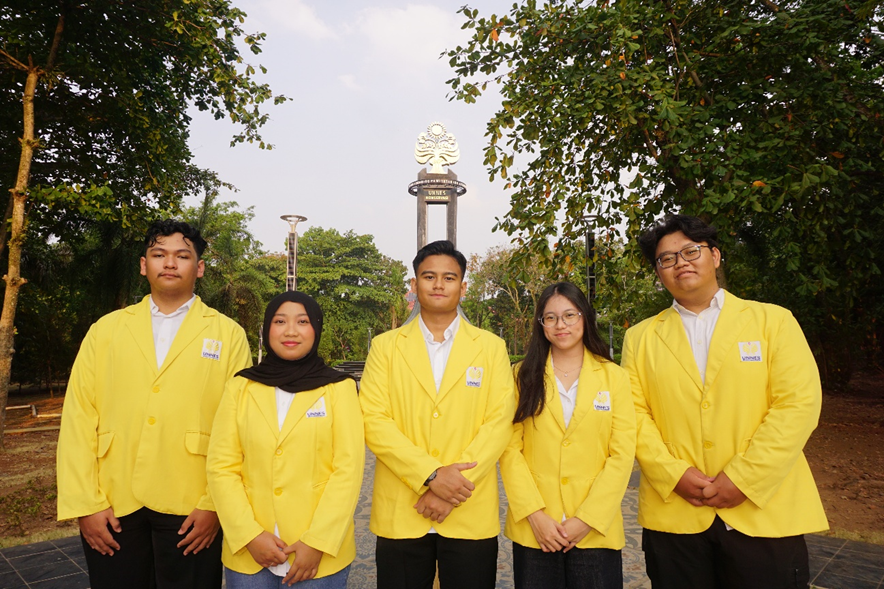
The activity was also attended by Prof. Dr. Edy Cahyono, M.Si., Dean of FMIPA UNNES; Prof. Dr. Sutikno, S.T., M.T., Vice Dean of FMIPA for Business, Research, and Cooperation; as well as several lecturers and UNNES conservation managers, including Teguh Prihanto, S.T., M.T. from the UNNES Conservation Subdirectorate, Abdul Jabbar, M.Ling., faculty advisor to the PPK Ormawa BEM FMIPA team, and Trida Ridho Fariz, M.Sc., from the FMIPA Conservation and SDGs Group.
The collaboration also involved local government representatives, including Pujiharini, S.Hut., M.P., Head of the Watershed Management, Rehabilitation, and Natural Resources Conservation Division at the Central Java Provincial Environmental and Forestry Agency (DLHK), and Ignatius Hidayat Edhi Nugroho, S.Kom., M.A., Head of the Environmental Pollution and Damage Control Division of the Kendal Environmental Agency.
The activity involved planting 200 durian trees, 200 mahogany trees, 200 avocado trees, and 1,000 vetiver plants (Chrysopogon zizanioides). The durian, mahogany, and avocado seedlings were provided through PT Mas Arya Indonesia’s CSR program, while the vetiver was specifically planted along the gully slopes at the site to help strengthen soil structure and control erosion.
The selection of Peron Village as the activity site has strategic importance because, hydrologically, the area is located in the upstream part of the Bodri Watershed. Upstream areas play an important role in maintaining water regulation, increasing infiltration, reducing surface runoff, and controlling erosion and sedimentation that may affect downstream areas. Therefore, vegetation planting in the upstream area is expected to provide ecological benefits at the local level while also contributing to the broader restoration of watershed functions.
The involvement of freshmen also provided an opportunity for direct environmental education. Students gained practical experience in understanding the role of vegetation in maintaining soil and water systems, while the participation of Peron residents is expected to support the long-term maintenance and care of the planted trees.
The collaboration with PT Mas Arya Indonesia and PT Silueta demonstrates that watershed conservation requires multi-stakeholder support. Universities contribute knowledge, education, and mentoring; students serve as agents of environmental action; local communities become active participants and environmental stewards; government agencies provide institutional support; and businesses contribute resources through corporate social responsibility initiatives.
The activity is expected to generate several positive impacts, including increased vegetation cover, strengthened soil and water conservation, reduced erosion risks on slopes, improved ecological functions of the upstream area, and increased community awareness and participation in watershed restoration. The planting of durian and avocado trees may also provide long-term food and economic benefits for local communities if the trees are properly maintained and sustainably managed.
From the perspective of the Sustainable Development Goals (SDGs), the activity strongly supports SDG 15 (Life on Land) through land rehabilitation, vegetation restoration, and terrestrial ecosystem conservation. It also contributes to SDG 6 (Clean Water and Sanitation) by supporting the hydrological functions of the upstream watershed, as well as SDG 13 (Climate Action) through tree planting as part of climate change mitigation and adaptation efforts. The planting of food-producing trees is also relevant to SDG 2 (Zero Hunger), while strengthening community environmental resilience supports SDG 11 (Sustainable Cities and Communities).
Furthermore, the involvement of FMIPA UNNES, the Peron Village community, PT Mas Arya Indonesia, PT Silueta, and government agencies strengthens the contribution of the program to SDG 17 (Partnerships for the Goals). This collaboration demonstrates that watershed restoration and sustainable environmental development require synergy among universities, communities, government, and the business sector. Through this initiative, the Student Organization Capacity Strengthening Program (PPK Ormawa) of BEM FMIPA UNNES demonstrates that watershed conservation cannot be achieved by a single stakeholder. Cross-sectoral collaboration provides an important foundation for restoring the upstream Bodri Watershed while fostering a long-term culture of environmental conservation and community participation.