

Semarang – The Faculty of Mathematics and Natural Sciences (FMIPA) of Universitas Negeri Semarang (UNNES) supports the rehabilitation efforts of the Bodri Watershed (DAS Bodri) through a series of planting activities totaling 61,600 trees in the upstream and downstream areas of DAS Bodri, Kendal Regency, Central Java. This activity was carried out through collaboration with the private sector, local communities, community empowerment institutions, students, and local governments as part of the effort to strengthen the ecological function of DAS Bodri. DAS Bodri is designated as one of the priority watersheds for rehabilitation in the Central Java Provincial Medium-Term Development Plan (RPJMD) for 2025–2029.
The series of activities included the planting of 1,600 trees in Peron Village, Limbangan District, on August 29, 2026, and the planting of 60,000 mangrove seedlings in Pilangsari Hamlet, Pidodokulon Village, Patebon District, which was carried out in stages from August to October 2026. Both locations have interconnected ecological positions, with Peron Village serving as the upstream area and Pilangsari Hamlet, Pidodokulon Village, as the downstream area of DAS Bodri.
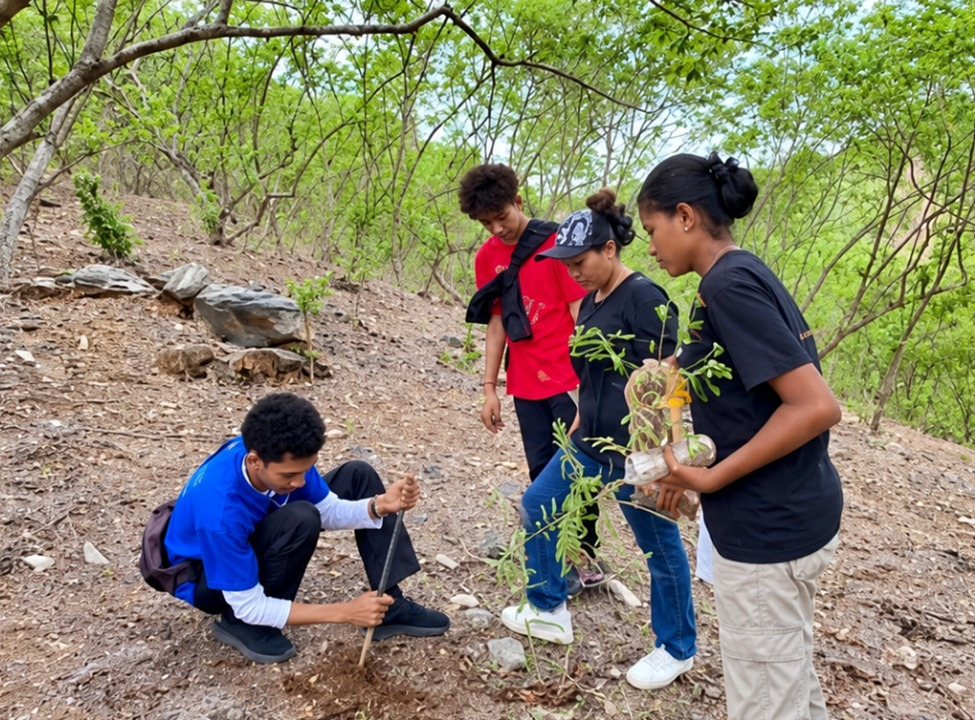
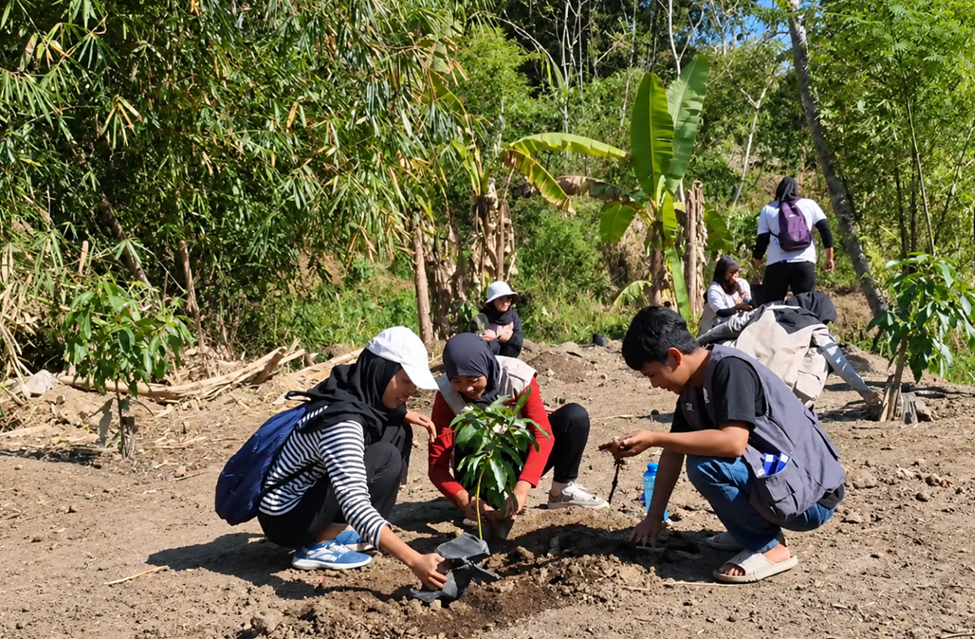
Strengthening Conservation in the Upstream Area of DAS Bodri The planting activity in Peron Village was carried out by the Student Organization Capacity Strengthening Program (PPK Ormawa) Team of BEM FMIPA UNNES alongside the Peron Village community, supported by PT Mas Arya Indonesia through their corporate social responsibility (CSR) program. The event, which took place on Saturday, August 29, 2026, involved 120 new students of FMIPA UNNES, 100 residents of Peron Village, and 50 representatives from PT Mas Arya Indonesia and PT Silueta.
The event was attended by the Dean of FMIPA UNNES, Prof. Dr. Edy Cahyono, M.Si.; Vice Dean of FMIPA for Business, Research, and Partnership, Prof. Dr. Sutikno, S.T., M.T.; Teguh Prihanto, S.T., M.T. from the UNNES Conservation Sub-directorate; Abdul Jabbar, M.Ling. as the supervising lecturer of the PPK Ormawa Team; and Trida Ridho Fariz, M.Sc. from the FMIPA Conservation and SDGs Task Force. From the local government, the event was attended by Pujiharini, S.Hut., M.P. from the Central Java Provincial Environment and Forestry Agency and Ignatius Hidayat Edhi Nugroho, S.Kom., M.A. from the Kendal Regency Environmental Agency.
During the event, a total of 200 durian seedlings, 200 mahogany seedlings, 200 avocado seedlings, and 1,000 vetiver (akar wangi) plants were planted. The durian, mahogany, and avocado seedlings were provided through the CSR support of PT Mas Arya Indonesia. Meanwhile, vetiver was specifically planted on slopes and gully areas to help strengthen soil structure, reduce surface runoff, and control erosion.
Peron Village holds a strategic position in the hydrological system of DAS Bodri due to its location in the upstream area. This area plays a vital role in regulating water management, increasing infiltration, and controlling erosion and sedimentation that could potentially affect downstream areas. Therefore, planting vegetation in the upstream area is expected to strengthen soil and water conservation functions while providing ecological and economic benefits to the local community.
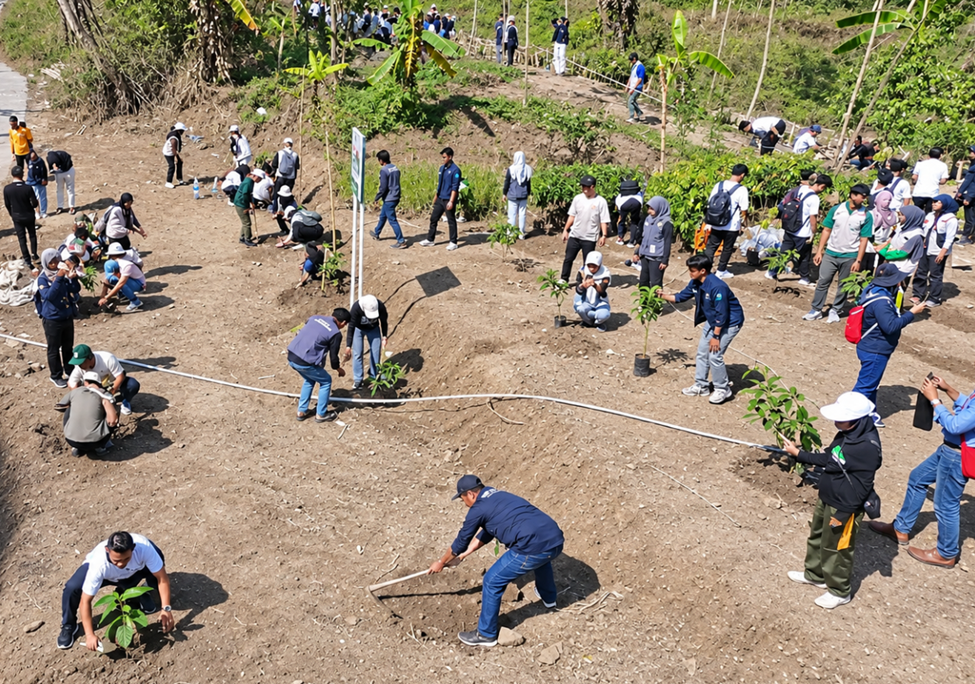
The involvement of students and the community in this activity also serves as part of environmental education and community empowerment. The people of Peron Village are expected to play an active role in maintaining the plants so that the benefits of the planting can be sustained continuously.
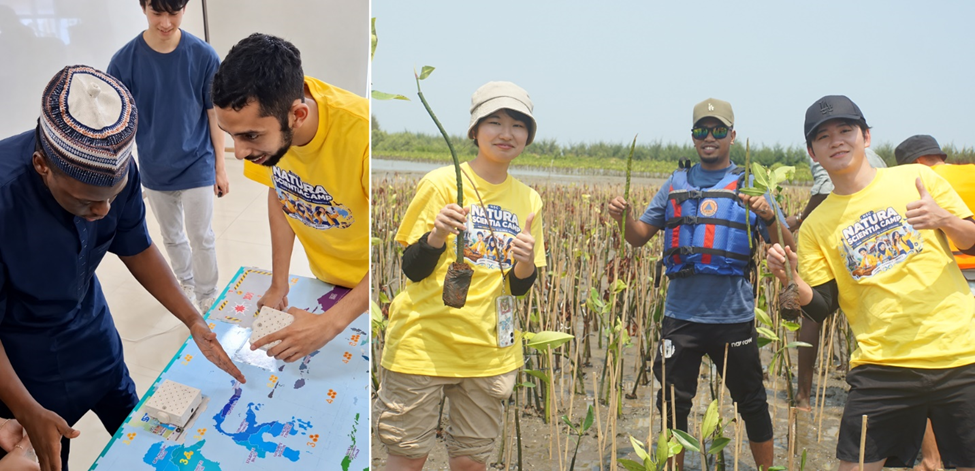
Mangrove Rehabilitation in the Downstream Area of the Bodri Estuary Conservation efforts continued in Pilangsari Hamlet, Pidodokulon Village, Patebon District, located in the downstream area of the Bodri Estuary. In this location, FMIPA UNNES supported the coastal ecosystem rehabilitation program through collaboration with PAMA Group and the Kendal Coastal Community Empowerment and Service Center (P3MP), realized through the planting of 60,000 Rhizophora mangrove seedlings. This program is part of PAMA Group’s corporate social responsibility (CSR) with funding support from the company.
In this collaboration, FMIPA UNNES played a role in supporting coordination, strengthening academic aspects, and providing environmental education, including the involvement of students in rehabilitation activities. Meanwhile, P3MP Kendal served as the implementing partner for the planting activities in the field. This collaboration brings together the contributions of the private sector, higher education institutions, and coastal community organizations in supporting the recovery of the Bodri Estuary mangrove ecosystem.
The selection of the planting location was based on ecological considerations and spatial planning suitability. The Bodri Estuary area is an estuarine region where the freshwater flow from the Bodri River meets the seawater from the Java Sea. This area experiences a relatively high accretion process, which is the addition of land due to sediment accumulation, potentially supporting the development of mangrove habitats. Furthermore, according to the Kendal Regency Spatial Plan (RTRW), the planting location is situated within a designated mangrove ecosystem area. These conditions are crucial considerations in supporting efforts to rehabilitate and restore coastal ecological functions.
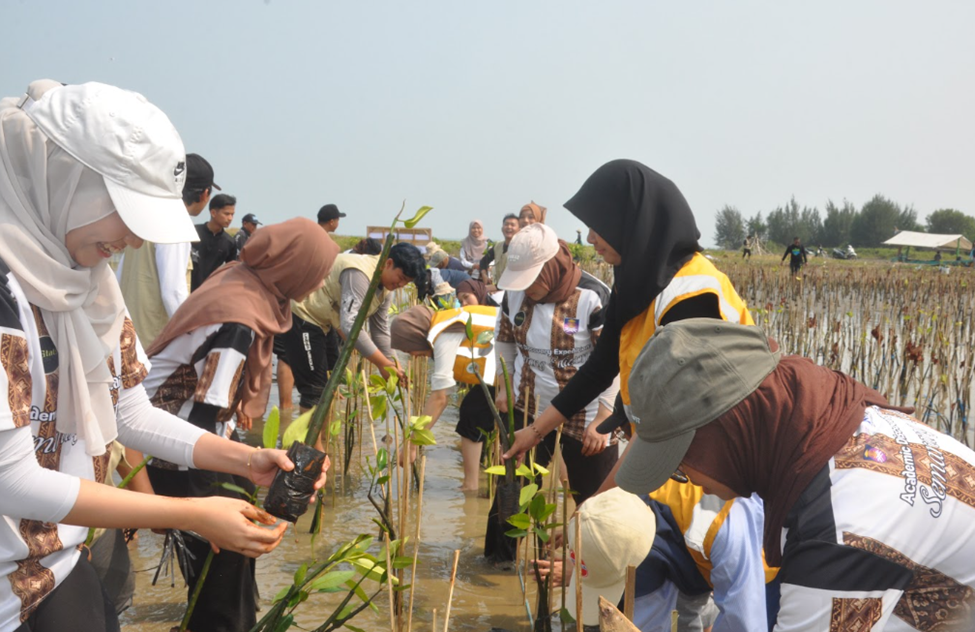
The planting program was implemented in stages from August to October 2026, following the initial planting of 2,000 mangrove seedlings by PAMA Group at Mangunharjo Beach, Semarang, in June 2026. This activity involved FMIPA UNNES students as well as international students through the Natura Scientia Camp (NSC) program from Universiti Malaya and Universiti Teknologi MARA (UiTM), Malaysia. International involvement expanded further through NSC Flash 2026, which was attended by 64 students from 16 countries. The participation of cross-border students transforms mangrove rehabilitation from merely a coastal conservation action into a medium for field learning, knowledge exchange, and strengthening global awareness of climate change and coastal ecosystem sustainability.
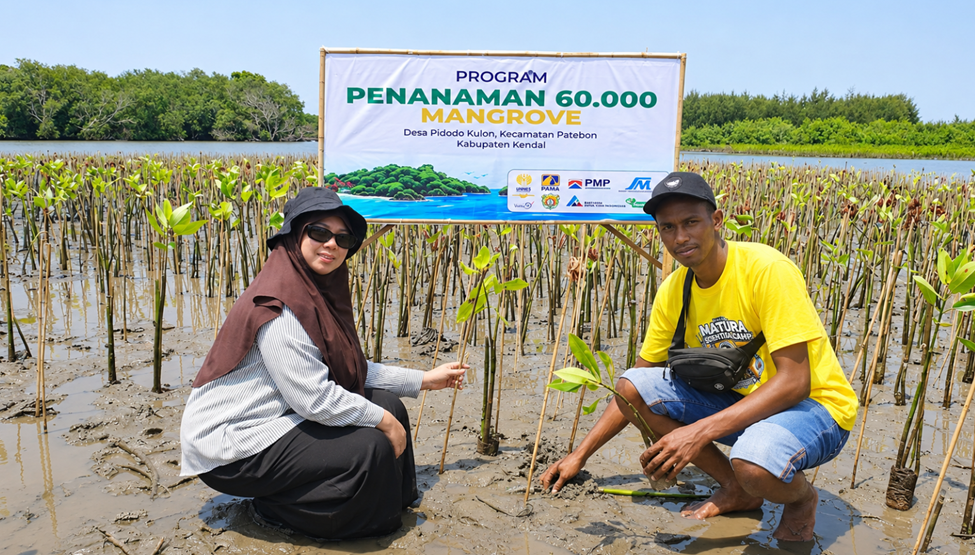
Upstream-Downstream Collaboration for DAS Bodri Restoration The series of planting activities in Peron and Pidodokulon demonstrates a collaborative commitment to restoring the ecological functions of DAS Bodri from upstream to downstream. Vegetation in the upstream area plays a role in maintaining water infiltration, strengthening soil structure, and reducing erosion and sedimentation. Meanwhile, mangroves in the downstream area function to protect the coastline, dampen wave energy, provide biodiversity habitats, and store carbon.
Through this collaboration, a total of 61,600 plants have been planted involving FMIPA UNNES, PT Mas Arya Indonesia, PAMA Group, P3MP Kendal, students, local communities, and local governments. This synergy not only strengthens environmental rehabilitation efforts but also promotes knowledge transfer, environmental education, community empowerment, and corporate involvement in conservation. The planting of durian and avocado trees also has the potential to provide long-term food and economic benefits to the community.
This activity supports the achievement of SDG 2 (Zero Hunger), SDG 6 (Clean Water and Sanitation), SDG 13 (Climate Action), SDG 14 (Life Below Water), SDG 15 (Life on Land), and SDG 17 (Partnerships for the Goals). FMIPA UNNES continues to encourage multi-stakeholder collaboration to ensure that the rehabilitation of DAS Bodri does not stop at planting, but continues through maintenance and monitoring to guarantee vegetation growth and the sustainability of ecological and social benefits for the community.