


The Faculty of Mathematics and Natural Sciences (FMIPA), Universitas Negeri Semarang (UNNES), is strengthening its commitment to energy efficiency and carbon emission reduction through assessments of energy use, Energy Use Intensity (EUI), carbon footprint, and the carbon sequestration potential of campus vegetation. These efforts are reflected in the study “Assessing Energy Efficiency Potential and CO₂ Emission Reduction Through Energy Use Intensity and Vegetation-Based Carbon Balance in University Campuses” by Maulana Malik Wicaksono, Sri Ngabekti, and Amnan Haris of FMIPA UNNES, published in a national SINTA 2-indexed journal in January 2026.
The study found that laboratory buildings were the highest consumers of electricity, with an average consumption of 6,916.94 kWh per month. The analysis also showed that implementing an energy-saving scenario could potentially reduce FMIPA’s electricity consumption by 32.64%, while simultaneously reducing emissions associated with energy use.
These findings provide a data-driven basis for energy management at FMIPA. Through measurements of electricity consumption and Energy Use Intensity (EUI), the faculty can identify buildings with relatively high energy use and determine areas requiring efficiency interventions. The study identified laboratory buildings as one of the priorities due to their use of energy-intensive equipment and longer operating hours.
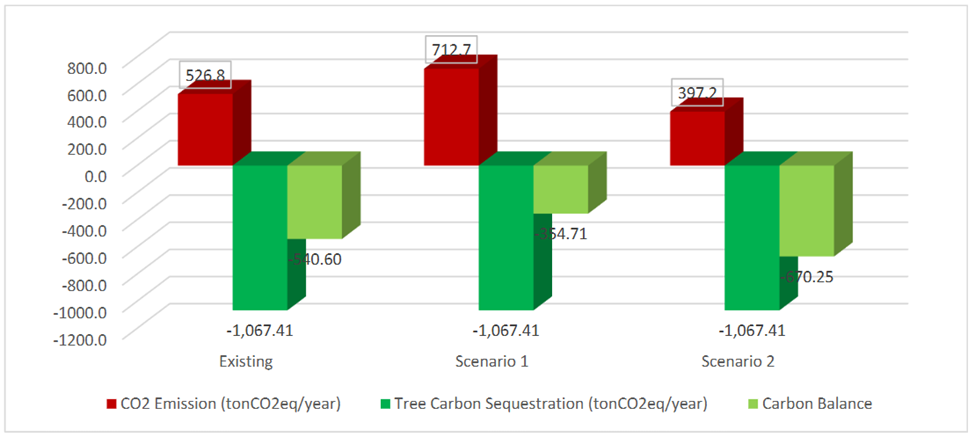
In terms of carbon emissions, FMIPA’s electricity consumption produces an estimated 526.81 tons of CO₂eq per year under existing conditions. With the implementation of energy-efficiency measures, emissions could potentially decrease to approximately 397.16 tons of CO₂eq per year, representing a reduction of around 32.64%. This finding demonstrates that energy efficiency can serve as a direct strategy for reducing the faculty’s carbon emissions.
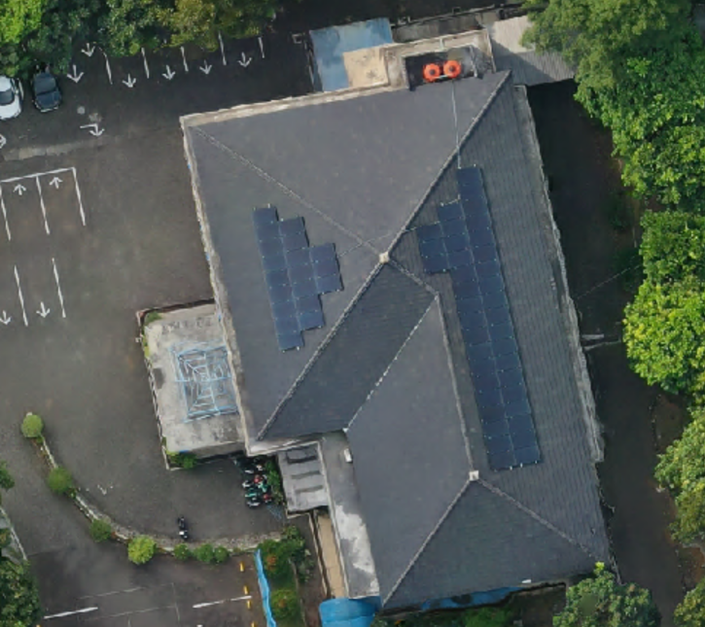
FMIPA UNNES also utilizes solar panels as part of its clean-energy initiatives. The total area of solar panel cells owned by FMIPA is 101 m². Based on an assumed capacity of 150 W/m², three hours of effective sunlight per day, 365 days per year, and a performance factor of 70%, the estimated energy generation is 11,612,475 Wh/year or approximately 11,612 kWh/year.
The use of solar energy contributes to energy-source diversification while supporting efforts to reduce dependence on electricity supplied through the grid. In the study, grid electricity consumption is categorized as an indirect source of emissions or Scope 2.
Emission-reduction efforts are also supported by maintaining green open spaces and trees across the FMIPA campus. The study identified 318 trees from 54 species, with an estimated carbon sequestration capacity of 1,067.41 tons of CO₂eq per year. This capacity exceeds the estimated emissions from electricity consumption under both existing and energy-efficiency scenarios.
This condition results in a negative carbon balance, indicating that the carbon sequestration capacity of campus vegetation is greater than the emissions associated with electricity consumption calculated in the study. Nevertheless, increasing energy consumption and changes in campus facilities may affect this balance, making continuous energy efficiency and vegetation management essential.
These initiatives have strong relevance to SDG 7 (Affordable and Clean Energy) through energy consumption monitoring and management, energy-efficiency improvement, and the utilization of renewable energy through solar panels. The study also provides an evidence-based foundation for implementing integrated energy management within the faculty. In terms of energy auditing, the study analyzed electricity consumption and EUI to identify buildings with high energy use and simulated potential energy-saving scenarios. The findings can therefore serve as a basis for evaluating energy performance and establishing efficiency priorities. From a carbon management perspective, FMIPA has also established a basis for calculating its carbon footprint, assessing potential emission reductions, and estimating the carbon sequestration capacity of campus vegetation. Overall, FMIPA UNNES has established an important foundation for supporting SDG 7 through energy monitoring, identification of efficiency opportunities, energy-saving simulations, carbon-emission assessment, solar energy utilization, and vegetation-based carbon sequestration. This integrated approach also supports the transition toward Carbon Neutrality and Net Zero Emissions 2060 by combining energy-efficiency strategies with nature-based carbon sequestration.