

Jetak Village, Getasan District, Semarang Regency, is located on the slopes of Mount Merbabu, with agriculture and cattle farming serving as major sources of livelihood for the local community. These conditions provide Jetak Village with significant potential to develop sustainable local resource management, particularly through the utilization of livestock waste, renewable energy, biomass, and water resources.
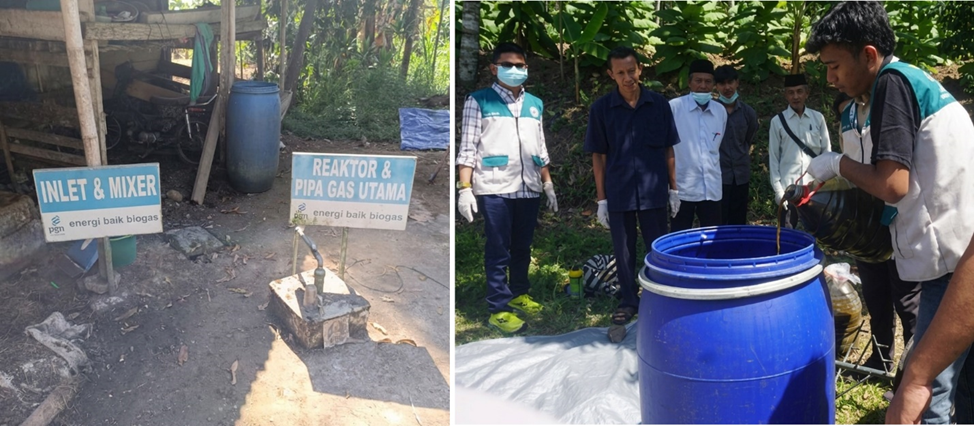
The use of local resources for energy has been part of Jetak Village’s development for many years. In 2017, Perusahaan Gas Negara (PGN) supported the development of biogas infrastructure by constructing a number of biodigesters and educational facilities. This support contributed to Jetak Village being recognized as one of the villages developing the concept of an Energy-Self-Sufficient Village. By 2018, biogas utilization had expanded significantly among local households to meet their domestic energy needs.
This experience has provided an important foundation for further development of clean energy in Jetak Village. However, the long-term sustainability of biogas utilization depends not only on the availability of feedstock but also on safe installation management, optimal utilization of biogas residues, and stronger community capacity to manage renewable energy technologies.
In 2026, the Faculty of Mathematics and Natural Sciences (FMIPA) of Universitas Negeri Semarang (UNNES) implemented two complementary community engagement activities in Jetak Village. Both initiatives focused on utilizing local resources through biogas technology, the Internet of Things (IoT), rainwater harvesting, and pyrolysis-based biochar.
The first activity was the Student Community Empowerment Program (Program Pemberdayaan Masyarakat oleh Mahasiswa/PMM) under the community engagement scheme of the Directorate of Research and Community Engagement (DPPM), entitled “Empowering Farmer Groups and Youth Organizations in Jetak Village through the Integration of Circular Economy Biogas and Rainwater Harvesting Technology for Sustainable Food Systems.” The program was implemented by the FMIPA UNNES PMM team in collaboration with the Center for Community Service Learning (KKN) Development, UNNES GIAT 16 LPPM.
The program applied a circular economy approach by connecting livestock farming, energy, agriculture, waste management, and digital technology. Cow manure, which has traditionally been used by residents as feedstock for biogas production, was further developed through the implementation of an IoT-based system to improve installation safety and detect potential gas leaks.
The IoT system enables biogas installations to be monitored more rapidly and provides notifications when sensors detect indications of gas leakage. The technology also provides an opportunity for local residents to learn about digital technology for clean energy management while strengthening their capacity to maintain the safety of renewable energy facilities.
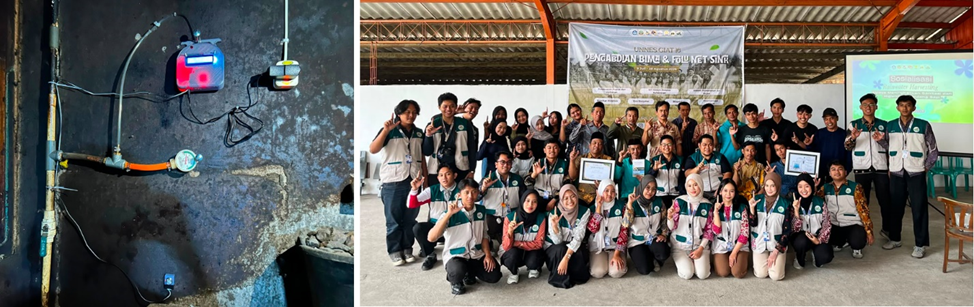
The activity involved the supervising lecturer and Head of the UNNES PMM Team, Abdul Jabbar, S.Si., M.Ling., together with Yahya Nur Ifriza, S.Pd., M.Kom., and Dr. Andhina Putri Heriyanti, S.T., M.Si. The approach positioned digitalization and the circular economy as key components of a more efficient and sustainable strategy for managing rural resources.
The initiative also went beyond using cow manure to produce energy by promoting the utilization of biogas residue, or slurry. The slurry, which still contains nutrients such as nitrogen, phosphorus, and potassium, was processed into Liquid Organic Fertilizer (LOF) and Solid Organic Fertilizer (SOF). In this way, residues from the energy production process can be returned to agricultural activities.
This approach creates a more integrated resource utilization cycle. Livestock farming provides the raw material for biogas, biogas produces clean energy for community needs, and its residue is utilized as fertilizer to support agriculture. The approach not only reduces potential waste but also increases the value of local resources and reduces dependence on agricultural inputs from outside the community.
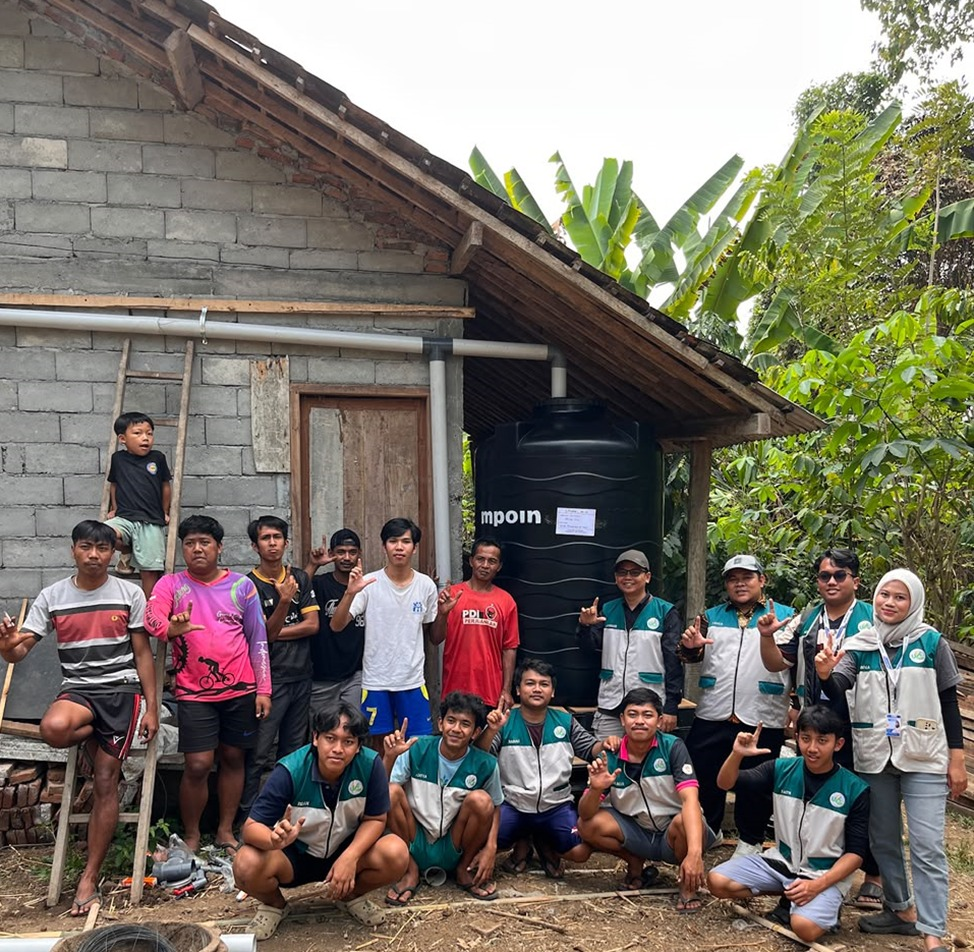
The PMM program also introduced Rainwater Harvesting (RWH) technology. Located in a mountainous area with relatively high rainfall, Jetak Village has considerable potential to optimize rainwater as a resource for agricultural and livestock activities.
Through the introduction of RWH, residents were encouraged to view rainwater not merely as runoff that needs to be drained away, but as a resource that can be collected and used more efficiently. The technology forms part of an effort to develop an agricultural system that is more adaptive to environmental conditions while supporting local food security.
The PMM training sessions were held at the Jetak Village Hall on July 26 and August 1, 2026, involving farmer groups, cattle farmers, and the village youth organization, Karang Taruna. Participants received both theoretical instruction and hands-on practice, including the installation of IoT-based gas sensors connected to an automatic notification system for detecting potential biogas leaks. The involvement of Karang Taruna also strengthened the role of young people in adopting appropriate technologies and managing renewable energy at the village level.
The second activity was supported by the FOLU Net Sink 2030 funding scheme and focused on a Biochar Pyrolysis Awareness and Training Program, conducted on July 11, 2026. The activity was initiated by students from the Environmental Science Study Program at UNNES as part of both experiential learning and community empowerment in biomass utilization.
Through this activity, students and residents of Jetak Village were introduced to the concept of biochar and the pyrolysis process through presentations and hands-on practice. Biomass available within the community was introduced as a resource that could be reused through relatively simple technology rather than simply becoming waste.
Biochar utilization is also closely related to environmental management and sustainable agriculture. Biomass processed through pyrolysis can produce material with potential applications in agricultural systems while contributing to a locally based approach to carbon management.
Together, the two activities demonstrate that Jetak’s development as an Energy-Self-Sufficient Village can move beyond the conventional use of biogas toward a more integrated resource management system. Cattle farming is not only an important economic sector but also part of the village’s energy system through the utilization of livestock manure. Biogas residues can subsequently be returned to agriculture, while other forms of biomass can be processed into biochar. At the same time, rainwater can be collected and utilized to support agricultural and livestock activities.
The FMIPA UNNES initiatives directly support SDG 7: Affordable and Clean Energy, particularly by providing community education on clean energy, energy management efficiency, the use of biogas as renewable energy, and the application of IoT technology to improve the safety of energy installations. Activities conducted outside the university also serve as a form of public outreach promoting renewable energy utilization and strengthening energy self-reliance based on local resources.
Beyond education, FMIPA UNNES also provides direct knowledge- and technology-based support to the local economic sector, particularly cattle farming, which is one of the primary sources of biogas feedstock. Training on biogas installation safety, slurry utilization, and IoT technology can contribute to improving the effectiveness and sustainability of clean energy management within the local livestock sector.
The activities also contribute to SDG 6: Clean Water and Sanitation through community education on water resource management using Rainwater Harvesting technology. RWH is particularly relevant to Jetak Village because its geographical conditions and rainfall patterns provide opportunities to collect, store, and utilize rainwater to support agricultural and livestock activities.
The conversion of slurry into organic fertilizer and biomass into biochar further strengthens the contribution to SDG 12: Responsible Consumption and Production through the application of circular economy principles and waste reduction. The utilization of renewable energy and biomass also supports SDG 13: Climate Action, while the use of organic fertilizer, rainwater, and agricultural development contributes to SDG 2: Zero Hunger.
The application of IoT, biogas technology, rainwater harvesting, and pyrolysis also supports SDG 9: Industry, Innovation and Infrastructure by introducing and applying technological innovations suited to community needs. The empowerment of farmer groups, cattle farmers, and youth organizations contributes to SDG 8: Decent Work and Economic Growth through capacity building and the strengthening of local resource-based economic potential. Meanwhile, the biochar and biomass management approach under the FOLU Net Sink 2030 framework strengthens the connection with SDG 15: Life on Land through more sustainable management of biological resources and biomass.
Overall, the FMIPA UNNES activities in Jetak Village go beyond the introduction of individual technologies. They establish a learning and empowerment ecosystem that connects clean energy, livestock farming, agriculture, water resources, biomass, digital technology, and the circular economy. This approach strengthens the role of local communities as key actors in resource management while providing students with opportunities to apply scientific knowledge directly to real-world challenges. Through these initiatives, FMIPA UNNES contributes to strengthening Jetak Village’s ongoing development toward energy self-reliance based on local resources. The integration of biogas, IoT, rainwater harvesting, slurry utilization, and biochar demonstrates that the transition toward sustainable rural development can begin with resources already available within the community. This effort represents a tangible contribution by FMIPA UNNES to the achievement of SDG 7, SDG 6, SDG 12, and SDG 13, as well as other interconnected SDGs.