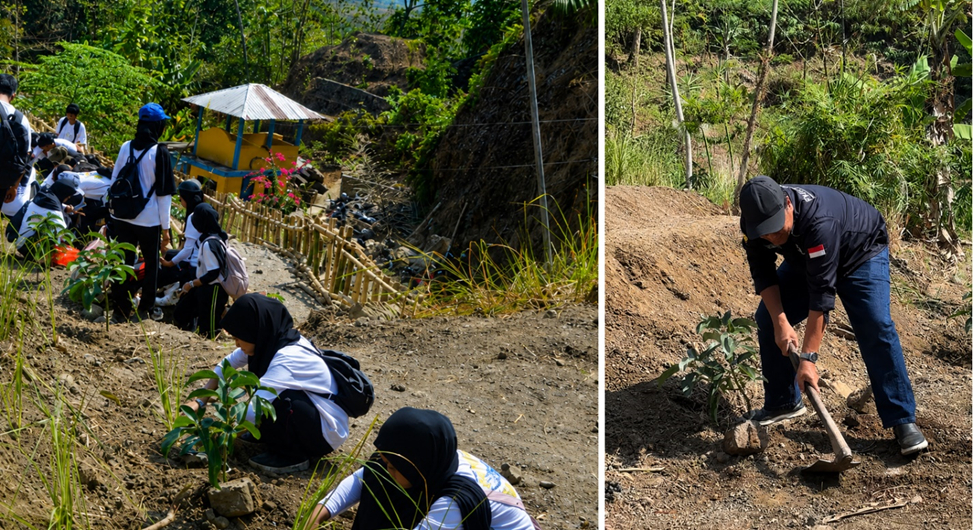



SEMARANG – Lecturers from the Faculty of Mathematics and Natural Sciences (FMIPA), Universitas Negeri Semarang (UNNES), conducted a community service program on the implementation of Good Agricultural Practices (GAP) for ginger and spice products in Jatirejo Urban Village, Gunungpati District, Semarang City, on June 7, 2026.
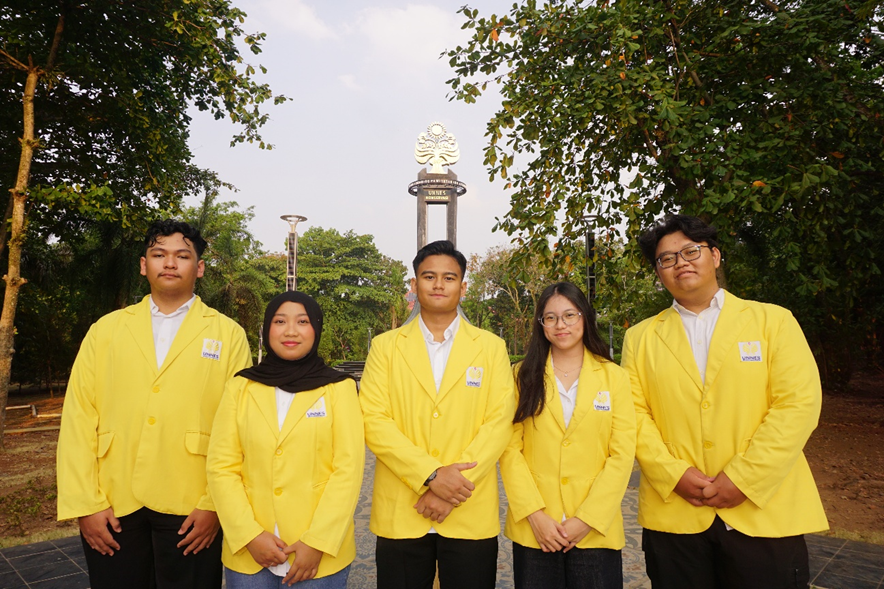
The program was led by Prof. Dr. Nanik Wijayati, M.Si., with Prof. Dr. Sudarmin, M.Si., and Dra. Sri Nurhayati, M.Si., as team members. The activity also involved undergraduate and graduate students from the Chemistry discipline cluster of FMIPA UNNES.
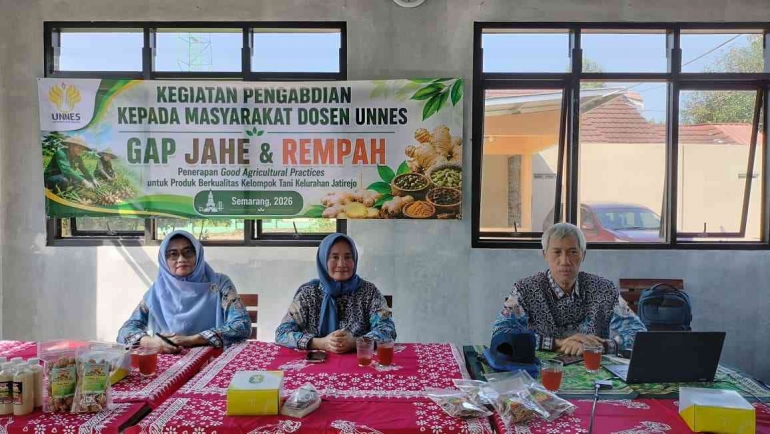
The FMIPA UNNES community service team delivered the introductory session on the implementation of Good Agricultural Practices for ginger and spice products in Jatirejo.
The FMIPA UNNES community service team delivered the introductory session on the implementation of Good Agricultural Practices for ginger and spice products in Jatirejo.
This community service program aimed to assist the farmer group in producing ginger and spice-based products that are safer, higher in quality, and more sustainable. Through the implementation of GAP, farmers and local residents were encouraged to understand good cultivation and processing practices, from raw material selection and post-harvest handling to the development of value-added local products.
This activity is related to the Sustainable Development Goals (SDGs), particularly SDG 2 on Zero Hunger, SDG 8 on Decent Work and Economic Growth, and SDG 12 on Responsible Consumption and Production. The assistance in applying GAP to ginger and spice products supports safer and more productive agricultural practices while helping increase the added value of local agricultural commodities.
Good Agricultural Practices are agricultural guidelines that emphasize product safety, efficient use of inputs, soil health, environmental sustainability, and the economic value of agricultural products. In the context of ginger and spices, GAP plays an important role in maintaining raw material quality, reducing excessive chemical use, and supporting the production of marketable products.
The activity began with an opening session led by Prof. Dr. Nanik Wijayati, M.Si., as the head of the community service team. The session continued with material presentation by Prof. Dr. Sudarmin, M.Si., followed by additional reinforcement from Dra. Sri Nurhayati, M.Si. The materials emphasized the importance of cultivation standards, processing practices, and product development based on ginger and spices to improve product quality.
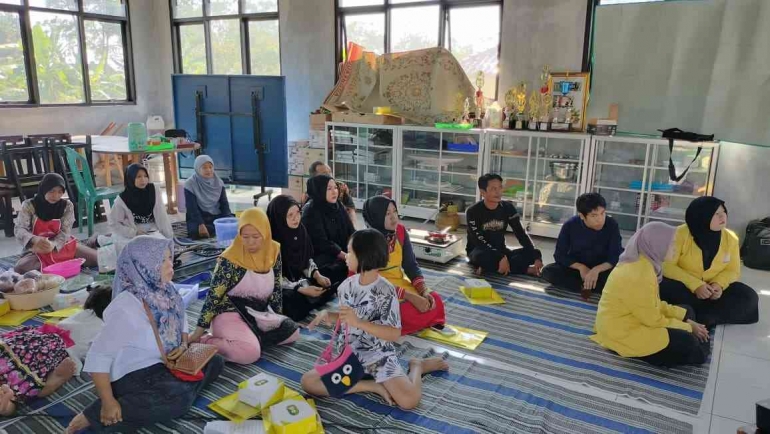
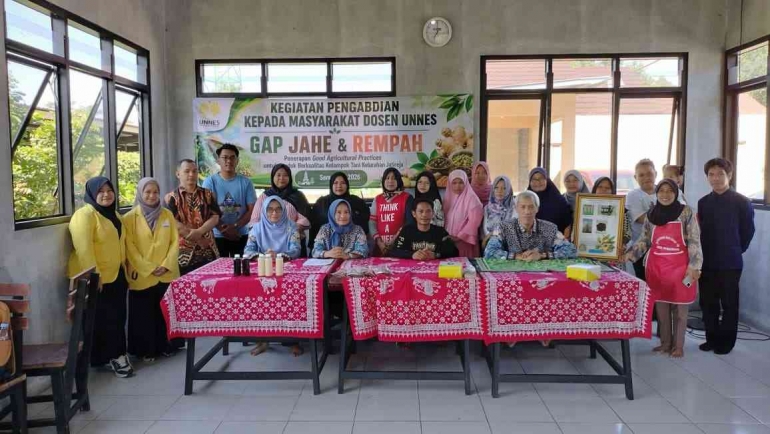
Jatirejo residents attended a session on the implementation of Good Agricultural Practices and the development of ginger and spice-based products.
After the material session, the activity continued with hands-on practice in processing ginger and spices into various value-added products.
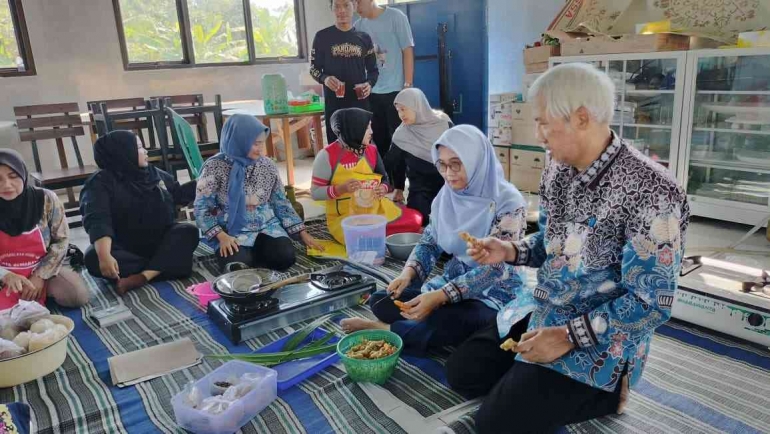
The FMIPA UNNES team assisted residents in processing ginger and spices into value-added local products.
The products developed included ginger drink, ginger snacks, ginger-filled onde-onde, ginger and spice syrup, and ginger powder with market potential.
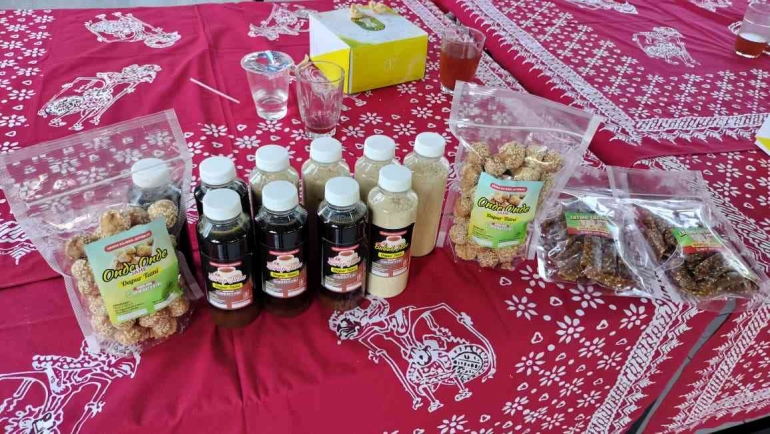
Various ginger and spice-based products developed through the FMIPA UNNES community service program in Jatirejo.
During the practice session, residents were directly assisted by the FMIPA UNNES lecturers and students. Participants not only learned processing techniques, but also conducted taste testing on the products they produced. Through this process, they provided input on the composition of sugar, salt, and other ingredients to create a more balanced taste that would better suit consumer preferences.
The program also introduced Kajera Thematic Café in Jatirejo as a potential platform for developing and marketing ginger and spice-based products. The café is expected to serve as a promotional space for local products, including ginger drinks, spice-based beverages, ginger-based foods, and distinctive Jatirejo souvenirs.
Through the development of ginger and spice-based products, local residents are expected to increase the added value of agricultural commodities. Products that were previously sold mainly as raw materials can be processed into ready-to-consume products with stronger market appeal.
This product development effort is also connected to SDG 8 because it supports local economic strengthening through products with business potential. At the same time, the application of better cultivation and processing standards is in line with SDG 12, as it emphasizes safer, more responsible, and quality-oriented production practices.
This community service program reflects FMIPA UNNES’ role in supporting community empowerment through science-based assistance. The implementation of GAP does not only focus on improving product quality, but also strengthens the capacity of local communities to manage their local potential in a more productive and sustainable way.
Through this activity, FMIPA UNNES expects the Jatirejo farmer group and local residents to continue developing innovative ginger and spice-based products. The application of Good Agricultural Practices is expected to become a foundation for producing safer, higher-quality, and economically valuable products while supporting the improvement of community welfare. This activity also reflects FMIPA UNNES’ contribution to sustainable agriculture, local economic empowerment, and more responsible food production.