
FMIPA UNNES Student Team Designs KAMPUNG LESTARI through a Cross-Disciplinary Approach to Support the Achievement of SDGs

Universitas Negeri Semarang/Faculty of Mathematics and Natural Sciences/Berita/FMIPA UNNES Student Team Designs KAMPUNG LESTARI through a Cross-Disciplinary Approach to Support the Achievement of SDGs
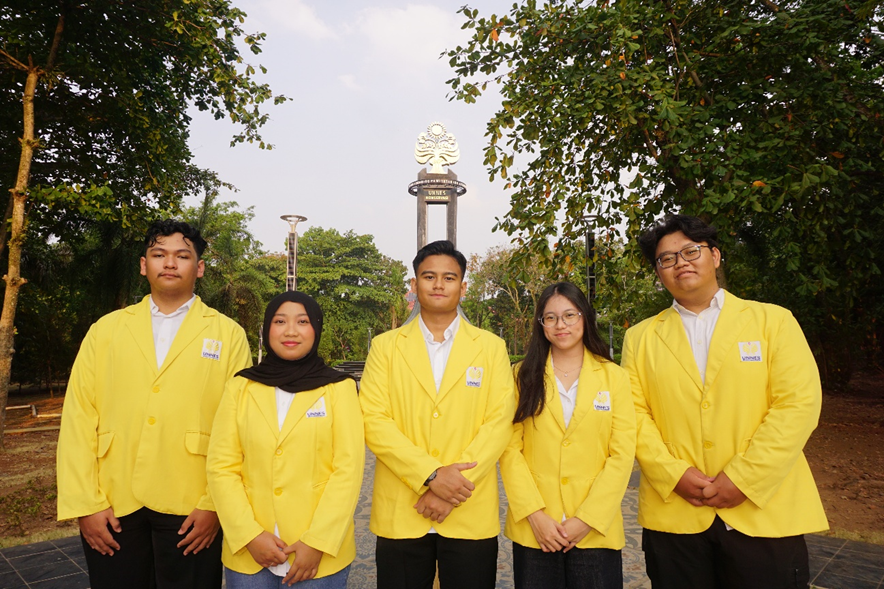
Five students consisting of three males and two females wearing the signature UNNES yellow alma mater jackets, standing in a row facing the camera outdoors with trees and the campus conservation monument in the background.

Future settlements require not only physical infrastructure but also resilience against the climate crisis and efficiency in resource utilization. The management of water, food, energy, data, and community participation requires approaches from various scientific fields. This is crucial for creating inclusive, safe, resilient, and sustainable settlements, in line with SDG 11 (Sustainable Cities and Communities).

This cross-disciplinary approach serves as a fundamental part in the development of KAMPUNG LESTARI, an innovative idea by five students from the Faculty of Mathematics and Natural Sciences (FMIPA), Universitas Negeri Semarang (UNNES), submitted to the 2026 PKM AMLI in the Written Futuristic Idea category.

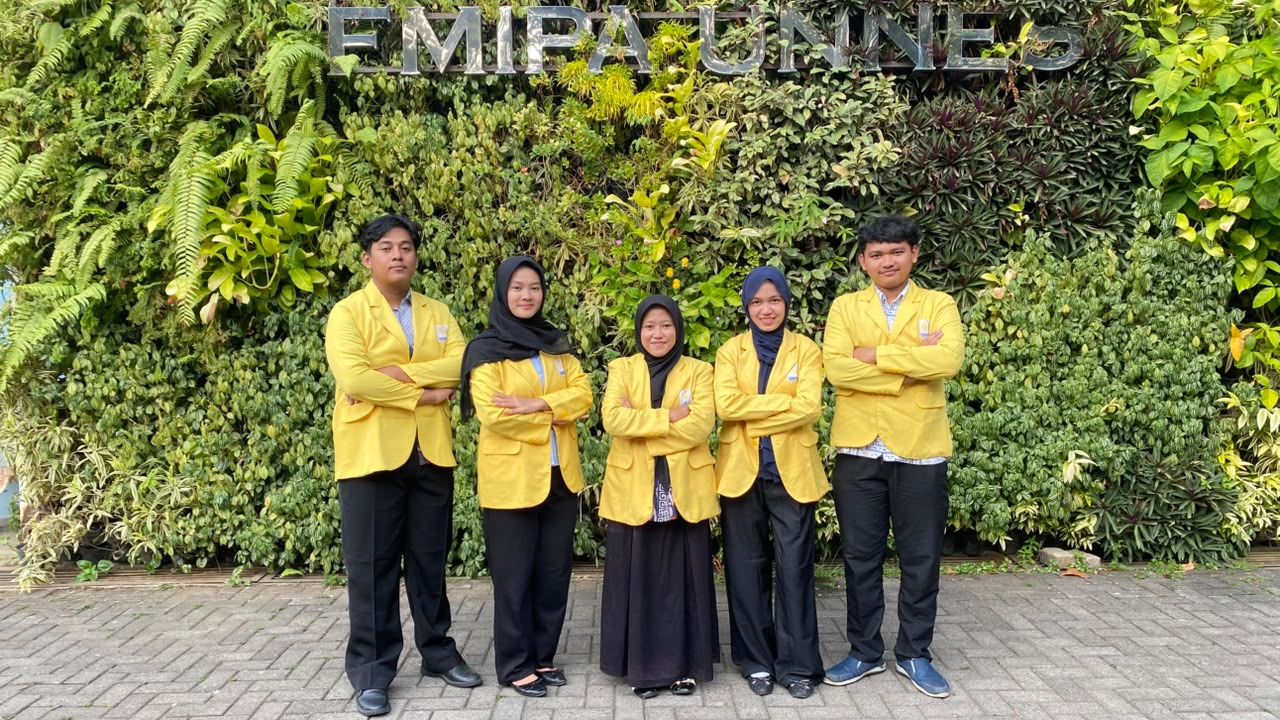
The team consists of students from the Informatics Engineering, Chemistry, and Biology study programs, who divide their contributions according to their respective areas of expertise. Syafiq Akmal Fauzan, Achmad Fauzan, and Mohammad Kresna Anugrah Raharjo contribute to the design of information technology aspects, digital governance, and system architecture. Putri Angellina contributes to the analysis of chemical aspects in water treatment and energy storage, while Nur Alfiati plays a role in designing the circular food system and biological processes.

The KAMPUNG LESTARI idea integrates four pillars, namely Water Resilience, Circular Bio-System, Energy Resilience, and Digital Governance. The entire system is designed to be connected through a Resource Center applying the Zero Resource Loss principle. This circular economy approach targets the efficiency of natural resource utilization to support SDG 12 (Responsible Consumption and Production).

Regarding the chemical aspects and water management, the design separates the flow of greywater and blackwater. Greywater is directed through constructed wetlands, electrocoagulation, and UV disinfection before being reused as non-potable treated water once it meets quality parameters. This sanitation innovation and water recycling efficiency represent direct support for SDG 6 (Clean Water and Sanitation). Blackwater itself has a separate pathway leading to an anaerobic process.

In the biological system, KAMPUNG LESTARI integrates aquaponics, vertical farming, Black Soldier Fly (BSF) larvae bioconversion, and organic residue management. This approach is designed so that resources and by-products from the food system can be managed and reused according to their functions, while simultaneously strengthening the environmental resilience of the area against climate change in accordance with SDG 13 (Climate Action).

On the information technology side, an Internet of Things (IoT) network is utilized to collect data from various systems. A Digital Twin is used to digitally represent the area’s conditions and support simulations, while Artificial Intelligence (AI) is deployed as an analytical and decision-recommendation tool for residents.

The interconnectivity among these components is also applied to the energy system through a smart microgrid scheme. The utilization of renewable hybrid technology supported by sensor monitoring, data communication, and information processing serves as the foundation for providing reliable energy for the area, in line with the SDG 7 (Affordable and Clean Energy) target.

KAMPUNG LESTARI was developed by Syafiq Akmal Fauzan, Achmad Fauzan, Mohammad Kresna Anugrah Raharjo, Putri Angellina, and Nur Alfiati, under the guidance of supervising lecturer M. Faris Al Hakim, S.Pd., M.Cs.

Through this comprehensive collaboration, the KAMPUNG LESTARI idea positions settlement issues as multidimensional challenges that require the interconnectivity of information technology, chemistry, biology, and sustainable community management.
Related Posts

Leave a Reply

* Kode Akses Komentar:

* Tuliskan kode akses komentar diatas:

GDPR

  • Privacy Policy

Privacy Policy

At unnes.ac.id, the privacy of our visitors is of extreme importance to us. This privacy policy document outlines the types of personal information that is received and collected by unnes.ac.id and how it is used.

Log Files

Like many other Web sites, unnes.ac.id makes use of log files. The information inside the log files includes internet protocol (IP) addresses, type of browser, Internet Service Provider (ISP), date/time stamp, referring/exit pages, and number of clicks to analyze trends, administer the site, track user’s movement around the site, and gather demographic information. IP addresses and other such information are not linked to any information that is personally identifiable.

Cookies

unnes.ac.id uses cookies to store information about visitors’ preferences, to record user-specific information on which pages the site visitor accesses or visits, and to personalize or customize our web page content based upon visitors’ browser type or other information that the visitor sends via their browser.

Third-party ad servers or ad networks use technology in their respective advertisements and links that appear on unnes.ac.id and which are sent directly to your browser. They automatically receive your IP address when this occurs. Other technologies (such as cookies, JavaScript, or Web Beacons) may also be used by our site’s third-party ad networks to measure the effectiveness of their advertising campaigns and/or to personalize the advertising content that you see on the site.

unnes.ac.id has no access to or control over these cookies that are used by third-party advertisers.

You should consult the respective privacy policies of these third-party ad servers for more detailed information on their practices as well as for instructions about how to opt-out of certain practices. unnes.ac.id’s privacy policy does not apply to, and we cannot control the activities of, such other advertisers or web sites.

If you wish to disable cookies, you may do so through your individual browser options. More detailed information about cookie management with specific web browsers can be found at the browsers’ respective websites.

Consent

By using our website, you hereby consent to our privacy policy and agree to its terms.

Update

This Privacy Policy was last updated on: 2023-02-14. Should we update, amend or make any changes to our privacy policy, those changes will be posted here.

Contact Us

If you have any questions, comments, or concerns about our Privacy Policy or our practices with regards to your personal information, please feel free to contact us through the contact form on our website or by emailing us at humas[at]mail.unnes.ac.id.

This Privacy Policy is intended as a general guide to our practices in collecting and using information. If there is any inconsistency between this Privacy Policy and the terms of the Service Agreement or any other terms that may apply to specific services you use, then those specific service terms shall apply.

Terms of Use

By using our website, you agree to abide by this Privacy Policy. If you do not agree with this Privacy Policy, please do not use our website. We reserve the right to update this Privacy Policy from time to time without prior notice. Please review our Privacy Policy periodically to check for changes. Your continued use of our website following the posting of changes to this Privacy Policy means that you accept the changes.

Thank you for reading our Privacy Policy. We are committed to protecting the privacy of our website visitors and will continue to update our Privacy Policy to ensure optimal protection.