


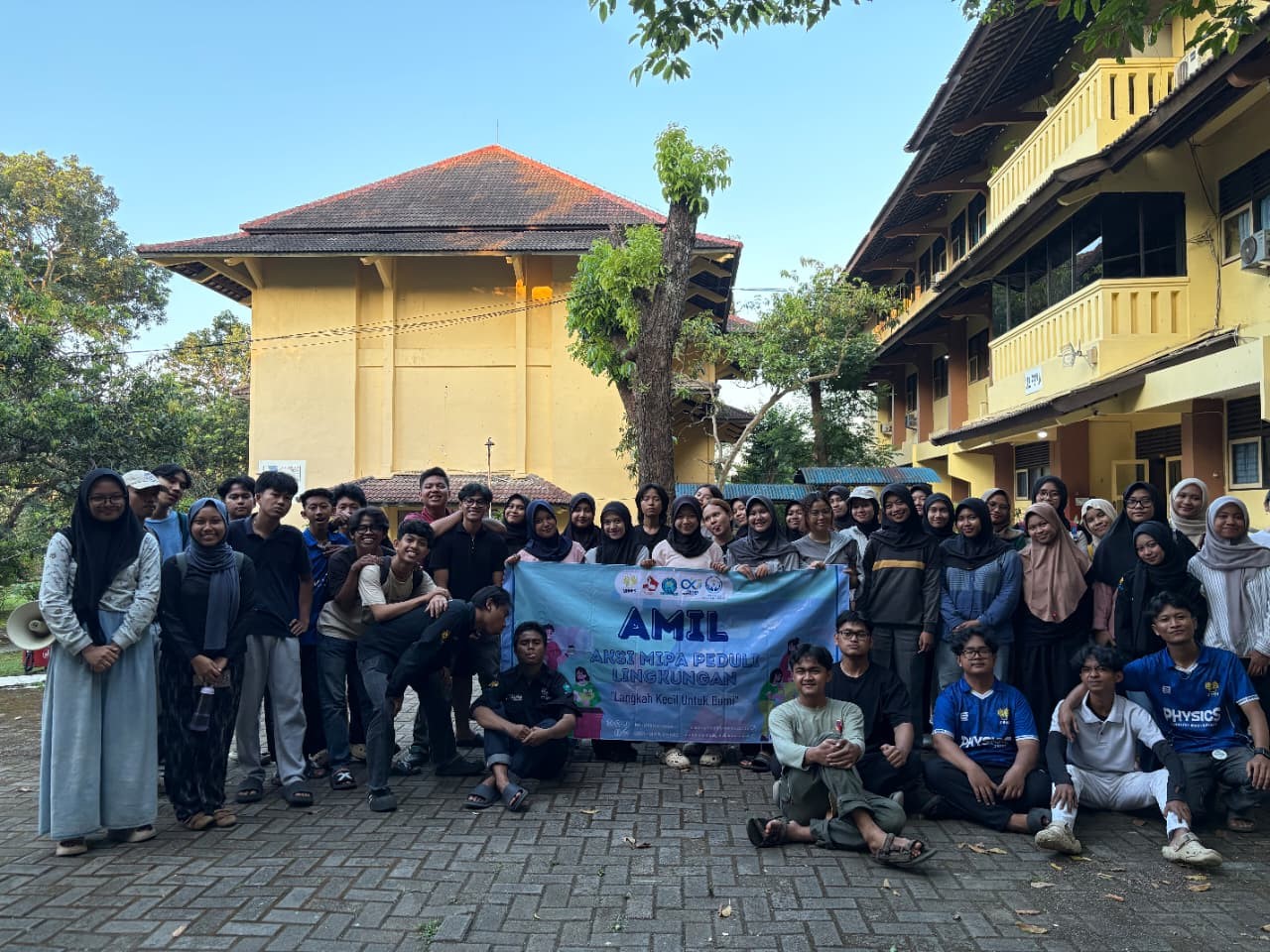
The AMIL (Aksi MIPA Peduli Lingkungan) activity was successfully held on April 25–26, 2026, in the Universitas Negeri Semarang area, covering FMIPA, FIK, and strategic locations around the UNNES Reservoir. This activity was organized by the Department of Environmental Affairs of BEM FMIPA UNNES as a concrete manifestation of students’ commitment to preserving the environment while supporting the realization of a sustainable conservation campus.
In its implementation, the AMIL activity was directly coordinated by the Department of Environmental Affairs of BEM FMIPA UNNES, involving 68 volunteers from students of the Faculty of Mathematics and Natural Sciences (FMIPA) UNNES. These volunteers served as the frontline in every series of activities, demonstrating strong dedication and environmental awareness. The active involvement of 68 FMIPA UNNES volunteers became one of the key strengths in ensuring the success of this program.
AMIL is one of the work programs designed not merely as a ceremonial event, but as a collective movement oriented toward real action. Its implementation integrates educational, participatory, and applicative values, thereby providing direct impact both for the campus environment and the surrounding community. This aligns with the fourth mission of FMIPA UNNES, which is to carry out community service in addressing problems, empowering communities, and improving societal welfare sustainably.
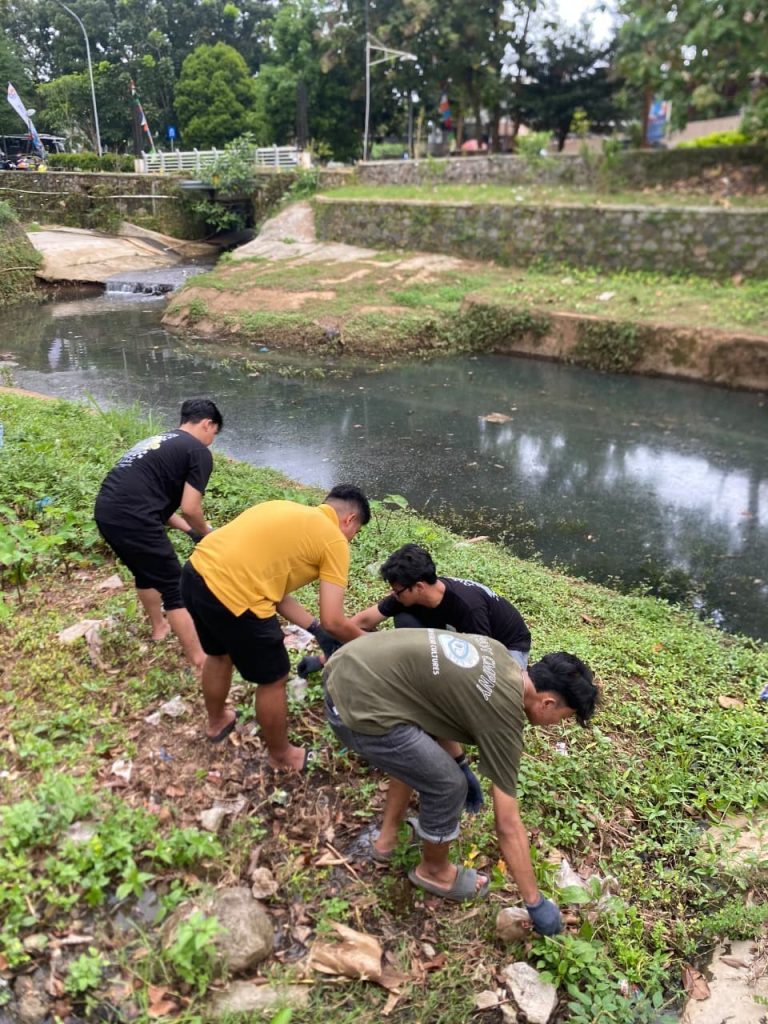
Over the two-day implementation, AMIL featured a series of structured and systematic activities. The program began with environmental clean-up actions focused on strategic points, such as faculty areas and the UNNES Reservoir, which serves as one of the campus conservation icons. In this activity, volunteers were directly involved in waste collection, environmental arrangement, and simple waste management practices as a form of practical education on the importance of maintaining cleanliness and ecosystem balance.
In addition to physical actions, AMIL also emphasized an educational approach through interactions with the surrounding community and academic community. The education provided covered environmental awareness, responsible waste management, and the role of individuals in maintaining environmental sustainability. This approach is expected to build collective awareness that environmental preservation is not only the responsibility of institutions but a shared responsibility.
The enthusiasm of the volunteers became one of the indicators of the program’s success. FMIPA UNNES students who participated as volunteers demonstrated a strong spirit of collaboration and environmental concern. Their active involvement not only strengthened the implementation of the program but also served as a means of character development for students to become more caring, responsive, and solution-oriented toward social and environmental issues.
More than just a two-day activity, AMIL is expected to serve as a catalyst for future sustainability-oriented movements. The campus environment, as a shared living space, requires continuous attention, thus necessitating synergy among students, institutions, and the community to maintain and manage it sustainably.
Through the implementation of AMIL, BEM FMIPA UNNES, through its Department of Environmental Affairs, reaffirms its role as an agent of change that operates not only in the academic sphere but also in social and environmental domains. In the future, similar initiatives are expected to continue to develop with broader innovations, so that students’ contributions in supporting a conservation campus become increasingly tangible and impactful for society.