


Semarang, November 17, 2025 – The Physics Education Study Program, Faculty of Mathematics and Natural Sciences (FMIPA), Universitas Negeri Semarang (UNNES), continues to demonstrate its commitment to supporting the transition toward clean energy through educational innovation and community engagement. Throughout 2025, a series of activities reflected the study program’s contribution to achieving the Sustainable Development Goals (SDGs), particularly SDG 7: Affordable and Clean Energy.
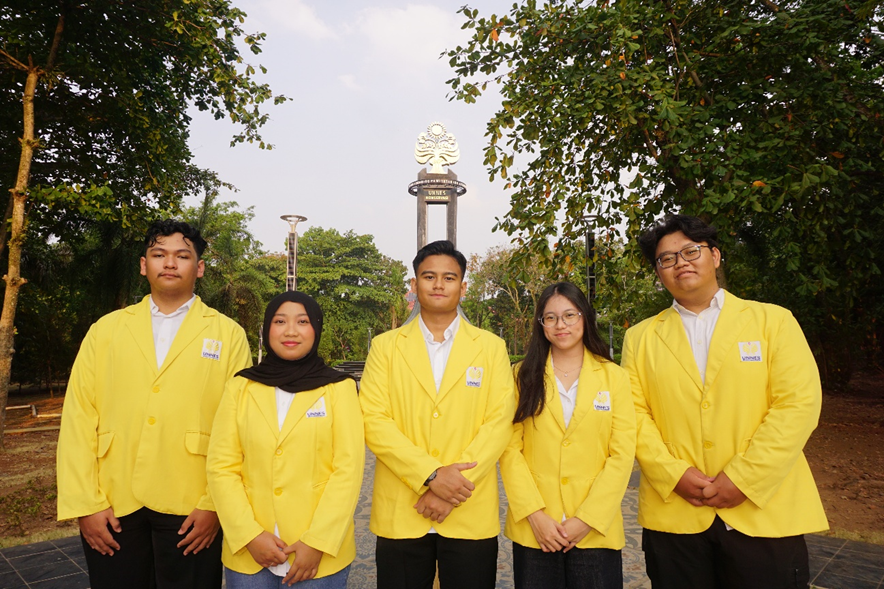
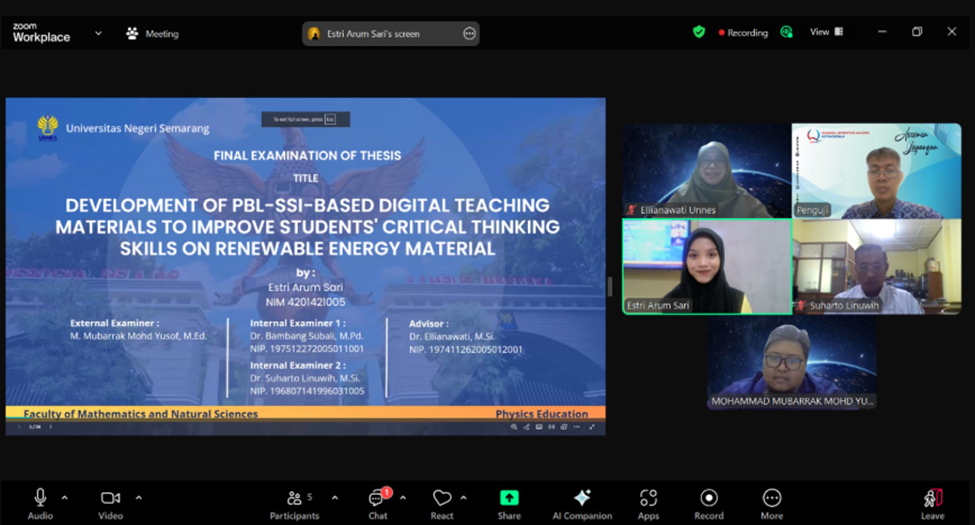
In April 2025, Dr. Ellianawati, M.Si., a lecturer in the Physics Education Study Program, supervised the development of an interactive digital learning resource on renewable energy that integrated the Socio-Scientific Issues (SSI) approach. The learning innovation was designed to enhance students’ scientific literacy, awareness of sustainable energy, and critical thinking skills in addressing contemporary energy challenges. The product received Intellectual Property Rights (IPR) protection and was highly appreciated by international examiner Mr. Mohammad Mubarrak Mohd. Yusof, M.Ed. from Universiti Teknologi MARA (UiTM), Malaysia, who recognized its relevance to twenty-first-century education.
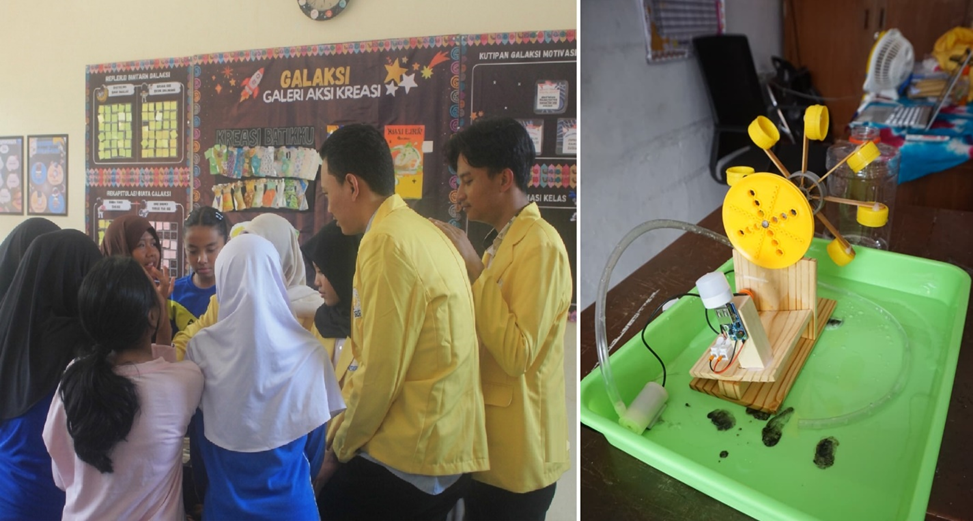
This commitment was further strengthened through the Environmental Physics for Sustainable Development (EPISODE) program, conducted on November 16, 2025, at SDN 1 Sekaran, Gunungpati. Under the supervision of Dr. Ellianawati, students implemented the results of their environmental mini-research projects by developing educational tools and learning products focusing on energy efficiency, renewable energy, and waste utilization. The innovations included a Mini Water Turbine, a solar-powered cooker, and a simple thermometer for teaching energy concepts, alongside circular economy products such as liquid fertilizer made from orange peels, aromatherapy candles produced from used cooking oil, and natural cleaning solutions derived from betel leaves.
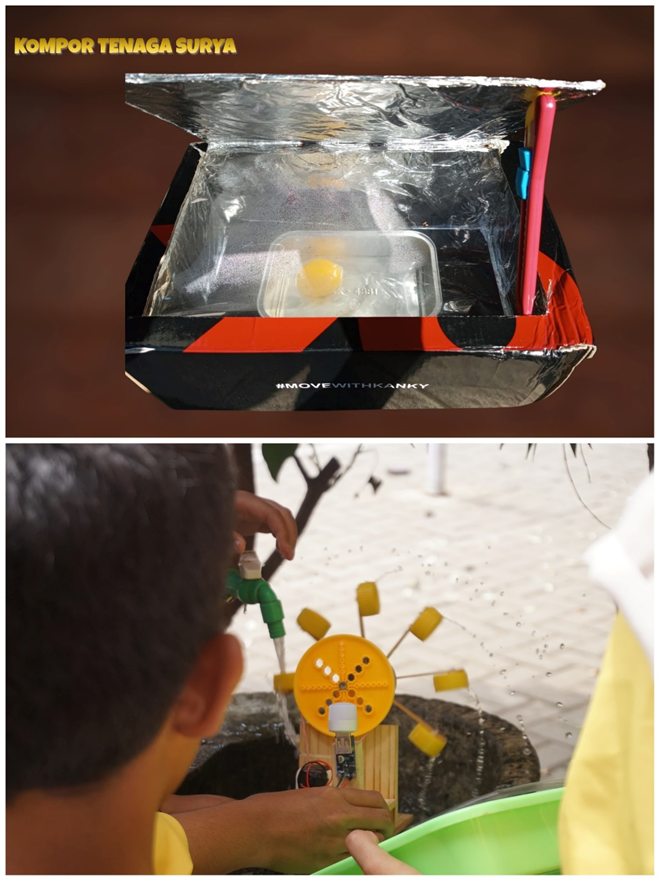
Through the EPISODE program, students not only designed practical environmental innovations but also educated elementary school students about the importance of energy efficiency, clean energy, and responsible resource management. Learning activities were delivered through demonstrations, hands-on practice, and interactive discussions, enabling students to gain direct experience with environmentally friendly technologies applicable in everyday life.
The EPISODE program also involved academic collaboration with Universiti Teknologi MARA (UiTM), Malaysia, whose representatives provided online reviews and evaluations of the students’ innovative products. This international collaboration enhanced the academic quality of the program while broadening students’ perspectives on environmental education and sustainable technology development in a global context.
According to Dr. Ellianawati, Physics Education should not only strengthen students’ conceptual understanding but also equip future educators with the ability to communicate scientific solutions effectively to society. Through project- and research-based learning, students are encouraged to develop practical, innovative, and environmentally friendly solutions that contribute to sustainable development.
These initiatives demonstrate FMIPA UNNES’ commitment to providing community-based educational programs that promote energy efficiency and clean energy awareness through innovative teaching materials, educational outreach, and direct engagement with schools. The activities also foster public understanding of sustainable energy technologies and encourage environmentally responsible practices from an early age. By integrating renewable energy education with community-based environmental projects, the Physics Education Study Program of FMIPA UNNES continues to strengthen its contribution to SDG 4 (Quality Education), SDG 7 (Affordable and Clean Energy), SDG 12 (Responsible Consumption and Production), and SDG 13 (Climate Action), while reinforcing UNNES’ vision as a conservation-oriented university committed to sustainable development.