

Related to SDGs
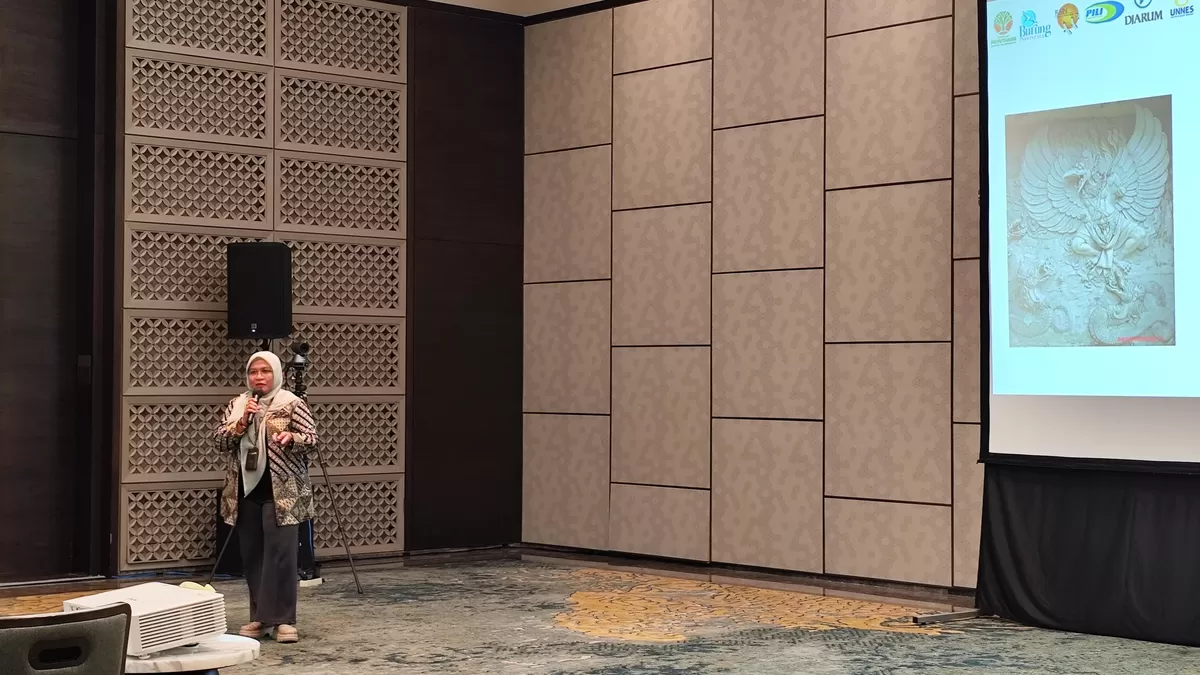
The Ministry of Forestry, alongside conservation partners within the multi-stakeholder collaboration Lacak Jejak Elang Jawa—including Burung Indonesia, RAIN, PILI Green Network, and PT Djarum—organized the Public Consultation for the Formulation of the Javan Hawk-Eagle Conservation Strategy and Action Plan (SRAK) 2026–2036 for Central Java. Held at the Padma Hotel Semarang on Friday, August 7, 2026, the forum gathered key stakeholders from Central Java and DI Yogyakarta to refine the conservation blueprint for the coming decade. The event brought together government officials, higher education representatives, researchers, civil society organizations, and the private sector.
Professor of Biodiversity, Bird Ecology, and Nature Conservation at UNNES, Prof. Dr. Margareta Rahayuningsih, S.Si., M.Si., emphasized that conserving the Javan Hawk-Eagle demands cross-sectoral commitment through a hexahelix approach. “Collaboration between the government, academics, community, NGOs, media, and private sector under the hexahelix framework is essential in Javan Hawk-Eagle conservation,” she stated. Margareta highlighted Mount Ungaran as a vital population pocket for the species, first recorded in Gonoharjo, Limbangan in 1994. Monitoring from 2010 to 2026 indicates sightings across diverse habitats ranging from primary forests to tea plantations. Contemporary monitoring efforts also incorporate modern technology, including camera traps, bioacoustics, drones, Artificial Intelligence (AI), and GIS to advance academic research and community outreach.
The public consultation and conservation research directly align with three key Sustainable Development Goals (SDGs). First, the initiative advances Life on Land (SDG 15) by protecting endangered species and preserving biodiversity across the Mount Ungaran ecosystem. Second, the program embodies Partnerships for the Goals (SDG 17) through a vibrant hexahelix synergy involving government, academia, the corporate sector, NGOs, and local communities. Finally, the effort contributes to Quality Education (SDG 4) by leveraging technology-driven research to enrich higher education learning and community service.