



In a classroom at SLB Negeri Salatiga, mathematics does not begin with numbers written on a whiteboard or formulas to memorize. Instead, the lesson starts with a simple affirmation spoken together by the students: “I can do it. I am strong. I am capable.” These words serve as the first step in building self-confidence before students are introduced to mathematical concepts through learning experiences connected to their everyday lives.
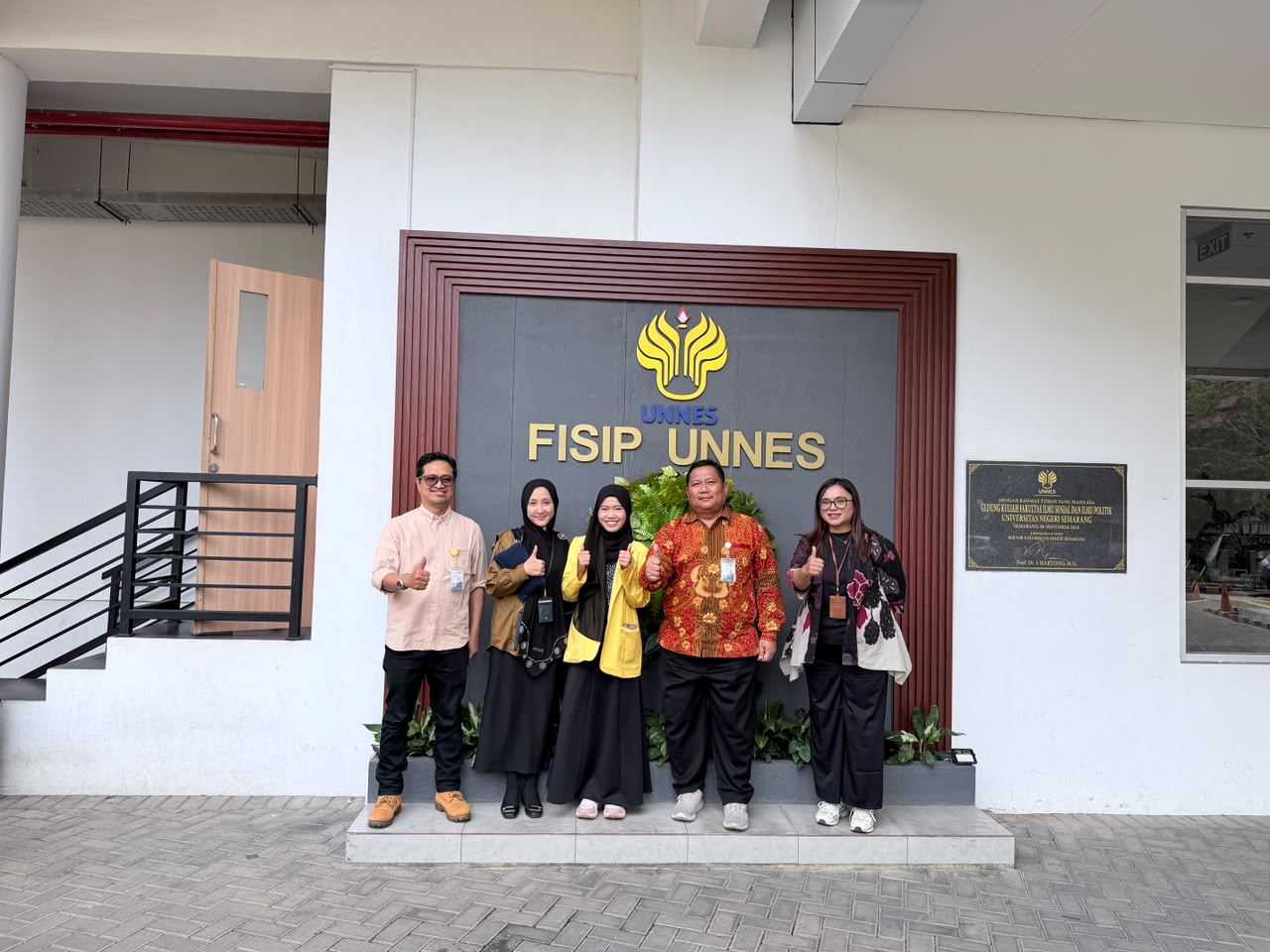
This approach was developed by the ASMARA Community Service Team from Universitas Negeri Semarang (UNNES) as part of its 2026 Community Service Program (PKM). The team is working with 12 senior high school students with intellectual disabilities at SLB Negeri Salatiga. The program is based on the belief that education for students with intellectual disabilities should go beyond delivering academic content. It should also nurture confidence, independence, and emotional well-being while creating meaningful learning experiences.
Students with intellectual disabilities face learning challenges that differ from those of their peers. They generally require more time to understand basic concepts, are easily distracted, and need intensive guidance when solving simple problems. As a result, abstract mathematical concepts often become difficult to grasp. Recognizing these challenges, the ASMARA team designed a contextual learning model that connects mathematics with real-life experiences, making lessons more relevant and easier to understand.
The program extends beyond academic instruction. Before introducing mathematics, the team strengthens students’ emotional readiness through the Havening Touch method combined with positive affirmations. This simple activity helps students feel calmer, improve their concentration, and develop confidence in their ability to learn.
Once students feel comfortable, they participate in hand painting activities, creating colorful handprints before writing down their names and future aspirations. These creative sessions provide opportunities for self-expression while encouraging students to recognize their own potential and build optimism about their future. In inclusive education, developing self-awareness is considered just as important as achieving academic success.
Mathematics lessons are then delivered through contextual learning experiences. One of the program’s most distinctive activities takes place at Gedung Papak, a historic heritage building in Salatiga. The building serves as an outdoor learning space where students identify two-dimensional and three-dimensional geometric shapes by observing its architectural features. Rather than learning geometry only from textbooks, students discover mathematical concepts in the environment around them, making learning more meaningful and engaging.
The learning process continues with Tangram puzzles consisting of seven geometric pieces. Students assemble different figures while identifying triangles, squares, and parallelograms. This activity encourages logical thinking, develops simple problem-solving skills, and promotes greater independence in learning. Presented as a game, the activity also helps students maintain their attention and enjoy the learning process.
Muhammad Bagas Riyanto, a member of the ASMARA team from the Faculty of Social and Political Sciences at UNNES, explained that the greatest challenge during the community service program was not teaching mathematics itself, but maintaining students’ emotional stability throughout the learning process.
“Emotional and mental stability is our biggest challenge because students with intellectual disabilities are easily distracted by activities outside the classroom, making it difficult for them to maintain focus and concentration,” he said.
According to Bagas, these conditions require every learning activity to be flexible, interactive, and adapted to each student’s individual characteristics. Understanding students’ emotional needs becomes the foundation for effective learning.
The program is carried out by five students from different academic disciplines under the supervision of Nuriana Rachmani Dewi (Nino Adhi), The interdisciplinary team includes students from Mathematics Education, History Education, Law, Informatics Engineering, and Guidance and Counseling. Their collaboration demonstrates that inclusive education requires contributions from multiple fields of expertise, addressing not only academic needs but also psychological, social, technological, and legal aspects of supporting students with disabilities.
More than a community service initiative, the program at SLB Negeri Salatiga highlights the importance of a human-centered approach to inclusive education. Success is measured not only by students’ ability to solve mathematical problems but also by the confidence they gain to participate, learn independently, and recognize their own potential.
The experience serves as a reminder that achieving quality education for all requires more than providing curricula and learning facilities. It also depends on educators and volunteers who understand the unique needs of every learner and create learning environments that value diversity and inclusion. In the classrooms of SLB Negeri Salatiga, mathematics has become more than numbers and formulas—it has become a pathway to confidence, independence, and the belief that every child deserves an equal opportunity to learn and thrive.